Artwork
The Bodhisattvas of the Ten Stages in Attaining the Most Perfect Knowledge; The Eight Hosts of Deva, Naga, and Yakshi
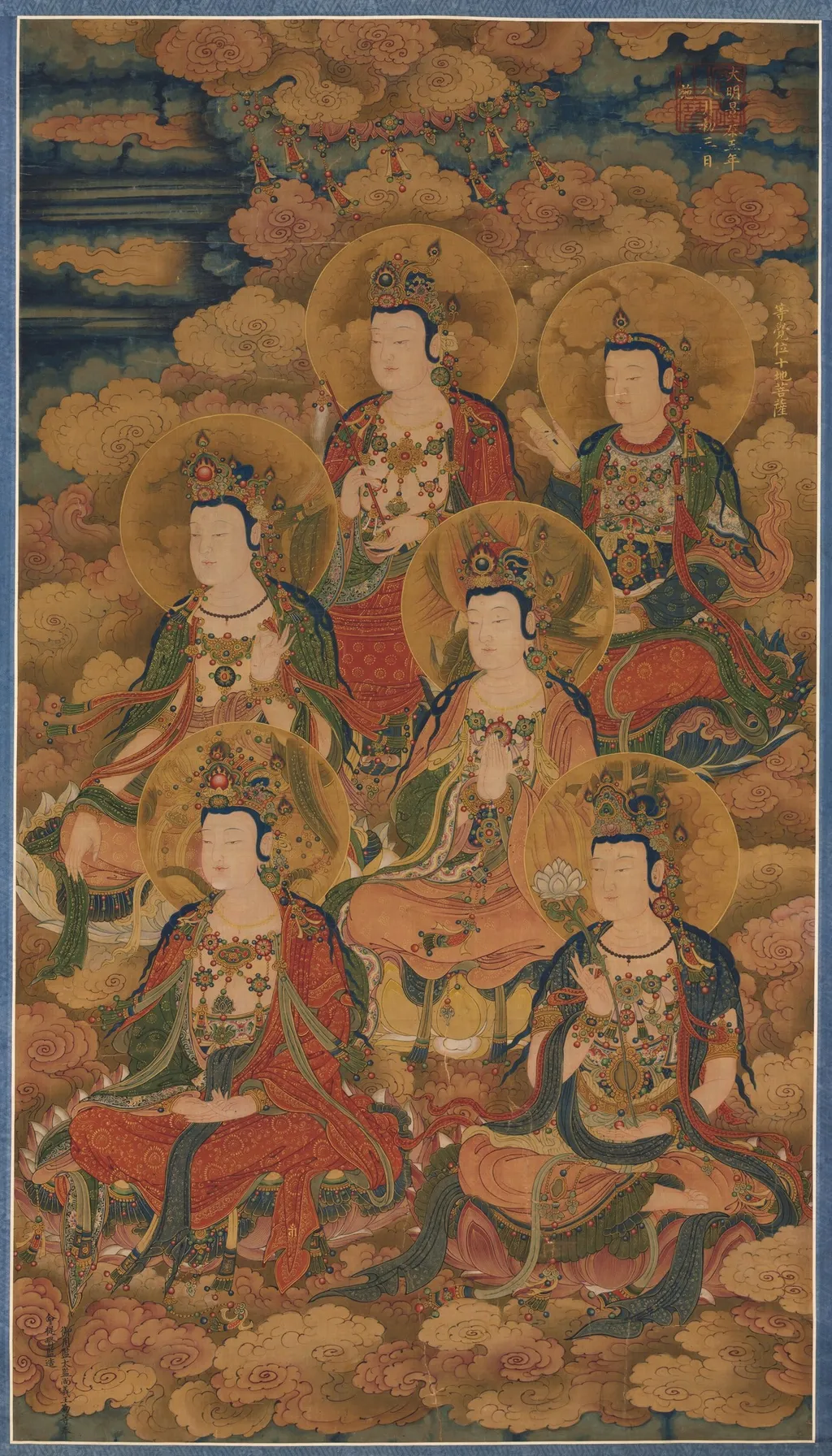
The Bodhisattvas of the Ten Stages in Attaining the Most Perfect Knowledge; The Eight Hosts of Deva, Naga, and Yakshi is an unspecified painting. It dates from 1454 and is held in the collection of the Cleveland Museum of Art.
About this work
History & Provenance
Created in 1454 in China, this religious painting is attributed to an unknown artist.
Created in 1454 in China, this religious painting is attributed to an unknown artist. The work, titled The Bodhisattvas of the Ten Stages in Attaining the Most Perfect Knowledge; The Eight Hosts of Deva, Naga, and Yakshi, entered the collection of the Cleveland Museum of Art, where it is registered under the accession number 1973.70. While the specific circumstances of its original commission and the intermediate ownership history prior to its museum acquisition are not detailed in the available records, the piece has been formally cataloged as part of the institution's holdings since 1973. Exhibition records are not cited in the available documentation.
Context
The Bodhisattvas of the Ten Stages in Attaining the Most Perfect Knowledge; The Eight Hosts of Deva, Naga, and Yakshi is a 15th-century Chinese religious painting dated 1454. It is catalogued as a painting within the religious genre and was produced in China, placing it within the broader tradition of Buddhist art of the period. The work belongs to the collection of the Cleveland Museum of Art. The artist is recorded as unknown, reflecting the anonymous status often associated with works of this era.
Overview
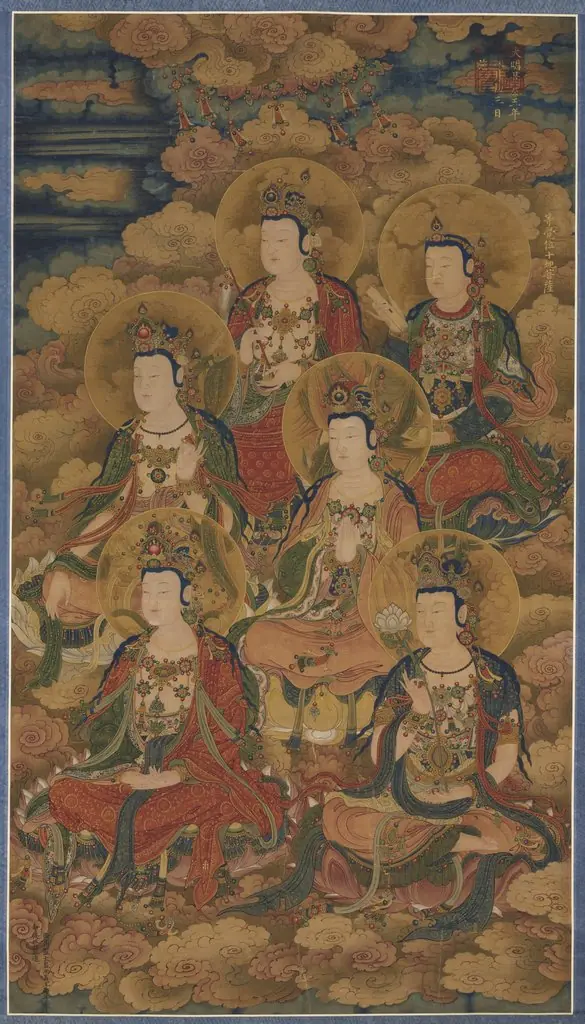
This painting, titled "The Bodhisattvas of the Ten Stages in Attaining the Most Perfect Knowledge; The Eight Hosts of Deva, Naga, and Yakshi," portrays a celestial assembly. Five robed figures, identified as Bodhisattvas and other divine beings, are depicted seated upon swirling clouds. Each figure is distinguished by a golden halo and vibrant, intricately patterned garments.
The composition is set against a dark, atmospheric sky, with a line of red text visible at the top edge, contributing to the work's spiritual context.
Subject & Meaning
The artwork illustrates a complex Buddhist cosmology, featuring Bodhisattvas who represent the ten stages of spiritual development towards enlightenment, alongside various divine and semi-divine entities. These figures are rendered with serene expressions, each holding symbolic attributes such as flowers or scrolls. Their collective presence on clouds suggests a heavenly gathering, emphasizing their elevated spiritual status and their role in guiding sentient beings through the path to ultimate knowledge.
Technique & Style
The artist utilizes a rich palette dominated by bright red, green, and gold, which vividly defines the figures' elaborate attire. These garments are adorned with intricate, hand-painted designs, contributing to the painting's detailed aesthetic. The figures are arranged in a dynamic pyramid formation, with a central, taller figure anchoring the composition.
This arrangement, combined with the swirling cloud motifs and the dark background, creates a sense of depth and ethereal movement within the celestial scene.
Artist & collection

- The Bodhisattvas of the Ten Stages in Attaining the Most Perfect Knowledge
 The Bodhisattvas of the Ten Stages in Attaining the Most Perfect Knowledge
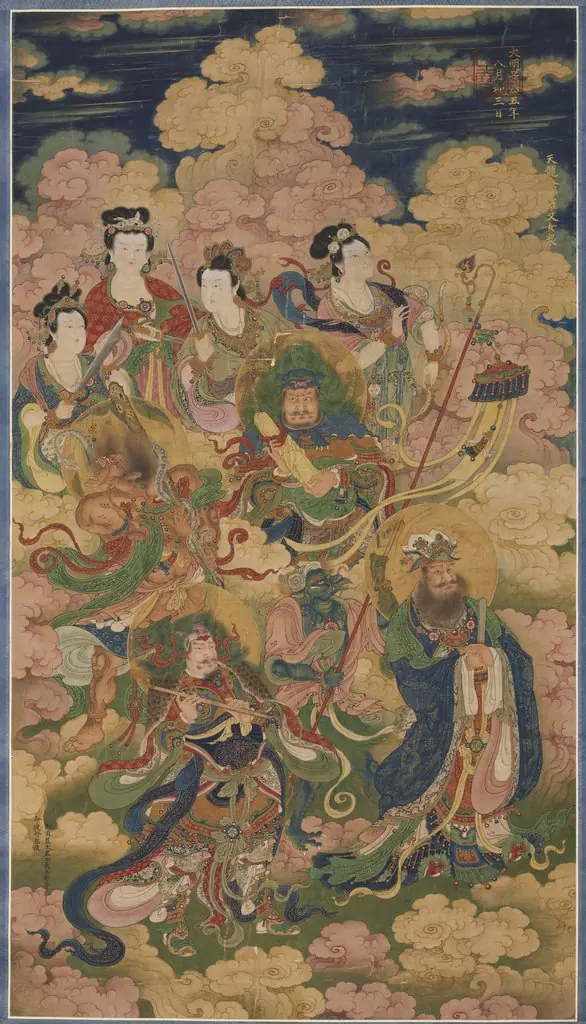 The Eight Hosts of Deva, Naga, and Yakshi
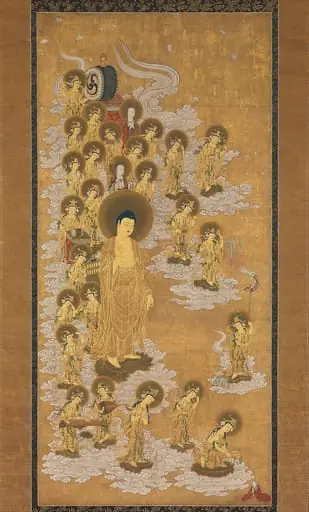 阿弥陀二十五菩薩来迎図|Welcoming Descent of Amida Buddha and Twenty-five Bodhisattvas
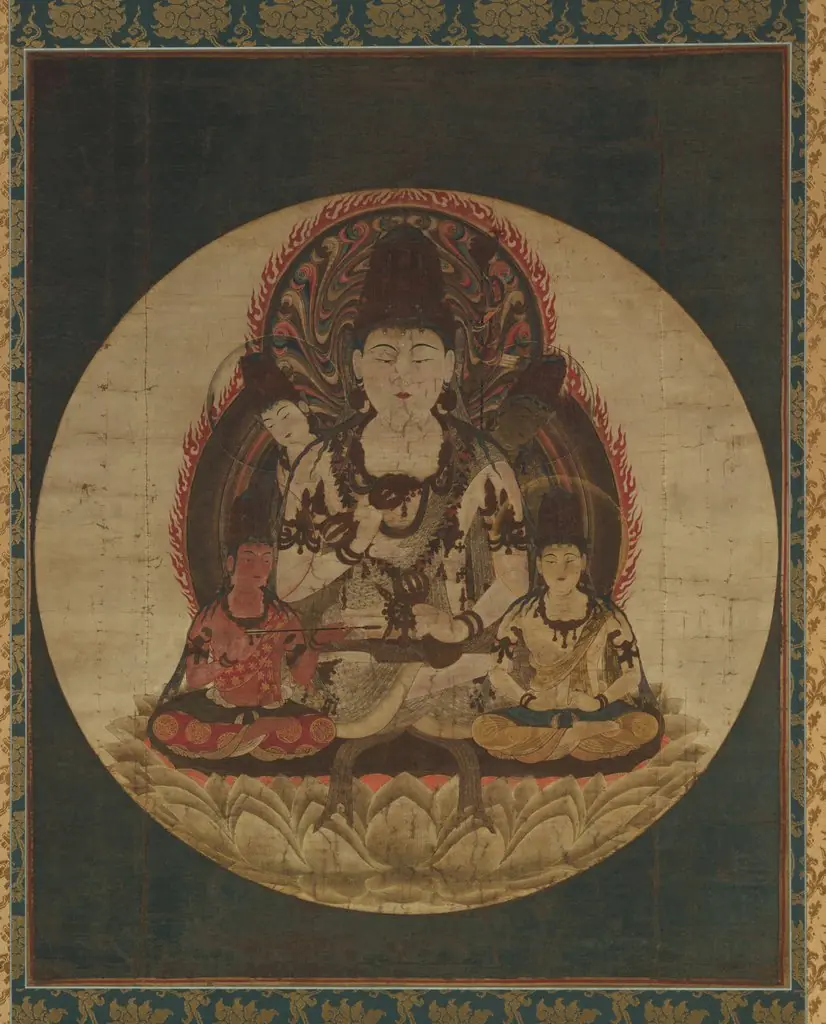 The Secret Five Bodhisattvas (Gohimitsu Bosatsu)
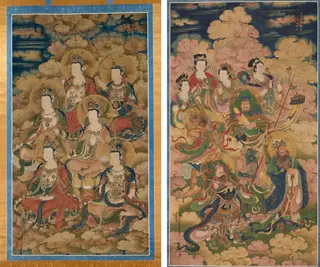 The Bodhisattvas of the Ten Stages in Attaining the Most Perfect Knowledge; The Eight Hosts of Deva, Naga, and Yakshi
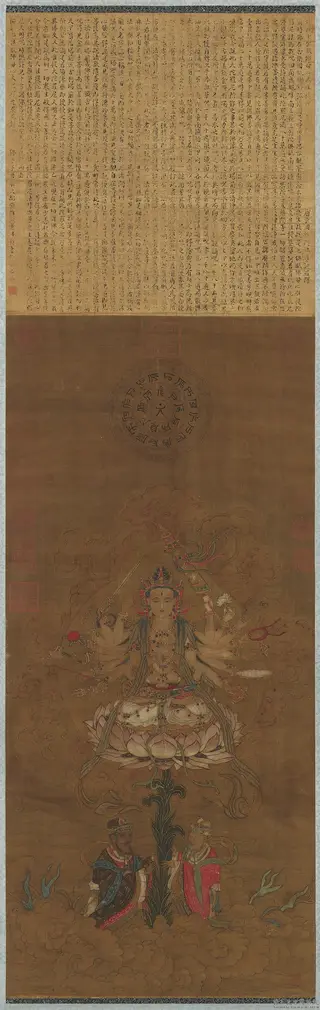 Cundi Bodhisattva
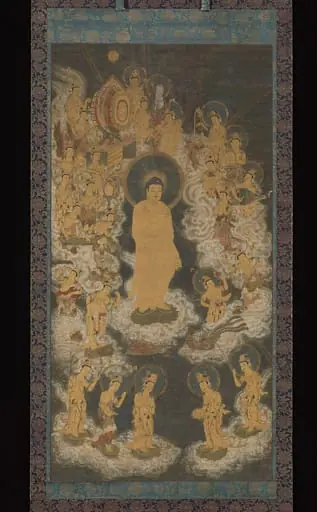 阿弥陀聖衆来迎図 |Welcoming Descent of Amida and Bodhisattvas
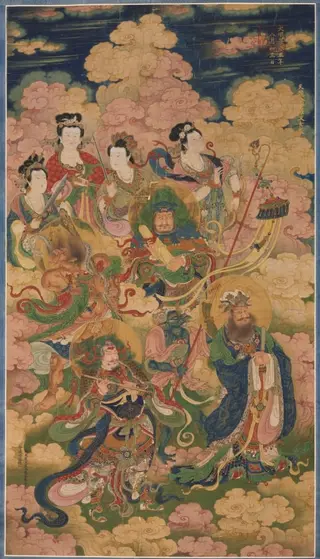 The Eight Hosts of Deva, Naga, and Yakshi
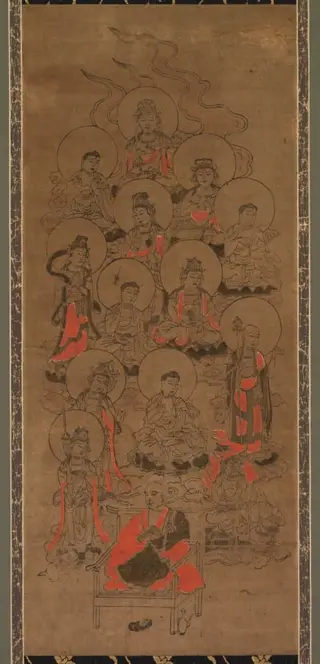 Twelve Buddhas and Kobo Daishi (Jusanbutsu)
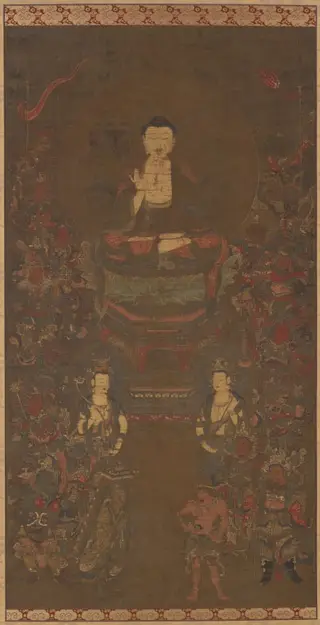 Shakyamuni with the Sixteen Benevolent Deities