Artwork
The Bodhisattvas of the Ten Stages in Attaining the Most Perfect Knowledge; The Eight Hosts of Deva, Naga, and Yakshi
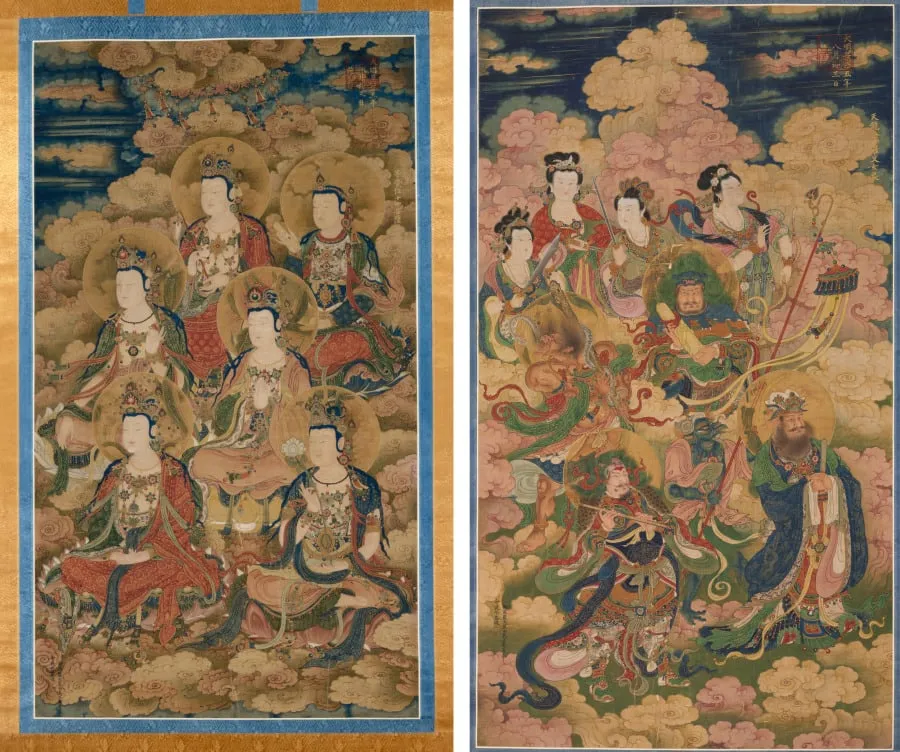
The Bodhisattvas of the Ten Stages in Attaining the Most Perfect Knowledge; The Eight Hosts of Deva, Naga, and Yakshi is an unspecified painting by the Ming dynasty painting artist Unknown. It dates from 1454 and is held in the collection of the Cleveland Museum of Art.
- Accession no.
- 1973.70
- Credit line
- John L. Severance Fund
About this work
You see two long scrolls filled with rows of colorful figures, gods, spirits, and heavenly beings, floating on clouds or standing in neat lines.
You see two long scrolls filled with rows of colorful figures, gods, spirits, and heavenly beings, floating on clouds or standing in neat lines.
These scrolls were made for a week-long Buddhist ritual called the Water-Land ceremony. The paintings were hung in temples to guide the souls of the dead. Only a few sets like this survive from the Ming dynasty.
To see more art from this time, look up china, ming dynasty (1368–1644).
Overview
These two long horizontal scrolls form part of a set of thirty-six ritual paintings created for the Water-Land ceremony, a Buddhist rite aimed at liberating all deceased souls. Commissioned in 1454 during the Jingtai reign of the Ming dynasty, they were likely intended for the Da Longfu monastery in Beijing. Their exceptional preservation, retaining vivid pigments and gold detailing, makes them among the most complete surviving examples of Ming-era ritual art.
Subject & Meaning
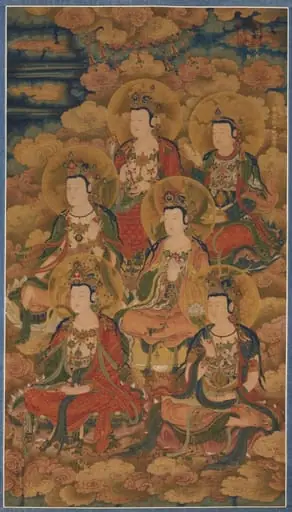
One scroll depicts the Eight Hosts, celestial beings including Nagas, Yakshis, and Devas, as described in the Lotus Sutra, representing protective forces of the Dharma. The other illustrates Bodhisattvas progressing through the Ten Stages of Enlightenment, symbolizing the path to full Buddhahood. Together, they serve as visual guides for the ritual, invoking divine presence to aid wandering spirits in their journey toward salvation.
Technique & Style
The paintings employ opaque mineral pigments and fine gold line work to create luminous, intricate figures. Drapery flows in sinuous, layered folds, emphasizing movement and divine grace. Backgrounds are minimally rendered, focusing attention on the densely arranged beings.
The precision of brushwork and the richness of materials reflect court-sponsored production, aligning with the aesthetic standards of Ming imperial religious art.
History & Provenance
Both scrolls bear an imperial seal and a gold inscription noting their donation on the third day of the eighth month in 1454. A separate ink annotation confirms they were produced under imperial command. Their association with the Da Longfu monastery suggests a direct link to court-sponsored religious patronage.
Only a handful of complete Water-Land sets from this period remain, making these scrolls rare witnesses to Ming ritual practice.
Context
The Water-Land ceremony, performed over seven days, was a major state-supported ritual for ancestral veneration and spiritual redemption. Paintings like these were displayed on the second day, forming a sacred visual environment for monks and lay participants. Their scale and detail mirrored the grandeur of temple interiors, reinforcing the connection between imperial authority, Buddhist doctrine, and the cosmological order.
Legacy
These scrolls stand as key examples of Ming Buddhist art’s integration of devotional function and artistic refinement. Their survival offers insight into the material culture of ritual practice and the role of imperial patronage in sustaining religious traditions. They continue to inform scholarly understanding of how visual imagery mediated spiritual experience in late medieval China.
Artist & collection









- The Bodhisattvas of the Ten Stages in Attaining the Most Perfect Knowledge
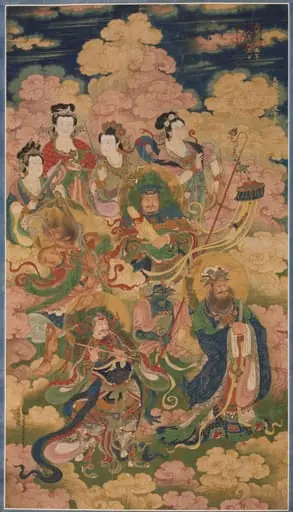 The Eight Hosts of Deva, Naga, and Yakshi
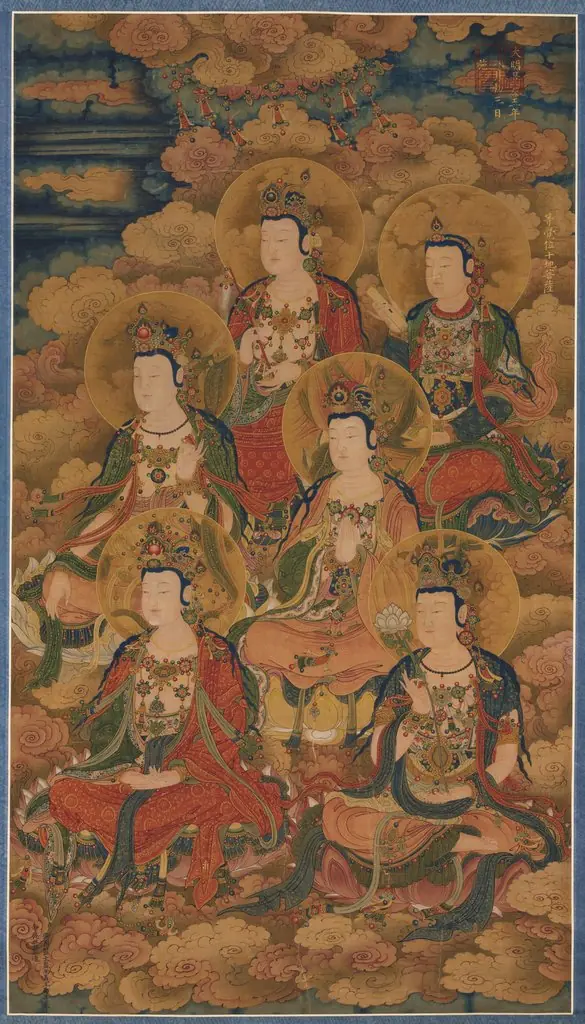 The Bodhisattvas of the Ten Stages in Attaining the Most Perfect Knowledge; The Eight Hosts of Deva, Naga, and Yakshi
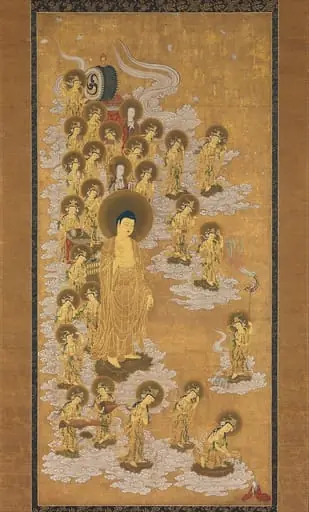 阿弥陀二十五菩薩来迎図|Welcoming Descent of Amida Buddha and Twenty-five Bodhisattvas
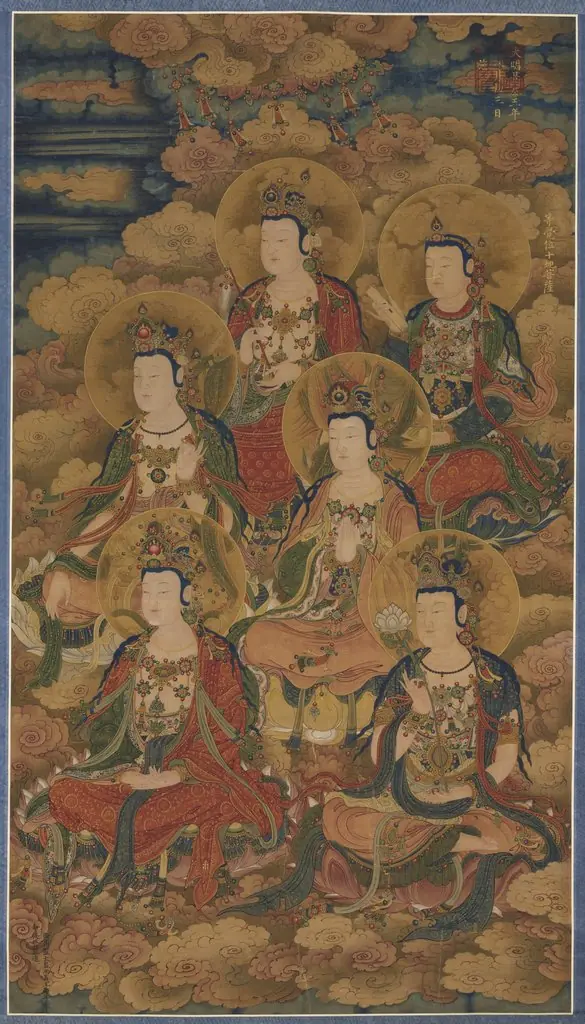 The Bodhisattvas of the Ten Stages in Attaining the Most Perfect Knowledge
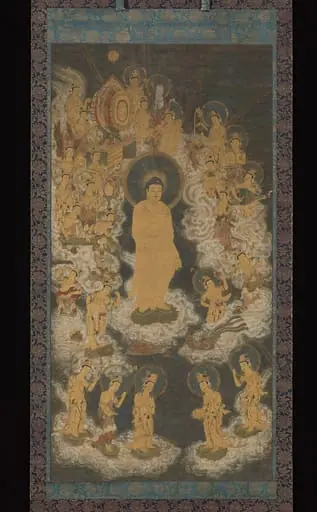 阿弥陀聖衆来迎図 |Welcoming Descent of Amida and Bodhisattvas
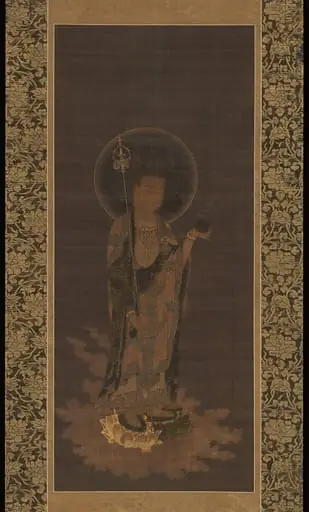 地蔵菩薩来迎図|Welcoming Descent of the Bodhisattva Jizō
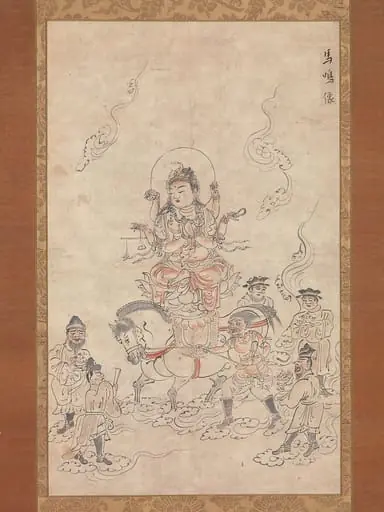 馬鳴菩薩図像|Iconographic Drawing of the Bodhisattva Memyō (Ashvaghosha)