Artwork
The Eucharist
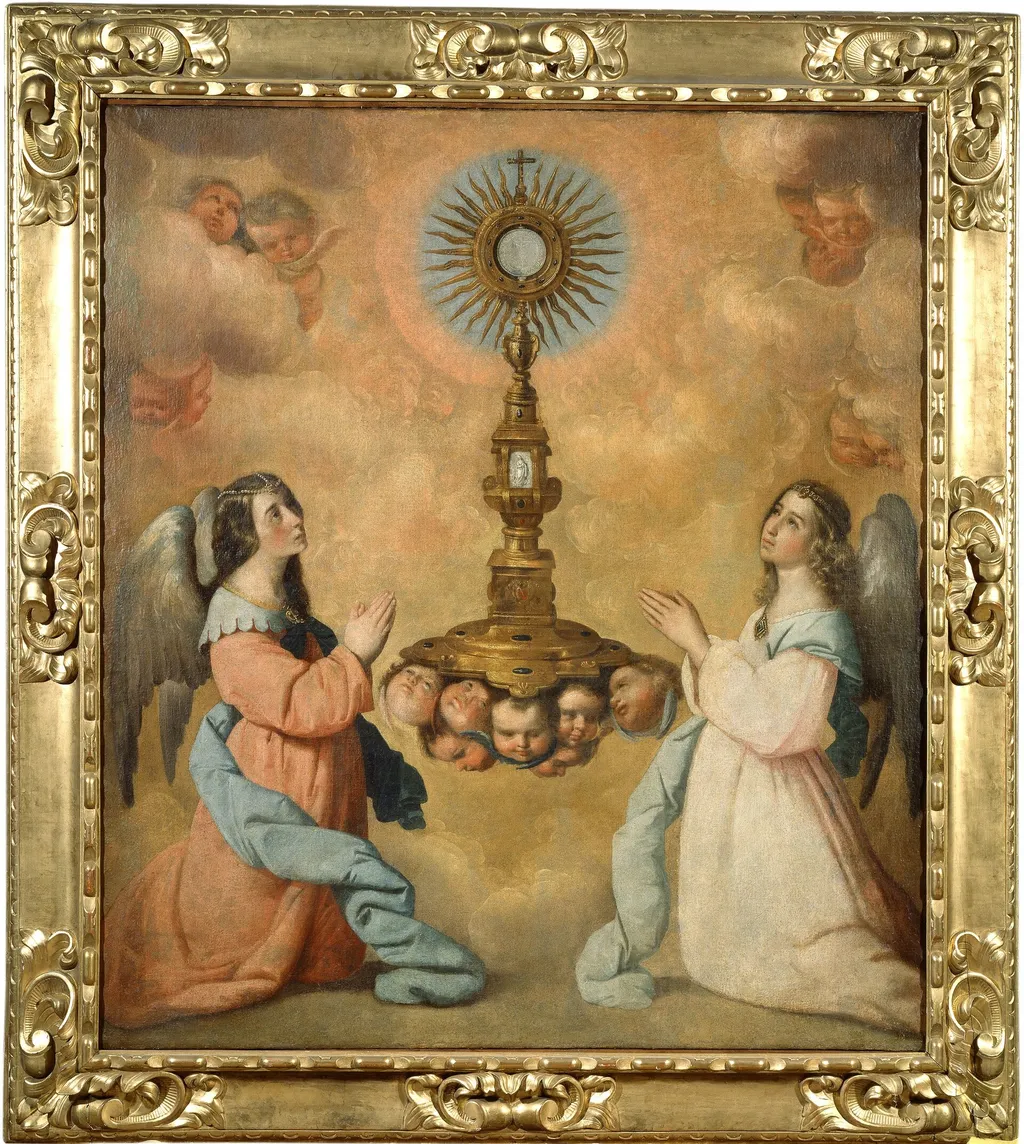
The Eucharist is an unspecified painting by Unknown. It is held in the collection of the Nationalmuseum. This painting centers on a solemn religious symbol: the monstrance holding the consecrated host.
About this work
Overview
The composition is symmetrical, with the monstrance as the focal point, framed by a luminous golden background and floating cherubs.
This painting centers on a solemn religious symbol: the monstrance holding the consecrated host. Two angels kneel in quiet adoration on either side, their postures and gestures emphasizing reverence. The composition is symmetrical, with the monstrance as the focal point, framed by a luminous golden background and floating cherubs. The tone is contemplative, avoiding dramatic flair in favor of stillness and sacred focus.
Subject & Meaning
The subject is the Eucharist, the Christian sacrament representing the body of Christ. The monstrance, with its radiant design, visually elevates the host as divine presence. The angels, neither speaking nor moving, serve as silent witnesses to the sacred mystery.
Their raised hands and bowed heads convey prayerful submission, reinforcing the painting’s purpose as an object of devotion rather than narrative storytelling.
Technique & Style
The artist employs soft modeling and smooth transitions to render the angels’ garments and the metallic sheen of the monstrance. Warm gold tones unify the background, suggesting divine light. Delicate brushwork defines the cherubs and cloud forms, while the glass-like center of the monstrance hints at transparency without literal realism. The style leans toward idealized Baroque piety, prioritizing spiritual atmosphere over anatomical precision.
History & Provenance
The painting’s origins are tied to devotional practices in Catholic communities, likely created for a chapel or private altar. Its emphasis on the Eucharist aligns with Counter-Reformation ideals that promoted visual aids for worship. While specific commission records are unverified, the work reflects a broader 17th- to 18th-century trend of using angelic figures to mediate sacred presence in liturgical art.
Context
In an era when the Catholic Church encouraged imagery to inspire faith, this painting functioned as a devotional tool. The Eucharist was a central point of theological emphasis, especially after the Council of Trent. Artworks like this one were meant to cultivate personal piety, inviting viewers to participate in silent contemplation of the sacrament through the angels’ example.
Legacy
Though not widely known outside devotional circles, the painting exemplifies a persistent tradition in religious art: using celestial figures to direct attention toward the sacred. Its quiet dignity and symbolic clarity influenced later ecclesiastical commissions, preserving a visual language of reverence that endured beyond stylistic shifts in broader art movements.
Artist & collection









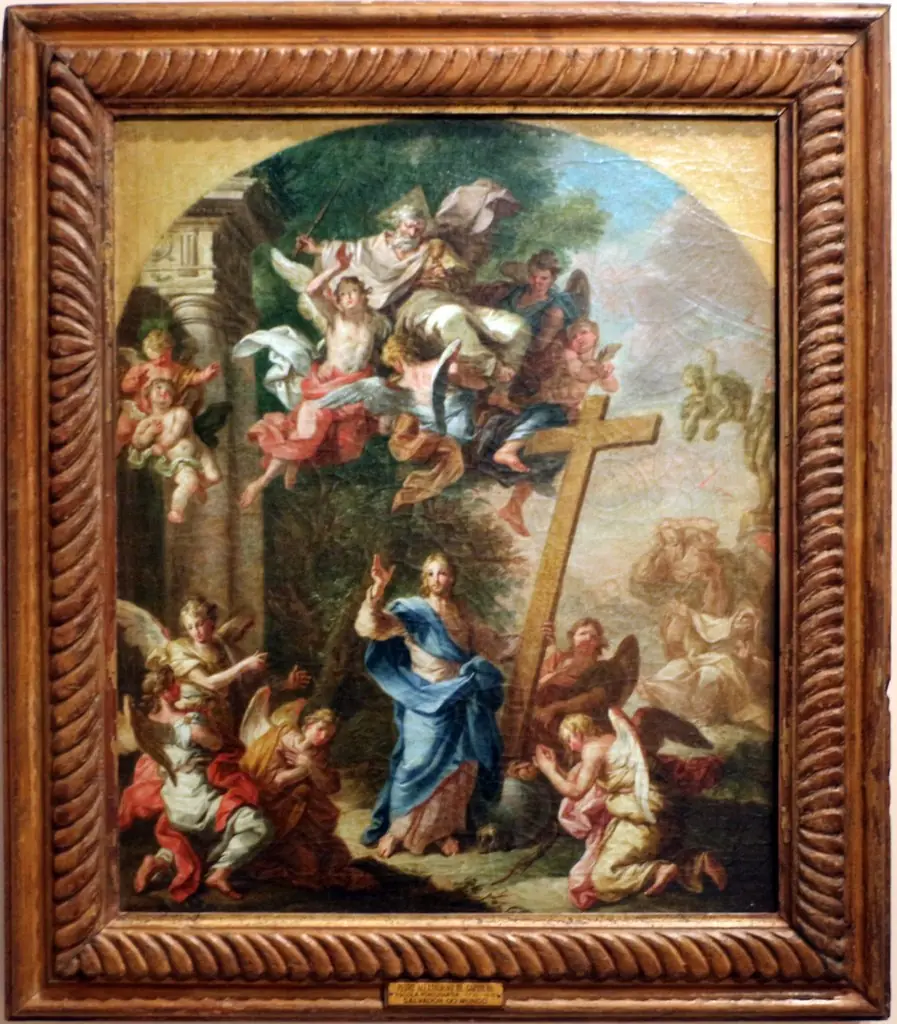 Cristo Salvador do Mundo
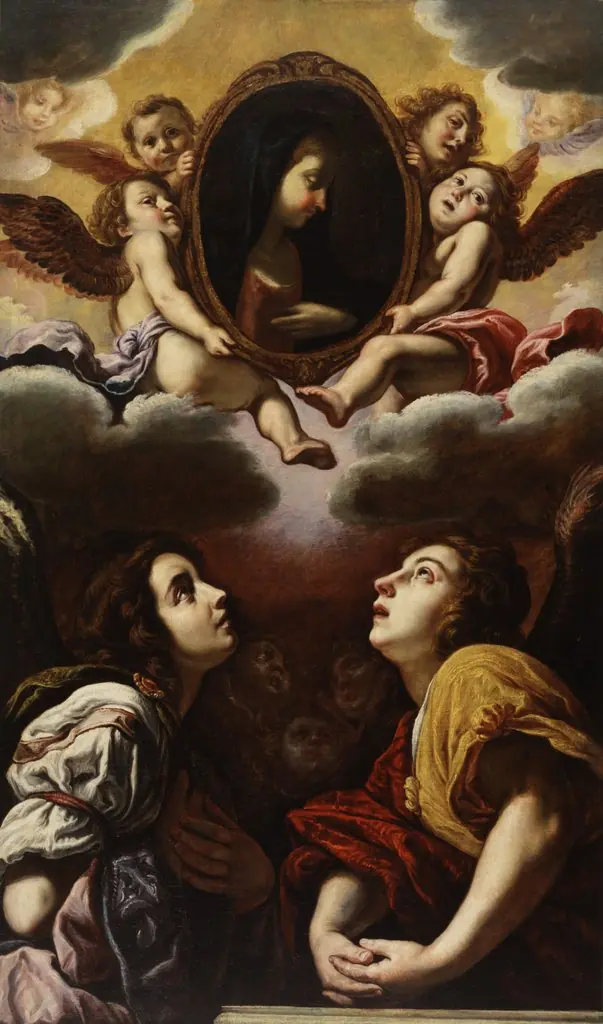 Flying and Adoring Angels
 The Immaculate Conception
 The Annunciation
 The Coronation of the Virgin
 Assumption of the Virgin
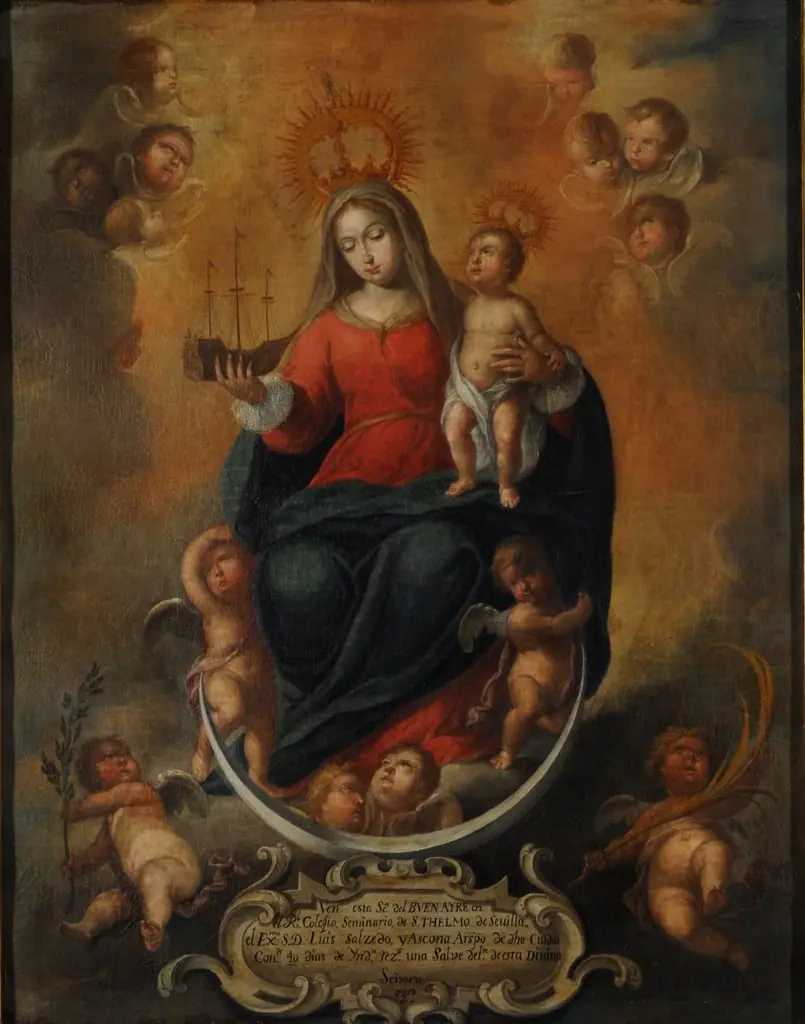 The Virgin of Buen Ayre
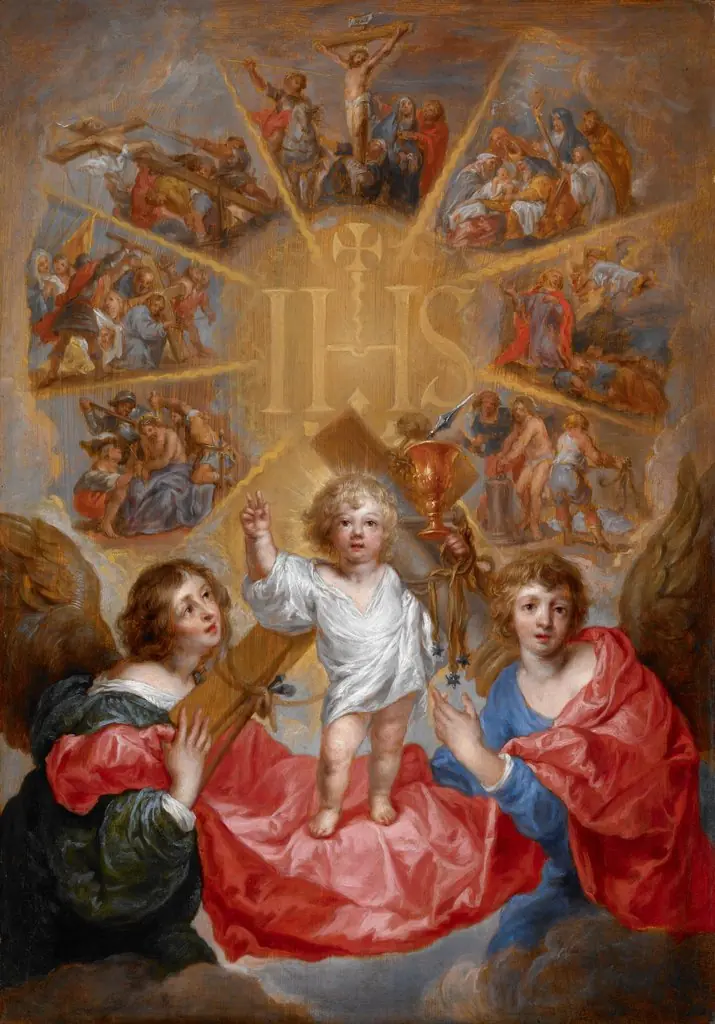 The Glorification of the Name of Jesus
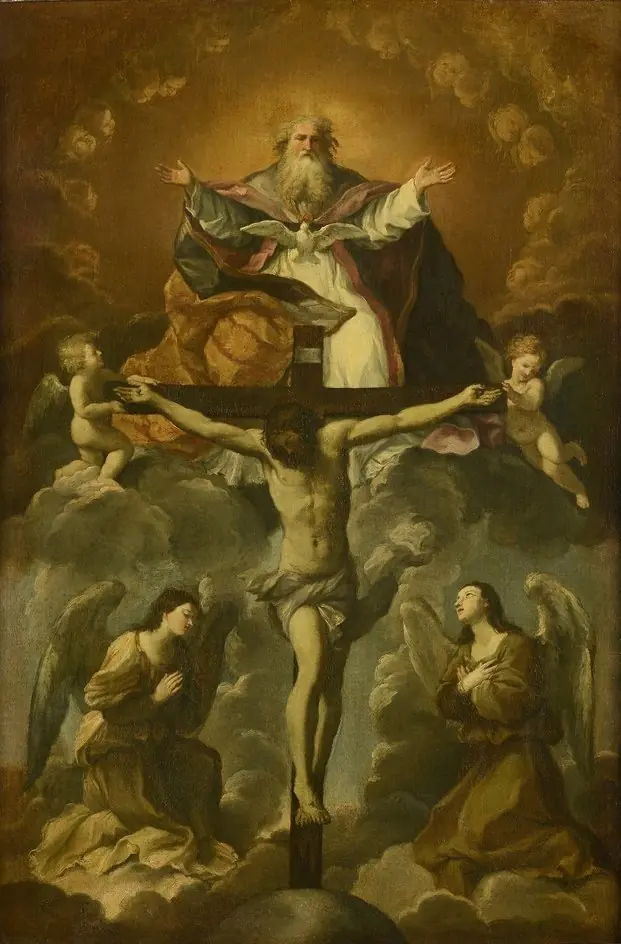 The Holy Trinity adored by Angels
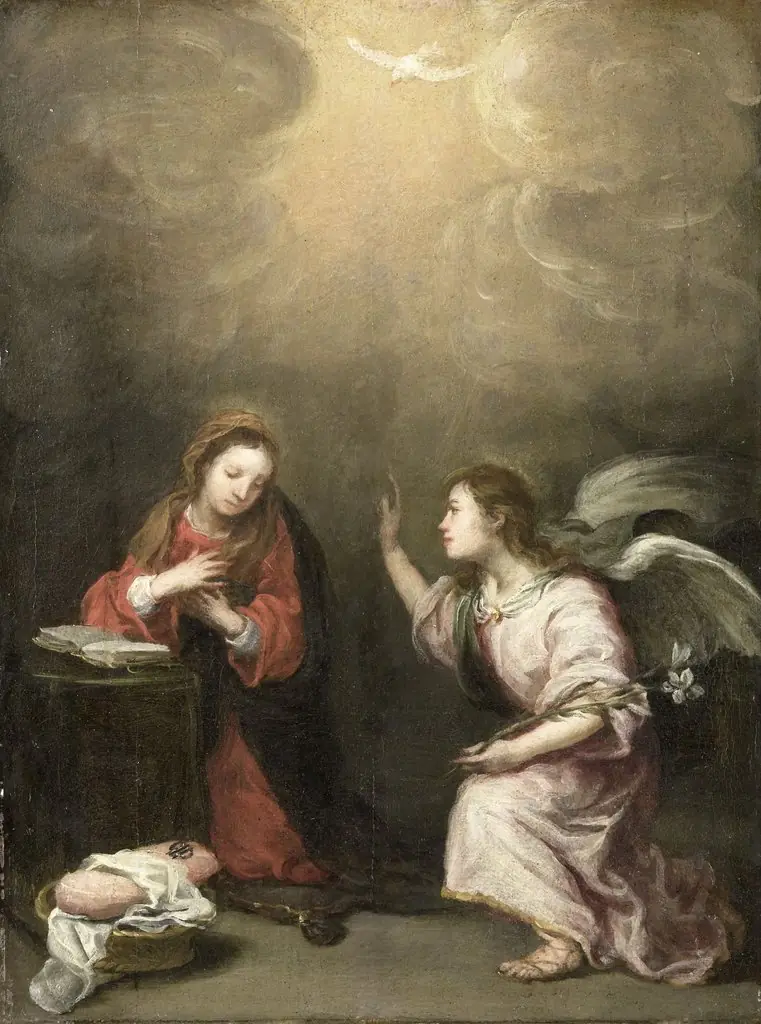 Annunciation to the Virgin
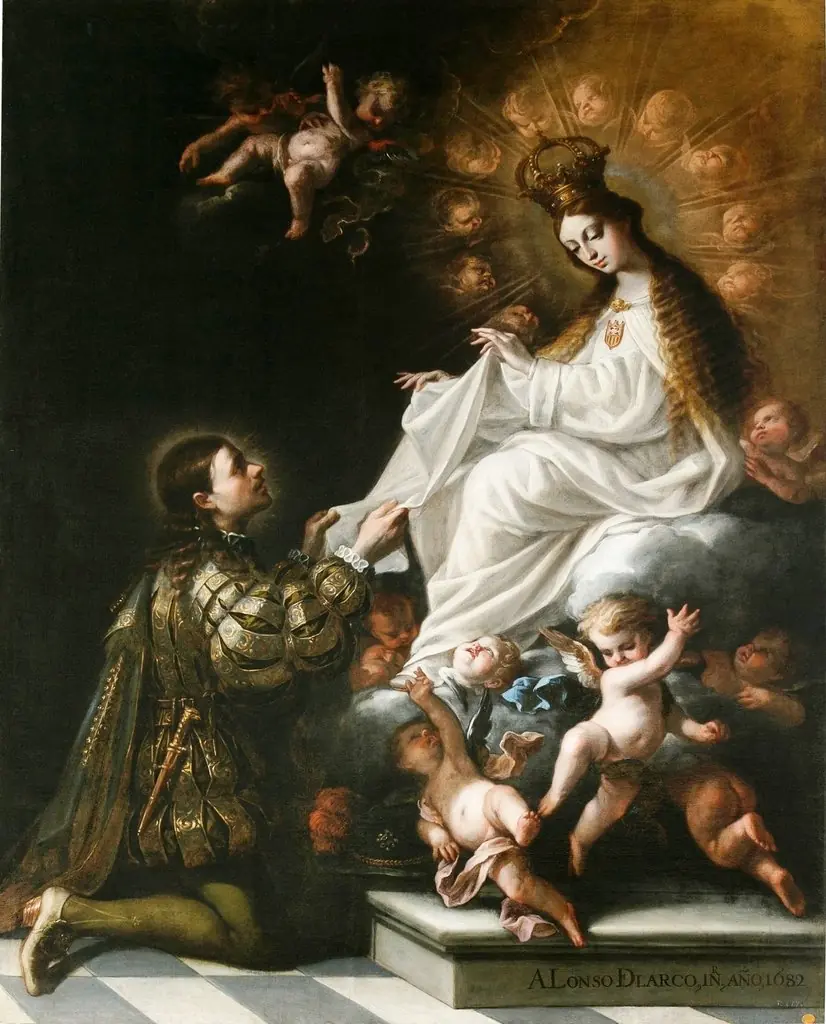 The Virgin of Mercy Appearing to Saint Peter Nolasco
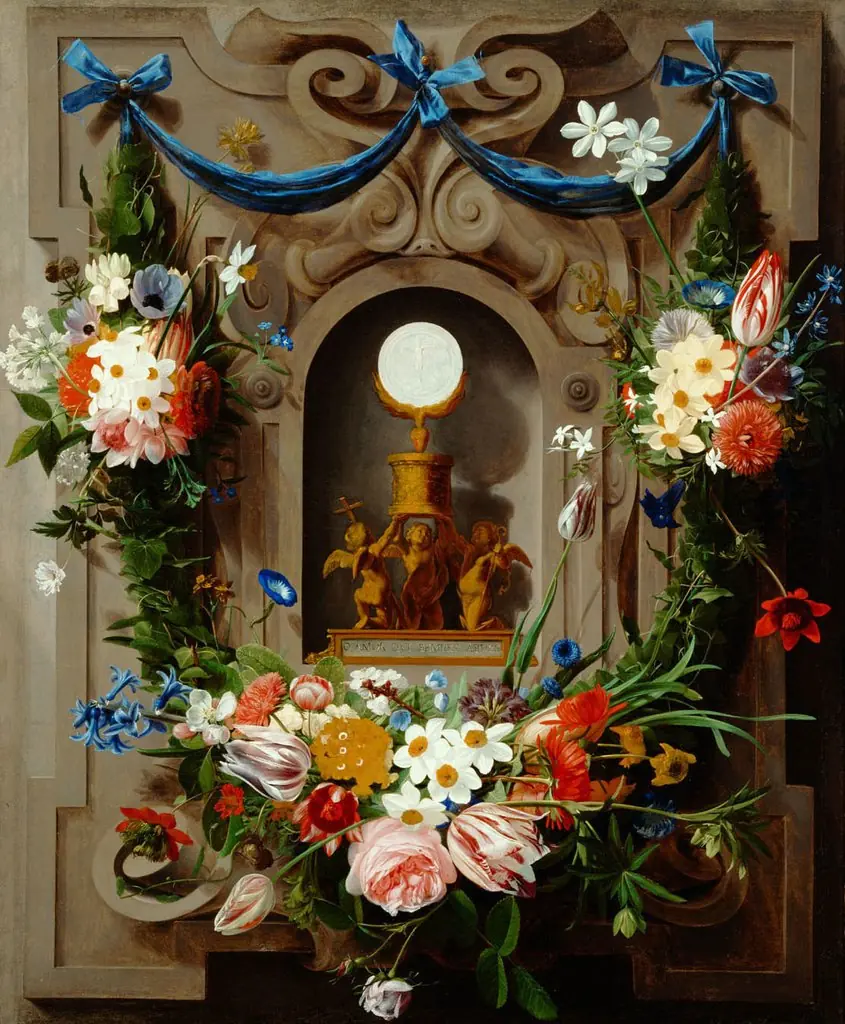
- Eucharist in a Garland