Artwork
The merchant Mansur departs on a sea voyage, leaving his wife behind, from a Tuti-nama (Tales of a Parrot): Seventeenth Night
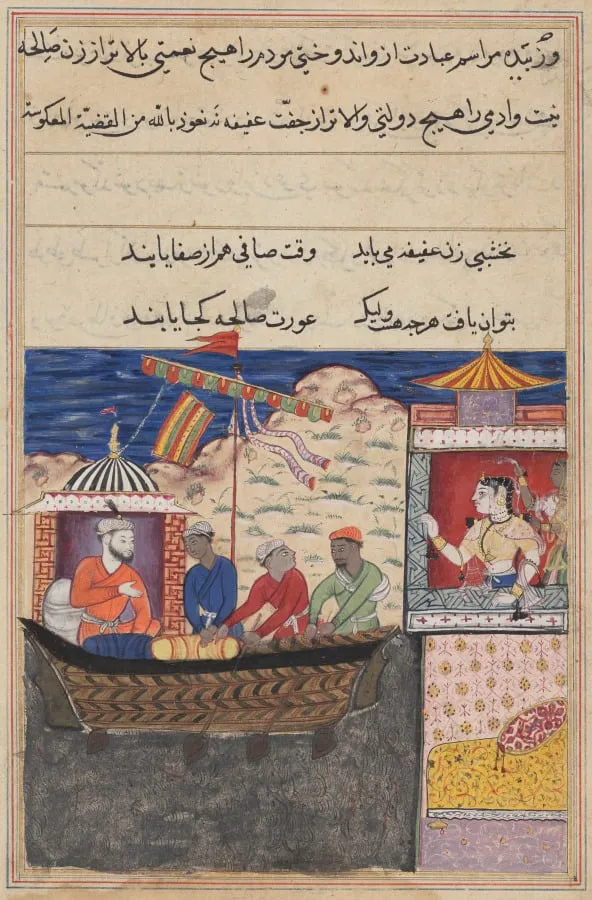
The merchant Mansur departs on a sea voyage, leaving his wife behind, from a Tuti-nama (Tales of a Parrot): Seventeenth Night is an unspecified painting by the Mughal Painting artist Unknown. It dates from 1560 and is held in the collection of the Cleveland Museum of Art.
- Accession no.
- 1962.279.125.b
- Credit line
- Gift of Mrs. A. Dean Perry
About this work
To see more art from this world, look up Mughal India, court of Akbar (reigned 1556–1605).
A merchant in bright orange sits on a ship, waving goodbye. His wife watches from a balcony above, her hands pressed together. Sailors scurry below, readying the vessel for sea.
This painting comes from a book of parrot tales made for Emperor Akbar’s court. The stories were told nightly to delay a queen’s secret meeting, each tale bought time. Here, the merchant’s journey is just one small scene in a much longer story.
To see more art from this world, look up Mughal India, court of Akbar (reigned 1556–1605).
Overview
This 17th-century painting depicts a poignant moment of separation as the merchant Mansur sets sail on a perilous sea voyage, leaving his virtuous and beautiful wife behind. The scene is a single illustration from a Tuti-nama, a collection of nightly tales told to distract a queen, thereby delaying her clandestine meetings.
Subject & Meaning
The painting captures the bittersweet departure of Mansur, a prosperous merchant, as he embarks on a dangerous journey. His wife, known for her beauty and virtue, bids him farewell from a second-story chamber, highlighting the emotional toll of separation on those left behind.
Technique & Style
Executed in the distinctive style of Mughal court art during Akbar's reign, the painting features vibrant colors, notably the merchant's bright orange attire, set against the bustling activity of sailors preparing the ship for departure.
History & Provenance
This painting originated from a Tuti-nama created for Emperor Akbar's court (r. 1556–1605), where such illustrated books were valued for their storytelling and artistic merit. The Tuti-nama's tales served a practical purpose: to occupy a queen and postpone her secret trysts.
Context
Understanding this piece requires knowledge of Mughal India under Akbar, where illustrated manuscripts like the Tuti-nama were integral to courtly life, combining entertainment, moral lessons, and exquisite artistry.
Legacy
As part of Akbar's Tuti-nama, this painting contributes to the broader legacy of Mughal art's fusion of Persian and Indian influences, influencing subsequent artistic traditions in the region.
Artist & collection









- The merchant Mansur departs on a sea voyage, leaving his wife behind, from a Tuti-nama (Tales of a Parrot): Seventeenth Night
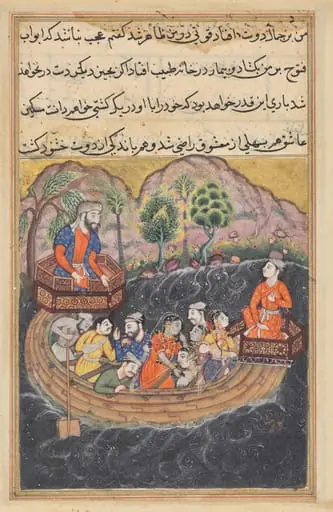 The young man of Baghdad joins the Hashimi’s boat as a sailor to find his slave-girl on board, from a Tuti-nama (Tales of a Parrot): Forty-eighth Night
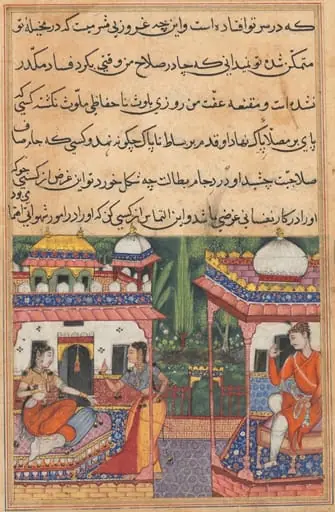 Kaiwan sends a message of love to Khurshid, wife of his brother Utarid who is away on a journey, from a Tuti-nama (Tales of a Parrot): Thirty-second Night
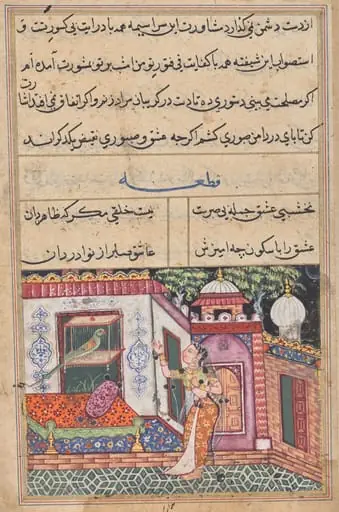 The Parrot Addresses Khujasta at the Beginning of the Eleventh Night, from a Tuti-nama (Tales of a Parrot)
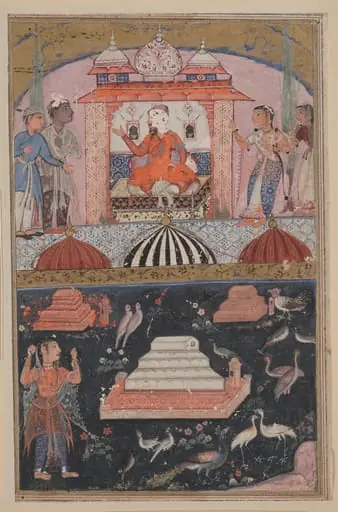 The merchant hears of his wife’s unfaithfulness (above); the unfaithful wife performs penance by plucking her hair (below), from a Tuti-nama (Tales of a Parrot): First Night
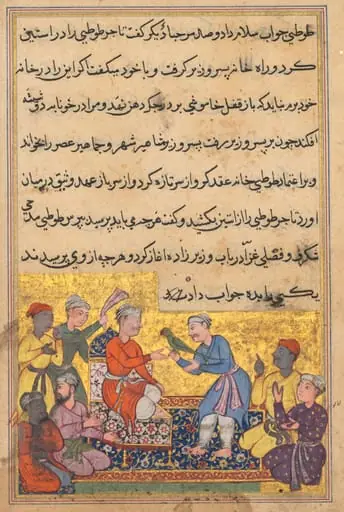 The magic parrot of the merchant talks to the vizier’s son, from a Tuti-nama (Tales of a Parrot): Tenth Night