Artwork
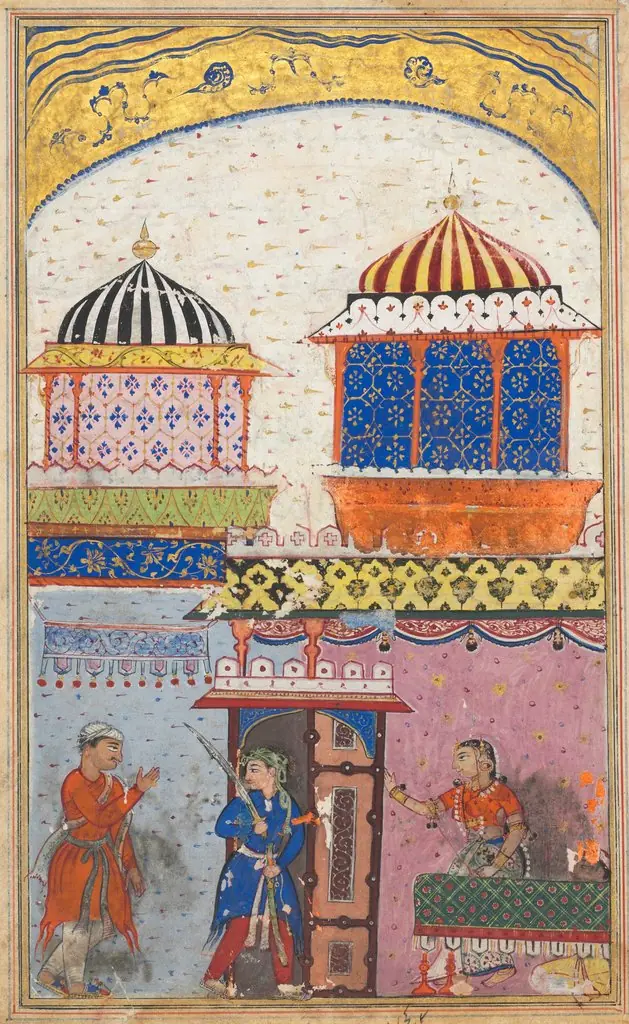
The merchant of Tirmiz takes the wise parrot and myna to ‘Ubaid, from a Tuti-nama (Tales of a Parrot): Forty-second Night
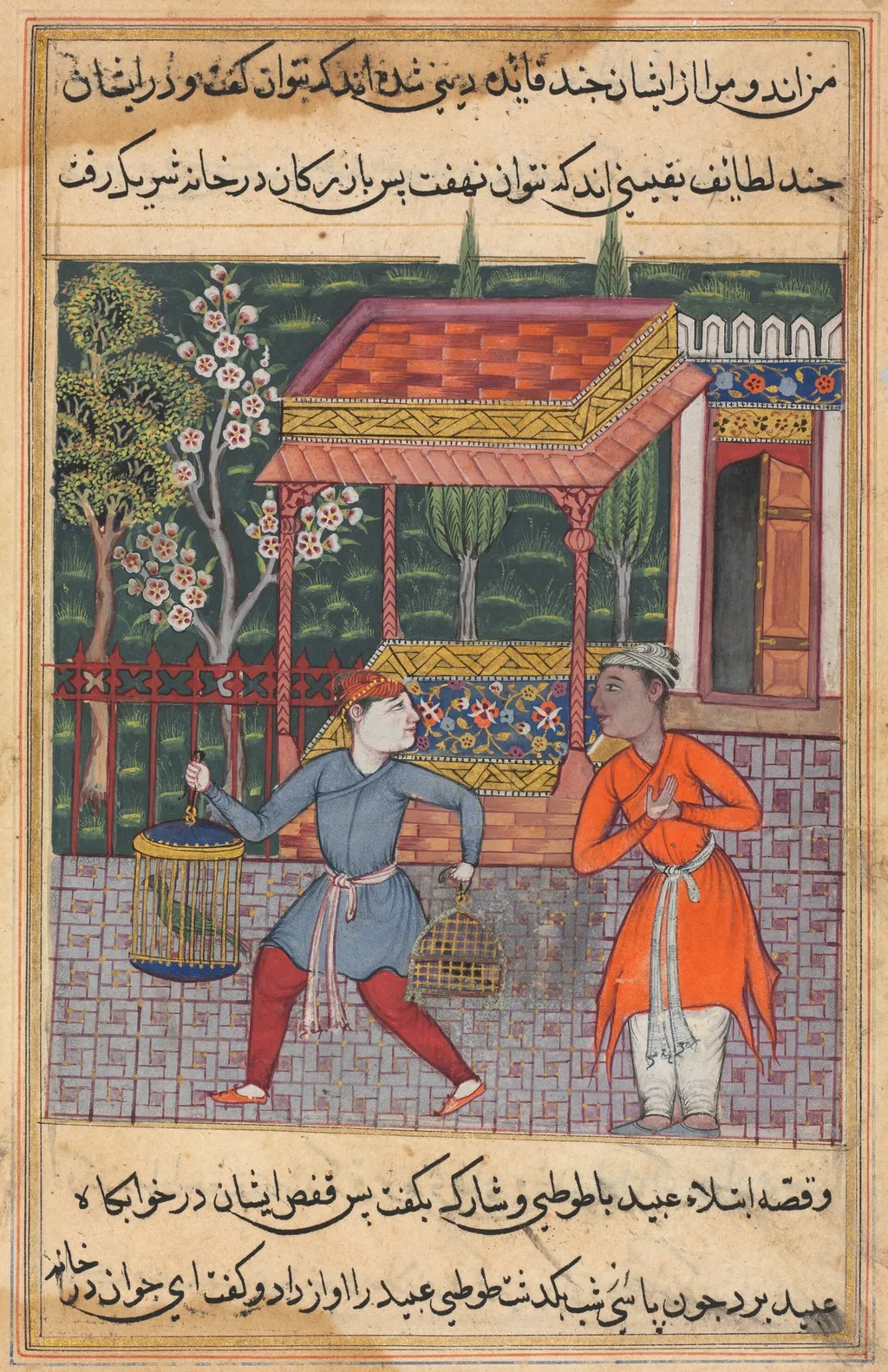
The merchant of Tirmiz takes the wise parrot and myna to ‘Ubaid, from a Tuti-nama (Tales of a Parrot): Forty-second Night is an unspecified painting. It dates from 1560 and is held in the collection of the Cleveland Museum of Art.
About this work
History & Provenance
The work titled The merchant of Tirmiz takes the wise parrot and myna to ‘Ubaid comes from a Tuti-nama (Tales of a Parrot): Forty-second Night. It was created in 1560 in the Mughal Empire and is classified as a painting. The artwork is part of the Cleveland Museum of Art collection and is cataloged under the identifier 1962.279.269.b.
Context
The work is attributed to an anonymous artist active during the mid-sixteenth century, reflecting the stylistic conventions of Mughal court painting.
The painting was created in 1560 within the Mughal Empire and is housed in the Cleveland Museum of Art, where it remains on view. Scholars have analyzed its composition and narrative within the broader context of Persian miniature traditions, noting its role in illustrating the Tuti-nama manuscript. The work is attributed to an anonymous artist active during the mid-sixteenth century, reflecting the stylistic conventions of Mughal court painting.
Overview
The work illustrates a scene from the Persian narrative collection Tuti‑nama, specifically the forty‑second night in which a merchant from Tirmiz presents a wise parrot and myna to a figure named Ubaid. Two figures in vivid garments stand before an elaborately decorated pavilion, one clutching a small cage, a drum, and a stick, while the other leans on a staff, listening attentively.
Subject & Meaning
The painting captures a moment of storytelling, emphasizing the exchange of exotic birds as symbols of wisdom and entertainment in medieval Persian culture. The interaction between the merchant and his audience reflects the didactic purpose of the Tuti‑nama, where animal characters often convey moral lessons.
Technique & Style
Rendered in bright, saturated colors, the composition features a tiled floor, a flowering tree behind a red fence, and a pavilion roof adorned with geometric patterns. The figures are outlined with fine brushwork, and the surrounding inscription appears in an Arabic‑style script, reinforcing the narrative’s setting.
Artist & collection

- The merchant of Tirmiz takes the wise parrot and myna to ‘Ubaid, from a Tuti-nama (Tales of a Parrot): Forty-second Night
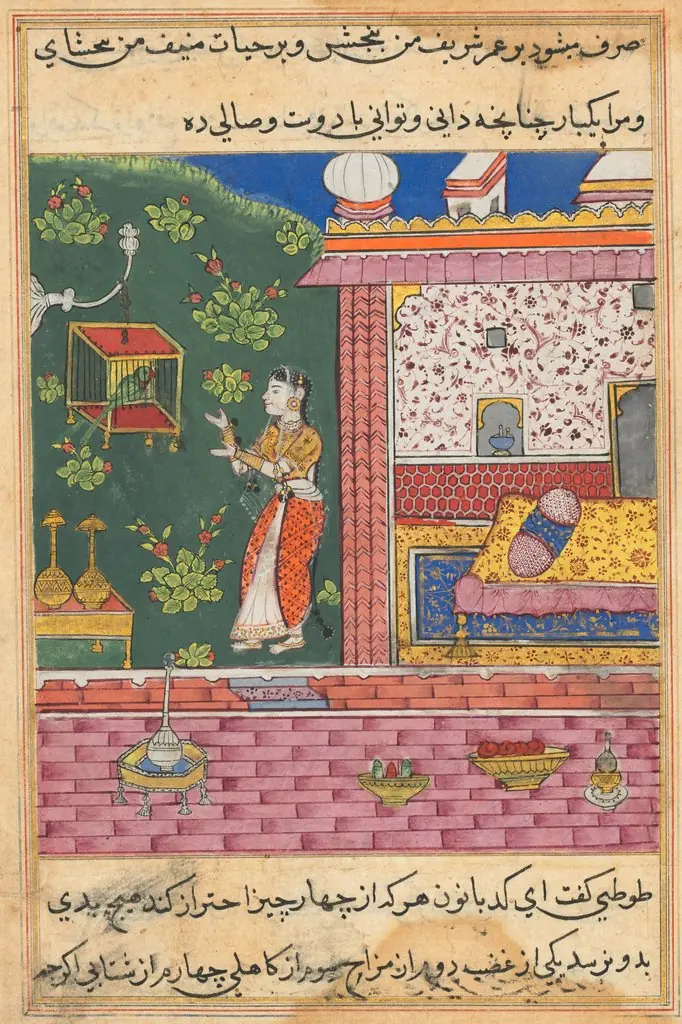 The Parrot Addresses Khujasta at the Beginning of the Thirtieth Night, from a Tuti-nama (Tales of a Parrot)
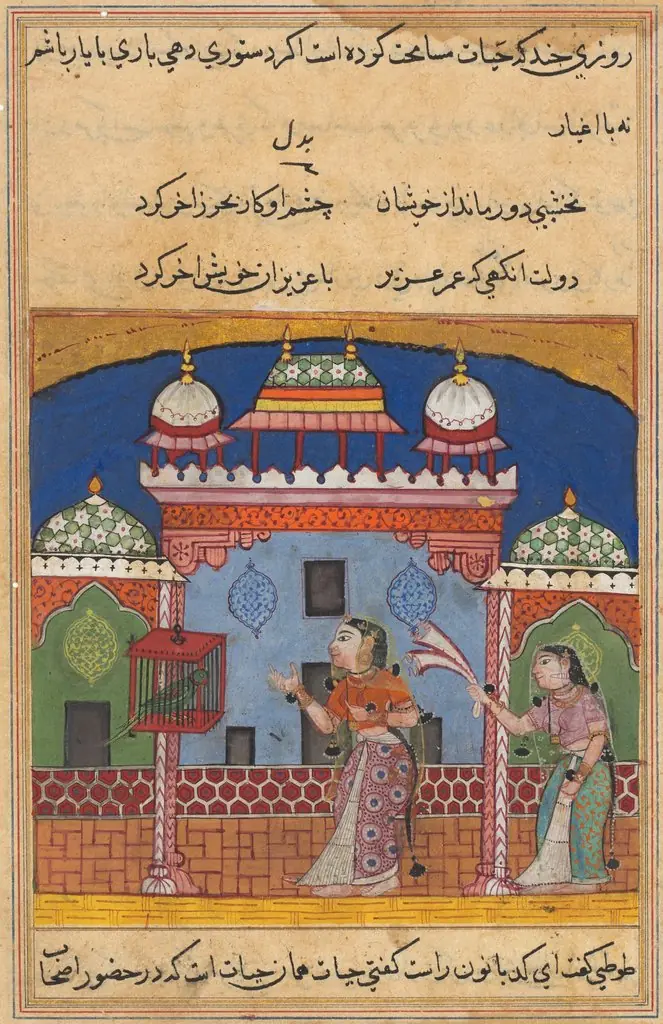 The Parrot Addresses Khujasta at the Beginning of the Twenty-second Night, from a Tuti-nama (Tales of a Parrot)
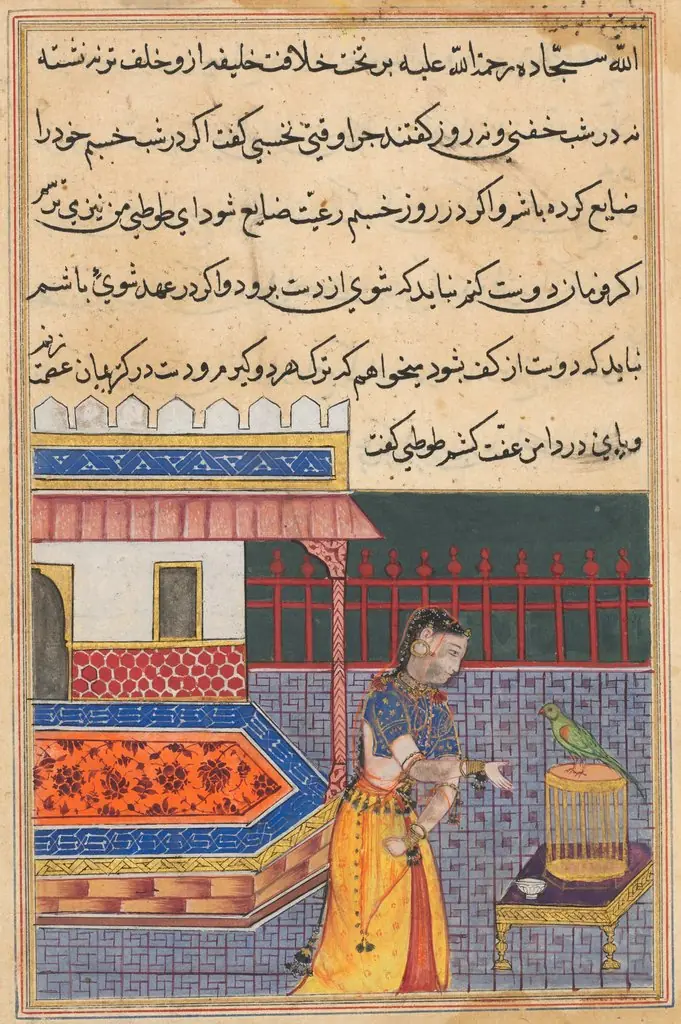 The parrot addresses Khujasta at the beginning of the forty-first night, from a Tuti-nama (Tales of a Parrot): Forty-first Night
 The parrot addresses Khujasta at the beginning of the forty-first night, from a Tuti-nama (Tales of a Parrot): Forty-first Night
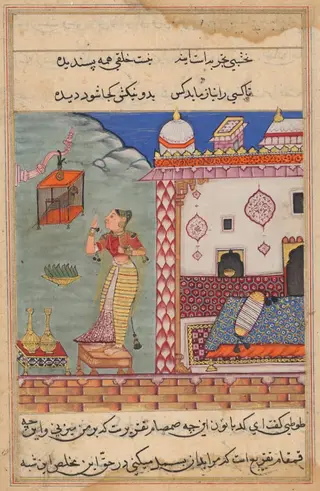 The Parrot Addresses Khujasta at the Beginning of the Twenty-seventh Night, form a Tuti-nama (Tales of a Parrot)
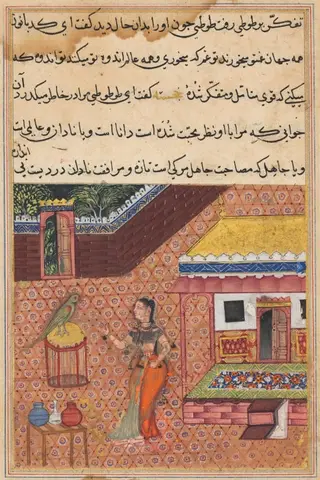 The parrot addresses Khujasta at the beginning of the thirty-fourth night, from a Tuti-nama (Tales of a Parrot)
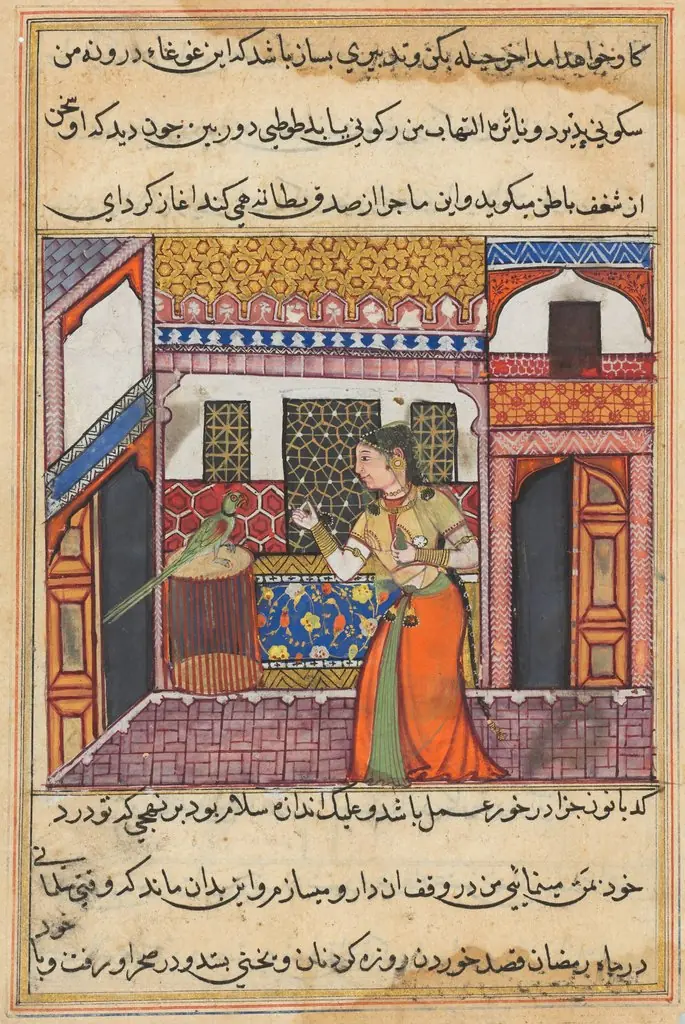 The parrot addresses Khujasta at the beginning of the forty-third night, from a Tuti-nama (Tales of a Parrot)
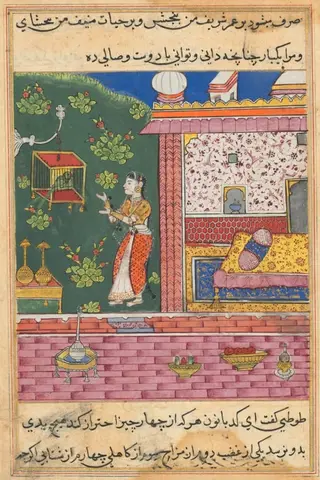 The Parrot Addresses Khujasta at the Beginning of the Thirtieth Night, from a Tuti-nama (Tales of a Parrot)
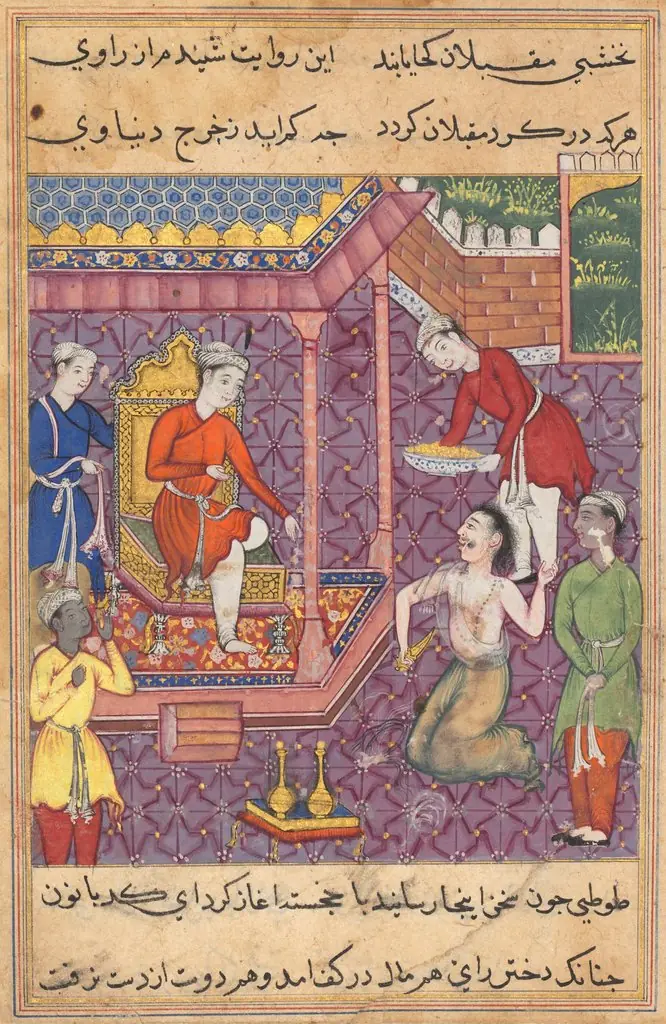 The magician disguised as a Brahman returns to claim his “daughter-in-law,” from a Tuti-nama (Tales of a Parrot): Thirty-fifth Night
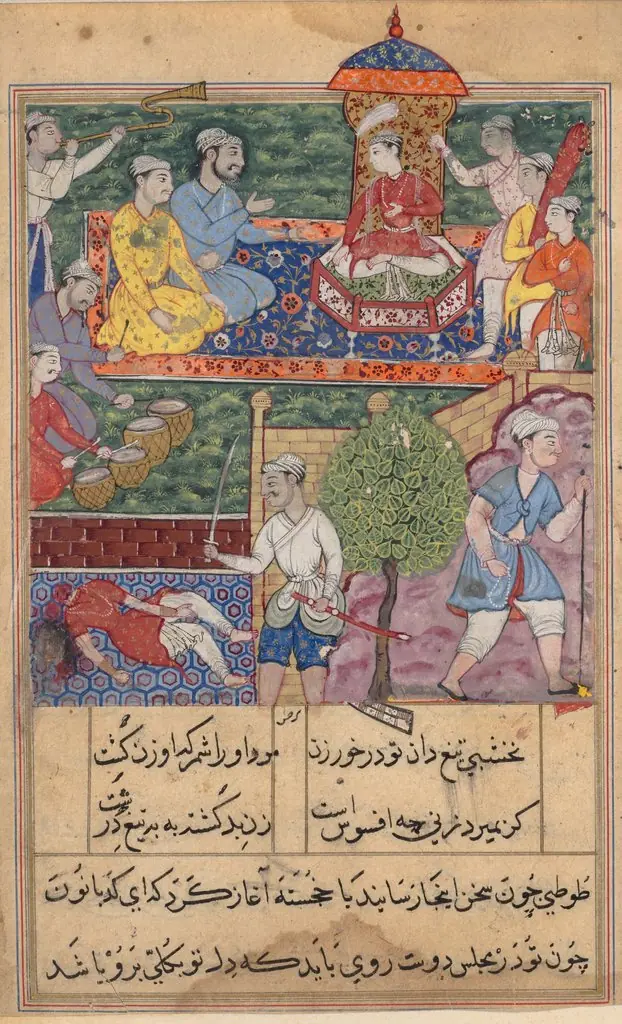 Page from Tales of a Parrot (Tuti-nama): text page
 A woman asks her lover to leave her house, brandishing his sword and feigning rage in order to deceive her husband who has just arrived, from a Tuti-nama (Tales of a Parrot): Eighth Night