Artwork
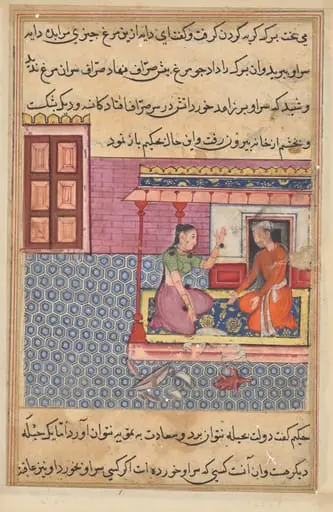
The merchant of Tirmiz takes the wise parrot and myna to ‘Ubaid, from a Tuti-nama (Tales of a Parrot): Forty-second Night
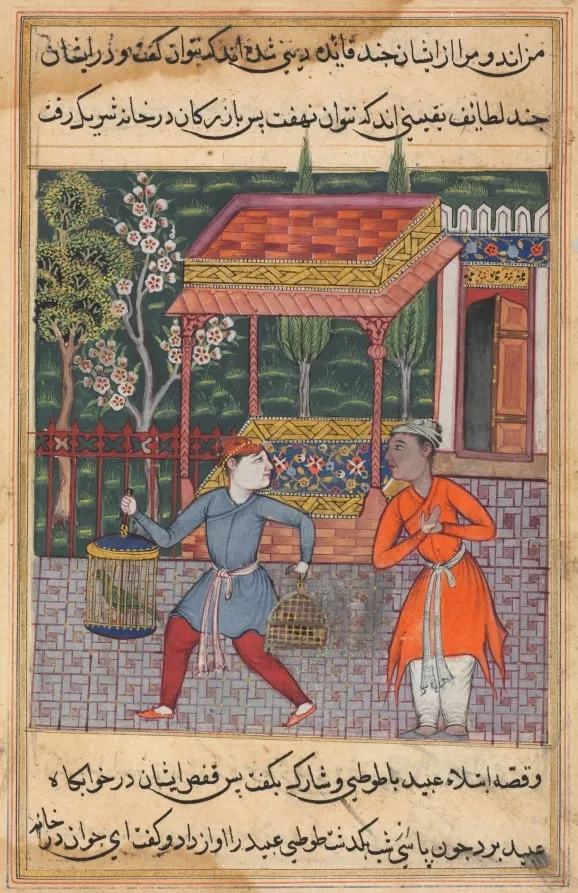
The merchant of Tirmiz takes the wise parrot and myna to ‘Ubaid, from a Tuti-nama (Tales of a Parrot): Forty-second Night is an unspecified painting by the Mughal Painting artist Unknown. It dates from 1560 and is held in the collection of the Cleveland Museum of Art.
- Accession no.
- 1962.279.269.b
- Credit line
- Gift of Mrs. A. Dean Perry
About this work
This painting comes from a book of stories told by a parrot to delay its owner’s wife from meeting her lover.
You see a man in a blue robe rushing down a path, two caged birds in his hands. His friend in orange walks beside him, pointing ahead.
This painting comes from a book of stories told by a parrot to delay its owner’s wife from meeting her lover. The birds here are meant to give wise advice to the merchant’s lovesick son. The bright colors and fine details show how much care went into even small illustrations in Mughal India.
To see more art like this, look up Mughal India, court of Akbar (reigned 1556–1605).
Overview
This miniature painting illustrates a scene from the Tuti-nama, a collection of frame stories in which a parrot narrates tales to distract its owner’s wife from illicit meetings. Here, a merchant from Tirmiz carries two caged birds, a parrot and a myna, along a path, accompanied by a companion in orange. The urgency of their movement suggests the importance of delivering the birds to ‘Ubaid, the merchant’s son, whose obsessive love for his wife requires intervention.
Subject & Meaning
The parrot and myna are not mere pets but symbolic advisors, believed to possess wisdom capable of guiding ‘Ubaid away from destructive passion. The merchant’s haste reflects the gravity of his son’s emotional state, while the companion’s gesture toward the destination underscores the communal expectation of moral correction. The birds function as instruments of counsel, embodying the narrative’s broader theme: reason over desire.
Technique & Style
Executed in the Mughal court style under Akbar, the painting features precise brushwork, vivid mineral pigments, and intricate detailing in textiles and landscape. Figures are rendered with subtle modeling, and the path winds through stylized vegetation, blending naturalism with decorative convention. The composition directs the viewer’s eye along the figures’ motion, emphasizing narrative momentum over spatial realism.
History & Provenance
Created in the late 16th century for the imperial atelier of Emperor Akbar, this folio belonged to a manuscript commissioned to translate and illustrate the Sanskrit Vetala Panchavimshati. The Tuti-nama series, comprising over 250 miniatures, was produced by a team of artists under royal patronage, reflecting Akbar’s interest in cross-cultural storytelling and visual pedagogy.
Context
In Mughal India, illustrated manuscripts served both entertainment and moral instruction, often blending Persian, Indian, and Islamic traditions. The Tuti-nama’s use of talking animals to explore human folly aligned with Sufi and courtly literary norms. Such works reinforced ideals of self-control and familial duty, particularly relevant in elite households where emotional excess could threaten social order.
Legacy
The Tuti-nama remains one of the most extensive illustrated manuscripts of its time, influencing later Mughal painting through its narrative structure and stylistic synthesis. Its survival in fragments across global collections highlights the dispersal of imperial collections after the 18th century, yet its artistic coherence continues to inform studies of Indo-Persian visual culture.
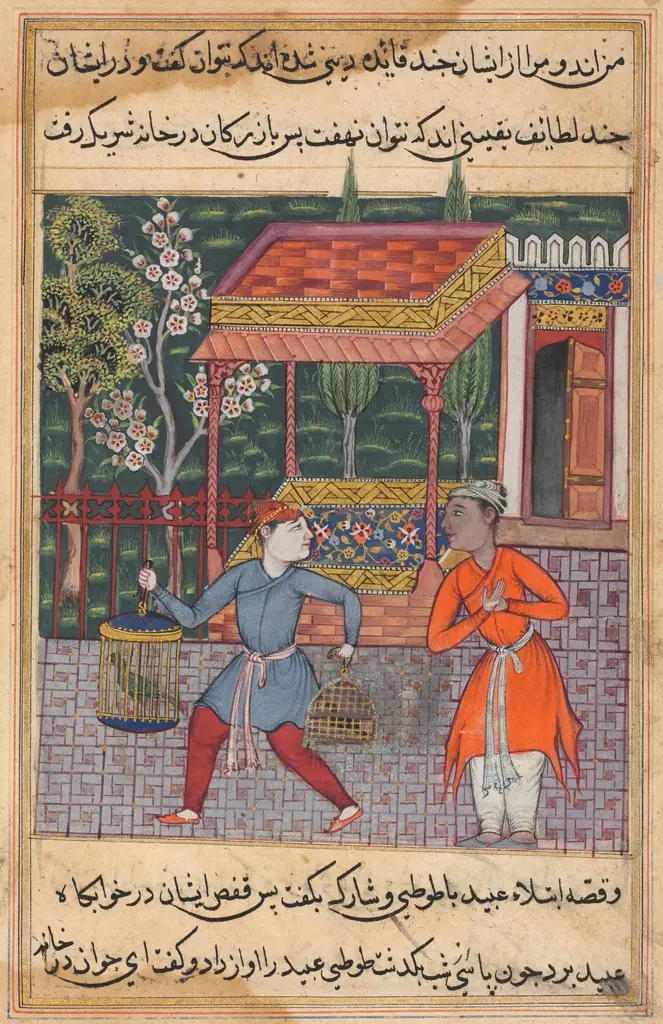
Artist & collection









- The merchant of Tirmiz takes the wise parrot and myna to ‘Ubaid, from a Tuti-nama (Tales of a Parrot): Forty-second Night
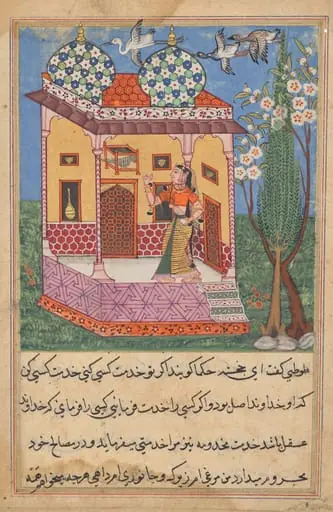 The Parrot Addresses Khujasta at the Beginning of the Twenty-sixth Night, from a Tuti-nama (Tales of a Parrot)
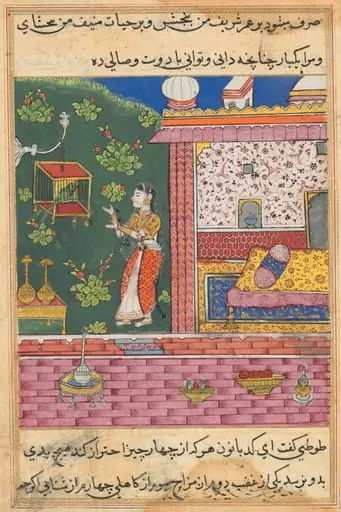 The Parrot Addresses Khujasta at the Beginning of the Thirtieth Night, from a Tuti-nama (Tales of a Parrot)
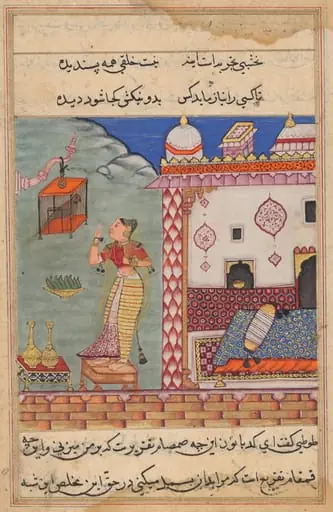 The Parrot Addresses Khujasta at the Beginning of the Twenty-seventh Night, form a Tuti-nama (Tales of a Parrot)
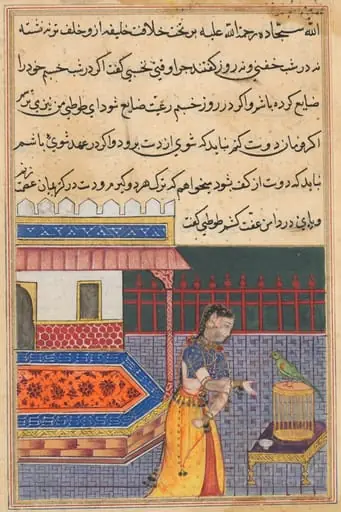 The parrot addresses Khujasta at the beginning of the forty-first night, from a Tuti-nama (Tales of a Parrot): Forty-first Night
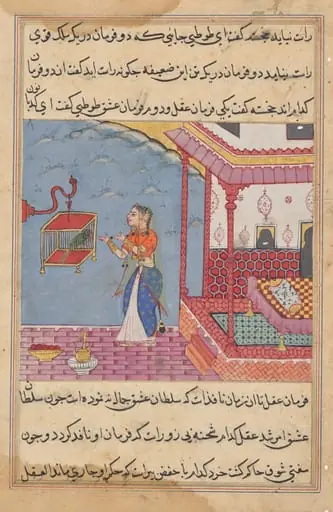 The Parrot Addresses Khujasta at the Beginning of the Twenty-Fourth Night, from a Tuti-nama (Tales of a Parrot)
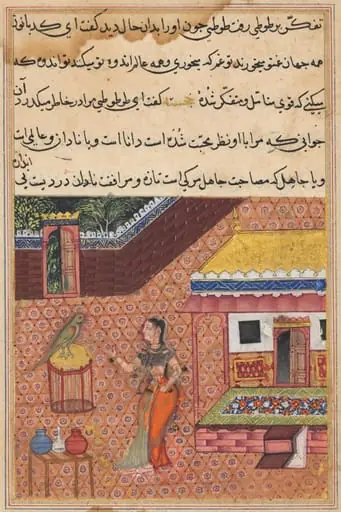 The parrot addresses Khujasta at the beginning of the thirty-fourth night, from a Tuti-nama (Tales of a Parrot)
 The pious man’s wife offers the seven-colored bird as food to her lover, but not finding its head, he breaks the pot and bowl in anger, from a Tuti-nama (Tales of a Parrot): Fifty-second Night