Artwork
竹取物語|The Tale of the Bamboo Cutter
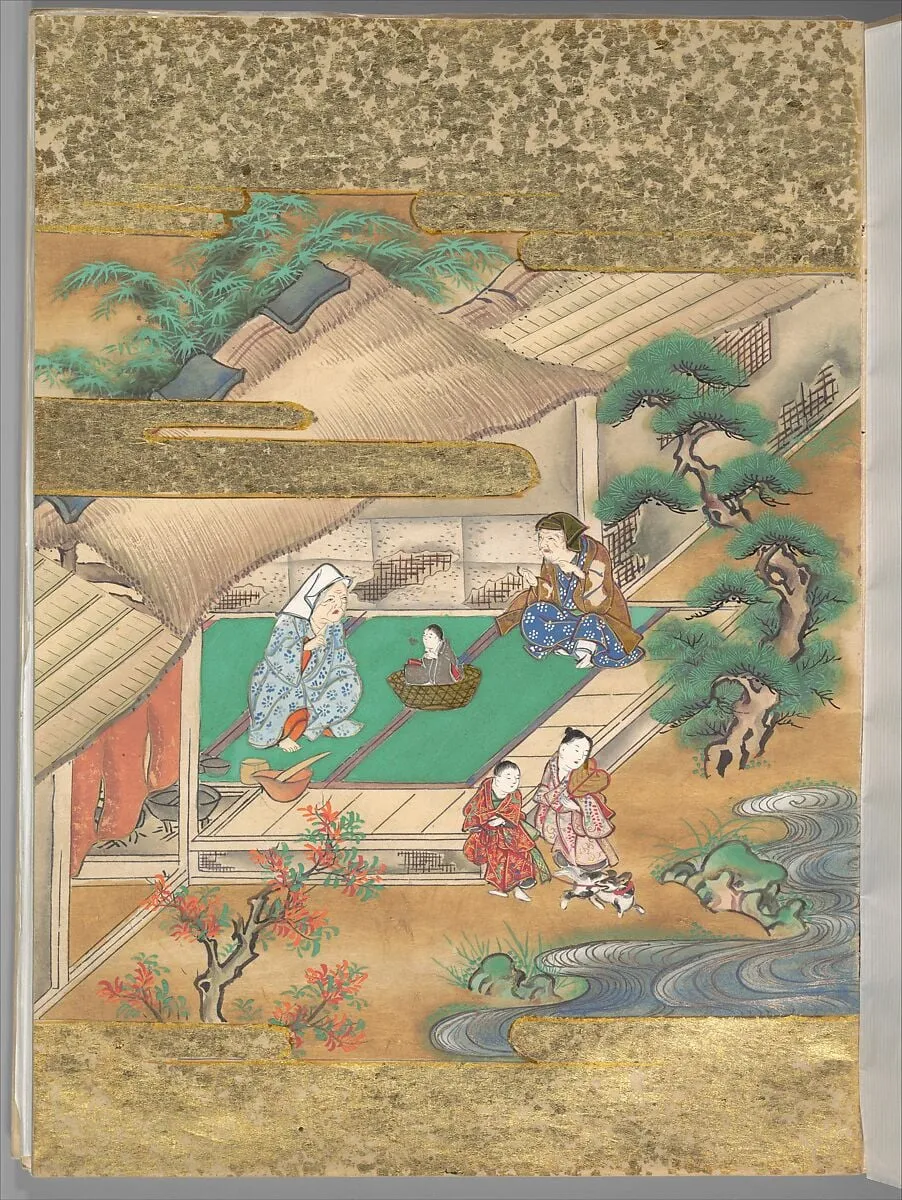
竹取物語|The Tale of the Bamboo Cutter is an ink painting. It dates from 1683 and is held in the collection of the Metropolitan Museum of Art.
About this work
An early picture-book version of The Tale of the Bamboo Cutter, Japan's oldest story: a tiny girl glows inside a bamboo stalk, lifted by an old man as villagers watch, a dog sniffing the air and robed women bowing. Gold and silver dust make the bamboo shine like moonlight. Unknown artist, 1683.
Subject & Meaning
The illustrated set depicts scenes drawn from the Japanese literary classic "The Tale of the Bamboo Cutter" (Taketori Monogatari), a foundational work of Japanese narrative tradition. The volumes portray human figures of both sexes together with an infant and a dog, suggesting that the hand-illustrated pages render key narrative episodes from the tale, including the discovery of the infant princess Kaguya-hime within a bamboo stalk and her life among human companions. The combination of ink, color, gold, and silver on paper reflects the luxurious production associated with late seventeenth-century Japanese illustrated books, where the legendary subject matter was treated as a vehicle for refined pictorial storytelling rather than overt symbolic allegory.
Technique & Style
The stylized line work and restrained palette reflect contemporary aesthetic conventions of Japanese narrative painting.
The Tale of the Bamboo Cutter is a hand‑illustrated set of three volumes produced in Japan in 1683. Each leaf is rendered in ink with additional color, gold and silver pigments applied to paper, creating a luminous surface characteristic of Edo‑period illustration. The work measures approximately 23.2 cm in height by 16.7 cm in width and is classified as a painting within the Metropolitan Museum of Art collection.
Compositionally, the scenes combine narrative clarity with subtle tonal gradations, while the use of metallic highlights accentuates key figures such as the infant and the celestial woman. The stylized line work and restrained palette reflect contemporary aesthetic conventions of Japanese narrative painting.
History & Provenance
The extant illustrated set of The Tale of the Bamboo Cutter held by the Metropolitan Museum of Art dates to 1683. Created in Japan, this hand-illustrated work consists of three volumes executed in ink, color, gold, and silver on paper. The artist remains anonymous, with no specific commissioning patron or detailed creation history recorded in the available documentation.
The work depicts various figures including men, women, infants, and a dog. Measuring 23.2 centimeters in height and 16.7 centimeters in width, the volumes represent a specific Edo-period interpretation of the classic narrative rather than the original medieval manuscript. The current ownership chain places the set within the permanent collection of the Metropolitan Museum of Art, where it is classified as a painting.
Overview
This three-volume, hand-illustrated work presents an early visual interpretation of The Tale of the Bamboo Cutter, recognized as Japan's most ancient narrative. Rendered with ink, color, gold, and silver on paper, these paintings constitute one of the earliest known picture-book adaptations of the classic story. The intricate illustrations bring the foundational Japanese fairy tale to life across its pages.
Context
As an early illustrated rendition of The Tale of the Bamboo Cutter, this work holds significance in the history of Japanese visual storytelling. It represents a foundational example of a picture book, translating the nation's oldest known fairy tale into a visual format for a wider audience. The complete three-volume set is preserved within the collection of The Metropolitan Museum of Art.
Artist & collection

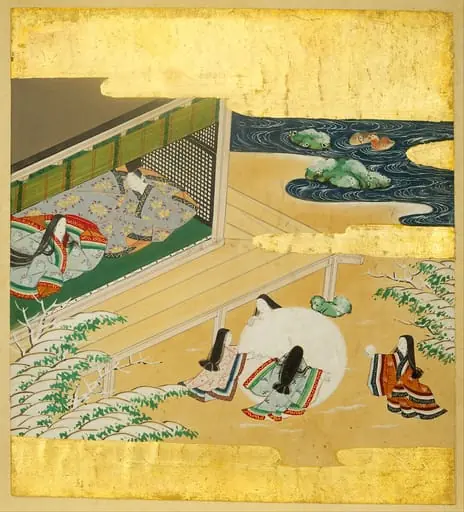 源氏物語画帖|The Tale of Genji (Genji Monogatari)
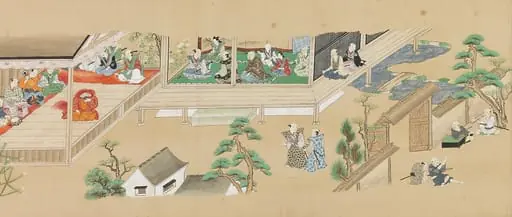 能楽風俗図絵巻|Six Noh Performances in Scenes from Daily Life
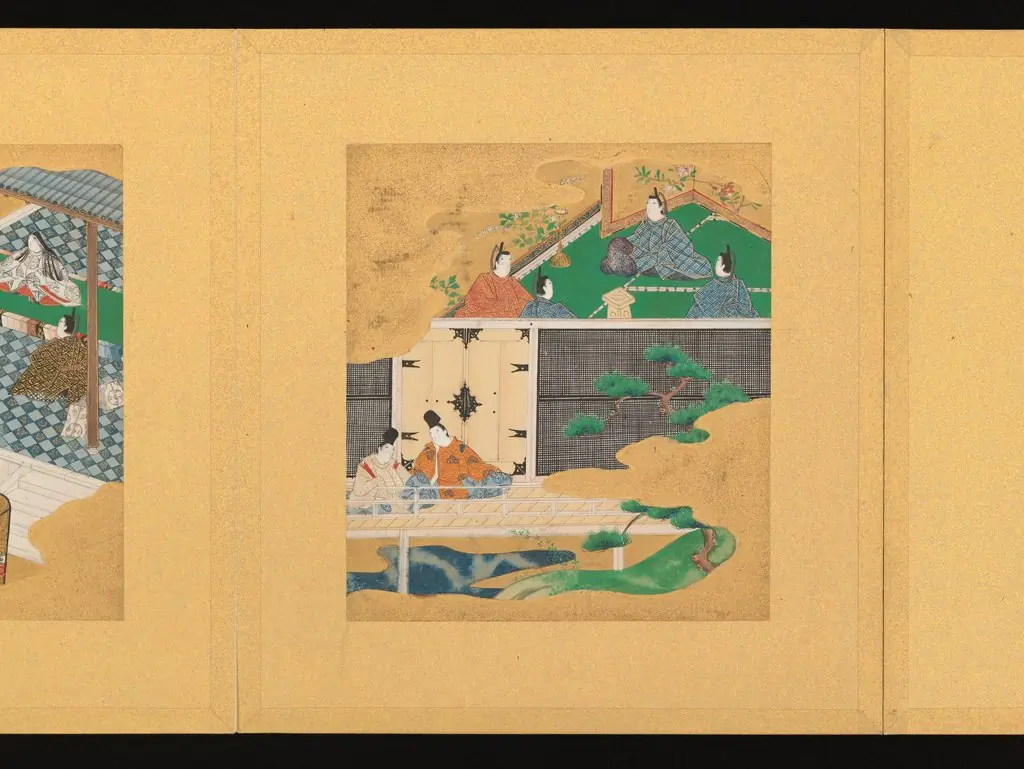 Scenes from The Tale of Genji (Genji monogatari)
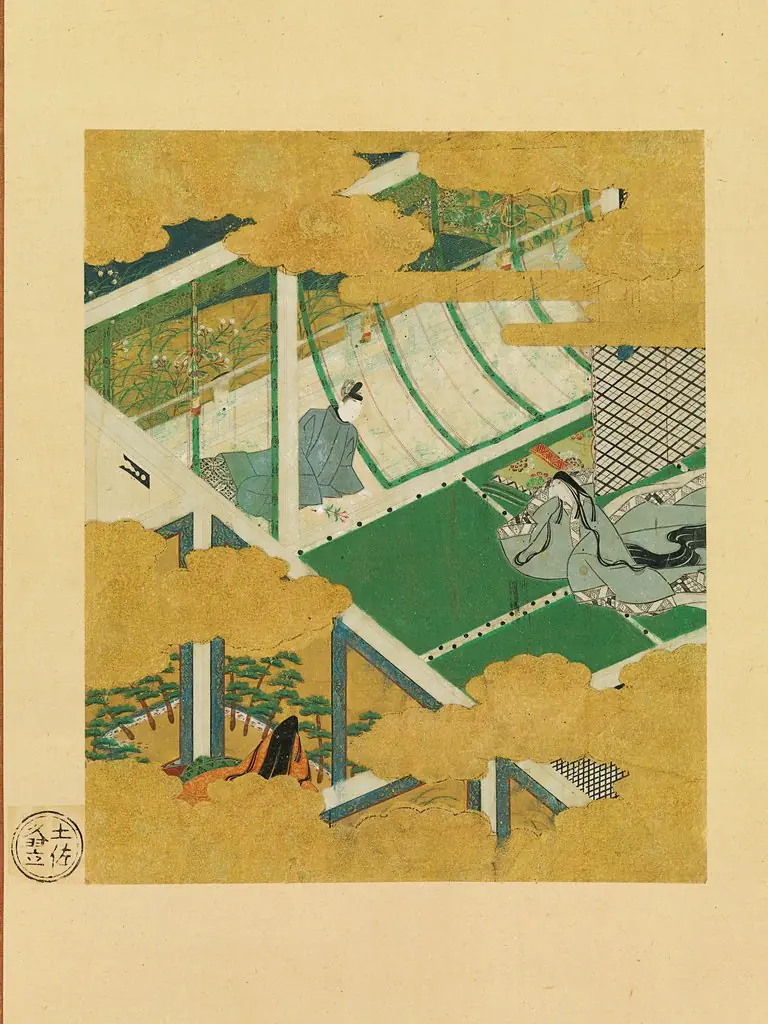 “Mistflowers” (Fujibakama)
 Drinking a Cup of Wine Before Retiring for Bed (From an Untitled Series)
 Untitled
 Group Pilgrimage to the Jizo Nun
 Nagisa Palace from the Tales of Ise
 Untitled
 Section of Jin'o-ji Engi Emaki (Konin Shonin E-den)
 Untitled
- 伝海北友雪筆 『源氏物語』 絵巻|The Tale of Genji