Artwork
The Translation of the Holy House of Loreto
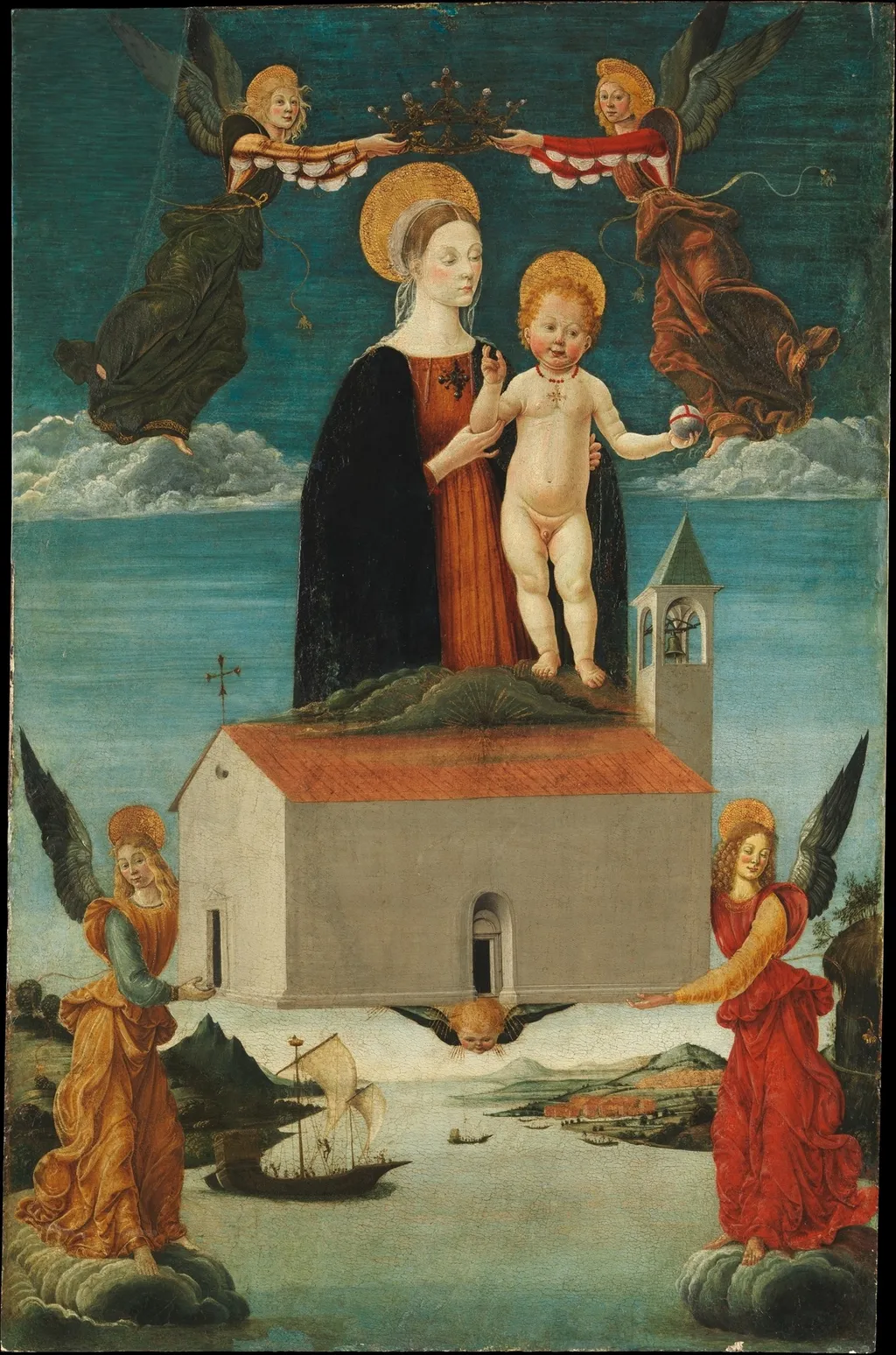
The Translation of the Holy House of Loreto is a tempera painting. It dates from 1510 and is held in the collection of the Metropolitan Museum of Art.
About this work
Subject & Meaning
The central iconography features the sacred dwelling of the Virgin Mary, shown as a distinct architectural structure being transported across the sea.
Created in 1510, this religious panel depicts the miraculous Translation of the Holy House of Loreto. The central iconography features the sacred dwelling of the Virgin Mary, shown as a distinct architectural structure being transported across the sea. Within or associated with this holy house are figures of the Madonna and Child, emphasizing the sanctity of the site as the traditional home of Jesus.
Angels are also present in the composition, symbolizing divine intervention and the supernatural nature of the house's flight from Nazareth to Italy. The use of tempera and gold leaf on wood underscores the work's function as a devotional object, visually narrating the legend that the angels carried the house to protect it from destruction, thereby establishing it as a major site of Christian pilgrimage.
Technique & Style
The panel is executed in tempera on wood, with applied gold leaf used for the haloes and decorative accents, consistent with early sixteenth-century Italian practice. The composition is organized in two registers: the upper half depicts the miraculous translation of the Holy House by angels, while the lower half shows the structure borne by a boat under human guidance. Handling is precise and linear, with crisp drapery folds and delicate modeling of faces and hands, typical of Saturnino Gatti's refined style. The panel measures 84.5 cm in height and 54.9 cm in width.
History & Provenance
The work was created around 1510, attributed to Saturnino Gatti. It entered the collection of the Metropolitan Museum of Art via successive owners: first J. Pierpont Morgan, then his son John Pierpont Morgan, Jr., and finally The Morgan Library & Museum, from which it was transferred to the Metropolitan Museum. The painting's tempera and gold leaf on wood support align with early sixteenth-century central Italian techniques, consistent with Gatti's documented practice in the region.
It was included in the Loan Exhibition of the Arts of the Italian Renaissance, marking a documented instance of its public display.
Overview
This painting, titled The Translation of the Holy House of Loreto, is executed on wood. It depicts a central female figure holding a child, surrounded by four angels. The scene features a small white building, seemingly airborne, with a cross atop it.
A serene blue sky with clouds and a distant boat on water complete the background, establishing a miraculous event in a natural setting.
Artist & collection

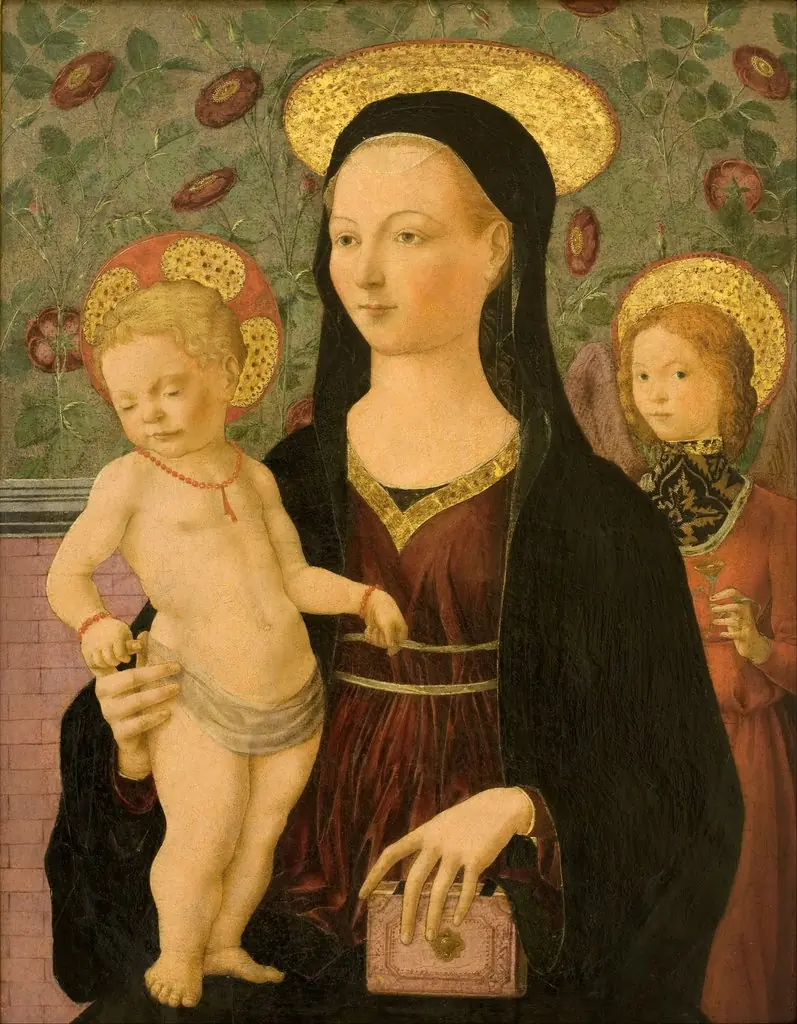
- Virgin and Child with an Angel
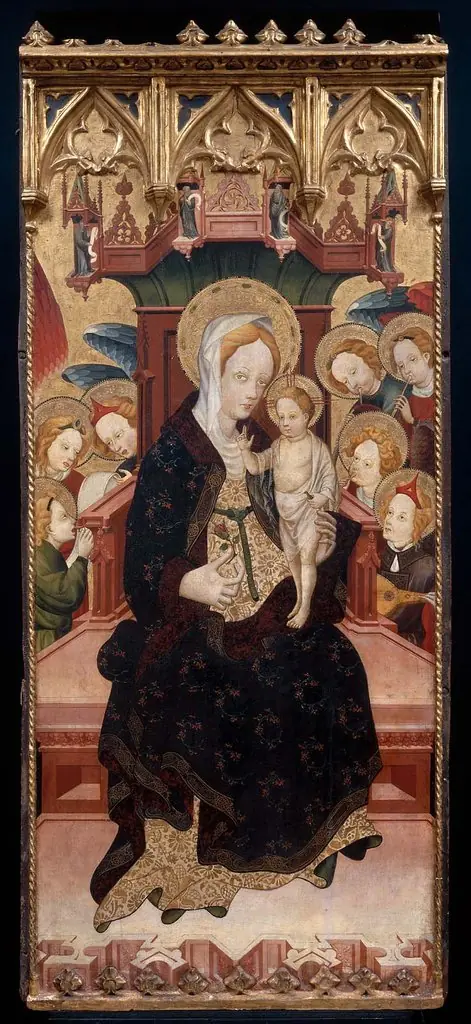 Virgin and Child Enthroned
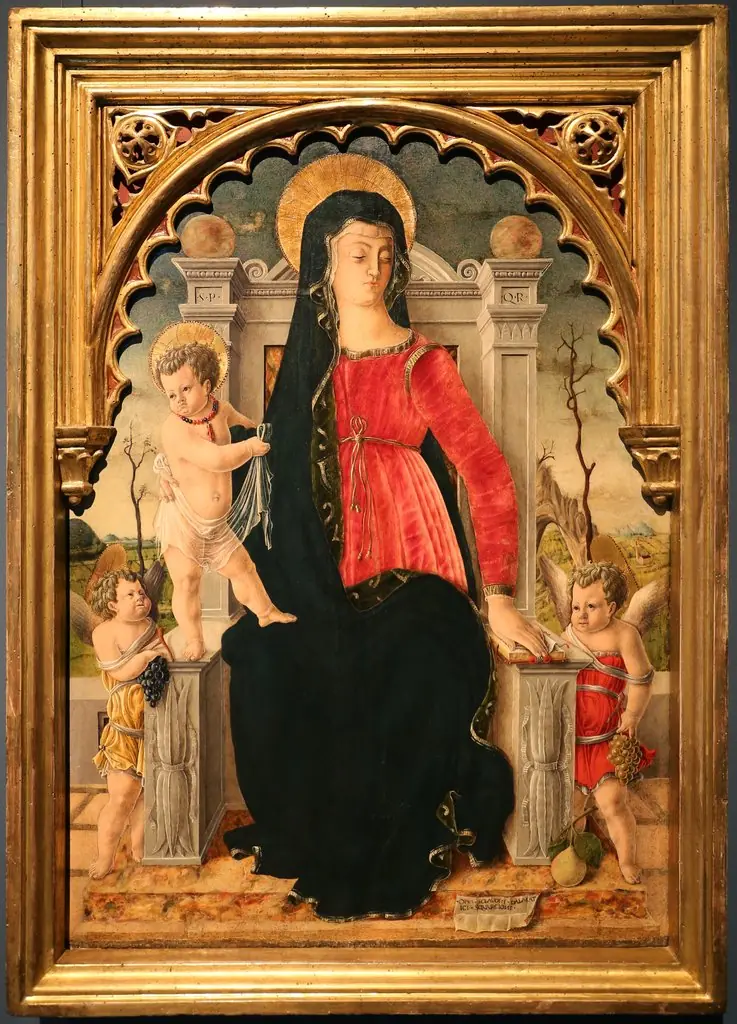 Virgin and Child enthroned with Angels
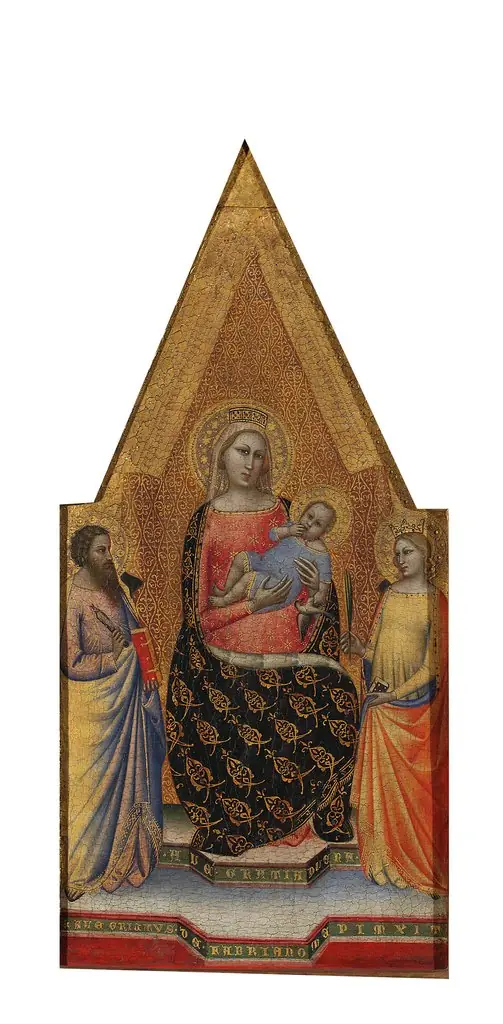 Madonna and Child enthroned with two Saints, Crucifixion
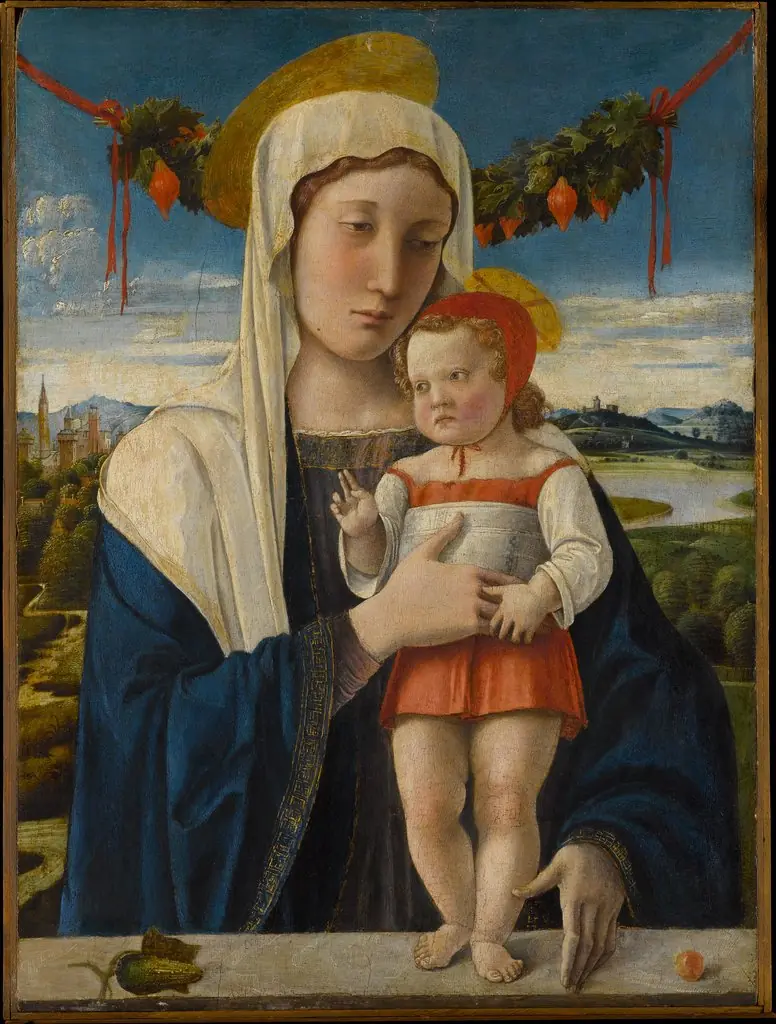 Lehman Madonna
 Madonna of Humility
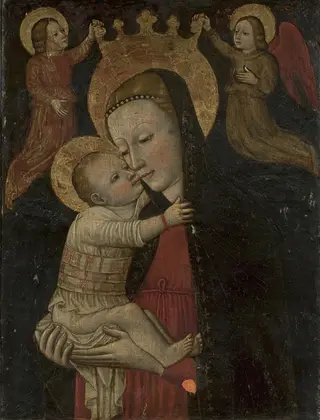 Madonna and Child with Angels
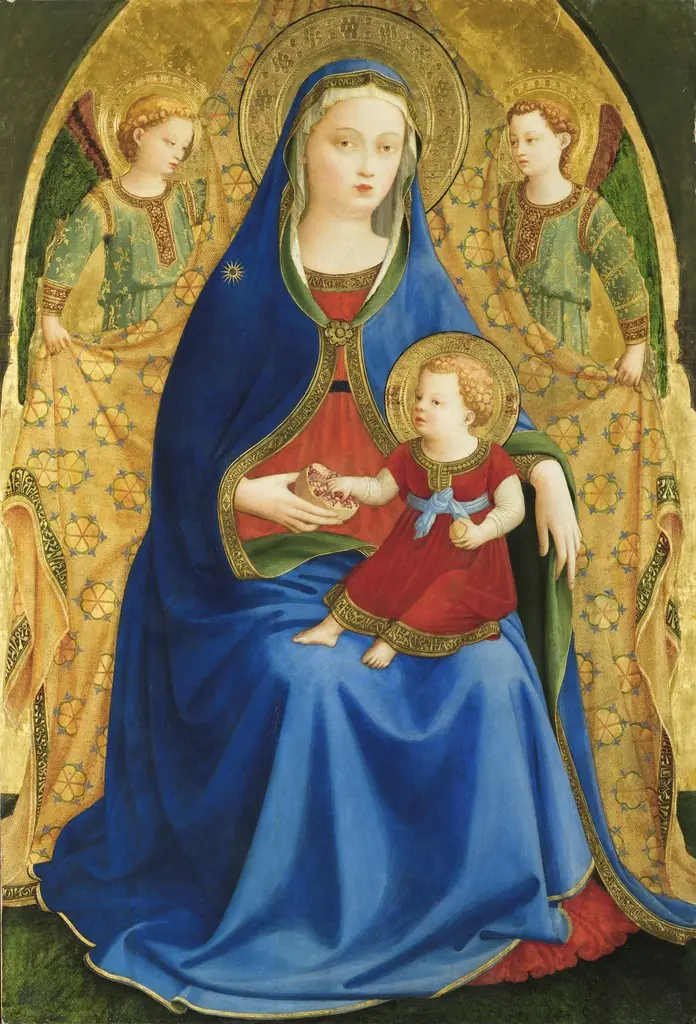 Madonna of the Pomegranate
 Virgin and Child with Butterflies
 Madonna Adoring the Child with Musical Angels
 Madonna and Child with Angels
 Madonna and Child