Artwork
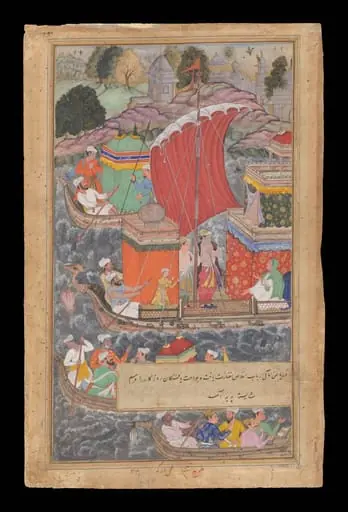
The young man of Baghdad reveals his true identity to the Hashimi, from a Tuti-nama (Tales of a Parrot: Forty-eighth Night
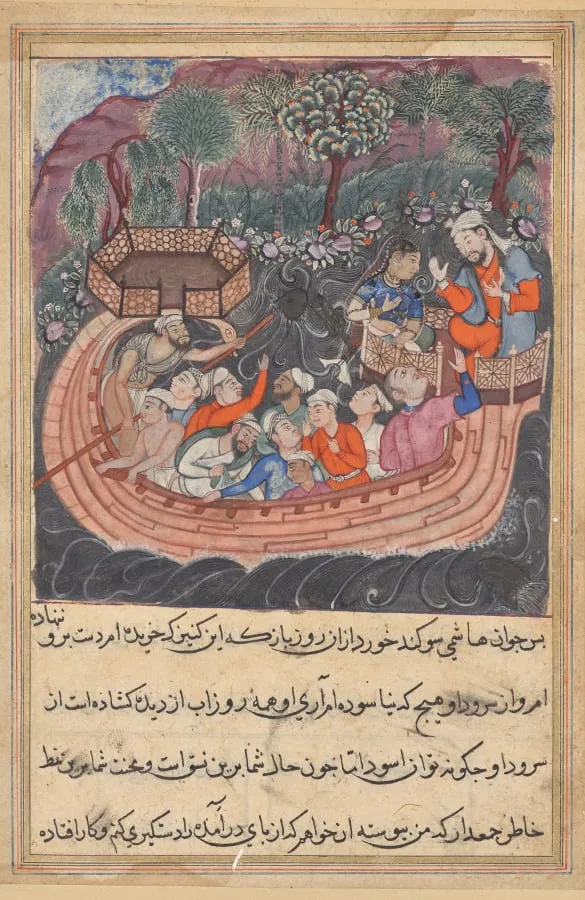
The young man of Baghdad reveals his true identity to the Hashimi, from a Tuti-nama (Tales of a Parrot: Forty-eighth Night is an unspecified painting by the Mughal Painting artist Unknown. It dates from 1560 and is held in the collection of the Cleveland Museum of Art.
- Accession no.
- 1962.279.308.b
- Credit line
- Gift of Mrs. A. Dean Perry
About this work
The story is about love, loss, and a surprise reunion, here, the woman’s singing is so moving that nature joins in.
A young man stands on a ship’s deck, shouting to a nobleman while a woman weeps beside him. Birds circle above, and fish leap from the waves, as if the sea itself is listening.
This scene comes from a Tuti-nama, a book of parrot tales told in Mughal India. The story is about love, loss, and a surprise reunion, here, the woman’s singing is so moving that nature joins in. The painting was made for Emperor Akbar’s court, where artists blended Persian and Indian styles.
To see more like this, look up Mughal India, court of Akbar (reigned 1556–1605).
Overview
This painting illustrates a moment from the Tuti-nama, a collection of moral tales framed by a parrot’s stories, commissioned for the Mughal court of Emperor Akbar. It depicts a reunion aboard a ship, where a formerly impoverished young man reveals himself to the Hashimi nobleman and the slave girl he once loved. The scene blends narrative drama with natural symbolism, reflecting the court’s interest in stories that intertwine human emotion with cosmic harmony.
Subject & Meaning
The young man, once forced to sell his beloved to survive, now stands before her and her new guardian, declaring his identity. Her tears turn to song, a gesture so emotionally potent that it stirs the natural world, birds take flight, fish leap from the sea, as if the elements recognize the purity of their reunion. The tale underscores themes of fate, redemption, and the transformative power of love, central to the Tuti-nama’s moral framework.
Technique & Style
Executed in the Mughal court atelier, the painting fuses Persian miniature traditions with Indian sensibilities: delicate brushwork, rich pigments, and intricate patterns adorn the figures and ship. The composition directs attention to the central trio, while the surrounding sea and sky are rendered with rhythmic, almost musical lines that echo the girl’s song. Nature is not background but active participant, rendered with symbolic precision.
History & Provenance
Created during Akbar’s reign (1556–1605), the painting belonged to a lavishly illustrated manuscript of the Tuti-nama, produced by a team of artists under imperial patronage. The manuscript was part of Akbar’s broader project to synthesize Persian literary culture with Indian artistic traditions. Its survival offers insight into the collaborative, multicultural environment of the Mughal studio.
Context
The Tuti-nama was translated from Persian into Persianate Urdu and illustrated as a didactic text for the Mughal court, blending entertainment with ethical instruction. This scene reflects the court’s fascination with stories that elevate emotion to cosmic significance. The integration of nature responding to human feeling aligns with broader Indo-Islamic literary motifs and the Mughal interest in harmony between the human and natural realms.
Legacy
The painting exemplifies the Mughal court’s achievement in visual storytelling, influencing later Indian miniature traditions. Its fusion of narrative depth, emotional subtlety, and natural symbolism became a model for subsequent courtly illustration. Though the original manuscript is dispersed, surviving folios like this one remain key to understanding the aesthetic and philosophical priorities of Akbar’s artistic program.
Artist & collection









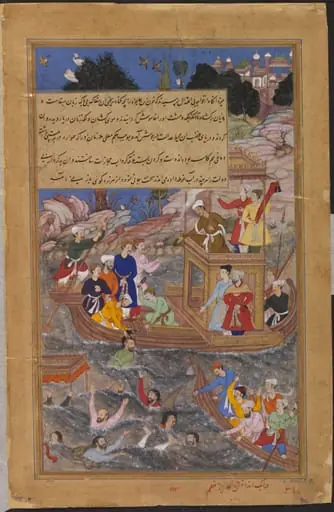 Khwajah Mu'azzam
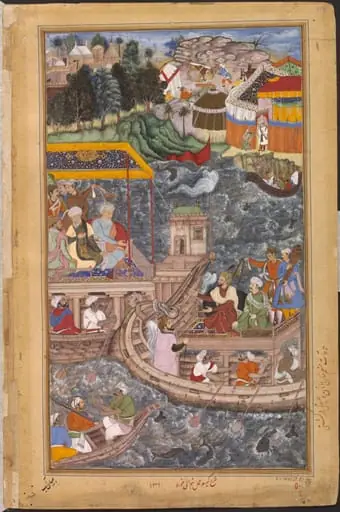 Mu'nim Khan and Khan Zaman
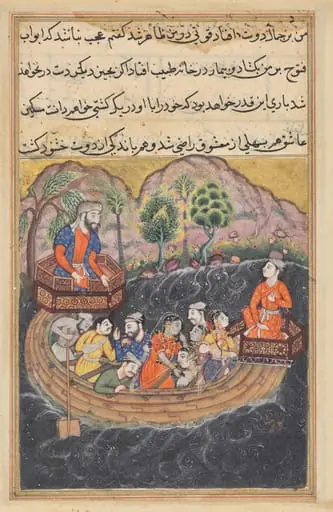
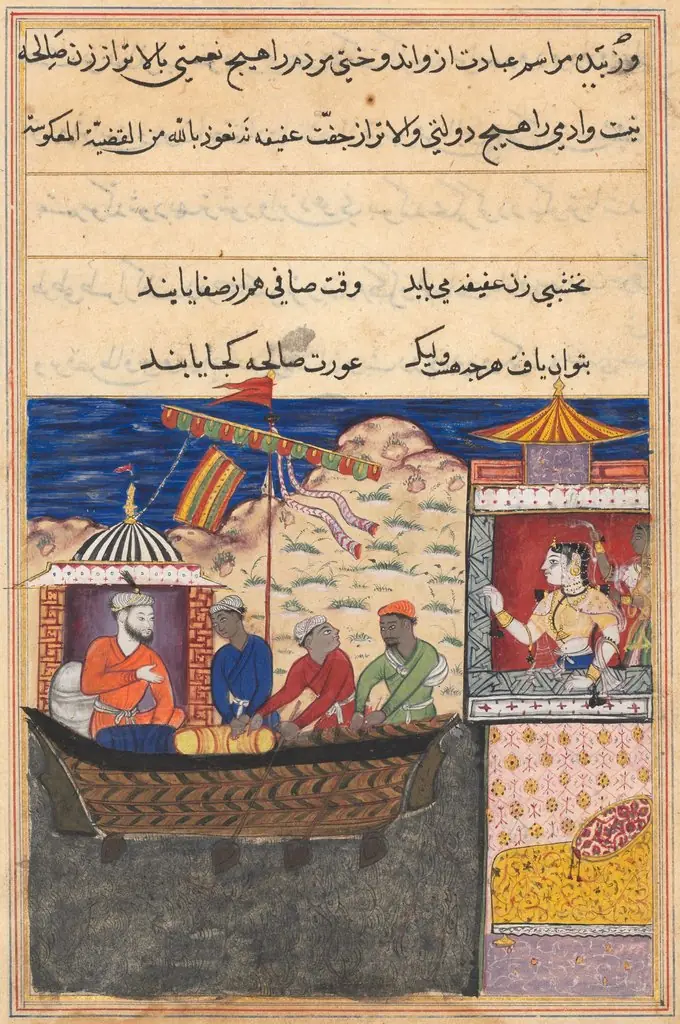
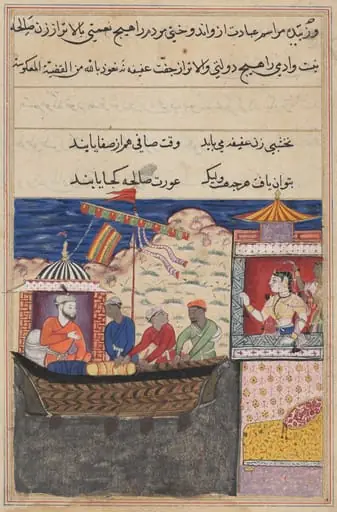 The merchant Mansur departs on a sea voyage, leaving his wife behind, from a Tuti-nama (Tales of a Parrot): Seventeenth Night
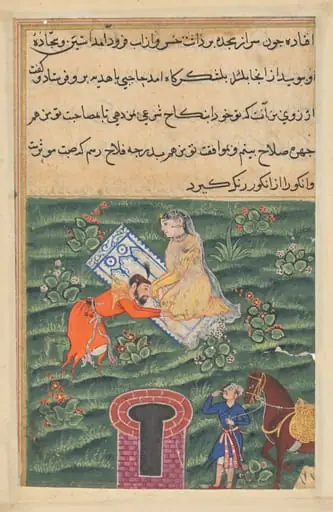 Khusrau, the King of Kings, pays homage to the pious daughter of Khassa, from a Tuti-nama (Tales of a Parrot): Fifty-first Night
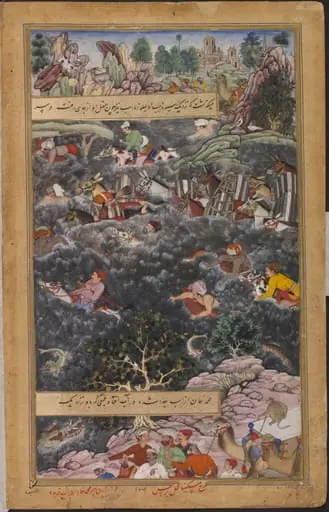 Pir Muhammad Khan
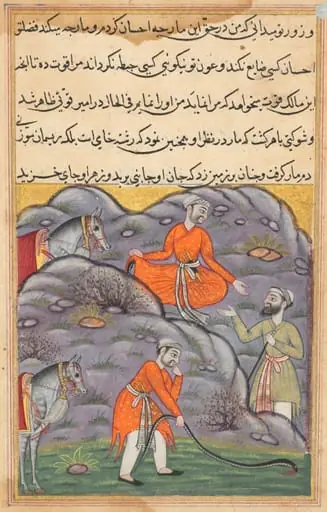 The emir slays the snake after giving it shelter, from a Tuti-nama (Tales of a Parrot): Forty-fifth Night
 Mariam Makani
 The merchant Mansur departs on a sea voyage, leaving his wife behind, from a Tuti-nama (Tales of a Parrot): Seventeenth Night