Artwork
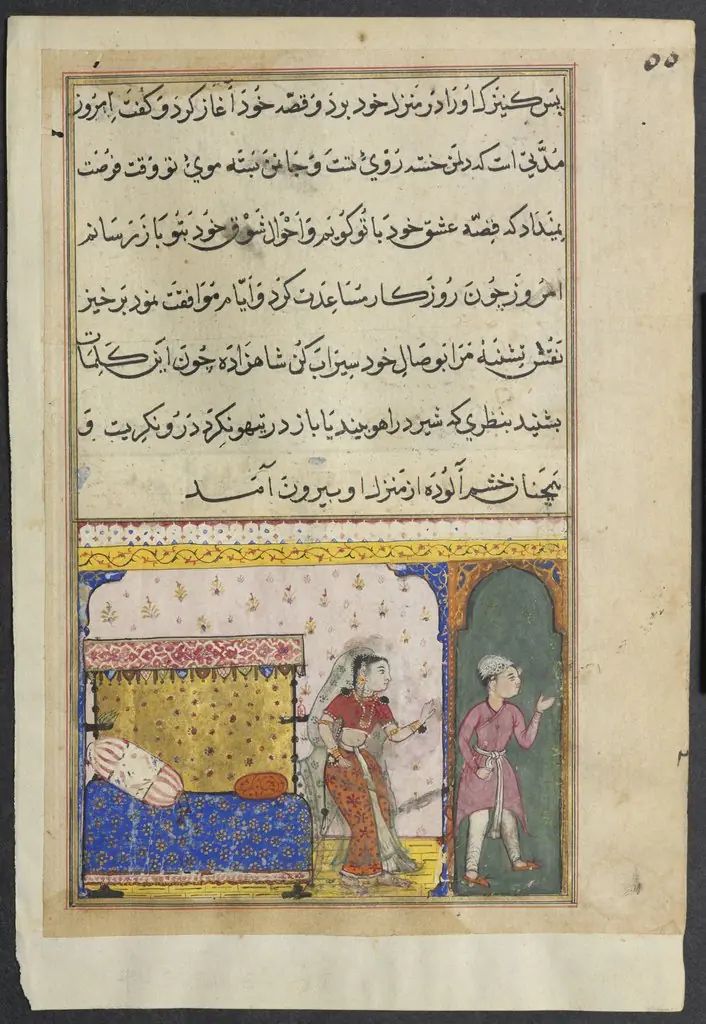
The young man, who has magically taken on the appearance of Mansur the merchant, arrives at his home, from a Tuti-nama (Tales of a Parrot): Seventeenth Night
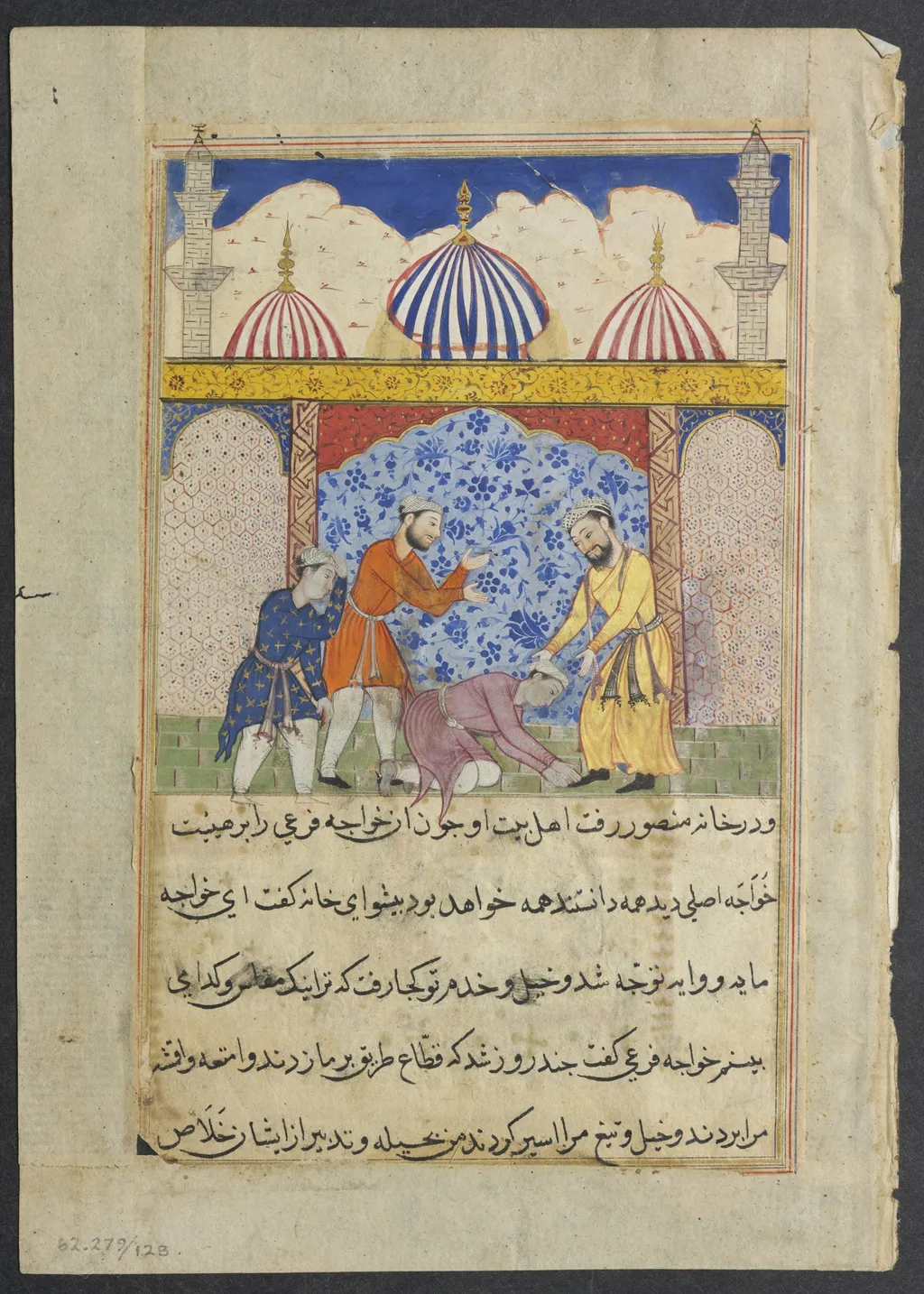
The young man, who has magically taken on the appearance of Mansur the merchant, arrives at his home, from a Tuti-nama (Tales of a Parrot): Seventeenth Night is an unspecified painting. It dates from 1560 and is held in the collection of the Cleveland Museum of Art.
About this work
History & Provenance
Created in 1560 within the Mughal Empire, this painting originates from a manuscript of the Tuti-nama (Tales of a Parrot), illustrating the seventeenth night.
Created in 1560 within the Mughal Empire, this painting originates from a manuscript of the Tuti-nama (Tales of a Parrot), illustrating the seventeenth night. The specific work was produced by an artist whose identity remains unknown. It currently resides in the collection of the Cleveland Museum of Art, where it is cataloged under the accession number 1962.279.128.a.
The museum's records confirm its creation date as 1560, aligning with the broader historical timeline of the manuscript's production.
Context
The painting entered the Cleveland Museum of Art collection in 1962 as accession number 1962.279.128.a, depicting a scene from the seventeenth night of the Tuti-nama in which a youth assumes the guise of the merchant Mansur. Executed in 1560 during the early Mughal period, it exemplifies the synthesis of Persian narrative tradition with indigenous Indian sensibility that characterises courtly manuscript painting of the era. Scholarship notes the refined line work and subtle palette of such early Mughal pages as markers of an emerging workshop style that bridged Safavid influence and local artistic idioms.
Overview
The work illustrates a narrative episode from the seventeenth night of the Persian illustrated manuscript known as the Tuti‑nama, or "Tales of a Parrot." It depicts three figures in vivid, patterned garments gathered beneath an ornate arch, with a backdrop of striped tents and towering structures set against a clear blue sky.
Subject & Meaning
The scene portrays a young man who has assumed the guise of the merchant Mansur, arriving at his residence. One figure kneels beside a pink‑robed individual, while another points toward them, suggesting a moment of recognition or revelation within the story.
Technique & Style
Executed with bold, saturated colors and precise line work, the painting employs a decorative, storybook aesthetic typical of Persian miniature tradition. The composition balances flat patterned surfaces with a shallow sense of depth, and an elegant Persian script runs beneath the image, narrating the episode.
Artist & collection

- The young man, who has magically taken on the appearance of Mansur the merchant, arrives at his home, from a Tuti-nama (Tales of a Parrot): Seventeenth Night
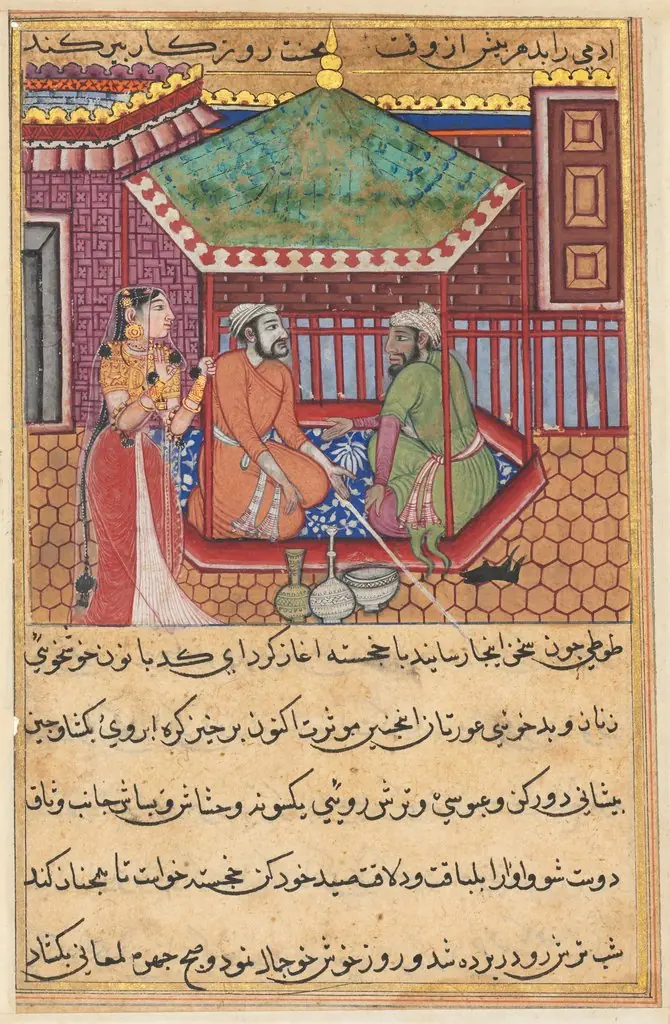 The eldest brother explains the reason for his youthful appearance, from a Tuti-nama (Tales of a Parrot): Forty-ninth Night
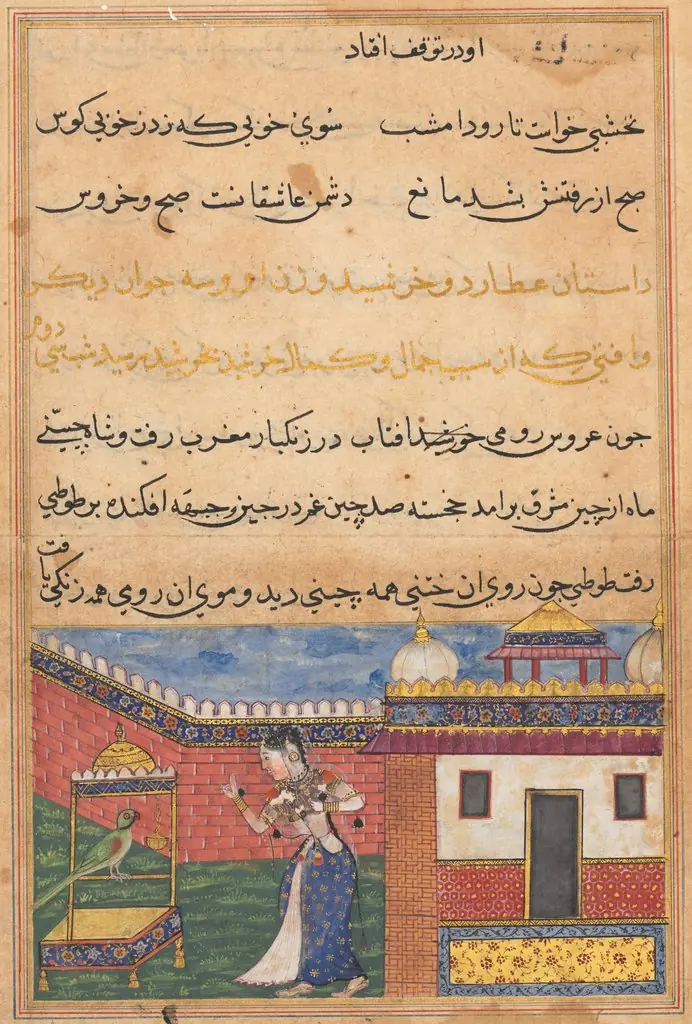 The parrot addresses Khujasta at the beginning of the thirty-second night, from a Tuti-nama (Tales of a Parrot)
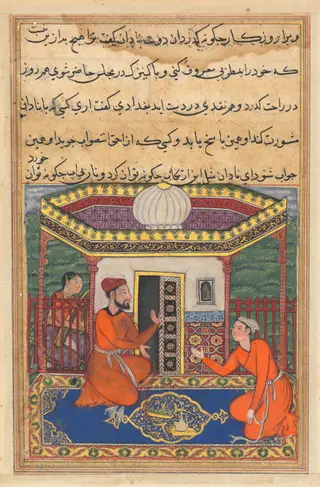 The young man of Baghdad solicits advice from a friend as his slave girl, who is adept at music, awaits, from a Tuti-nama (Tales of a Parrot): Forty-eighth Night
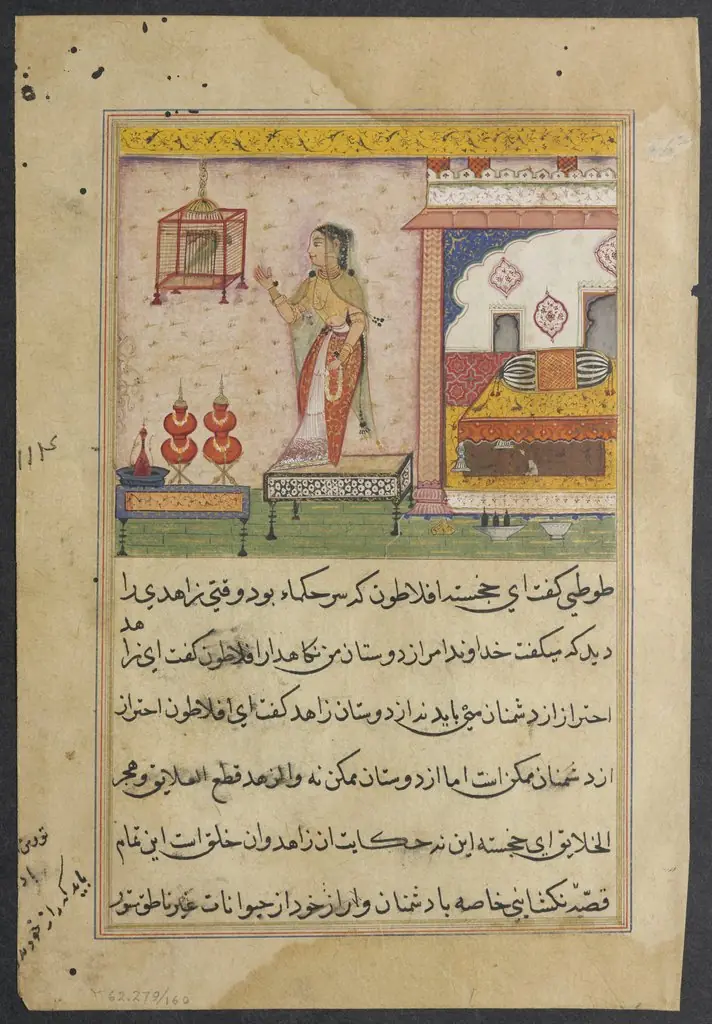 The Parrot Addresses Khujasta at the Beginning of the Twenty-third Night, from a Tuti-nama (Tales of a Parrot)
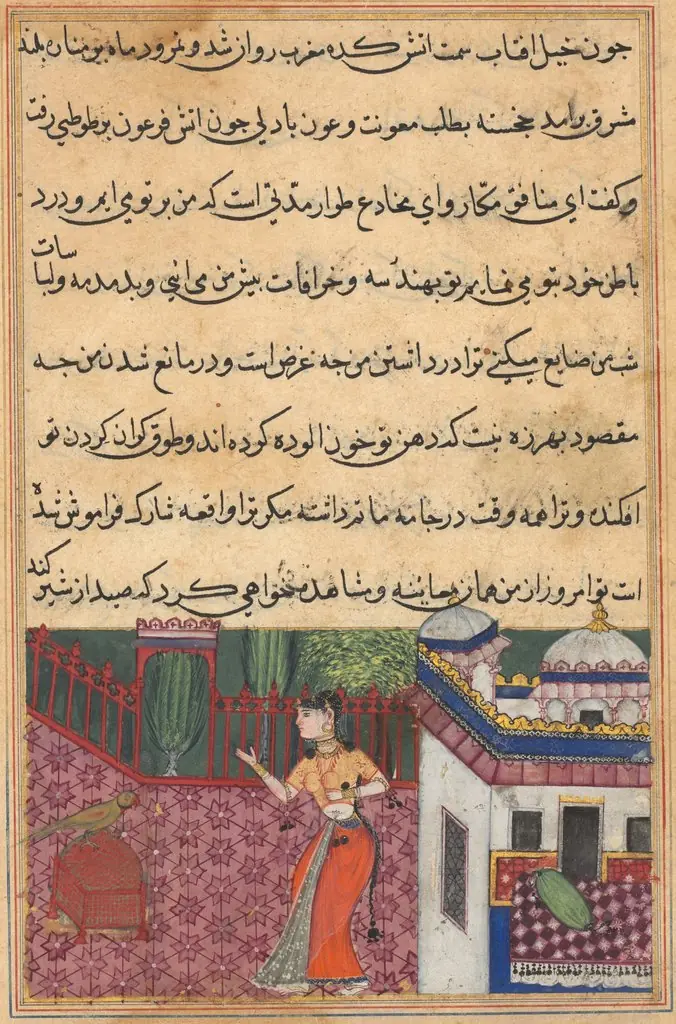 The parrot addresses Khujasta at the beginning of the thirty-third night, from a Tuti-nama (Tales of a Parrot)
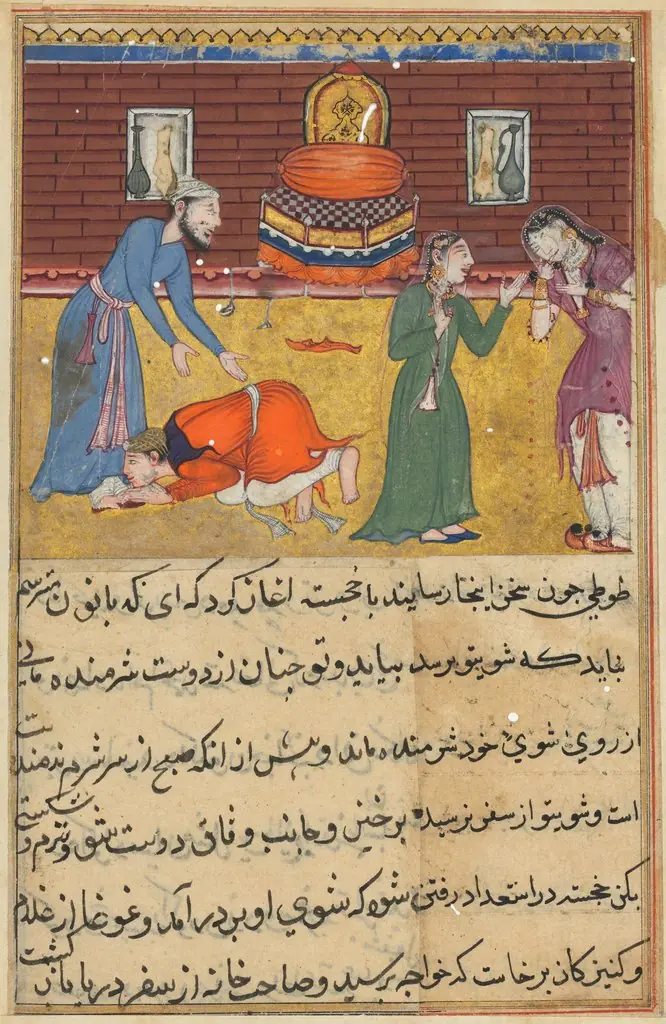 The pious man’s son, now a king, reveals himself to his father; his nurse upbraids his unfaithful mother, from a Tuti-nama (Tales of a Parrot): Fifty-second Night
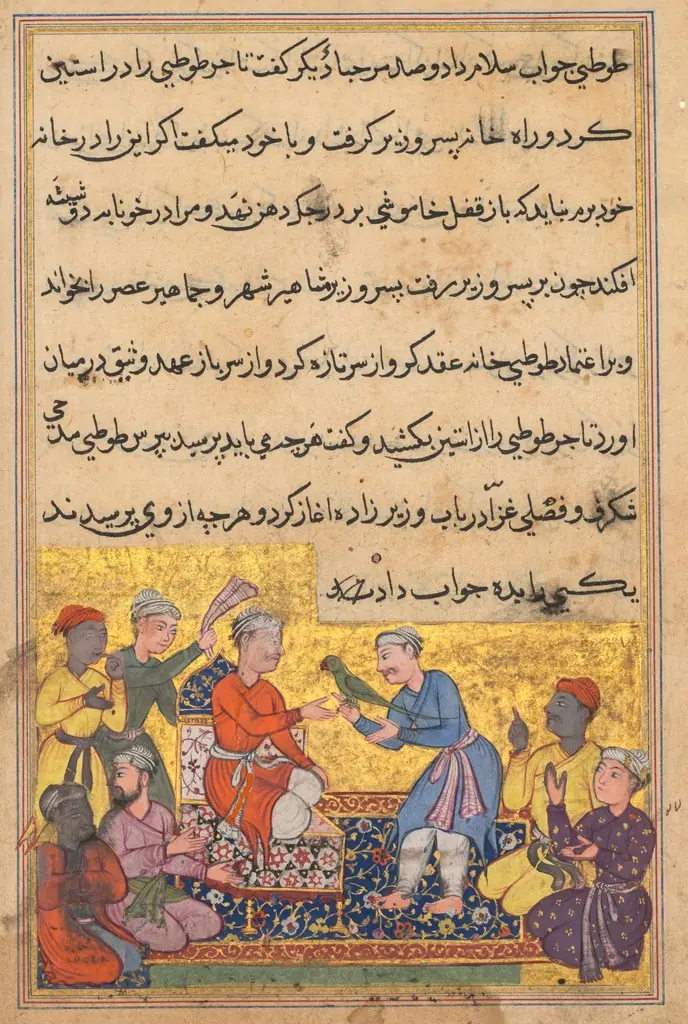 The magic parrot of the merchant talks to the vizier’s son, from a Tuti-nama (Tales of a Parrot): Tenth Night
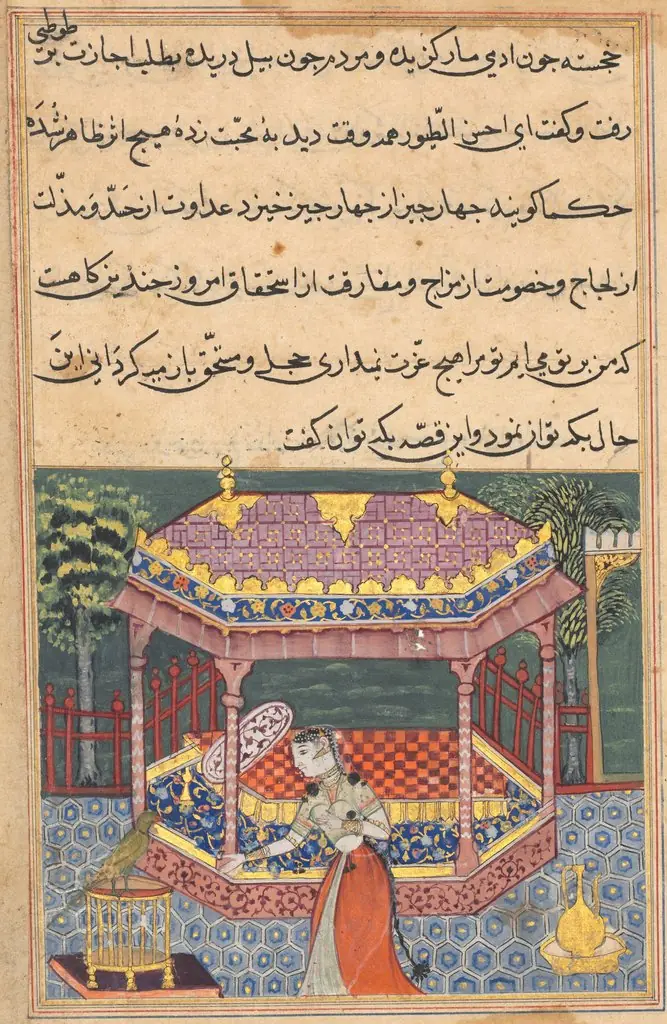 The parrot addresses Khujasta at the beginning of the thirty-seventh night, from a Tuti-nama (Tales of a Parrot)
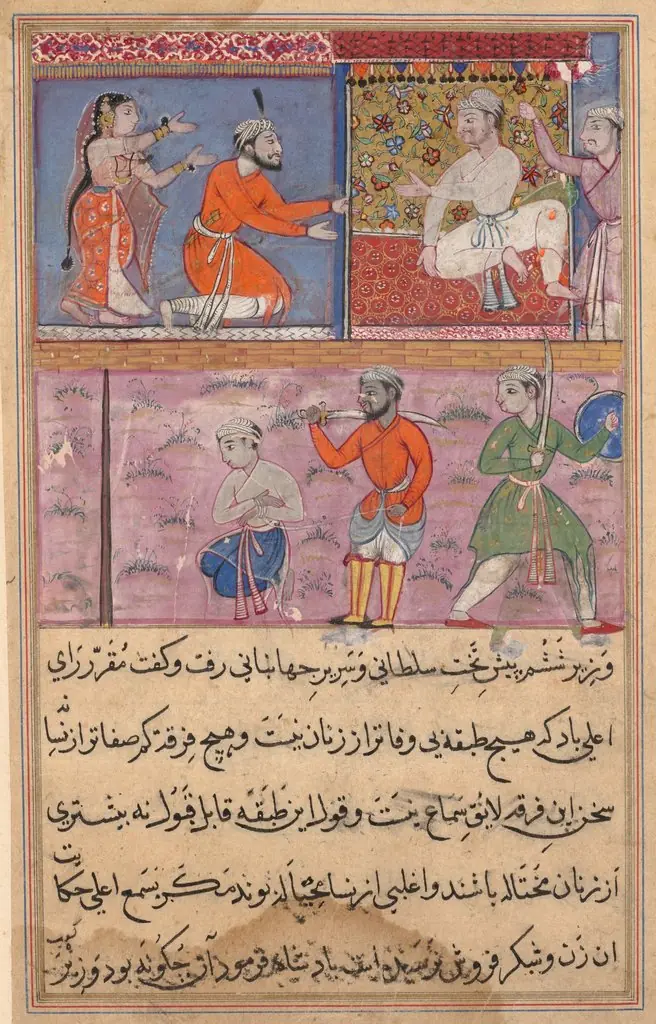 Page from Tales of a Parrot (Tuti-nama): text page
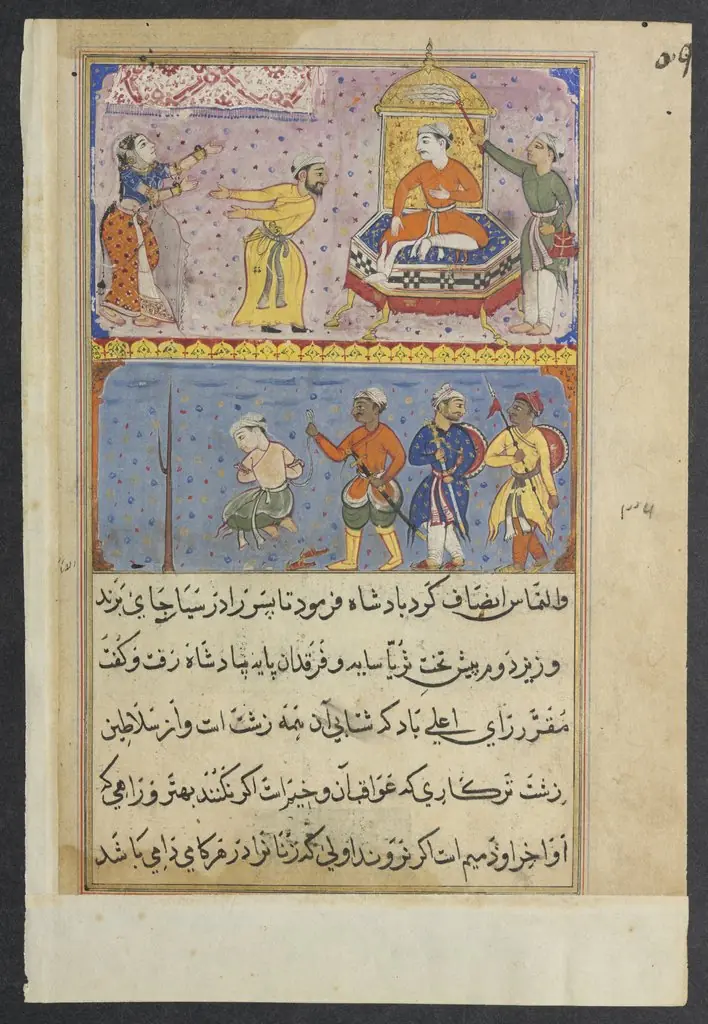 The prince, once reprieved, is returned to the palace of execution a second time on the plea of the king’s handmaiden, from a Tuti-nama (Tales of a Parrot): Eighth Night
 The prince rejects the amorous advances of the king’s handmaiden, from a Tuti-nama (Tales of a Parrot): Eighth Night