Artwork
Timur Lenk (Tamarlan) (1336-1405), mongolsk stor-khan
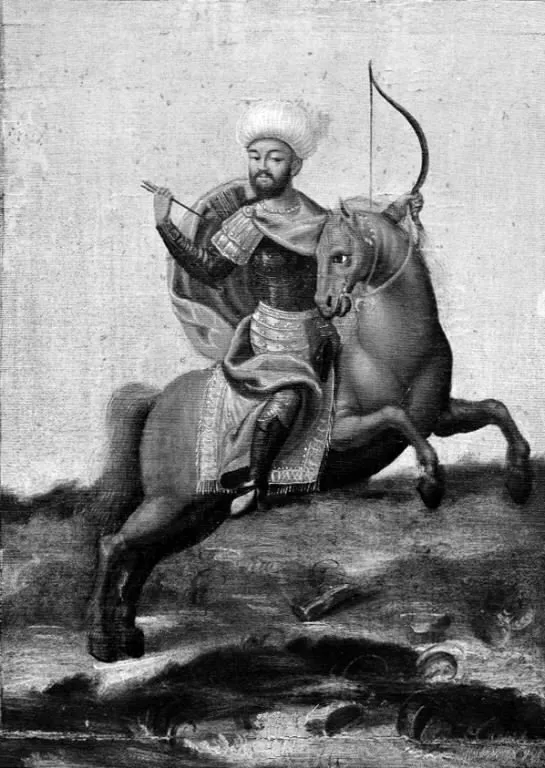
Timur Lenk (Tamarlan) (1336-1405), mongolsk stor-khan is an unspecified painting by the Barbizon school artist Unknown. It dates from 1675 and is held in the collection of the Statens Museum for Kunst. The work entitled Timur Lenk (Tamarlan) (1336‑1405), mongolsk stor‑khan depicts a mounted figure captured in dynamic motion.
About this work
Subject & Meaning
The portrait’s placement in the Statens Museum for Kunst further situates it within a public collection dedicated to preserving such historical representations.
The painting portrays Timur Lenk (Tamerlane), the 14th‑century Mongol emperor, as its sole subject. Executed in 1675, the work is a formal portrait that emphasizes his likeness and regal presence, consistent with the genre’s aim to record notable individuals. By depicting Timur in this manner, the artwork functions as a commemorative image, invoking his historical legacy of conquest and rule.
The portrait’s placement in the Statens Museum for Kunst further situates it within a public collection dedicated to preserving such historical representations.
History & Provenance
The portrait of Timur Lenk was painted in 1675 by an unidentified artist recorded in the museum’s inventory as KMS 1400 Ubekendt. The work entered the collection of the Statens Museum for Kunst, where it is presently housed; no earlier owners or commissioning patrons are documented in the available sources. Consequently, the painting’s provenance is limited to its modern museum holding, and its creation history rests solely on the 1675 date and the anonymous attribution.
Legacy
The painting of Timur Lenk (Tamarlan) (1336-1405), Mongolsk stor-khan, created in 1675, has been part of the collection of Statens Museum for Kunst since its acquisition. Its representation of Timur as a subject contributed to scholarly and curatorial interest in Central Asian historical figures within European portraiture, influencing later depictions of Mongol leaders in museum contexts. The work remains accessible to the public at the museum, where it is studied and interpreted as part of the institution’s broader historical portraiture holdings.
Overview
The work entitled Timur Lenk (Tamarlan) (1336‑1405), mongolsk stor‑khan depicts a mounted figure captured in dynamic motion. The rider, positioned on a rearing horse, dominates a stark background that offers only minimal suggestion of terrain. The composition focuses on the interplay of light and shadow, highlighting the figure’s elaborate attire and the animal’s taut musculature.
Technique & Style
The painter employs strong chiaroscuro, contrasting deep, muted tones of the background with bright highlights on the gold‑trimmed robe and the horse’s musculature. The rendering of the horse’s lifted forelegs conveys tension and movement, while the simplified setting keeps attention on the figure. Brushwork suggests a focus on form rather than intricate landscape, a common approach in portraiture of heroic subjects.
Artist & collection









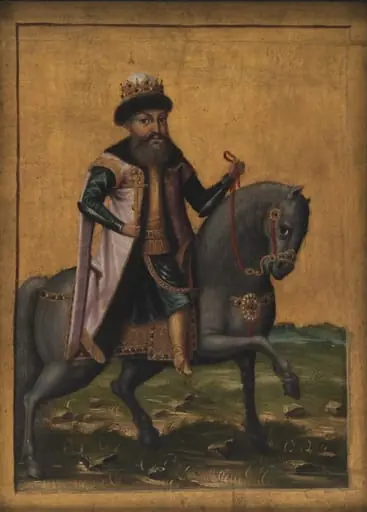 Aleksej Mikhajlovitj (1645-76), russisk zar
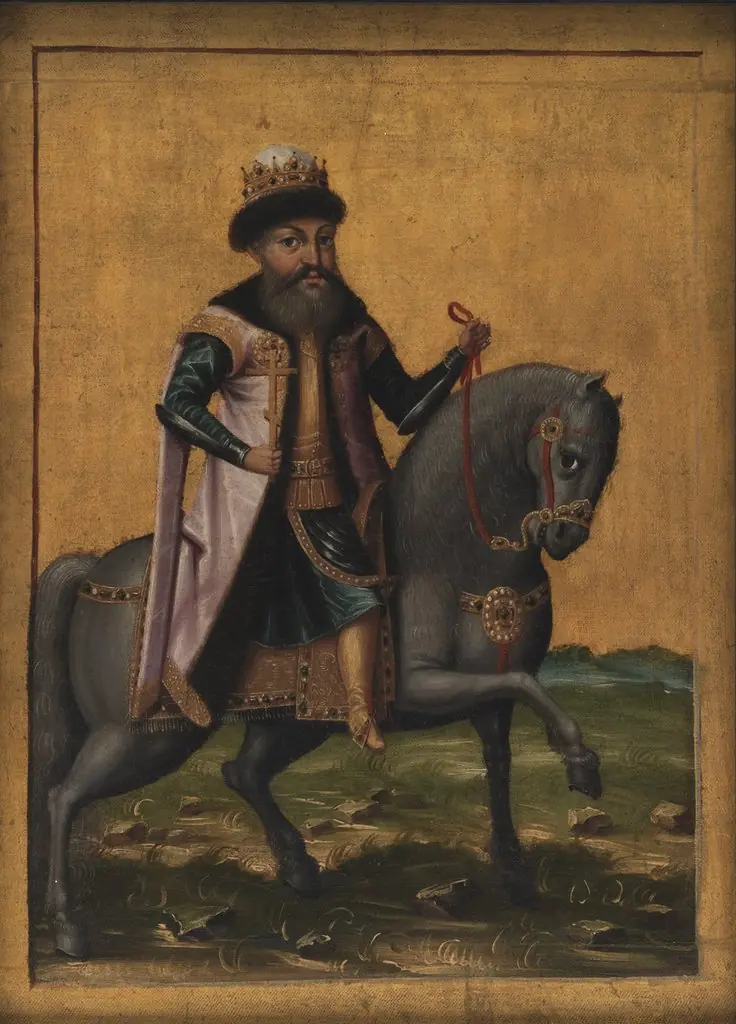 Aleksej Mikhajlovitj (1645-76), russisk zar
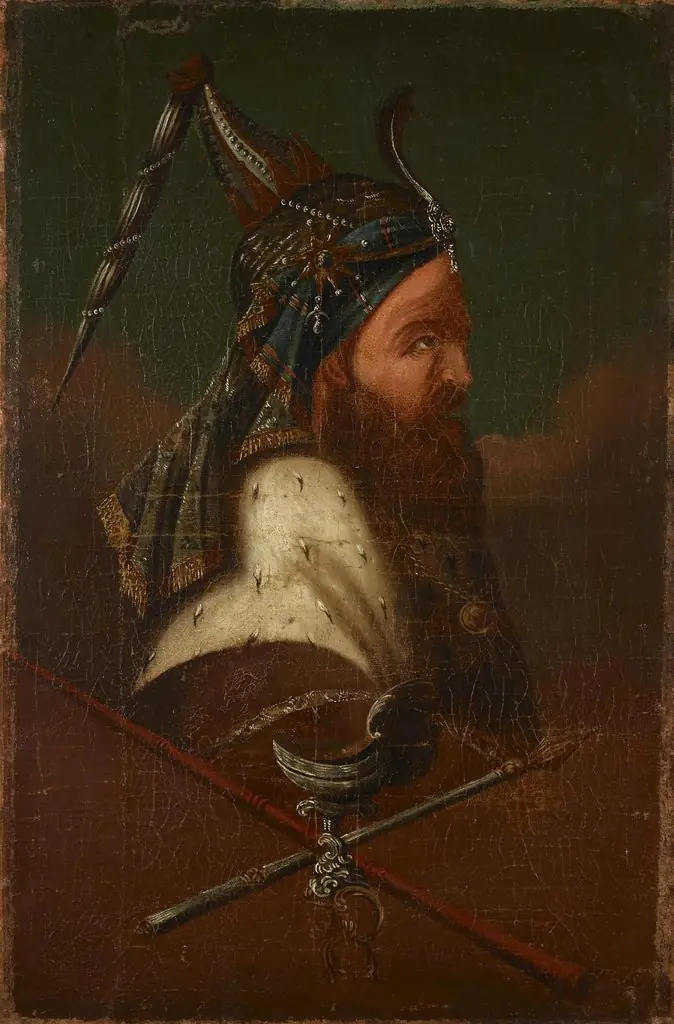 Historical Portrait
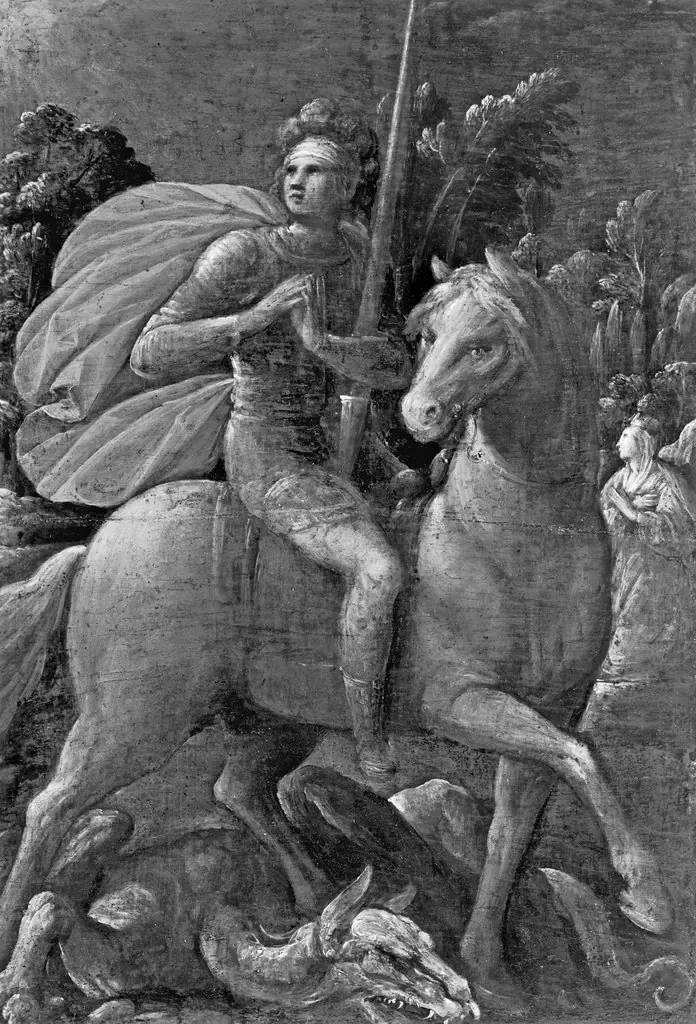 Saint George and the Dragon
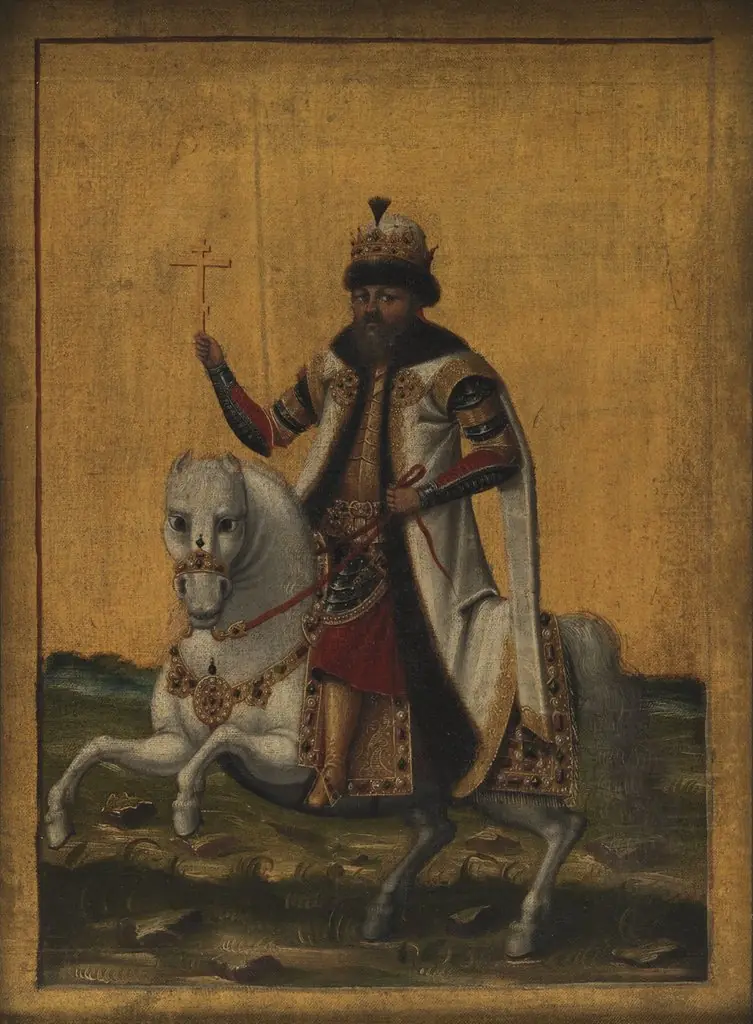 Mikhail Fjodorovitj (1613-45), russisk zar
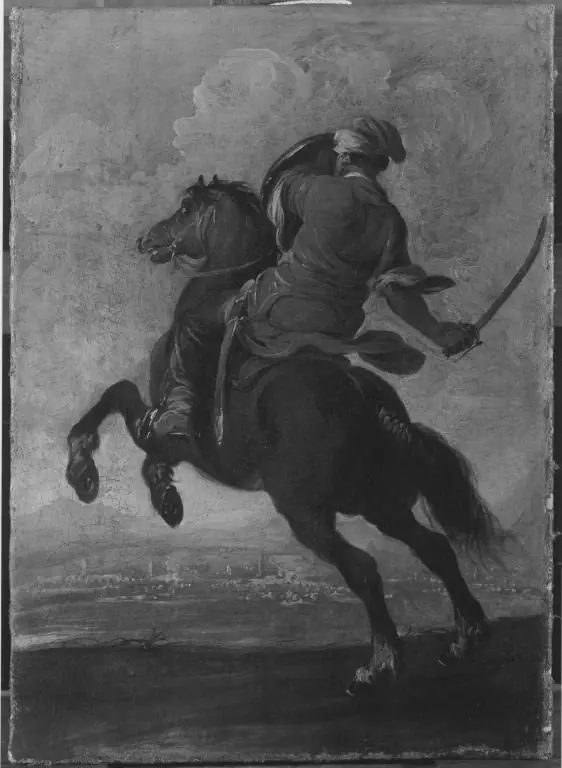 Reiter im Angriff
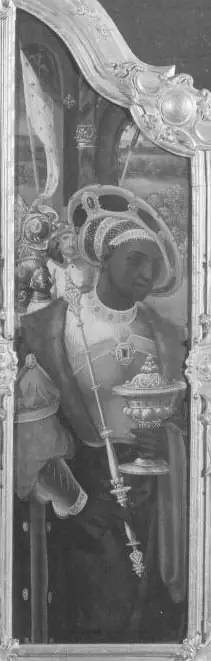 Triptych: King Balthazar
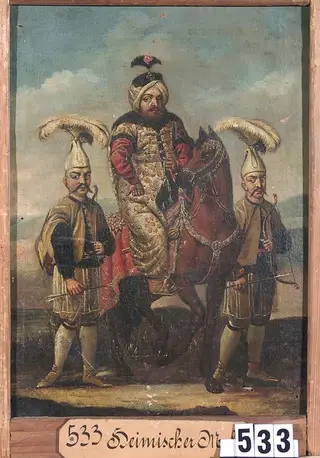 Sultan însoțit de arcași (în registrul inventar: Pașă turc)
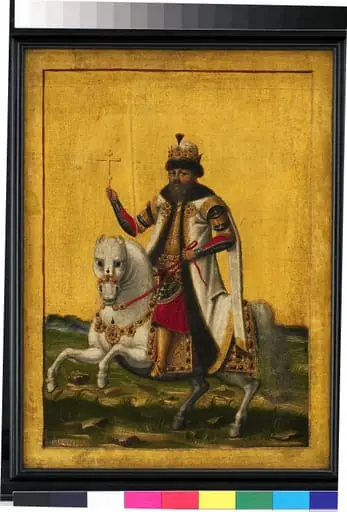 Mikhail Fjodorovitj (1613-45), russisk zar