Artwork
Two Wings of a Triptych with the Portraits of Julien de Brouckere and his Wife Elisabeth Canneel
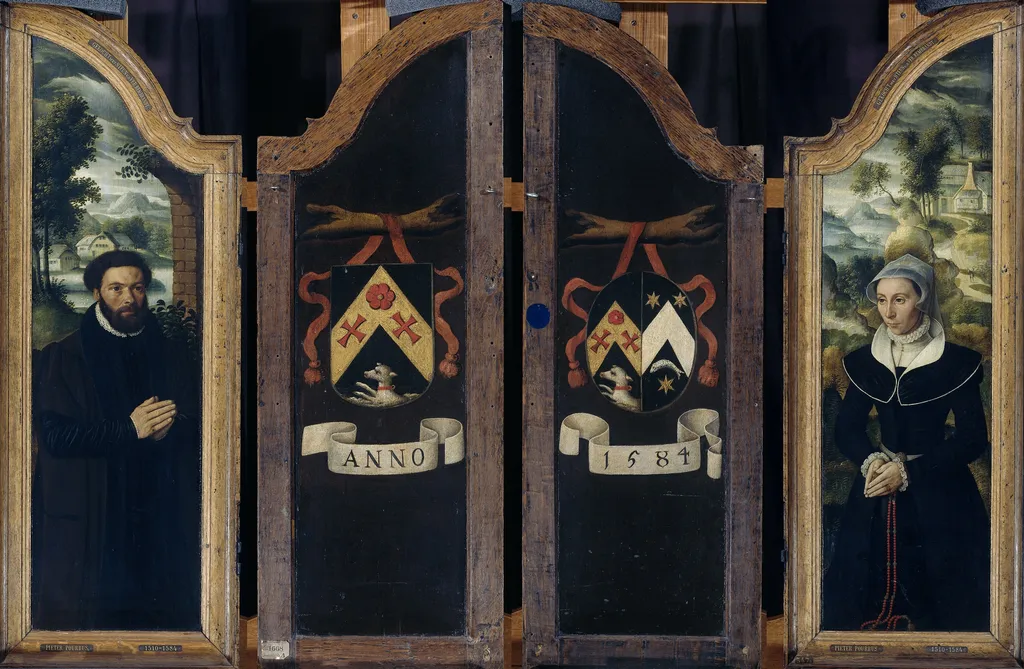
Two Wings of a Triptych with the Portraits of Julien de Brouckere and his Wife Elisabeth Canneel is an oil painting. It dates from 1592 and is held in the collection of the Rijksmuseum. Two painted panels form the side wings of a 1584 triptych, each depicting a member of a Flemish couple.
About this work
The wooden panels around the portraits look old and worn, with carvings at the top.
This painting shows two people standing in front of dark panels. The man on the left wears a black coat and a white ruff collar. The woman on the right has a white cap and a dark dress with a string of beads. Between them is a shield with symbols and the year "1584" written on a scroll.
The dark background behind them frames a landscape with houses and trees. The wooden panels around the portraits look old and worn, with carvings at the top.
Look up Rijksmuseum to see where this painting is kept.
Subject & Meaning
These two panels form the hinged wings of a triptych, flanking a central devotional image that is no longer associated with them. The outer faces carry donor portraits of Julien de Brouckere and his wife Elisabeth Canneel, the patrons who commissioned the altarpiece. By appearing on the wings, the couple is shown in the conventional role of donors, presented in pious attendance on the sacred scene at the center.
The wings depict a man and a woman in formal portrait format, a standard arrangement for married donors on a diptych or triptych. Their placement on the exterior wings meant the portraits would be visible when the altarpiece was closed, identifying the patrons and their act of devotional patronage to viewers entering the church.
The work represents both personal commemoration of the Brouckere–Canneel couple and their public act of religious patronage, executed in oil on panel in Bruges in 1584.
Technique & Style
The two wings are executed in oil paint on panel, a support consistent with late sixteenth-century portrait practice in Bruges, where the work was produced in 1584. Each wing is a tall, narrow format, measuring 83 cm in height and 25.5 cm in width, dimensions suited to their function as flanking panels of a triptych. The medium and support place the portraits within the tradition of small-scale devotional triptychs in which donor likenesses appear on hinged wings.
Stylistically, the work belongs to portrait painting of the period, depicting a man and a woman, identified as Julien de Brouckere and Elisabeth Canneel, on the separate wings. The painting is held in the Rijksmuseum collection.
History & Provenance
The two wings were created in 1584 in Bruges, executed in oil paint on panel as portrait components of a larger triptych. The work depicts a man and a woman, identified as Julien de Brouckere and his wife Elisabeth Canneel. The painting is held in the collection of the Rijksmuseum, where it remains located.
The sources do not provide further details about the original commissioner, the circumstances of the 1584 production, or the subsequent chain of ownership prior to the work's acquisition by the museum.
The two wings of the triptych are held in the collection of the Rijksmuseum. According to the available records, the work is catalogued within that institution's holdings and is located there.
No specific inventory or accession number is documented in the available sources. Likewise, no exhibition history is recorded for these panels.
The painting is executed in oil on panel, measures 83 cm in height and 25.5 cm in width, and was produced in Bruges in 1584.
Overview
Two painted panels form the side wings of a 1584 triptych, each depicting a member of a Flemish couple. Julien de Brouckere stands on the left in a black coat with a white ruff, while his wife Elisabeth Canneel appears on the right, wearing a dark dress, a white cap and a string of beads. Both figures are set against a muted landscape of houses and trees, framed by aged wooden panels with carved tops.
Context
The painting belongs to a period when portraiture served both personal and genealogical functions among the burgeoning bourgeoisie of the Low Countries. The use of a heraldic shield reflects contemporary practices of asserting family identity, while the modest interior setting aligns with the era’s preference for realistic, unidealized depictions of patrons.
Artist & collection

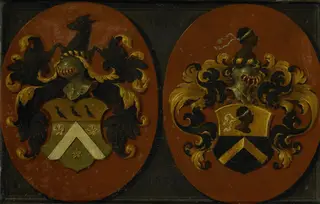
- Wapenbord met de wapens van Boudaen en Fourmenois, 1623 (het wapen van Fourmenois omgewend)
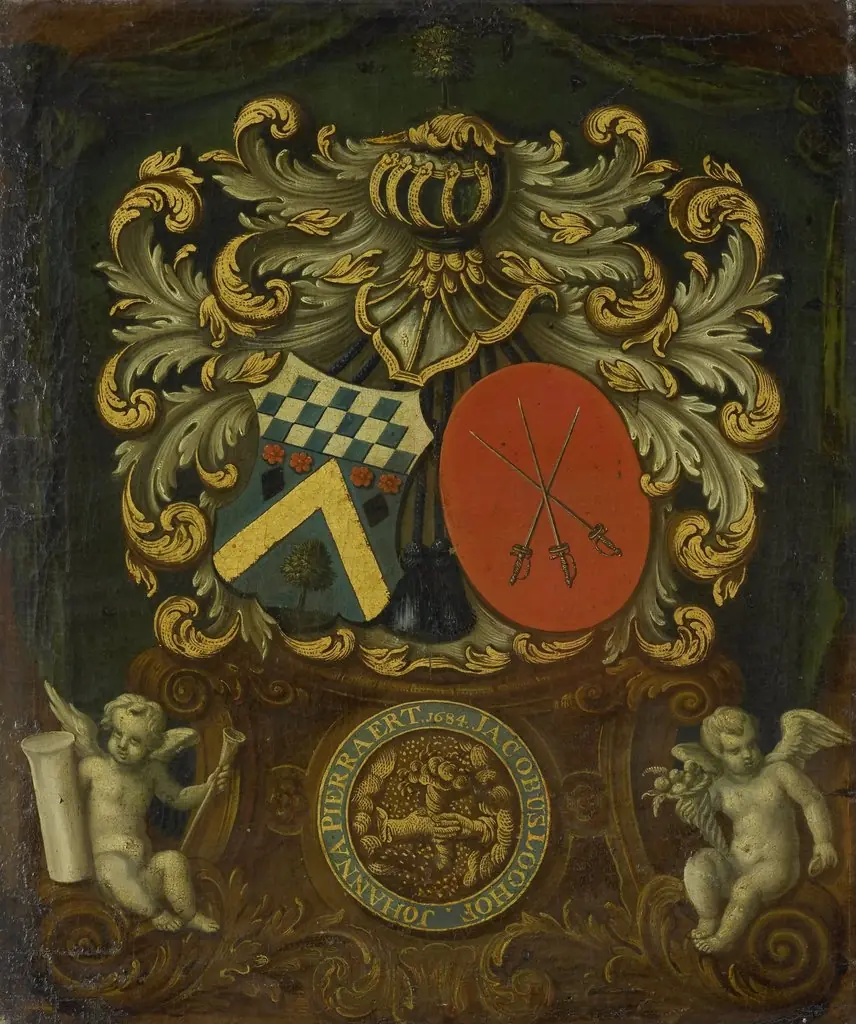 The family shields of Jacobus Loohoff and Johanna Pierraert, 1684
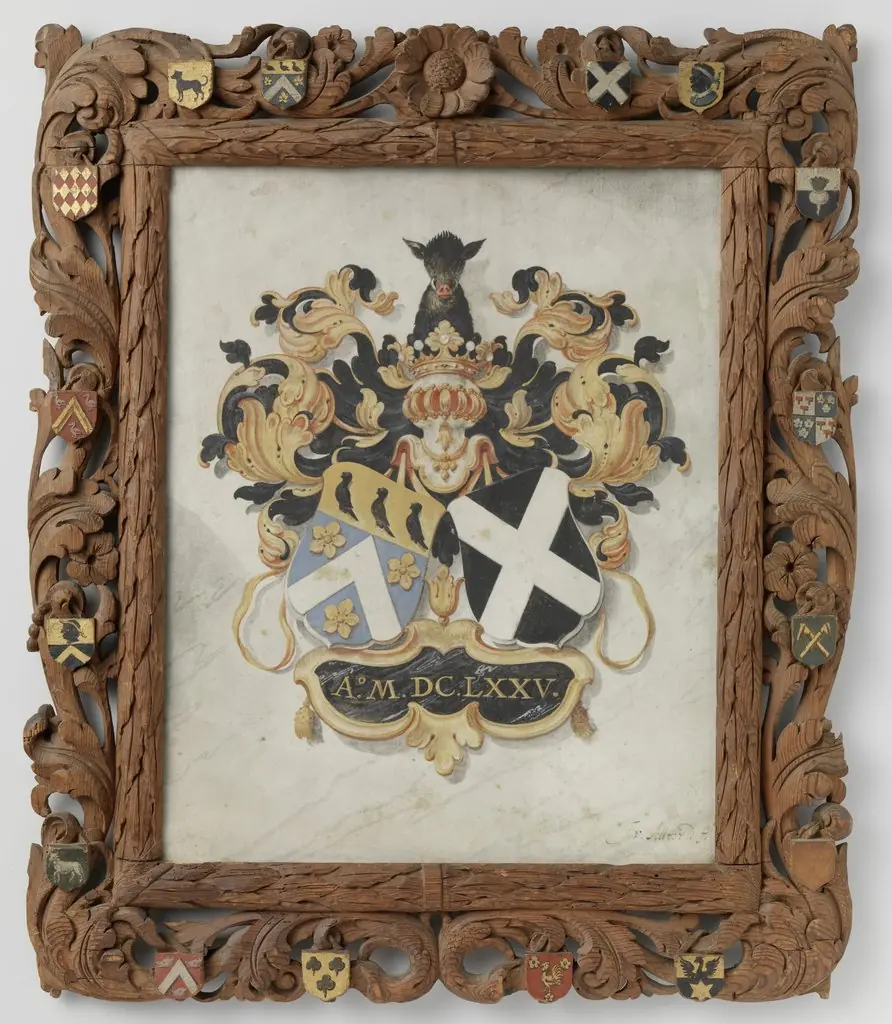 The family shields of Jan Boudaen Courten and Anna Maria Hoeufft
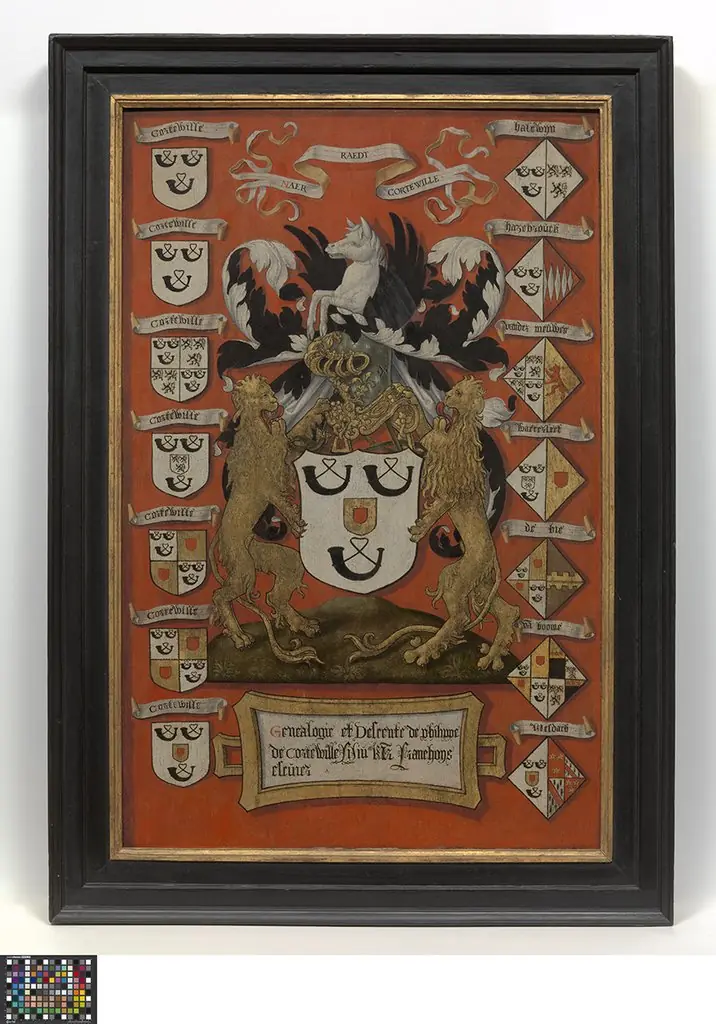 Pedigree of Filips de Cortewille
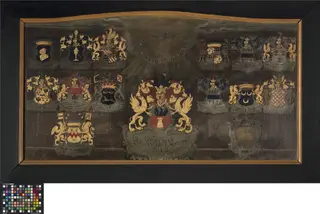 Wapenbord van de rederijkerskamer Heilige Geest
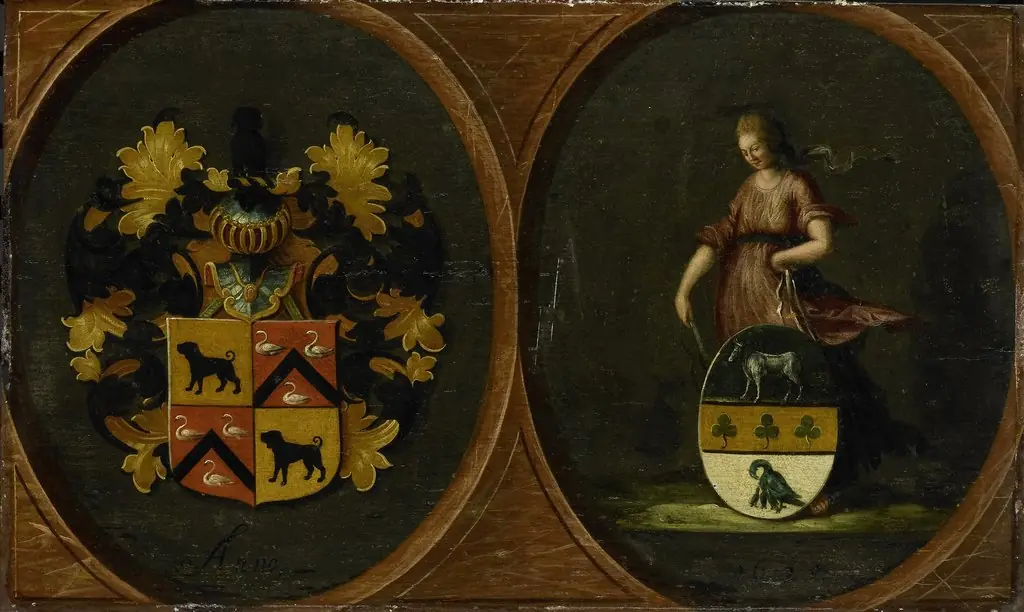 Heraldic panel with family shields of the couple Hortensia del Prado and second husband Peter Courten, 1625
![Hans Roth [reverse], by Bernhard Strigel](https://artifactworldgallery.com/img/bernhard-strigel--hans-roth-reverse--9e98efc46bbdf23c-w320.webp) Hans Roth [reverse]
Hans Roth [reverse]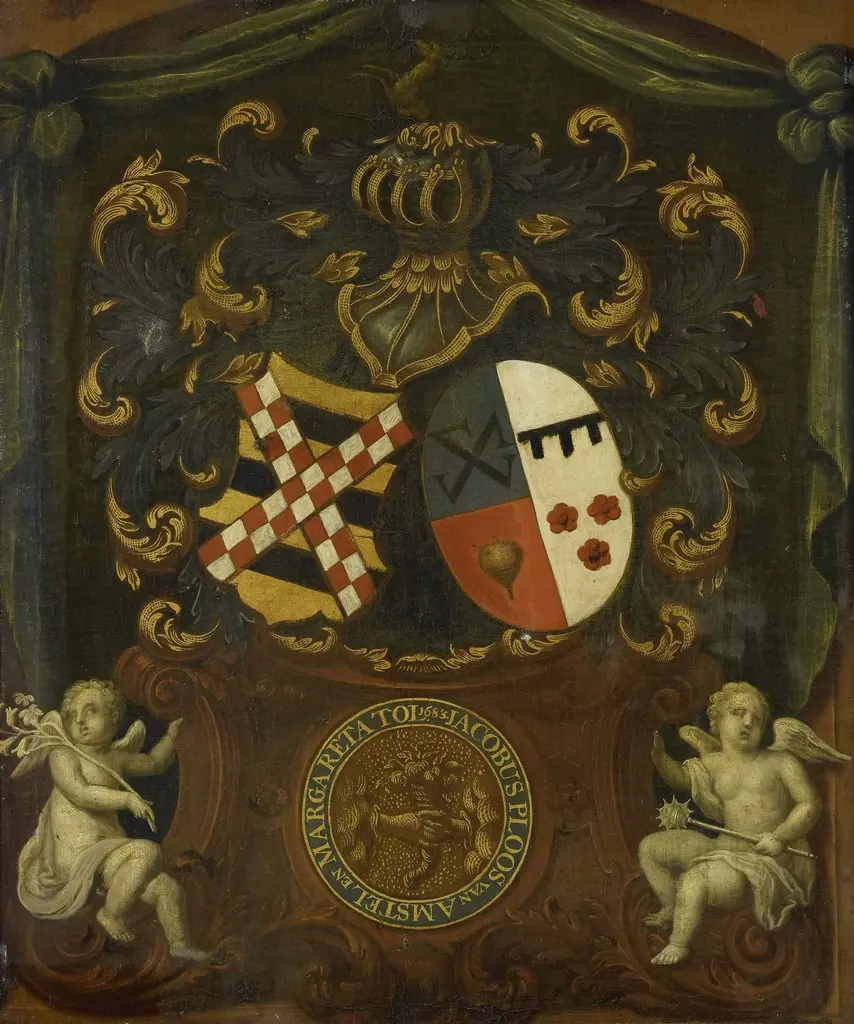 The family shields of Jacob Ploos van Amstel and Margareta Tol
![Margarethe Vöhlin [reverse], by Bernhard Strigel](https://artifactworldgallery.com/img/bernhard-strigel--margarethe-vohlin-reverse--01f4c80425fbb8fe-w320.webp) Margarethe Vöhlin [reverse]
Margarethe Vöhlin [reverse]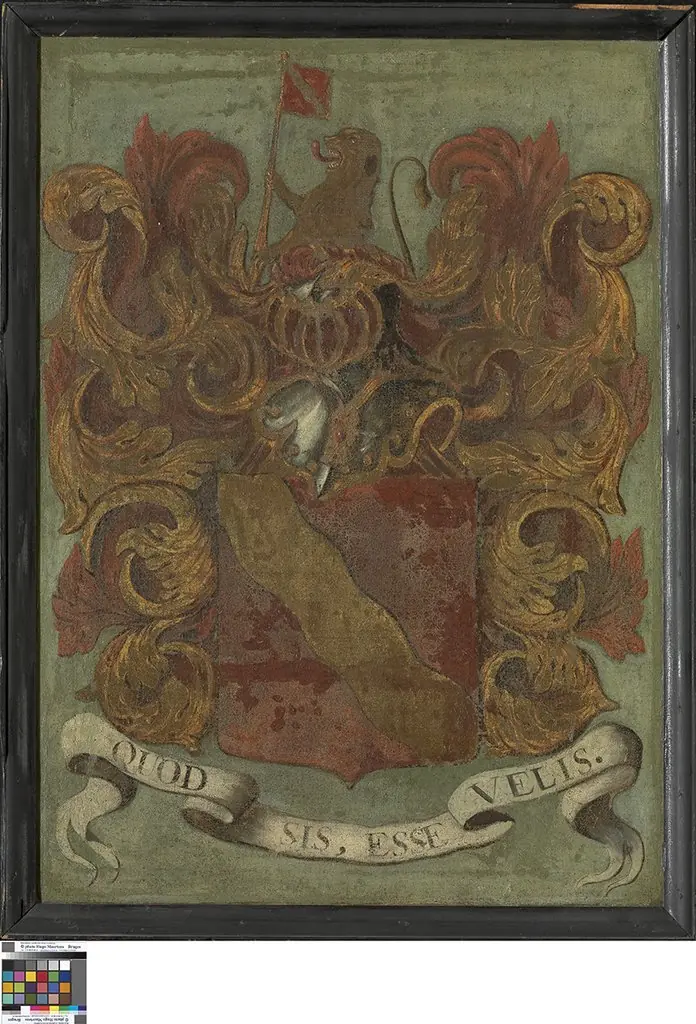 Wapenschild
 Wapenbord met het wapen van de familie Snoeck (Amsterdam)
 Coat of Arms of Adriana Perez