Artwork
Untitled
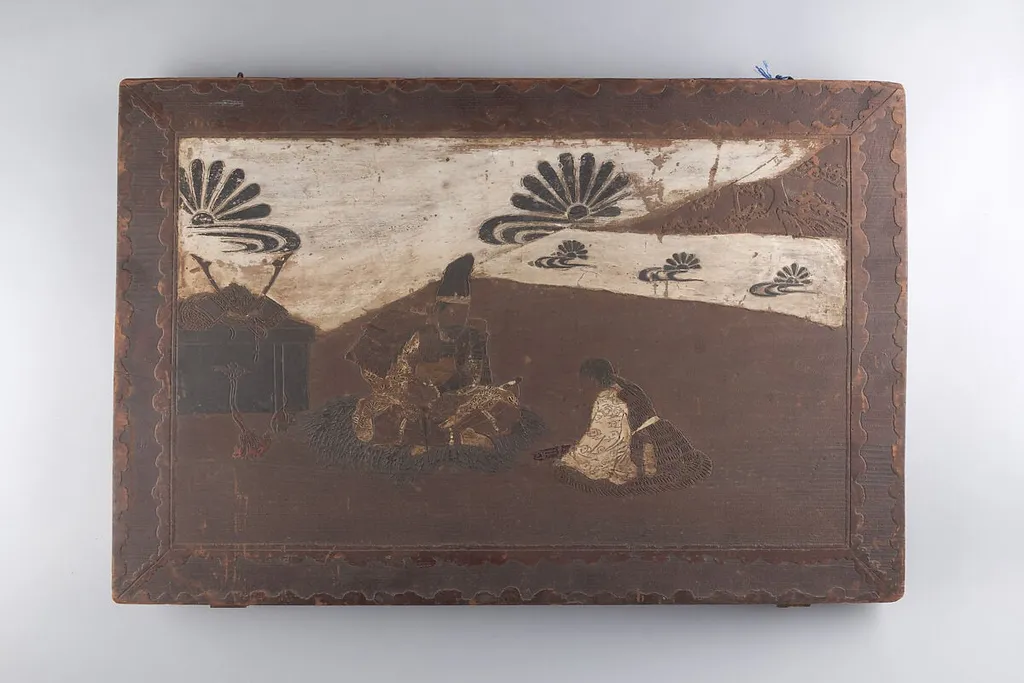
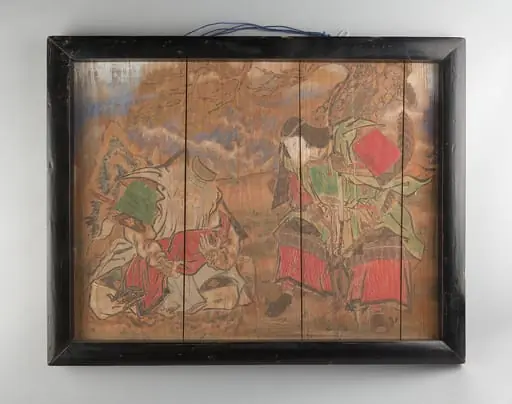
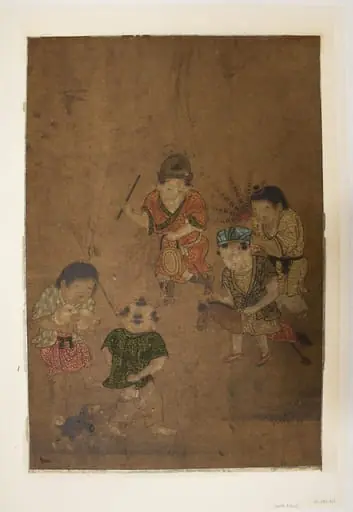
Untitled is an ink painting. It dates from 1849 and is held in the collection of the Metropolitan Museum of Art.
- Accession no.
- 1985.396.3
- Credit line
- Gift of Stanley J. Love, 1985
About this work
Subject & Meaning
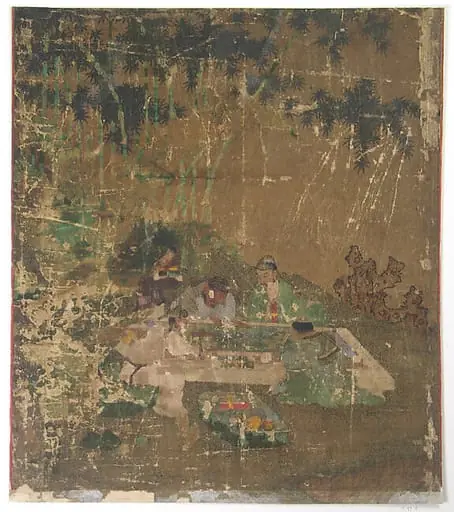
The figures are identified only as boy, father, hat and man, without further narrative detail, and the painting is classified as religious genre.
The work shows a boy standing beside an older man wearing a hat, a composition recorded in both the internal catalog and the Metropolitan Museum of Art’s Wikidata entry. The figures are identified only as boy, father, hat and man, without further narrative detail, and the painting is classified as religious genre. Its iconography therefore suggests a generic sacred narrative rather than a specific story, emphasizing a timeless relationship between youth and paternal authority.
The anonymous authorship and 1849 date place the piece within early Japanese religious painting, where such minimal iconographic elements conveyed spiritual themes without explicit narrative exposition.
Technique & Style
The painting employs ink and opaque water-based pigments applied to a single panel of cryptomeria (sugi) wood, using fine brushwork to delineate figures and details. The support remains unlined, with the natural grain of the wood left visible along the edges, indicating the use of a prepared, planed board rather than a composite support. Handling is restrained, with controlled, linear strokes defining contours and subtle gradations of tone to model form.
Stylistically, the work adheres to a flat, graphic manner, typical of late Edo-period narrative imagery, where figures are arranged in a shallow, compressed space without illusionistic recession. The color palette is muted, relying on earthy ochres, indigo, and vermilion applied in thin, uniform washes.
History & Provenance
The painting entered the Metropolitan Museum of Art’s collection with no prior provenance recorded, and its artist remains anonymous. It is dated to 1849 based on internal records and the Wikidata entry, which situates its creation within Japan. No commission details or original ownership history are documented, and the work’s religious genre and depiction of a boy, father, and man suggest a possible private devotional context rather than a public commission.
The work titled Untitled, attributed to an anonymous Japanese painter, is held in the collection of the Metropolitan Museum of Art in New York. It entered the museum’s holdings in 1849, as recorded in the institution’s catalog, though no specific accession or inventory number is listed in the available documentation. The sources do not mention any exhibition history for this piece, indicating that it has not been publicly displayed in major exhibitions according to the cited records.
Overview
Untitled is a Japanese votive painting rendered in ink and color on cryptomeria wood. This type of artwork, known as an ema, was traditionally offered at Shinto shrines as a petition or an expression of gratitude. The piece depicts a quiet interaction between a man and a boy, characterized by its understated palette and direct presentation. Its creation was primarily for spiritual rather than aesthetic appreciation.
Context
This "Untitled" piece serves as an ema, a specific form of Japanese votive plaque. Such objects were not created for public display in a gallery or for private collection, but rather as offerings within a sacred space. Left at a Shinto shrine, its primary audience was the divine, intended to communicate human hopes, fears, or gratitude directly to the gods, rather than to human observers or art connoisseurs.
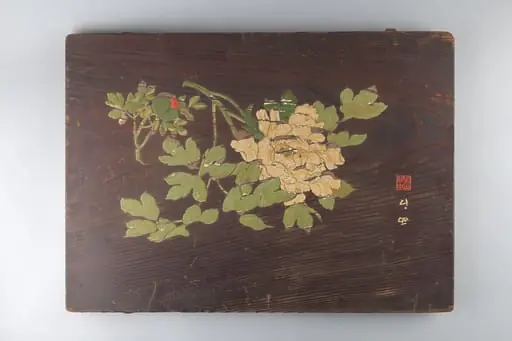
Artist & collection

- Untitled
 Untitled
 Rajput Box with Various Scenes
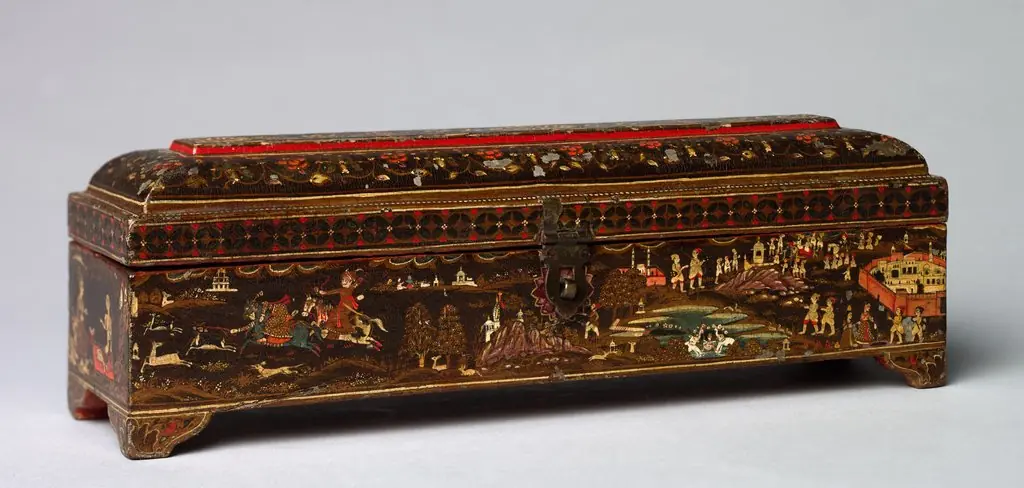 Rajput Box with Various Scenes
 Untitled
 Copy of painting in the caves of Ajanta (Cave 2)
 Hunting in the Hills and Pictorial
 Slika Igranje na inštrumente
 Copy of painting inside the caves of Ajanta (cave 17)
 Untitled
 Maica Domnului ține în brațe Pruncul Iisus Hristos, care arată cu mâna dreaptă înspre Maica Domnului, prezentându-ne-o. Maica Domnului este înveșmântată în mantie cu maforion roșu-acajou, cu broderie dantelată pe marginile mânecilor, cu interiorul negru și ciupag brodat auriu-bronziu. Veșmântul este de o eleganță deosebită. Pruncul Iisus Hristos este înveșmântat cu sacos și omofor roșu-acajou, de asemenea, cu interiorul ocru-galben rozaliu, cu coroană și aureolă pe cap. Maica Domnului cu mâna dreaptă ni-L arată pe Mântuitorul Iisus Hristos ca fiind Calea. Adevărul și Viața, este tip Hodighitria. Culorile Maicii Domnului reprezintă noblețea împărătească, suferința monahică și nădejdea bucuriei Învierii. Culorile Mântuitorului reprezintă suferința monahică și patima dureroasă a Jertfei. Fondul icoanei este întunecat, în contrast cu lumina dăruită de chipurile sfinte și veșmintele senine, cu stele crem-gabene. Cromatică: roșu stacojiu, brun, acajou, galben-ocru, brun, bej, alb, negru. Icoana este încadrată și de un chenar decorativ-geometrizant liniar roșu. Inscripția din româno-chirilică se traduce MP IC XC Maica Domnului Iisus Hristos. Icoana este de iconostas. Desenul, cromatica, compoziția, fondul, încadrarea, trăsăturile chipurilor sunt deosebit de frumoase. Icoana este o bijuterie! Este atribuită lui Toader Popovici Zugrav.
 Untitled