Artwork
Untitled
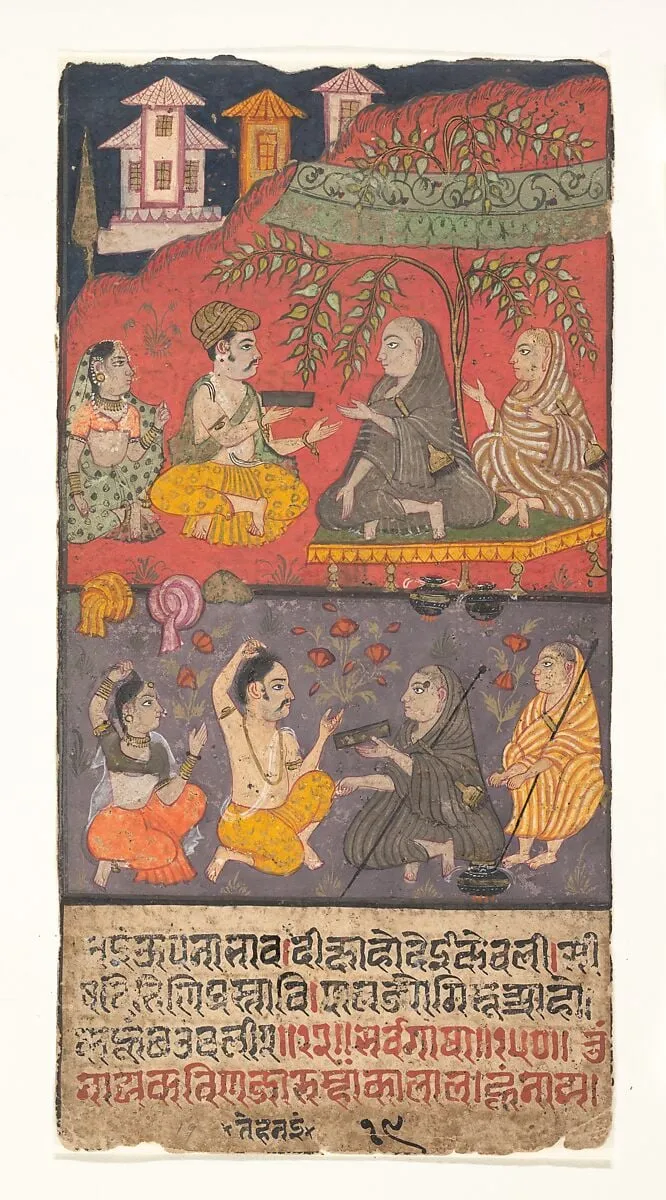
Untitled is a watercolor painting. It dates from 1725 and is held in the collection of the Metropolitan Museum of Art.
About this work
Subject & Meaning
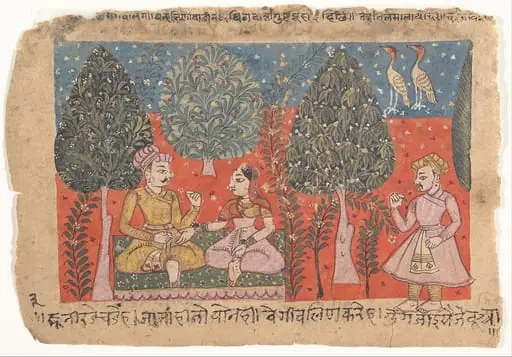
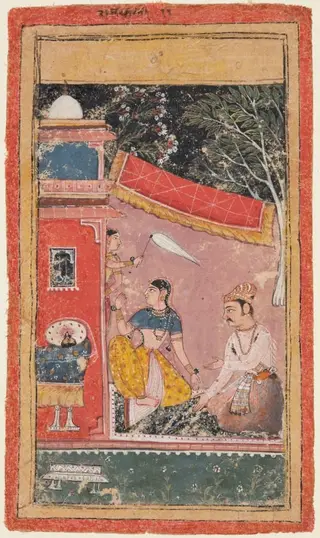
Created by an anonymous artist in India, the composition depicts a man and a woman, serving as the primary figures within its iconographic framework.
The artwork, dated to 1725, is a religious painting executed in ink and opaque watercolor on paper that centers on the tradition of Jainism. Created by an anonymous artist in India, the composition depicts a man and a woman, serving as the primary figures within its iconographic framework. While the specific narrative context or individual identities of these figures are not detailed in the available records, their inclusion within a work explicitly classified under the religious genre indicates that the scene illustrates a concept, episode, or devotional aspect integral to Jain belief systems.
The pairing of male and female subjects in this context likely represents a spiritual dynamic or a specific doctrinal teaching characteristic of the era and region of its production.
Technique & Style
The work is executed in ink and opaque watercolor on paper, a technique typical of Indian painting. The support is a sheet of paper, and the piece is classified as a painting. Its religious genre portrays Jainist themes, specifically a man and a woman, as indicated by the subject matter.
The artwork dates to 1725 and is held in the Metropolitan Museum of Art’s collection in New York, having been made in India. While the sources describe the medium, support, and iconography, they do not provide details about the artist’s handling, the painting’s condition, or finer formal qualities beyond its genre and depiction.
History & Provenance
The work titled Untitled was produced circa 1725 in India by an anonymous painter, as indicated by its inception date and creation location. Executed in ink and opaque watercolor on paper, it belongs to the Paintings category and falls under the religious genre, specifically depicting Jainism with figures of a man and a woman. The painting’s early history is unclear, but it entered the collection of the Metropolitan Museum of Art, where it remains on display.
Its provenance therefore traces from an Indian artistic context in the early 18th century to its acquisition and current ownership by the museum.
The work is held in the collection of the Metropolitan Museum of Art in New York. While the specific inventory or accession number is not detailed in the available records, the institution is confirmed as its current location. The provided sources do not list any specific past exhibitions or a detailed exhibition history for this piece.
The painting, created in India in 1725, remains part of the museum's holdings of religious art depicting figures associated with Jainism.
Context
The untitled painting, dated 1725 and executed in ink and opaque watercolor on paper, exemplifies 18th‑century Indian Jain religious art. Its depiction of a man and woman within a Jain narrative aligns with the genre’s devotional focus, as recorded in the work’s classification and described in the Metropolitan Museum of Art’s catalogue. The piece is attributed to an anonymous painter, a common circumstance for works of this period in Indian artistic production, and its presence in the Met’s collection underscores its significance as a representative example of Jain manuscript illustration.
Scholarship on the painting remains sparse, but its stylistic features have been noted in studies of Jain visual culture as indicative of regional artistic exchange.
Legacy
The 1725 Untitled painting, classified as a Jain religious work depicting a man and a woman, entered the Metropolitan Museum of Art collection, ensuring its preservation and scholarly access. Its status as an anonymous Indian artwork has prompted extensive research into early Indian miniature painting and the practice of anonymity among artists. Inclusion in major exhibitions and academic publications has shaped the narrative of Jain visual culture in Western art history, influencing subsequent studies and contemporary artists who reference its iconography.
The work’s legacy endures through ongoing exhibitions, citations in art historical literature, and its role as a reference point for discussions of religious art from 18th‑century India.
Overview
This untitled painting, rendered in ink and opaque watercolor on paper, presents a vibrant and intricate scene. It depicts numerous figures, both men and women, arranged in rows with raised hands, set against a background illuminated by gold ink. The artwork, originating from Gujarat, India, is approximately three centuries old, offering a glimpse into a specific cultural and religious tradition.
Artist & collection

- Untitled
 Untitled
 Raja Viram Dev
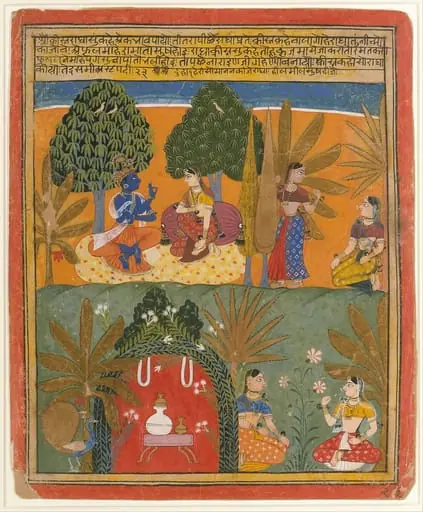 Untitled
 Untitled
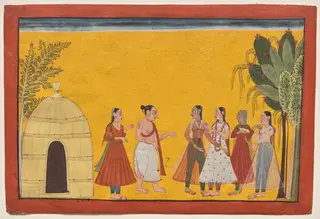 Rishyashringa addresses the courtesans, from the "Shangri" Ramayana
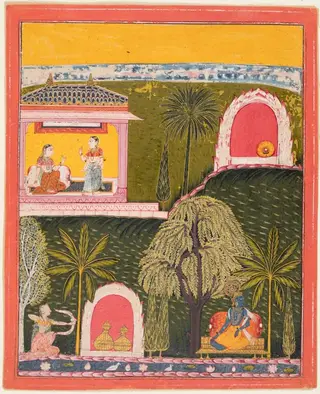 Rati, the Goddess of Erotic Love, Takes Aim at Krishna, from a Rasikapriya
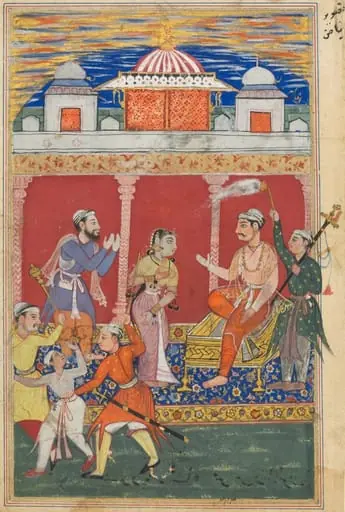 The prince’s ordeal continues, he is ordered away to be executed for the fifth time, from a Tuti-nama (Tales of a Parrot): Eighth Night
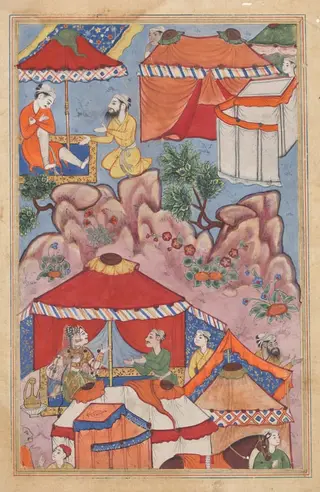 Bashir confides his love for Habbaza to an Arab friend, and sends him to her with a message, from a Tuti-nama (Tales of a Parrot): Twenty-fourth Night
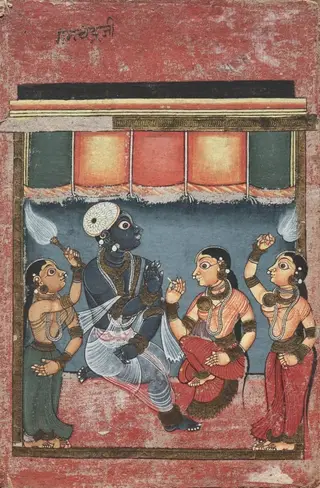 Krishna with Radha and Two Attendants (recto)
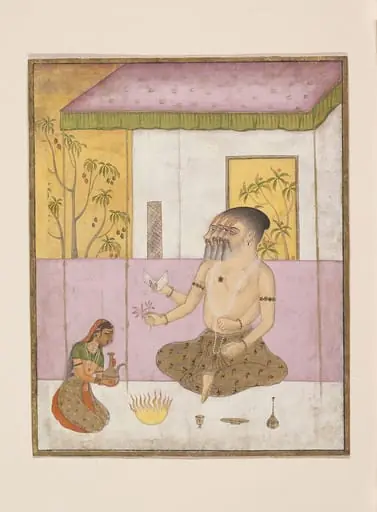 Untitled
 Lovers on a Terrace: Ramakali Ragini of Hindol, from a Bundi Ragamala