Artwork
Untitled
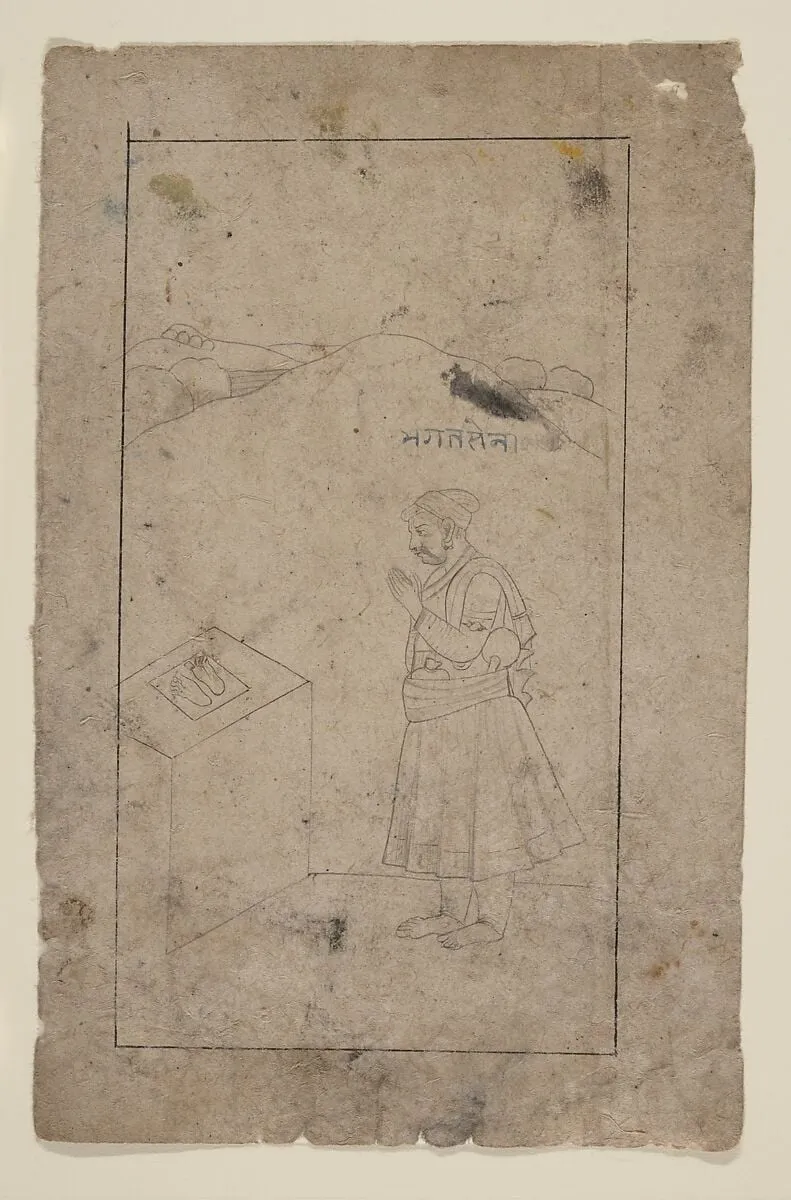
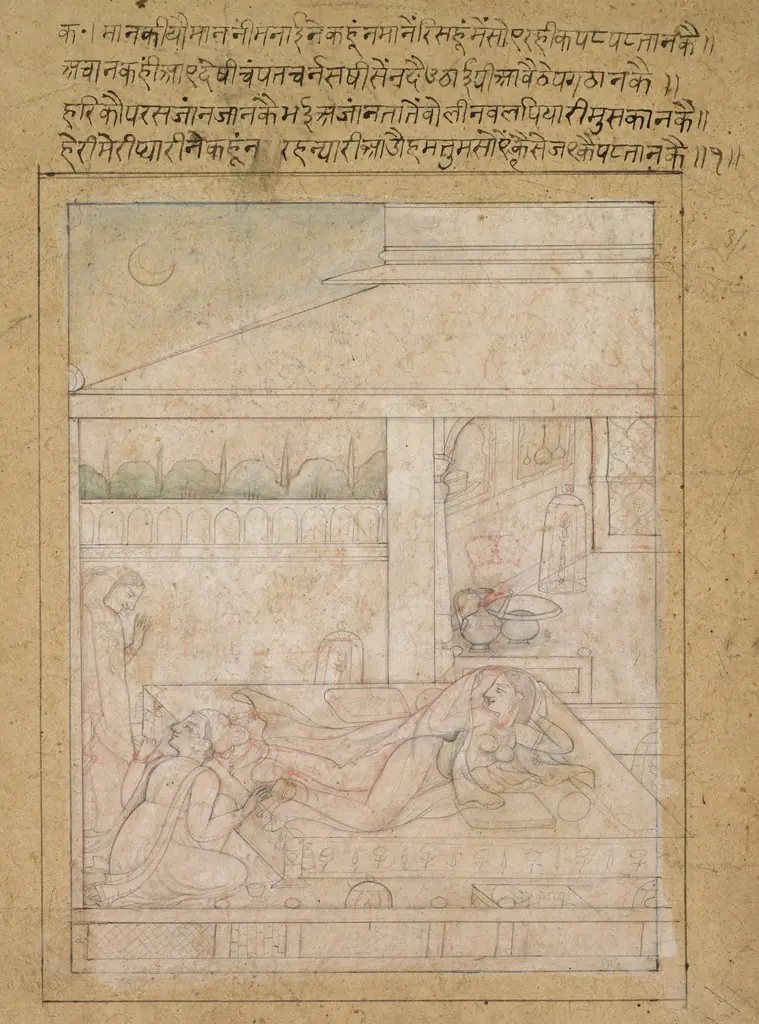
Untitled is an ink painting. It dates from 1753 and is held in the collection of the Metropolitan Museum of Art.
About this work
Subject & Meaning
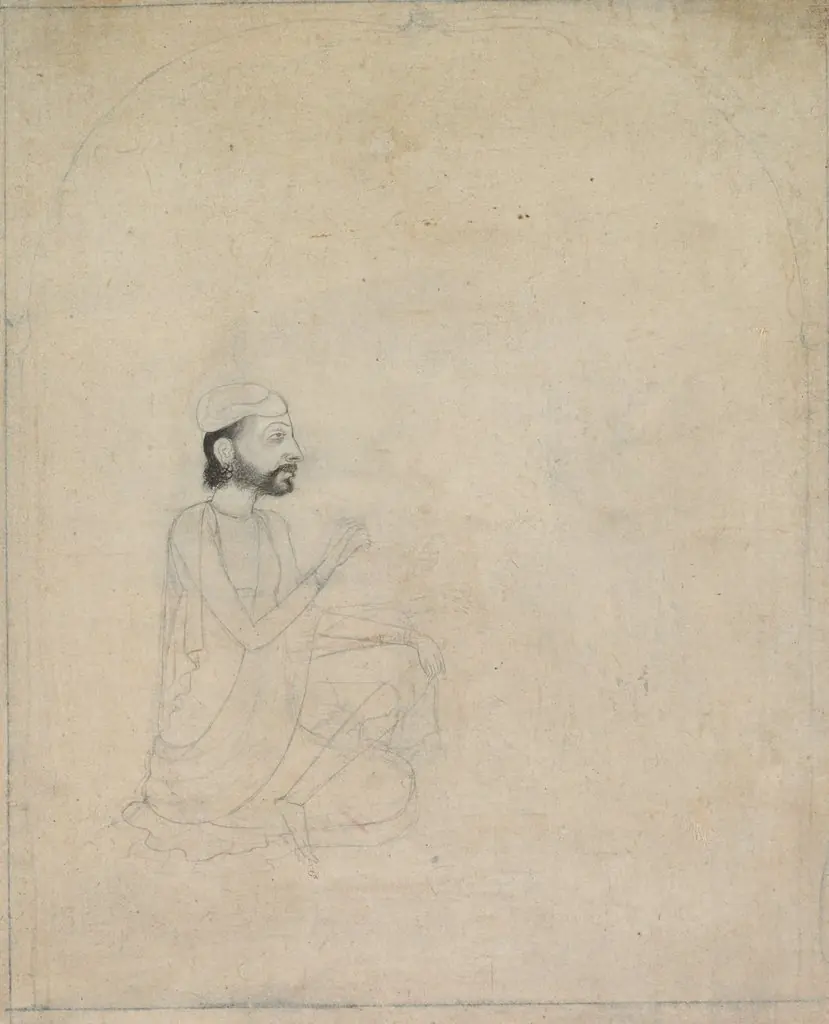
The painting, titled Untitled (1753), is an ink and wash landscape that portrays a solitary man within a natural setting.
The painting, titled Untitled (1753), is an ink and wash landscape that portrays a solitary man within a natural setting. As recorded in the Metropolitan Museum of Art’s catalogue and Wikidata entry, the work belongs to the landscape genre and was produced in India in the mid‑18th century. The figure is rendered in a minimalist style, but the sources do not elaborate on any iconographic or symbolic significance attached to the man, leaving his presence open to interpretation. The composition reflects the anonymous painter’s focus on atmospheric scenery rather than narrative storytelling.
History & Provenance
The ink and wash painting titled Untitled was created in 1753 by an anonymous artist in India. This landscape work, which depicts a man, measures 23.5 cm in height and 15.2 cm in width. While the specific commission details and initial ownership chain are not recorded in the available documentation, the work is currently held in the collection of the Metropolitan Museum of Art.
The piece is classified as a painting within the landscape genre and dates to the mid-18th century, reflecting artistic production from that region during that period.
The work is held in the collection of the Metropolitan Museum of Art, where it remains on view as part of the museum's holdings of paintings. According to its Wikidata record, the piece is catalogued at the institution and located there permanently. No specific accession number is recorded in the available sources, and no exhibition history beyond its presence in the Metropolitan Museum of Art's collection is documented.
Overview
This untitled work, executed in ink and wash on paper, depicts a solitary male figure within a landscape. Originating from a small kingdom in the Pahari hills of India, the piece's creator and its original purpose are not documented. It represents a characteristic style from the region, emphasizing a quiet, contemplative mood.
Technique & Style
The artwork is rendered using ink and wash on paper, employing a restricted tonal range primarily in shades of gray. This technique eschews bright colors in favor of a muted aesthetic. The ink lines are delicate and appear almost smudged, contributing to the gentle, atmospheric quality that defines the visual character of the scene.
Context
This drawing originates from a small, unnamed kingdom located within the Pahari hills of India. In such regions, artistic production was typically commissioned by local rulers rather than by patrons in larger urban centers. The work embodies a regional style known for its serene, ink-washed compositions, often featuring similar gentle scenes.
Artist & collection

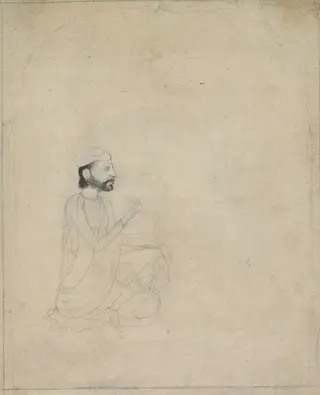
- Portrait of a Seated Man
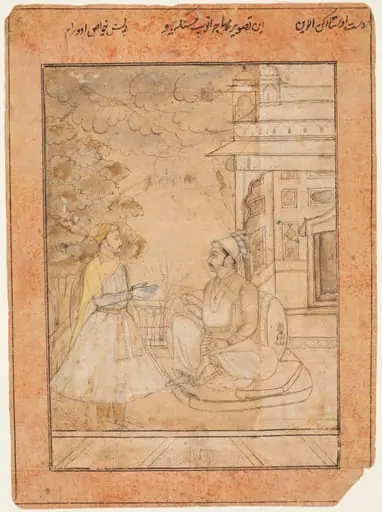 Maharaja Anup Singh of Bikaner (reigned 1669–98) Receives a Courtier
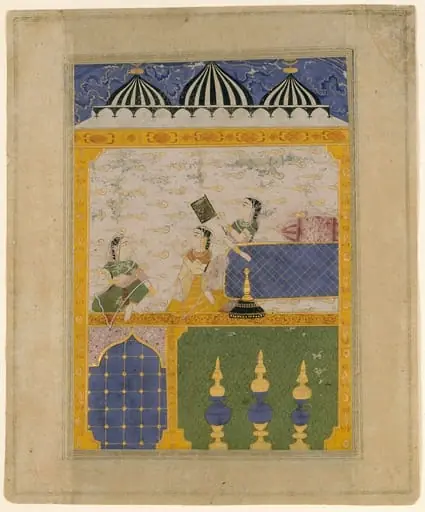 Untitled
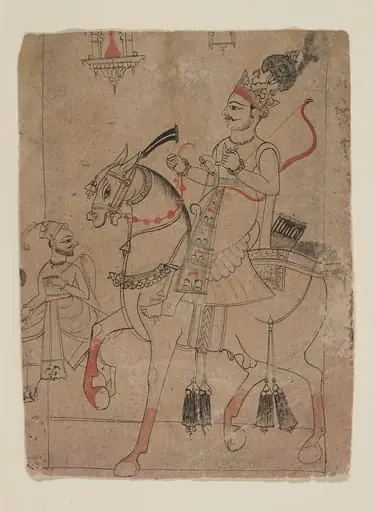 Untitled
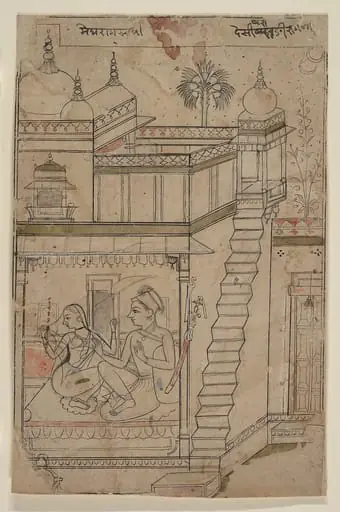 Untitled
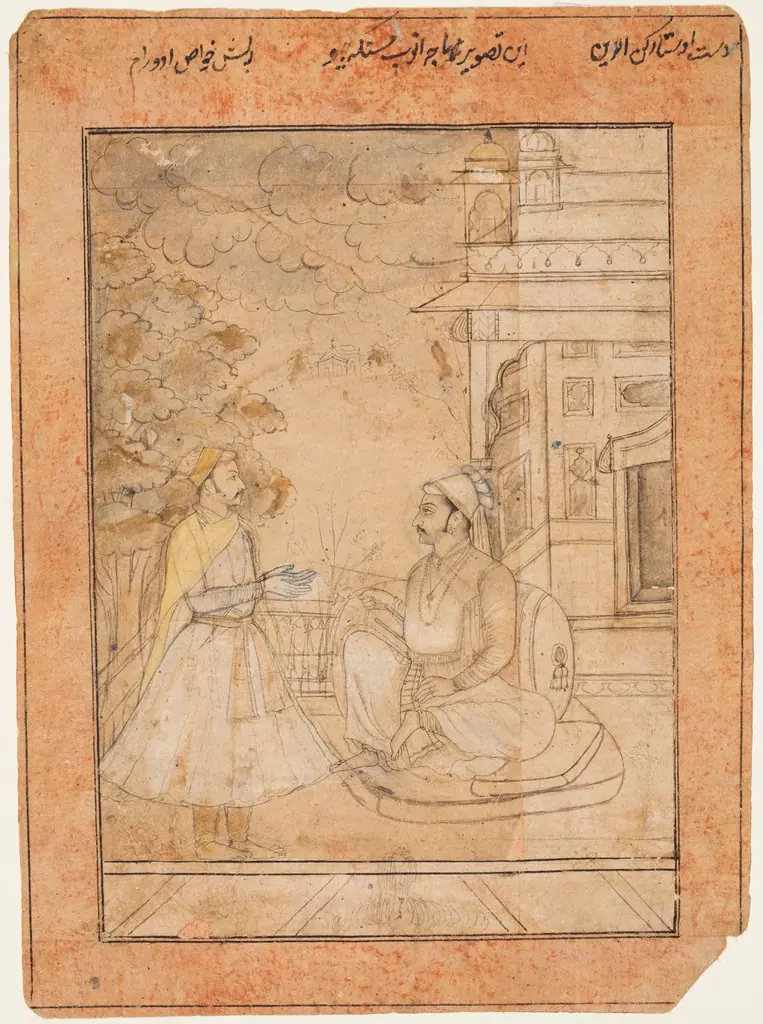 Maharaja Anup Singh of Bikaner (reigned 1669–98) Receives a Courtier
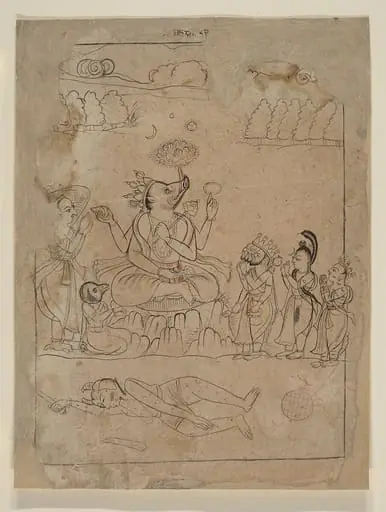 Untitled
 Portrait of a Seated Man
 A woman mistakes a cow for the Angel of Death, from a Lights of Canopus (Anwar-i Suhaili) of Kashifi (Iranian, d. 1504)
 Dhanasri Ragini
 Kabir and Two Followers on a Terrace (recto)
 Radha and Krishna's Reconciliation