Artwork
Untitled
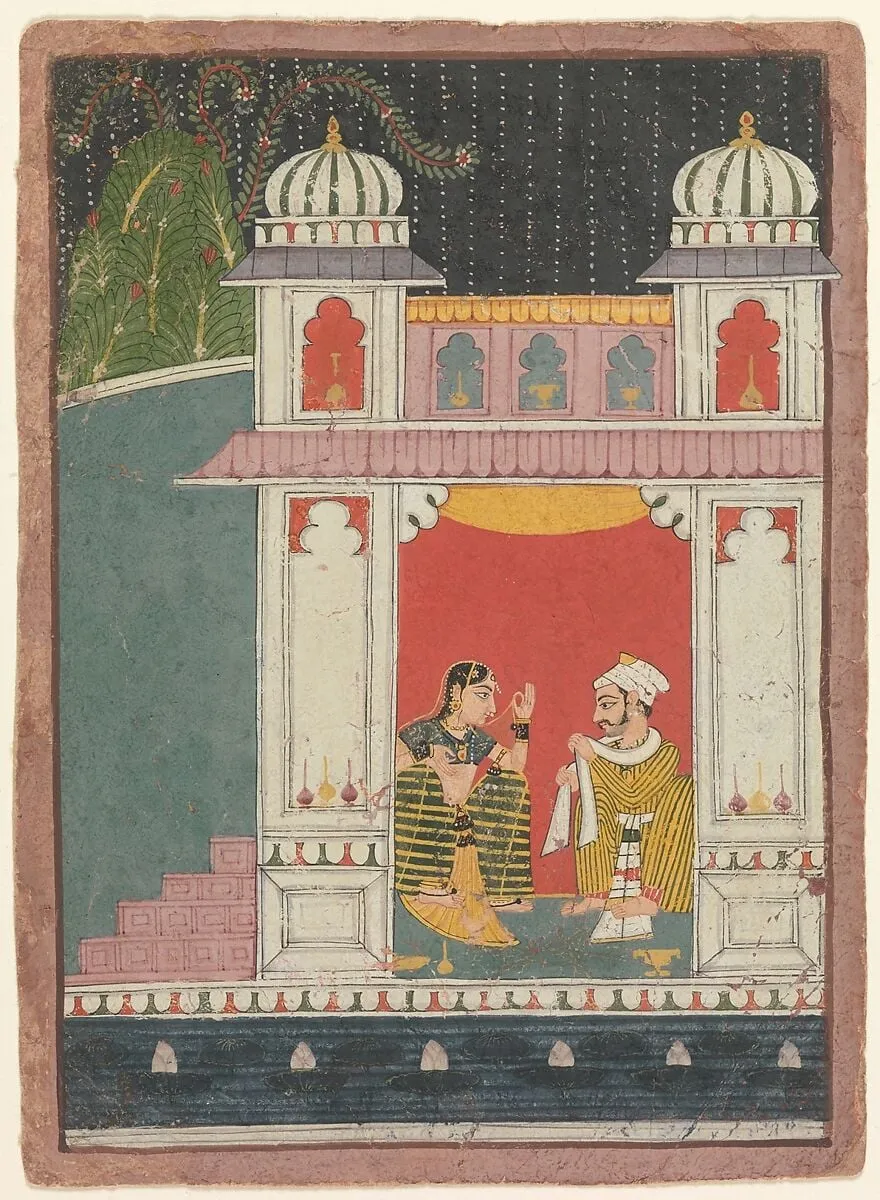
Untitled is a watercolor painting. It dates from 1670 and is held in the collection of the Metropolitan Museum of Art.
About this work
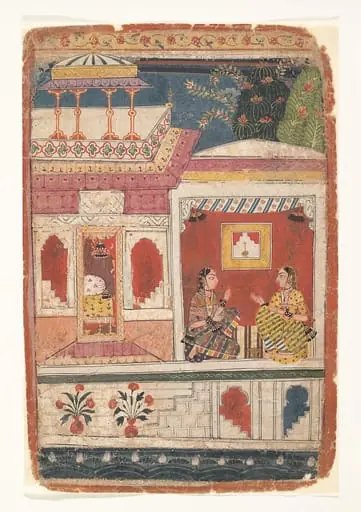
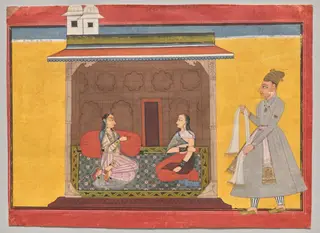
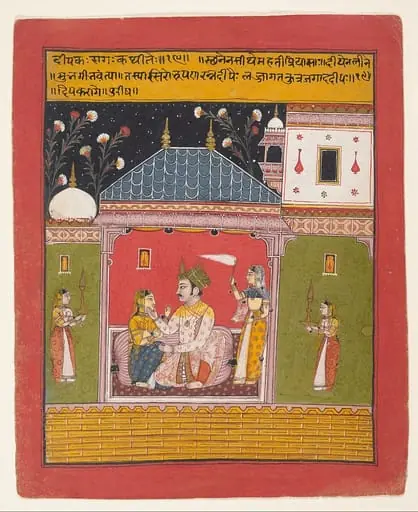
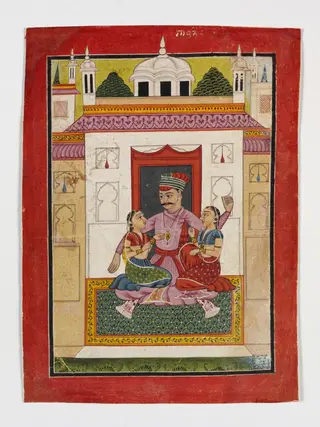
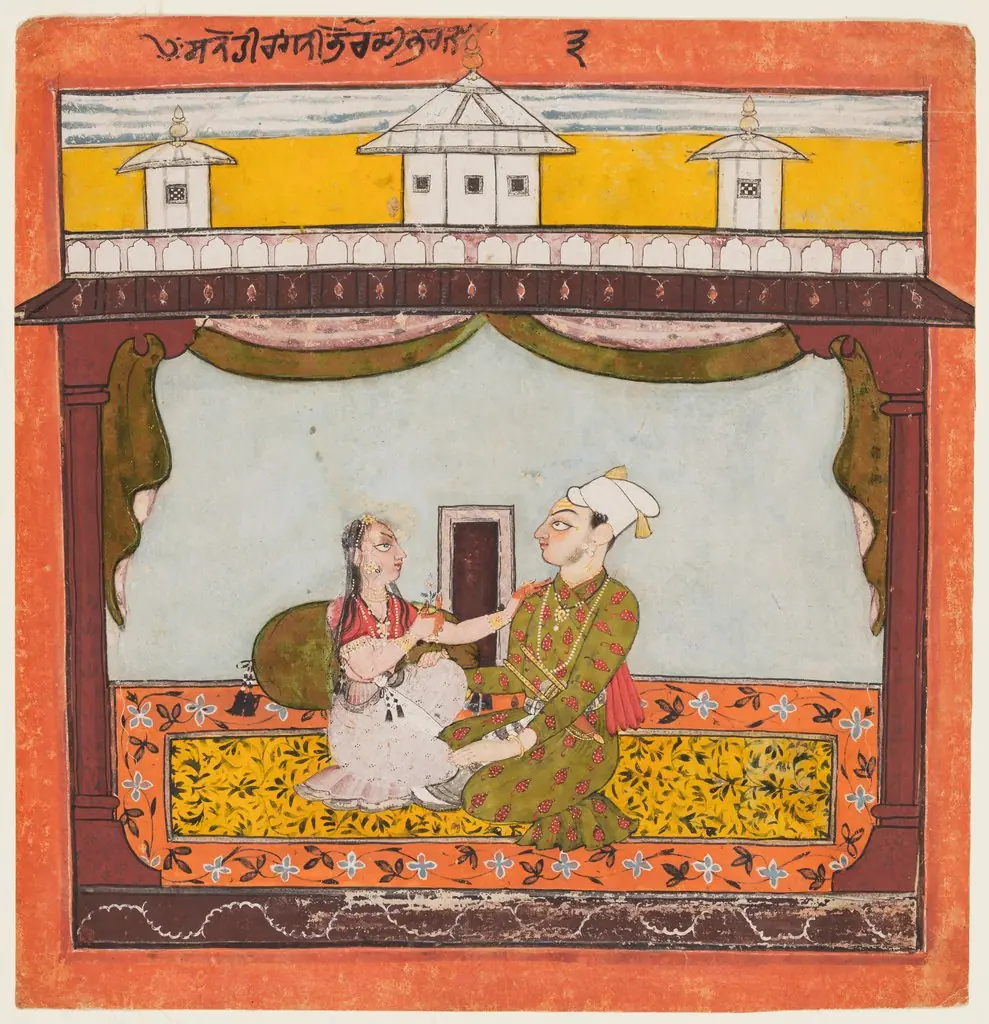
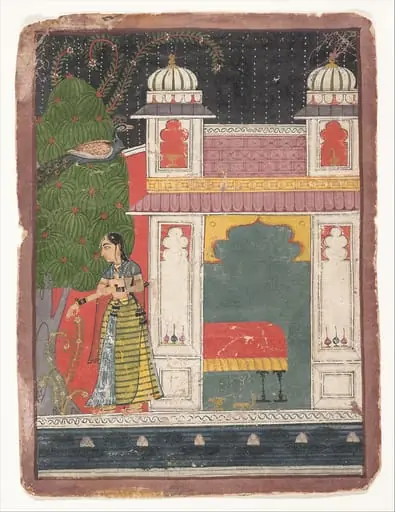
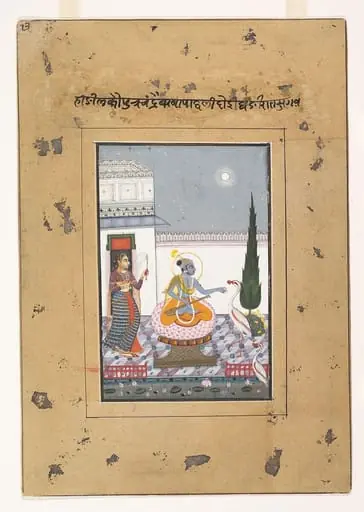
Two couples occupy a small garden pavilion, one pair seated and the other standing, amid flowers, patterned rugs, and soft light in bright ink and watercolor. Painted in Madhya Pradesh, India, around 1660 to 1680 by an unnamed hand, its colors are built in thin washes that let each layer show through.
Subject & Meaning
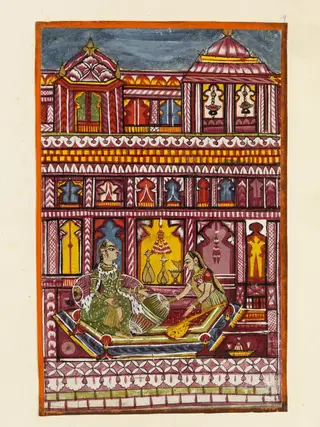
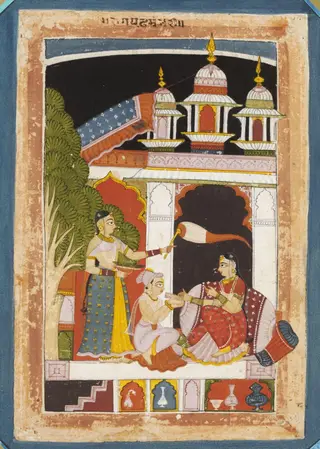
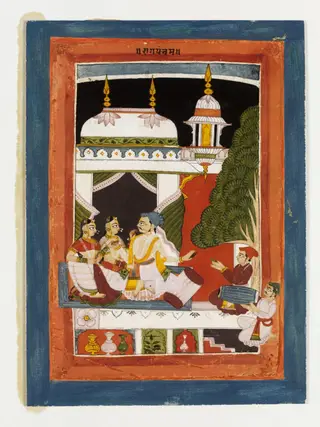
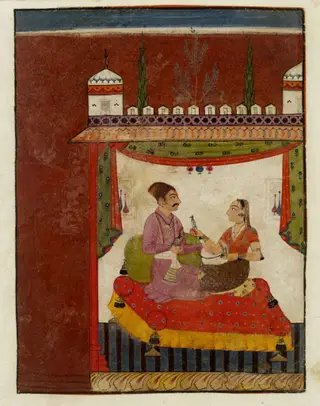
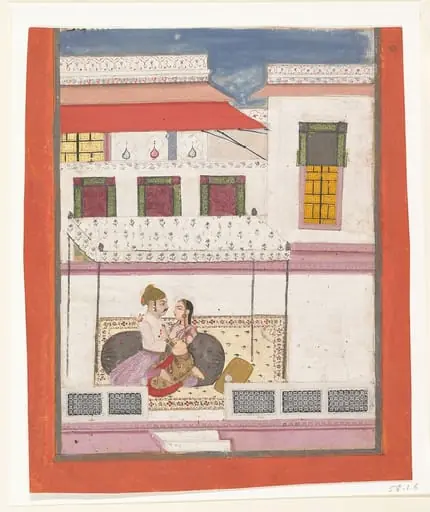
The painting depicts a couple, a man and a woman, positioned within or near a pavilion, rendered in ink and opaque watercolor on paper.
The painting depicts a couple, a man and a woman, positioned within or near a pavilion, rendered in ink and opaque watercolor on paper. The pavilion setting situates the figures within an architectural framework commonly associated with courtly or romantic encounters in Indian painting traditions of the period. The pairing of a male and female figure within such a structure typically represents themes of companionship, intimacy, or idealized love, while the pavilion itself serves as a symbolic marker of refined, sheltered space rather than the open landscape.
Together, the man, woman, and pavilion form a compact iconographic program centered on the depiction of an amorous or conjugal pair.
History & Provenance
The work is held by the Metropolitan Museum of Art in New York, where it is catalogued as an anonymous painting from India, dated to circa 1670. Its dimensions are recorded at 21.6 cm in height and 15.7 cm in width. The museum's collection entry aligns with the painting's depiction of a couple in a pavilion, corroborating its attribution and iconography. No separate accession number is provided in the cited sources.
Overview
This untitled painting, rendered in ink and opaque watercolor on paper, originates from Madhya Pradesh, India, dating to approximately 1660
80. It depicts an intimate scene within a garden pavilion, where two couples are present, one seated and the other standing. The composition is vibrant with floral motifs, intricate rug patterns, and a gentle illumination, characteristic of the period's artistic output.
Technique & Style
Executed with ink and opaque watercolor on paper, the painting demonstrates a refined application of color. The artist employed a glazing technique, layering thin washes of pigment to allow underlying tones to subtly show through, creating depth and luminosity. This method, combined with a distinctive visual language, contributes to the artwork's unique and personal aesthetic.
Context
This painting is representative of artistic production in Madhya Pradesh during the latter half of the 17th century. The region was a significant center for painting, known for its distinctive styles and themes. Examining similar works from this specific area of India can provide further insight into the broader artistic conventions and cultural expressions prevalent at the time.
Artist & collection