Artwork
Untitled
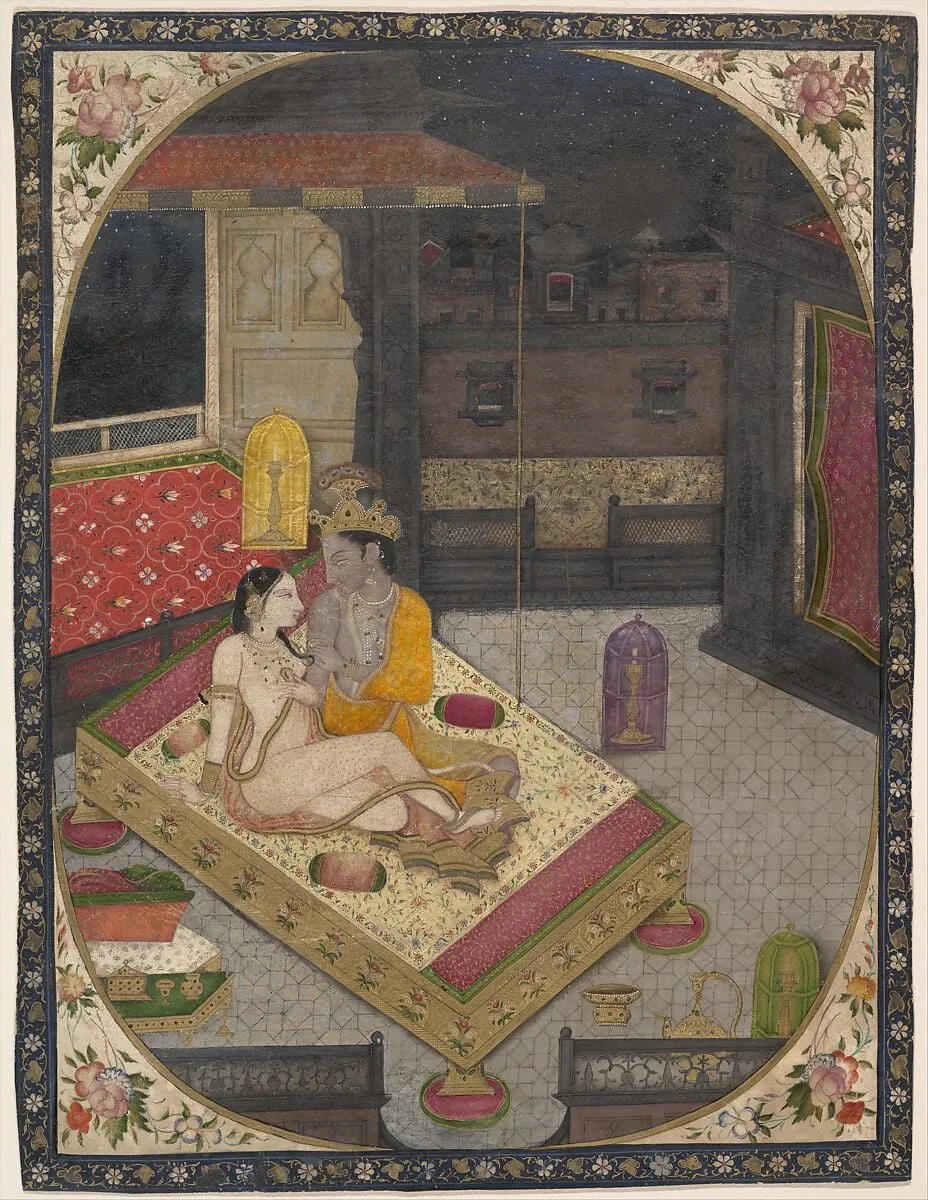
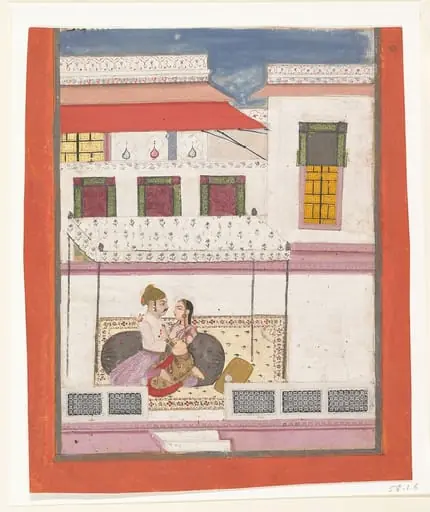
Untitled is a watercolor painting. It dates from 1830 and is held in the collection of the Metropolitan Museum of Art.
About this work
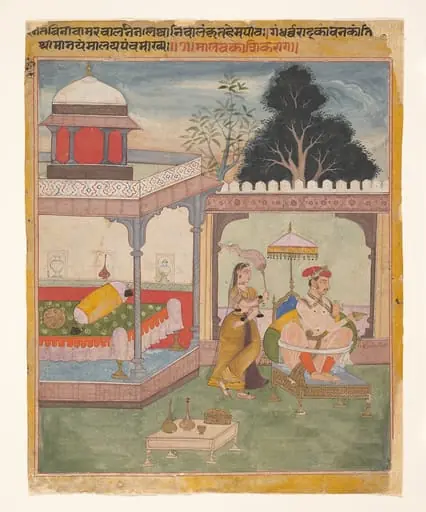
Two men lounge on a low bed in a small, dark room, one playing a flute while the other leans back to listen. A woman peeks from behind a curtain. Painted in India around 1830 by an unknown artist, the scene shows the god Krishna relaxing with a friend, built up in soft, thin layers of watercolor.
Subject & Meaning
The iconography aligns with the Radha-Krishna theme, emphasizing divine love and union within an intimate setting.
The painting depicts a nocturnal interior scene centered on a recumbent couple, identified as the Hindu deities Krishna and Radha, who are shown reclining on a bed. A standing male attendant, possibly a companion or chaperone, is positioned at the foot of the bed, while a woman stands nearby, adding a sense of domestic presence. The iconography aligns with the Radha-Krishna theme, emphasizing divine love and union within an intimate setting.
The inclusion of the bed and interior space underscores the private, earthly context of their celestial romance, reflecting the Bhakti tradition’s portrayal of sacred love as both human and transcendent.
Technique & Style
The work is executed in ink and opaque watercolor on paper, indicating a support of paper and a technique that combines linear ink drawing with layered, opaque washes. As a religious painting from 1830 made in India, it depicts Krishna and Radha together with a bed, interior setting, and additional male and female figures. The medium allows for fine detail in the figures while the opaque watercolor provides solid areas of color, characteristic of early‑19th‑century Indian painting approaches.
History & Provenance
The 1830 ink and opaque watercolor painting titled Untitled is held in the collection of the Metropolitan Museum of Art in New York. While the specific accession number is not detailed in the available records, the institution is confirmed as the current custodian of the work, which depicts Krishna and Rādhā within an interior setting. The provided sources do not list any specific past exhibitions or loan history for this piece, focusing instead on its physical dimensions and inclusion in the museum's holdings. The work is classified as a religious painting originating from India.
Overview
This untitled Indian painting, created around 1830, utilizes ink and opaque watercolor on paper. It portrays a scene featuring the Hindu deity Krishna, identifiable by his flute, alongside a companion in a private setting. A third figure, a woman, observes from behind a curtain.
The artist, whose identity remains unknown, employed a delicate layering technique to achieve subtle color transitions and atmospheric depth within the composition.
Context
The depiction of Krishna is a recurring theme in Indian art, reflecting his central role in Hindu mythology and devotional practices. This painting contributes to a rich visual tradition that illustrates various episodes from Krishna's life, often emphasizing his charm, musicality, and divine interactions. Such works served both aesthetic and spiritual purposes, inviting contemplation of the deity's attributes.
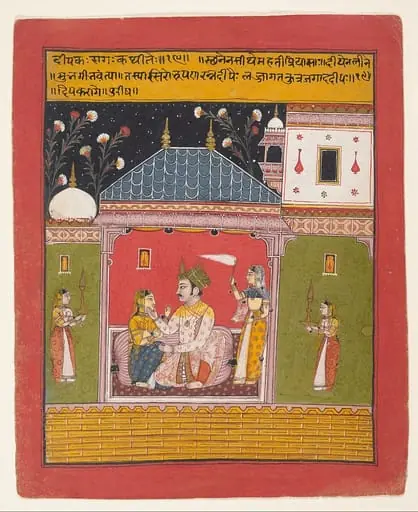
Artist & collection

- Untitled
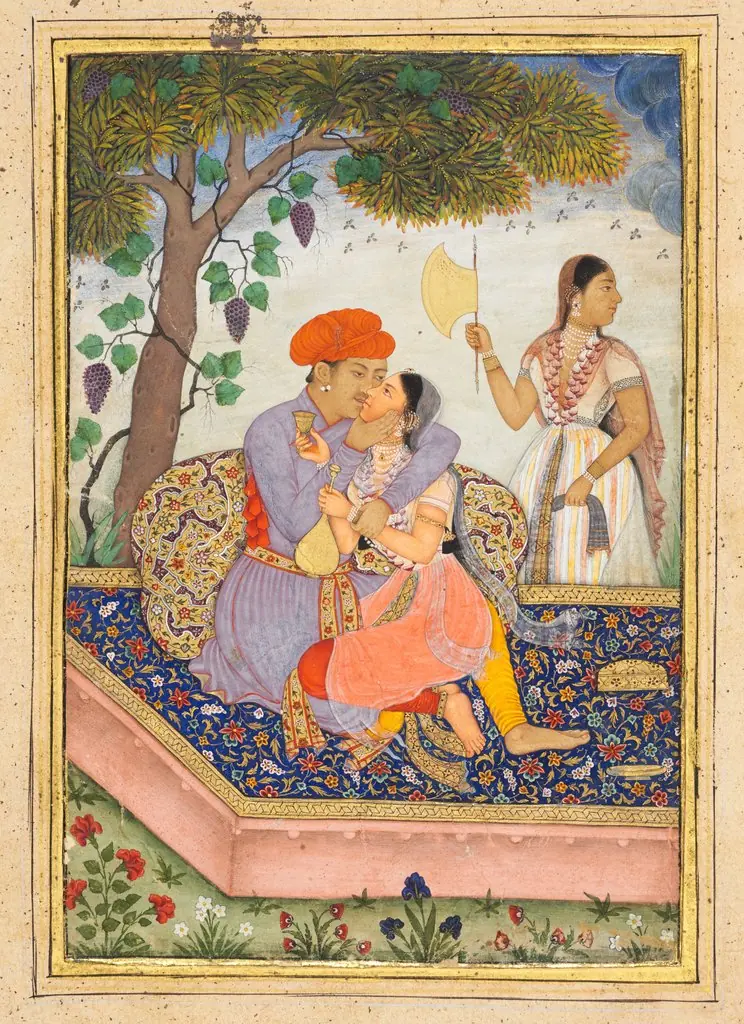 Lovers Embracing
 Lovers Embracing
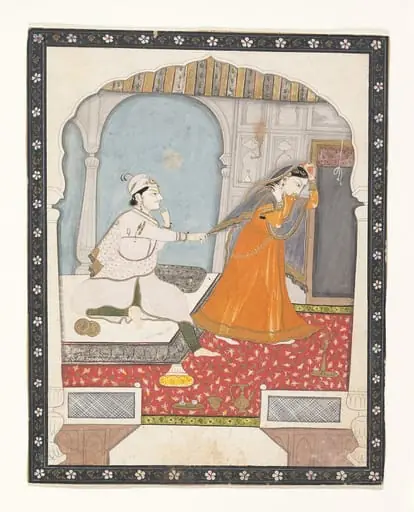 Untitled
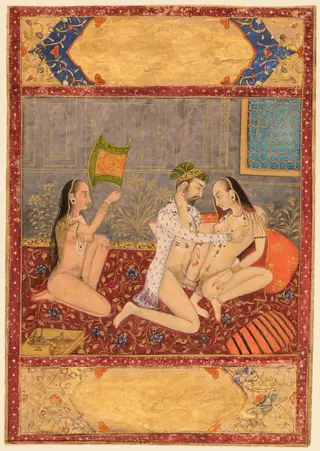 A King Making Love in the Harem
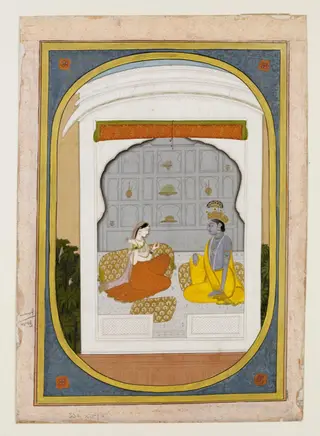 Radha and Krishna
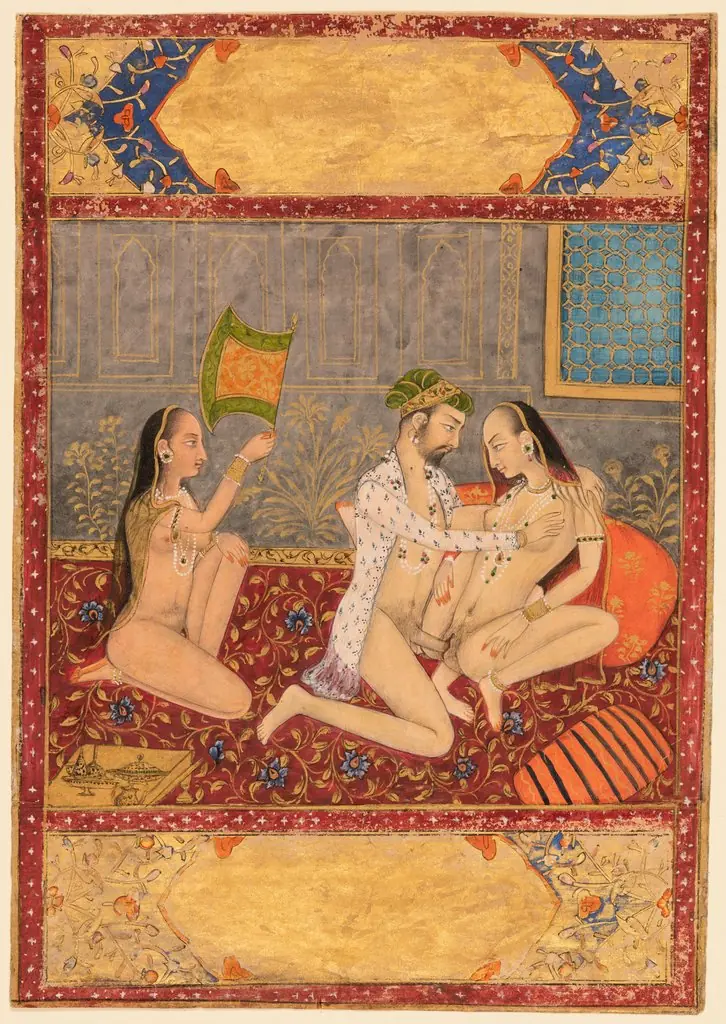 A King Making Love in the Harem
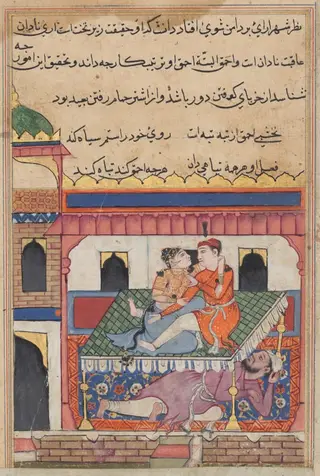 Shahr-Arai and her lover dallying on a bed beneath which is concealed her husband, from a Tuti-nama (Tales of a Parrot): Fortieth Night
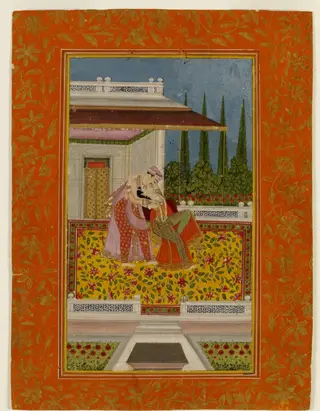 Malkaus Raga
 Untitled
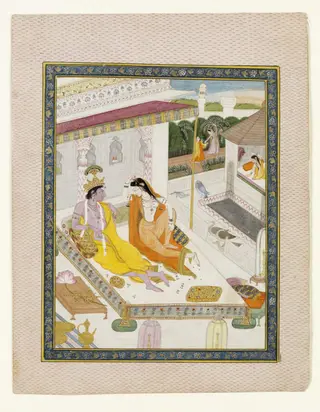 Radha and Krishna
 Untitled