Artwork
Untitled
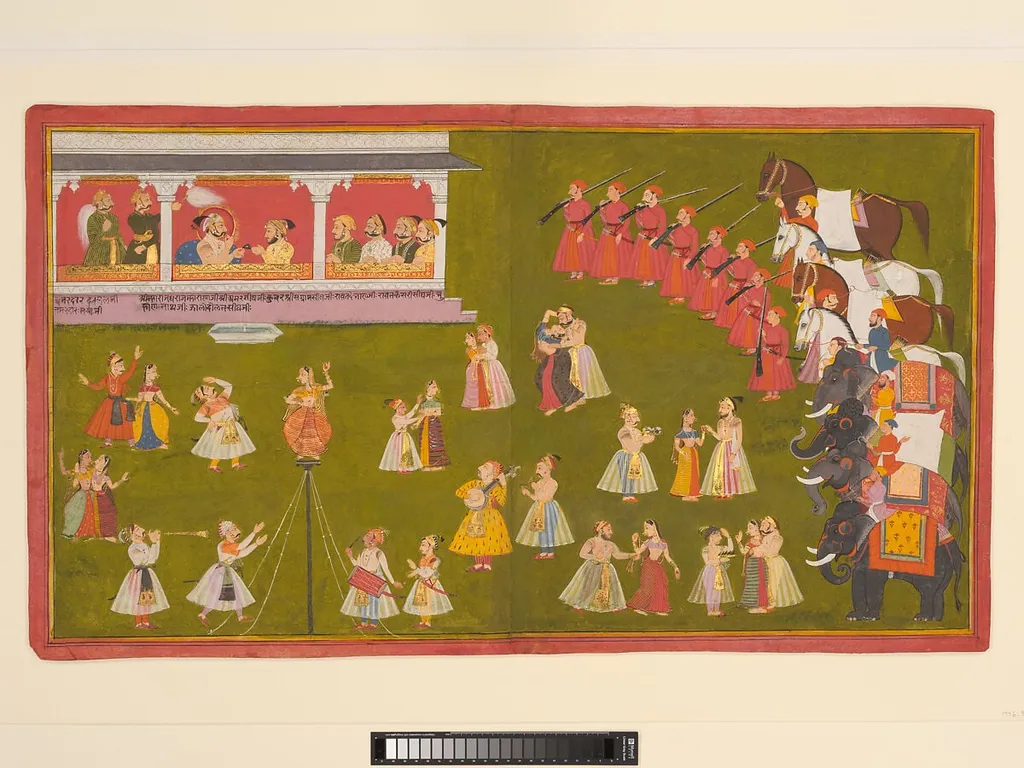
Untitled is a watercolor painting. It dates from 1706 and is held in the collection of the Metropolitan Museum of Art.
About this work
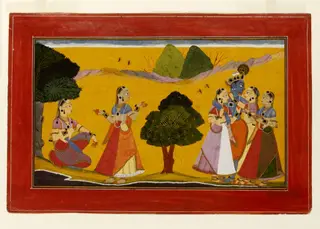
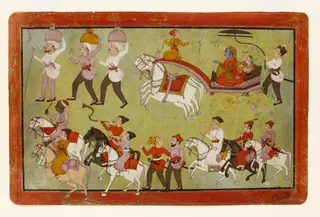
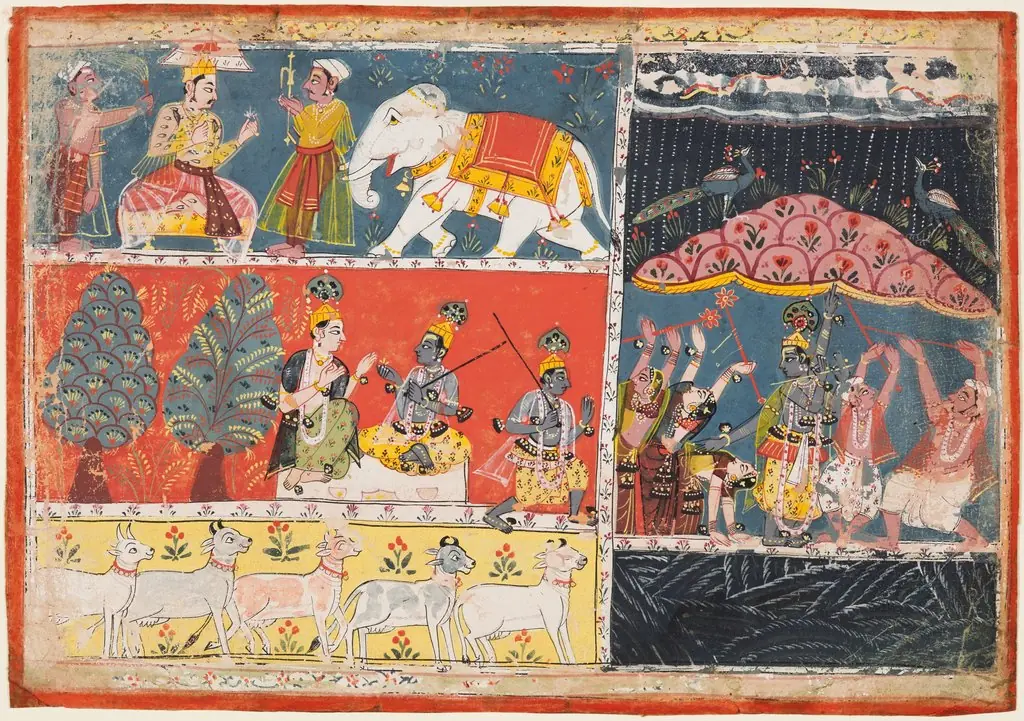
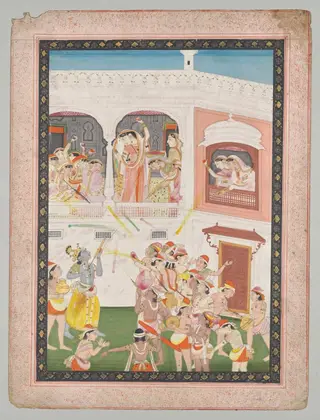
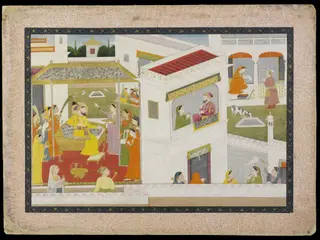
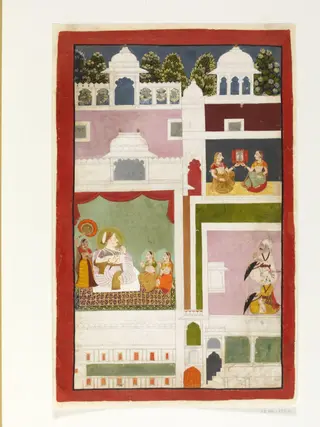
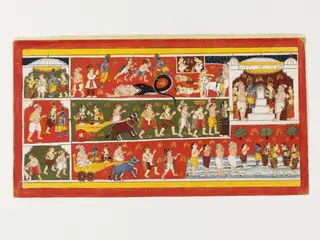
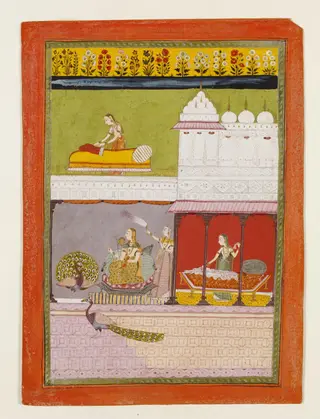
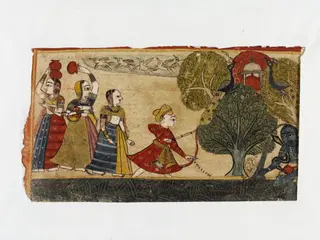
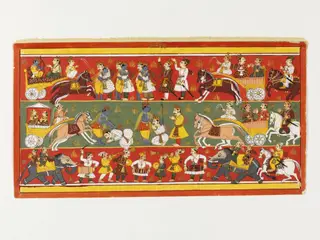
A crowded procession: men and women in bright clothes ride elephants and horses while others watch from below. Painted in India around 1706 in thin, layered watercolor that gives glowing color, its gold leaf makes the figures shimmer. The painter is unknown, but the style was common in royal courts.
Subject & Meaning
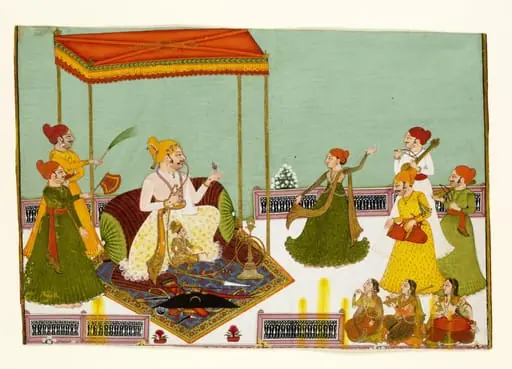
The inclusion of the ruler, Sangram Singh II, suggests the subject matter relates to royal entertainment or a specific ceremonial event attended by the monarch.
Created in 1706, this Indian genre scene portrays a performance involving specific figures and animals. The composition depicts Sangram Singh II alongside a man and a woman, who are accompanied by an elephant and a horse. As a work classified within the genre scene tradition, the painting focuses on capturing a moment of activity or courtly life rather than a mythological or religious narrative.
The inclusion of the ruler, Sangram Singh II, suggests the subject matter relates to royal entertainment or a specific ceremonial event attended by the monarch. The presence of both large animals and human performers indicates a spectacle, likely emphasizing the power and patronage of the depicted ruler through the grandeur of the performance.
Technique & Style
The work is executed in ink and opaque watercolor heightened with gold on paper, a combination typical of Indian miniature traditions of the early eighteenth century. The support is a single sheet of paper measuring approximately 90.8 cm in height by 52.1 cm in width, consistent with the album leaf format used for courtly imagery. Handling is precise and linear, with delicate washes modulating shadow and volume, while gold is reserved for highlights on textiles and architecture to signify status.
Stylistic qualities include a flattened yet spatially suggestive composition, hierarchical scale, and a restrained palette punctuated by jewel-like accents, reflecting the refined aesthetics of Rajput painting under Mewar patronage.
History & Provenance
Created in 1706 in India, this ink, opaque watercolor, and gold work on paper was produced by an anonymous artist. The painting, which depicts a genre scene featuring Sangram Singh II alongside figures, horses, and elephants, currently resides in the collection of the Metropolitan Museum of Art. While the specific circumstances of its commission and the detailed chain of ownership prior to its museum acquisition are not recorded in the available documentation, the work's inception date and place of origin are established as early eighteenth-century India.
Overview
This untitled painting, executed in India around 1700, employs ink, opaque watercolor, and gold on paper. It depicts a lively, crowded gathering, featuring numerous figures on horseback and atop elephants, alongside observers on foot. The artwork exemplifies the vibrant visual culture prevalent in the region during this period, characterized by rich detail and a luminous palette.
Artist & collection