Artwork
Untitled

Untitled is a watercolor painting. It dates from 1116 and is held in the collection of the Metropolitan Museum of Art.
About this work
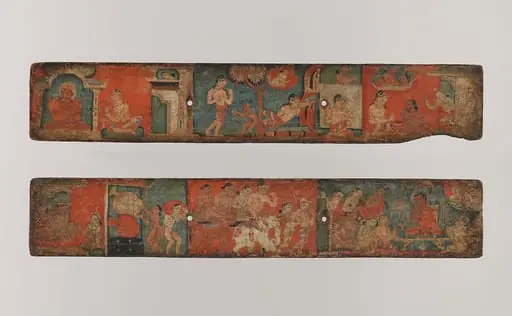
A small wooden panel crowds with figures, men in white robes and women in bright saris, gathered under a flowering tree. Their faces are nearly identical though each holds a different pose. Made around 1116 for a Jain temple in Gujarat, where every soul counts as equal whatever its station. The artist is unknown.
Subject & Meaning
The composition's emphasis on everyday figures within a sacred context highlights the integration of the mundane and the divine in Jain thought.
The work, dated to 1116 and executed in opaque watercolor on wood, portrays a Jain narrative that includes a man and a woman, suggesting a communal or mythic scene within the Jain tradition. Its religious genre is underscored by the depiction of Jainism, indicating symbolic references to ascetic ideals and spiritual partnership. As an anonymous Indian painting now held by the Metropolitan Museum of Art, the piece functions as a devotional image, using iconography to convey Jain doctrinal concepts.
The composition's emphasis on everyday figures within a sacred context highlights the integration of the mundane and the divine in Jain thought.
Technique & Style
The work is executed in opaque watercolor applied to a wooden panel, a technique used in early Indian painting where pigment is laid on a solid support to achieve vivid, matte surfaces. The wooden support measures approximately 5.5 cm in height and 32.4 cm in width, providing a rigid ground in the long, narrow proportions of a manuscript cover. The limited palette and flat, outlined figures reflect a Jain religious subject, with the composition centered on a man and woman rendered in a stylized, flat manner.
History & Provenance
Created in 1116 in India, this opaque watercolor on wood is attributed to an anonymous artist. The work, which depicts figures associated with Jainism, is held in the collection of the Metropolitan Museum of Art under the title Untitled. While the specific circumstances of its commission and the details of its ownership chain prior to entering the museum are not detailed in the available records, its inception date and place of origin are established as early twelfth-century India. The sources do not specify an explicit accession number or record any exhibition history.
Context
The painting, dated to 1116 and executed in opaque watercolor on wood, is a religious work depicting Jain narratives with male and female figures; it was produced in India and entered the collection of the Metropolitan Museum of Art. As anonymous workshop output from the early twelfth century, the piece exemplifies the illustration of Jain devotional iconography and contributes to the broader corpus of South Asian manuscript and panel traditions. Its attribution to an unidentified painter reflects the difficulty of reconstructing artistic authorship in pre-modern Indian art.
Overview
This untitled painting, rendered in opaque watercolor on a small wooden panel, depicts a dense gathering of figures. Men in white robes and women in vibrant saris congregate beneath a blossoming tree, creating a visually rich and crowded scene. The composition emphasizes a collective presence, characteristic of its devotional purpose.
Artist & collection

- Untitled
 Untitled
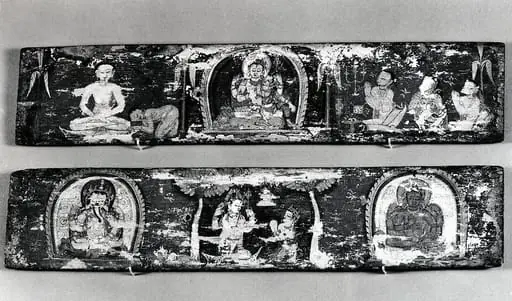 Untitled
 A Prince Performs Austerities (recto); Shiva and His Followers Return to Mount Kailash (verso), from a Romance of Chandrabhanu and Lavanyavati of Upendra Bhanja (1670–1740)
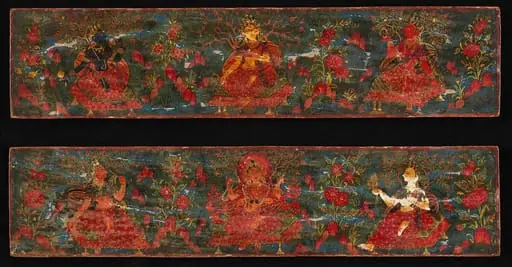 Untitled
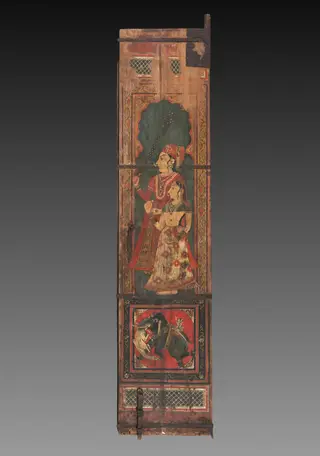 Painted Door
 Four bodhisattvas and two attendants flanking Vajrasattva, bottom cover, from a Manuscript of the Perfection of Wisdom in Eight Thousand Lines (Ashtasahasrika Prajnaparamita-sutra)
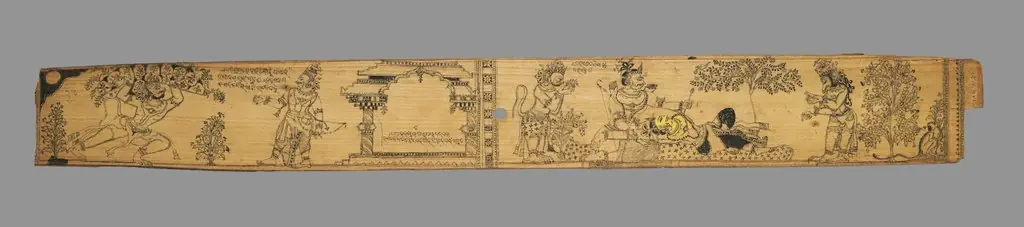 The Monkeys and Bears Fight Ravana and His Demons (verso), from a Romance of Chandrabhanu and Lavanyavati of Upendra Bhanja (Indian, died 1740)
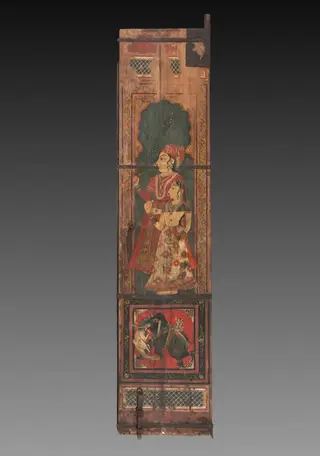 Painted Door
 Manuscript of the Perfection of Wisdom in Eight Thousand Lines (Ashtasahasrika Prajnaparamita-sutra)
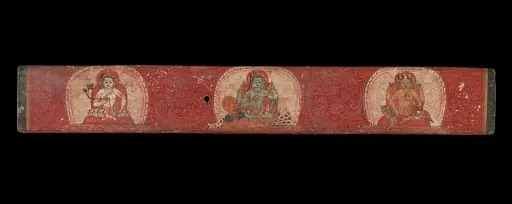 Untitled
 Perfection of Wisdom in Eight Thousand Lines: Ashtasahasrika Prajnaparamita: Back Cover