Artwork
Untitled
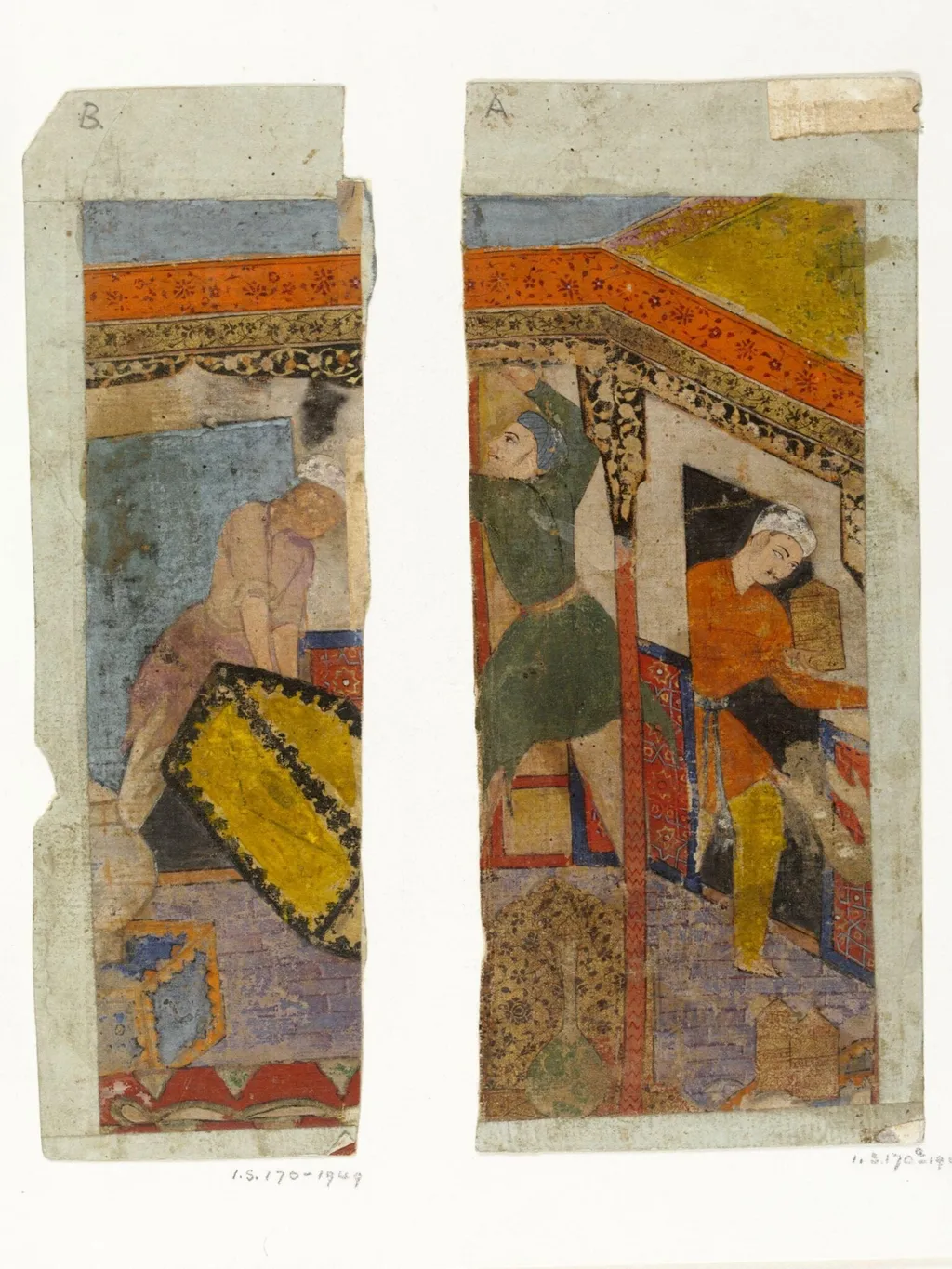
Untitled is a paint painting by the Renaissance artist Unknown. It dates from 1562 and is held in the collection of the Victoria and Albert Museum.
About this work
Overview
Created in 1562, this small opaque watercolor on cloth is a surviving fragment of an illustration for the Hamzanama, the epic romance commissioned by the Mughal court. The work portrays interior scenes with figures in vivid, though now faded, reds, blues and golds, and shows the characteristic intricate detailing of early Mughal painting.
Subject & Meaning
The fragment presents two separate vignettes: on the left, a woman in a blue garment stands beside a yellow drapery; on the right, a man in a red robe and turban sits beneath a doorway, holding a scroll. The domestic setting and the presence of the scroll suggest a narrative moment drawn from the larger heroic tale, though the exact episode remains unidentified.
Technique & Style
Executed in opaque watercolor on cloth, the piece employs bright pigments applied in layered washes, creating a luminous surface despite age‑related fading. The composition features delicate linear patterns on walls and floors, a hallmark of the early Mughal synthesis of Persian miniature conventions with Indian decorative motifs.
History & Provenance
The Hamzanama project marked the first major undertaking of the newly established Mughal atelier, directed by two Iranian masters and staffed by artists from northern Hindustan. Work on the series continued for fifteen years during Emperor Akbar’s reign. This particular fragment entered the Western market when Sir Leigh Ashton purchased it in Istanbul, where it later entered a museum collection.
Context
The painting belongs to the formative phase of Mughal visual culture, when court patronage blended Persian artistic traditions with indigenous Indian styles. The Hamzanama illustrations served both as decorative objects and as visual narrations of the heroic exploits of Hamza, reinforcing imperial ideals of bravery and cultural synthesis.
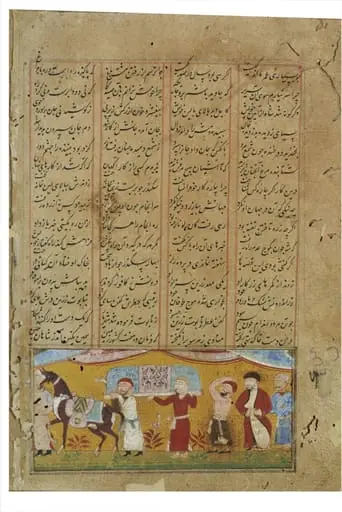
Artist & collection









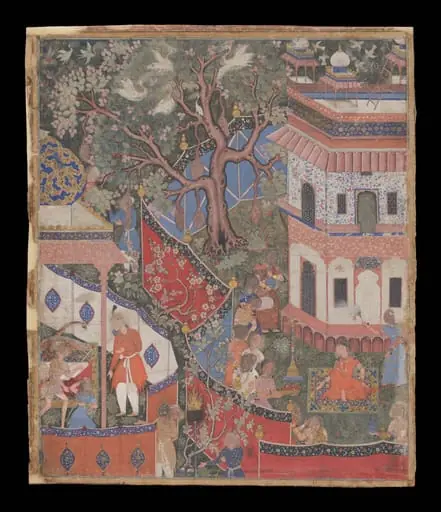 Rustam and Mihrafroz prepare for their wedding
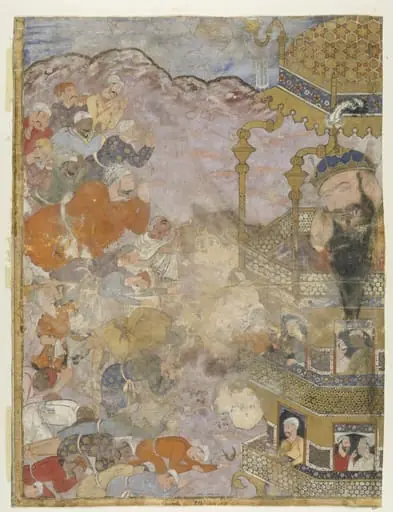 Umar is received by the giant Zumrud Shah
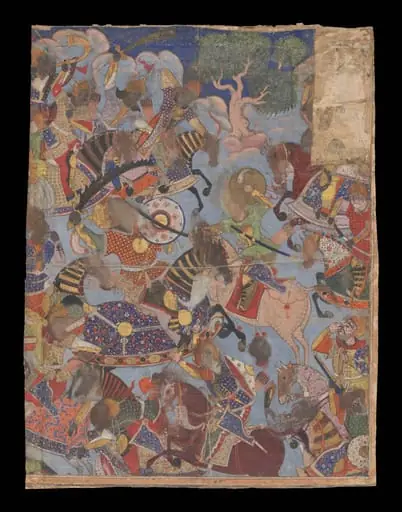 Hamza's army battles Girang's men and kills a giant
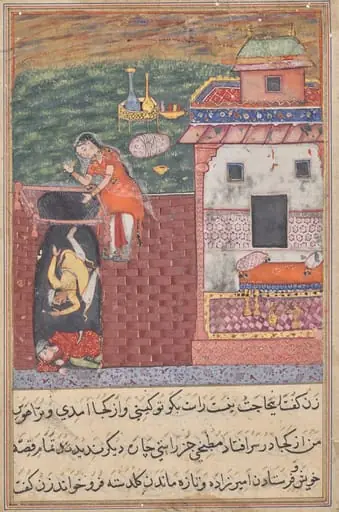 The two cooks, who attempt to seduce the warrior’s loyal wife, are trapped by her in a cellar, from a Tuti-nama (Tales of a Parrot): Fourth Night
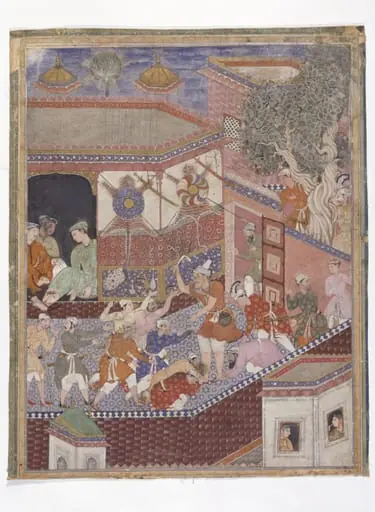 Umar searches for Hamza
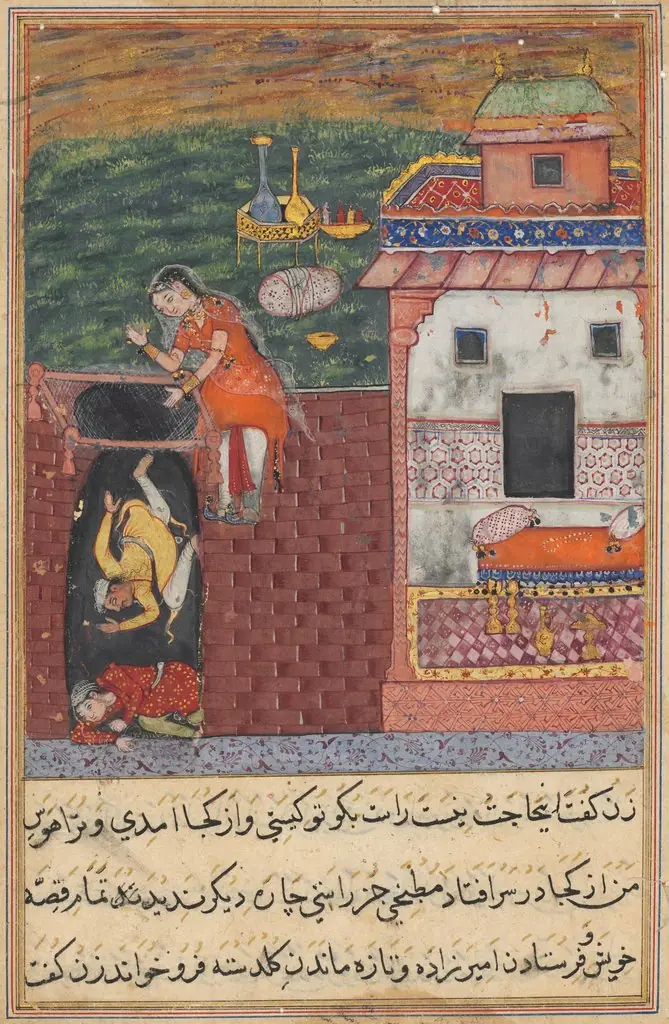 The two cooks, who attempt to seduce the warrior’s loyal wife, are trapped by her in a cellar, from a Tuti-nama (Tales of a Parrot): Fourth Night
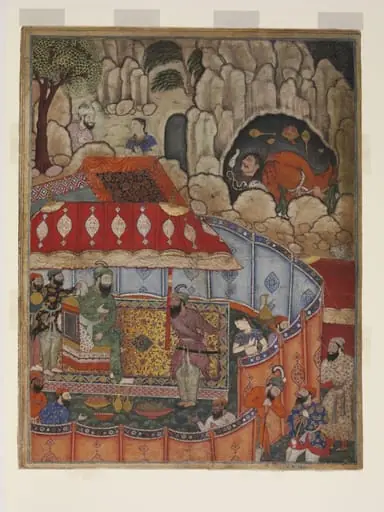 Hamzanama
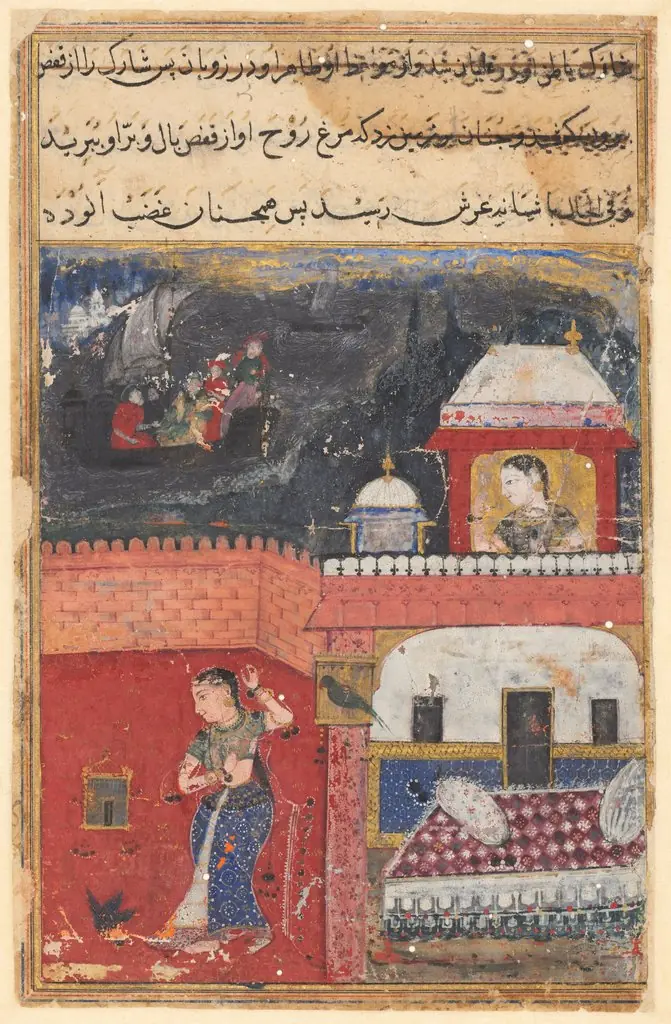 Khujasta kills the pet mynah who advises her not to be unfaithful to Maymun, her husband, from a Tuti-nama (Tales of the Parrot): First Night
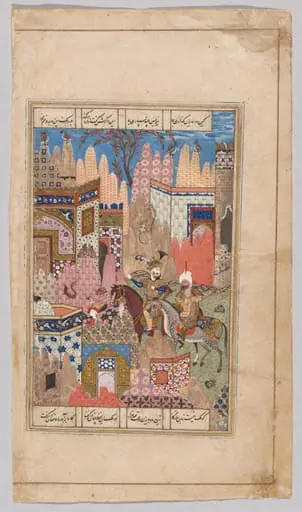 King Anushirwan and the Owls, from the Khamsa of Nizami
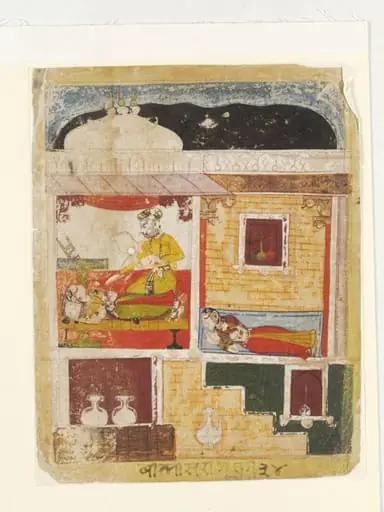 Vibhasa Ragini