Artwork
Untitled
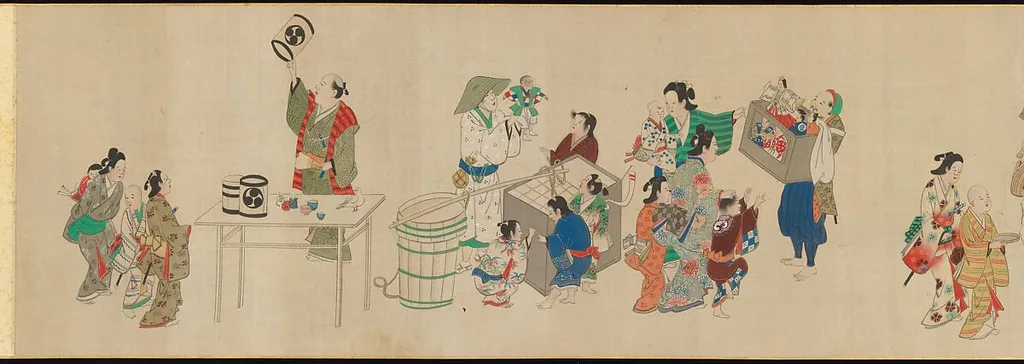
Untitled is an ink painting. It dates from 1749 and is held in the collection of the Metropolitan Museum of Art.
About this work
Subject & Meaning
Created in Japan in 1749, this handscroll presents a genre scene featuring a gathering of figures that includes a man, a woman, a boy, and a girl.
Created in Japan in 1749, this handscroll presents a genre scene featuring a gathering of figures that includes a man, a woman, a boy, and a girl. The composition is anchored by the presence of a barrel and a puppet, which serve as central visual elements alongside the human subjects. While the specific narrative action or the identity of the anonymous artist remains unrecorded in the available documentation, the inclusion of a puppet within a domestic or social setting suggests a focus on everyday life, performance, or perhaps a specific folk tradition.
The work functions as a depiction of a momentary interaction among these varied characters, utilizing ink and color on silk to capture the details of their attire and the surrounding objects without explicit allegorical markers identified in current records.
History & Provenance
The handscroll painting titled Untitled, dated 1749, is held in the collection of the Metropolitan Museum of Art in New York. The work, attributed to an anonymous Japanese artist, bears the accession number 45.97.6 within the museum's records. Classified as a genre scene executed in ink and color on silk, the scroll depicts a narrative involving a man, woman, boy, girl, a puppet, and a barrel.
While the provided sources confirm the artwork's current location and specific inventory designation, they do not document a history of public exhibitions or loan records for this piece.
Context
The work titled Untitled, dated 1749, is a Japanese handscroll painted in ink and color on silk that portrays a barrel, boy, girl, man, puppet, and woman; it is classified as a genre scene. The piece is attributed to an anonymous painter and is part of the Metropolitan Museum of Art collection (accession 45.97.6). Its subject matter exemplifies the mid‑Edo period fascination with everyday activities, and scholarship uses it to illustrate the role of anonymous artists in shaping genre painting in Japan.
The work’s museum presentation highlights its significance within broader narratives of 18th‑century Japanese art and the study of popular cultural motifs.
Overview
This untitled handscroll, rendered in ink and color on silk, presents a dynamic street scene. The artwork unfolds horizontally, inviting viewers to progress from right to left across its length. It depicts a lively gathering of individuals, including men, women, boys, and girls, interspersed with numerous puppet figures.
The composition captures a moment of everyday life, characterized by its detailed yet fluid portrayal of a public space.
Technique & Style
The artist employed a distinctive approach to execution, utilizing quick and light brushstrokes to define the various elements of the composition. This technique contributes to the overall sense of movement and spontaneity within the scene. Furthermore, the deliberate bleeding of the ink was used to soften the contours of figures and objects, lending a subtle atmospheric quality to the artwork's visual texture.
Artist & collection

- Untitled
 Untitled
 Untitled
 Untitled
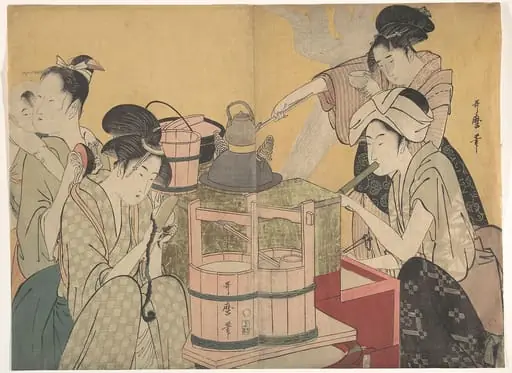 Untitled
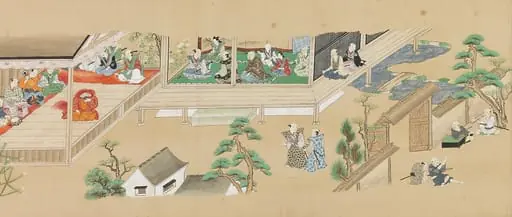 能楽風俗図絵巻|Six Noh Performances in Scenes from Daily Life
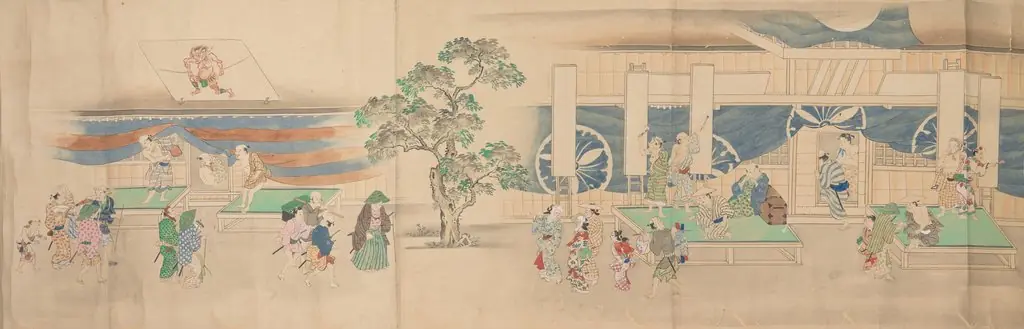 Kabuki Theater
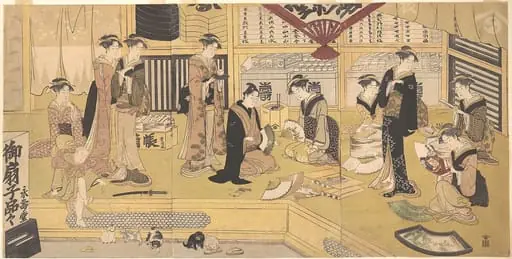 御影堂扇屋図|The Mieidō Fan Shop
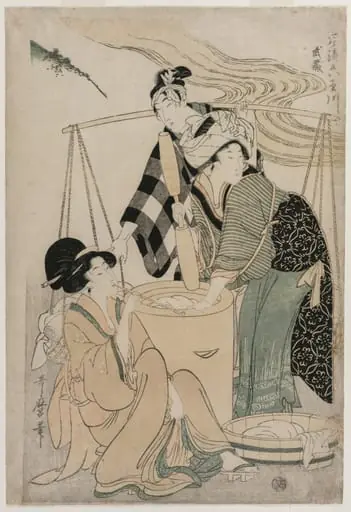 Settsu Province from the series Fashionable Six Jewel Rivers (Furyu Mu Tamagawa)
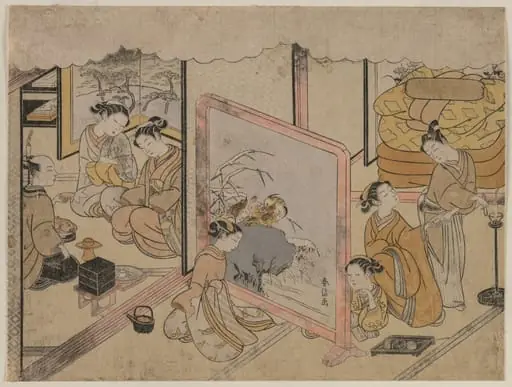 Drinking a Cup of Wine Before Retiring for Bed (From an Untitled Series)
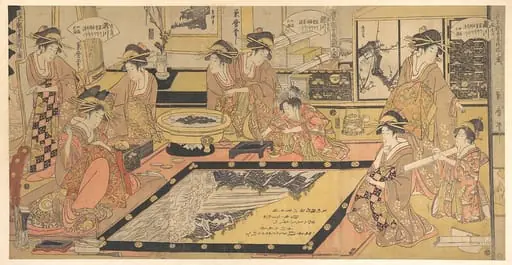 『浅草観音奉掛額之 図』 「扇屋内滝川 富川、粂川、玉川、津川、歌川、清川 め浪、お浪」|A Votive Picture to Be Donated to the Kannon of Asakusa (Asakusa Kannon hō kakegaku no zu), by Takigawa of the Ōgiya, Kamuro Menami and Onami, with Tomikawa, Kumegawa, Tamagawa, Tsugawa, Utagawa, and Kiyokawa
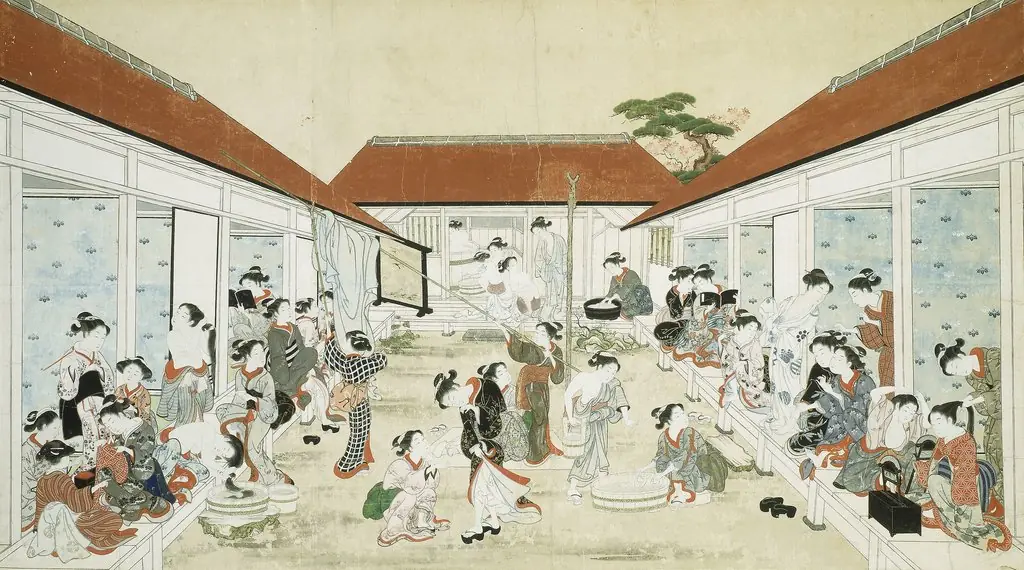 Women's Bathhouse and Laundry