Artwork
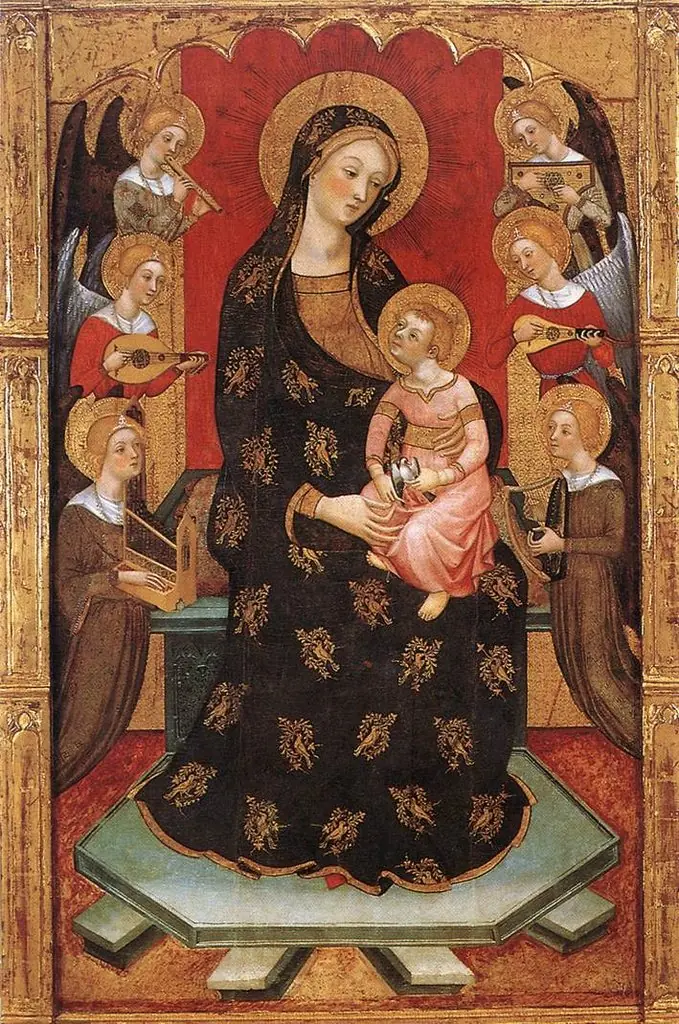
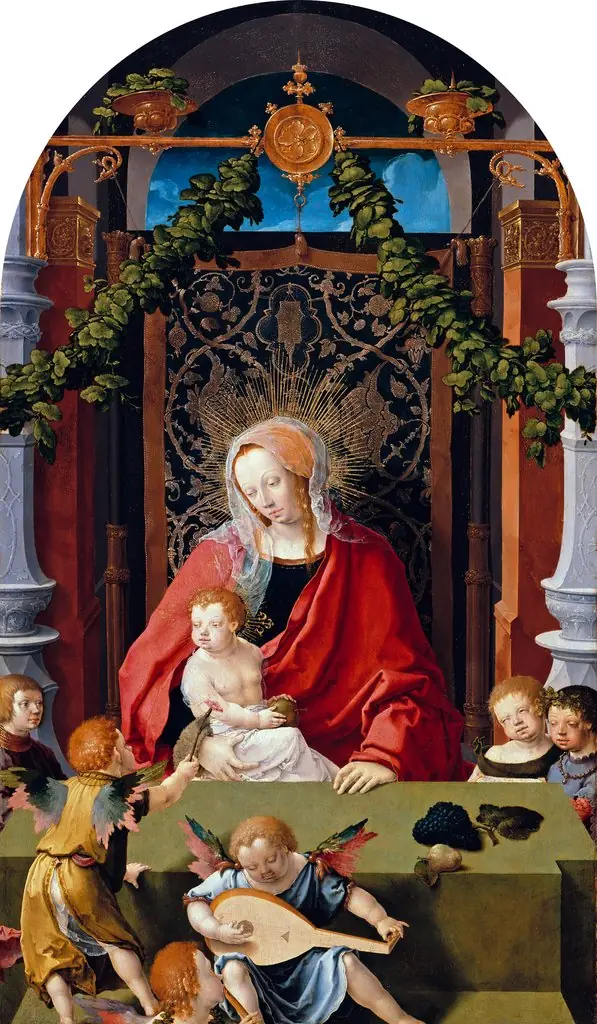
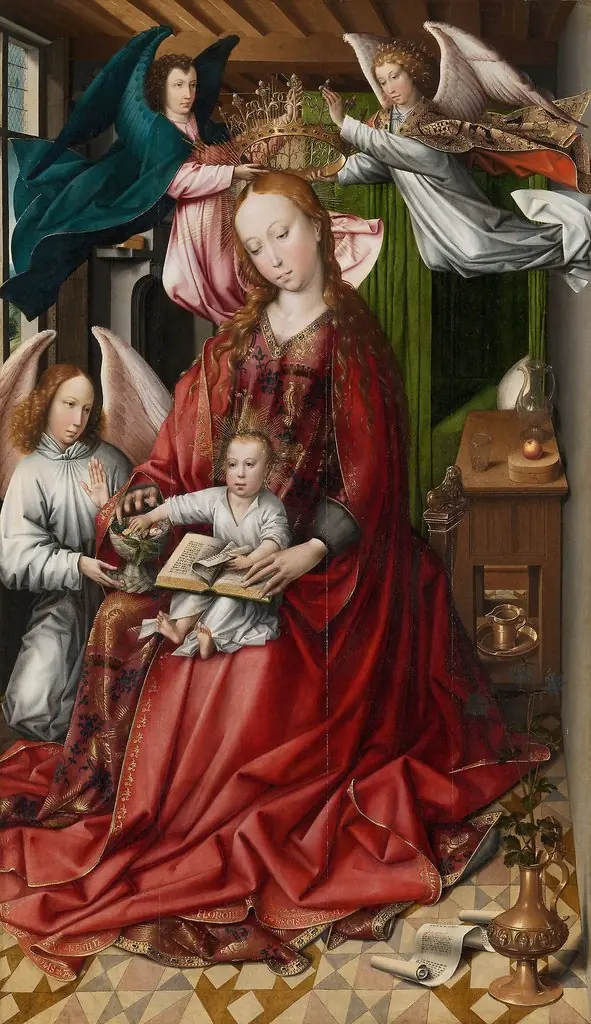
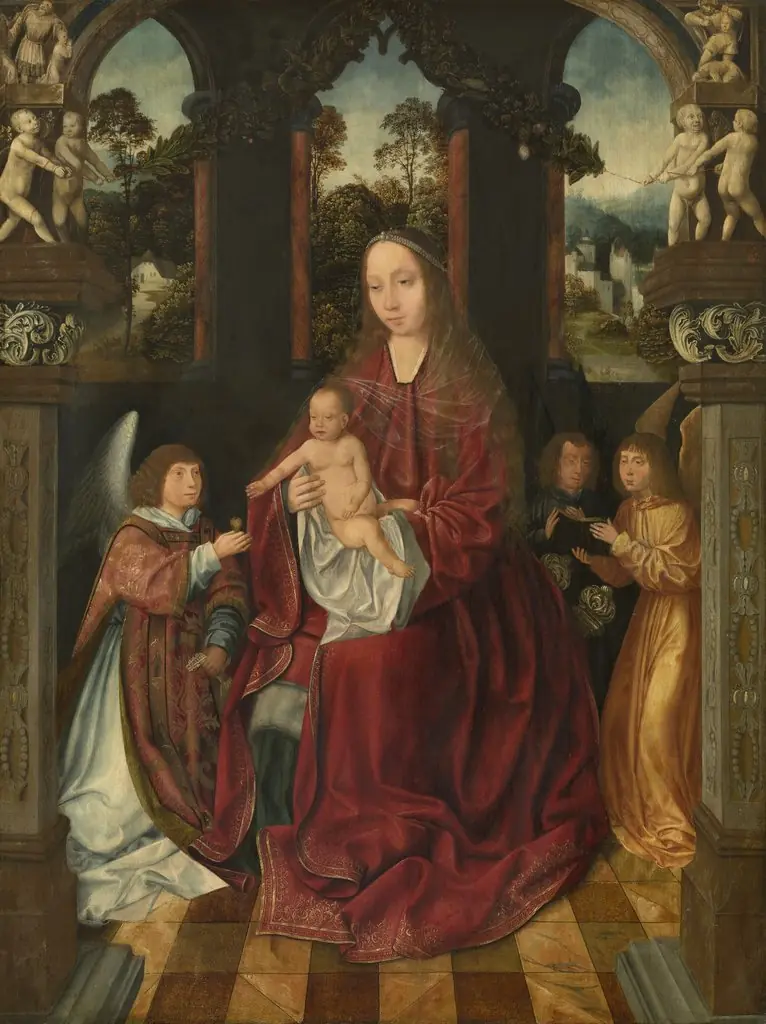
Virgin with Angels Playing Musical Instruments
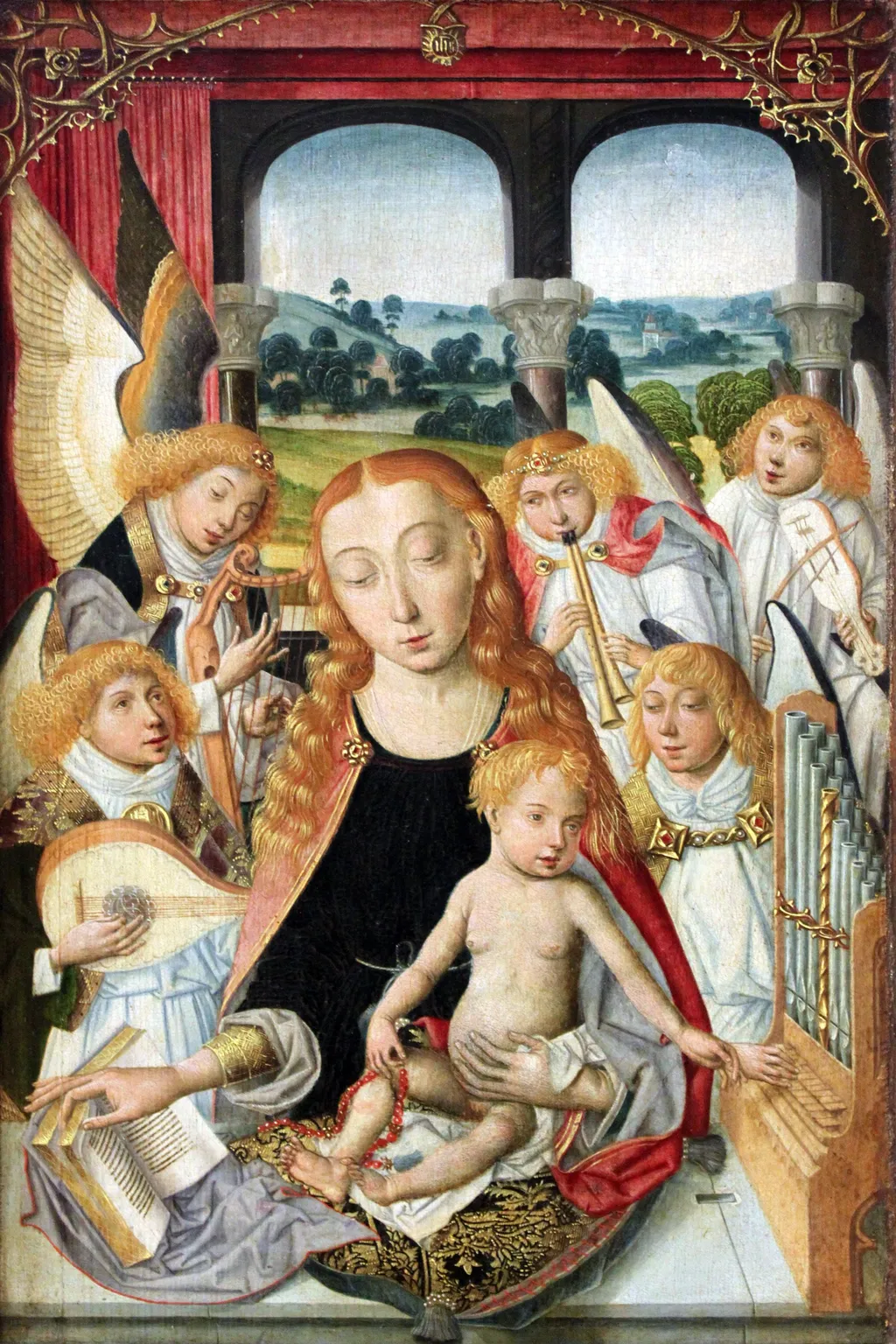
Virgin with Angels Playing Musical Instruments is an oil painting by the High Renaissance artist Unknown. It dates from 1496 and is held in the collection of the Gemäldegalerie Berlin.
About this work
Overview
Virgin with Angels Playing Musical Instruments is an oil painting on panel dated to approximately 1490, attributed to an unknown artist.
Virgin with Angels Playing Musical Instruments is an oil painting on panel dated to approximately 1490, attributed to an unknown artist. Measuring 66.6 by 47.4 centimetres, the work depicts the Virgin Mary with the Christ Child surrounded by music-making angels. It is held in the collection of the Gemäldegalerie Berlin, where it is displayed in the Bode Museum. The painting belongs to the religious art genre and represents a significant example of late fifteenth-century devotional imagery featuring the Madonna and Child with angelic musicians, a popular theme in Northern European and Italian Renaissance art.
Subject & Meaning
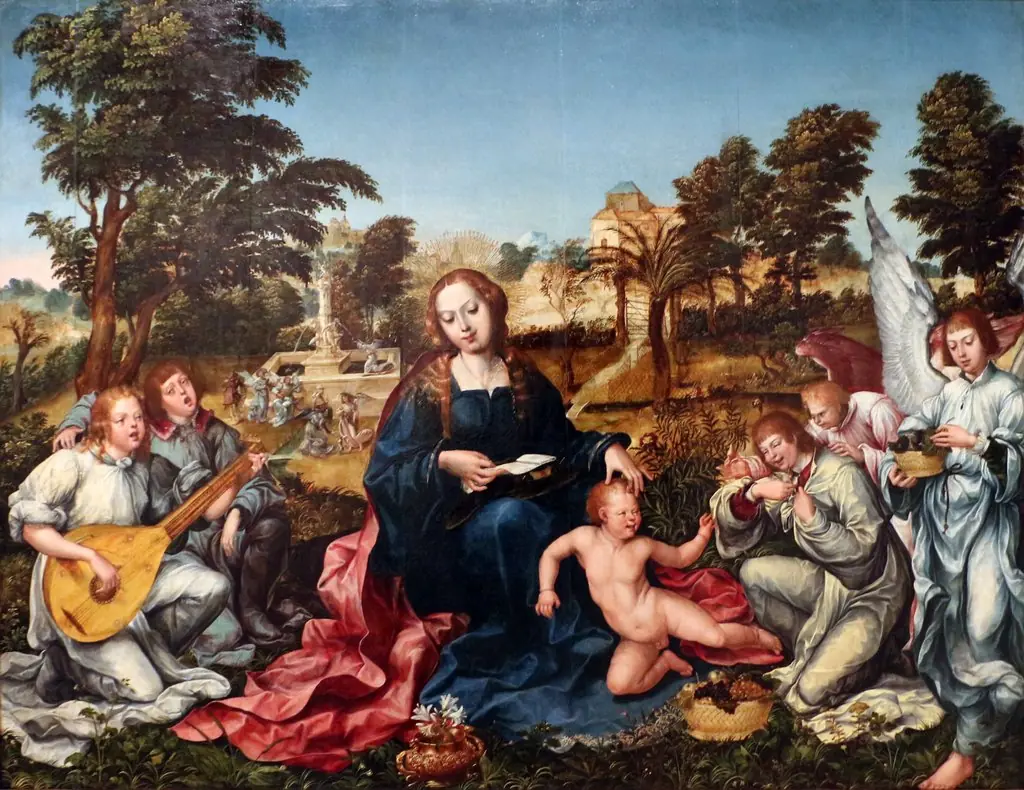
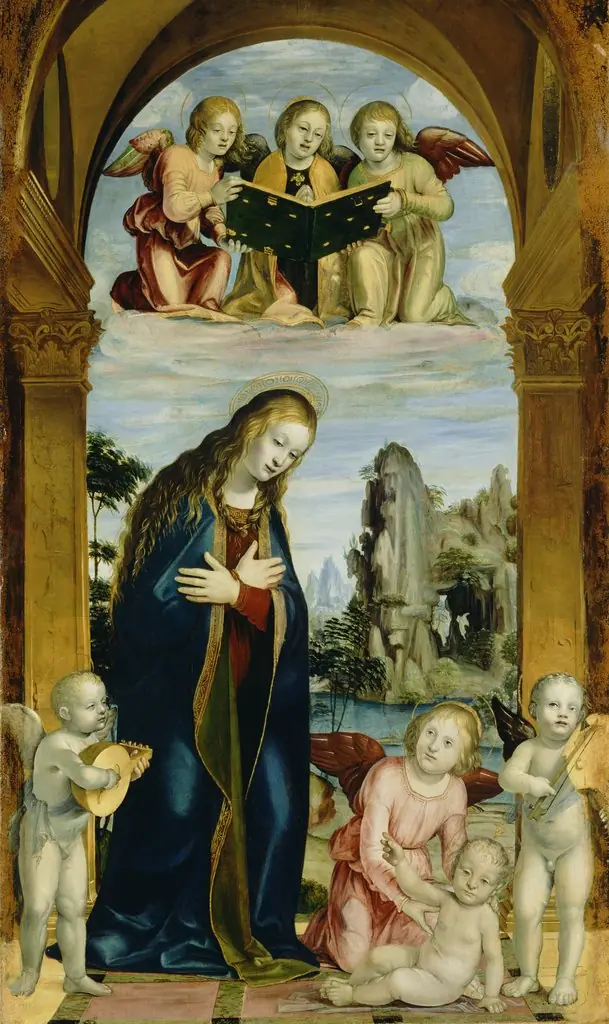
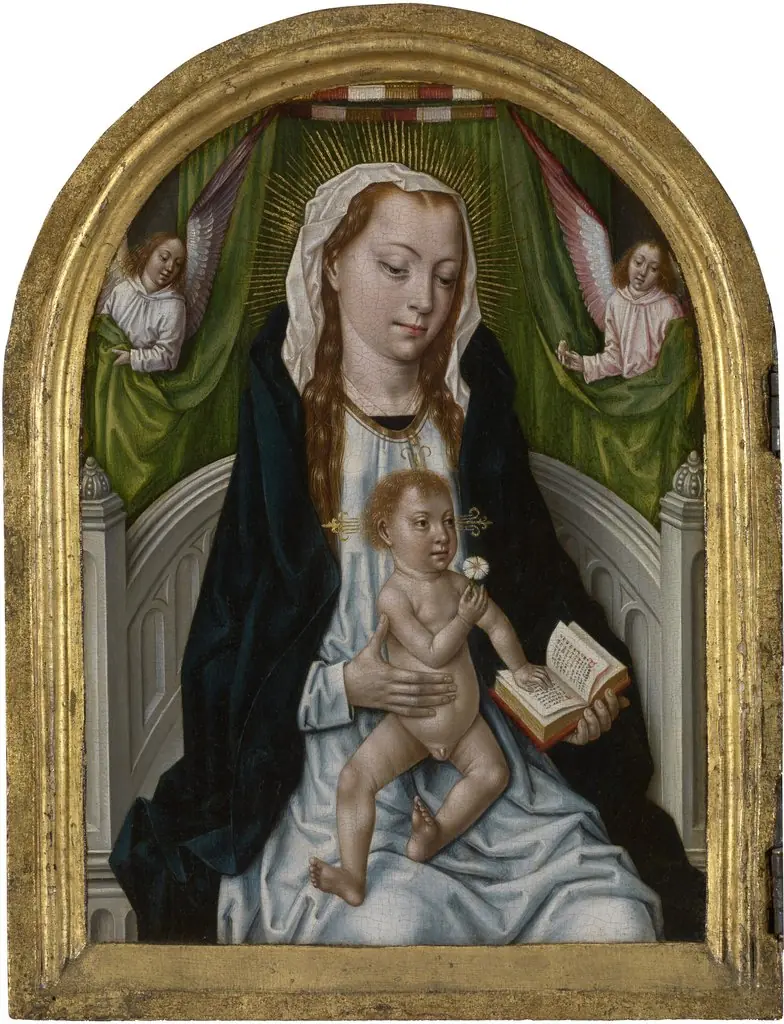
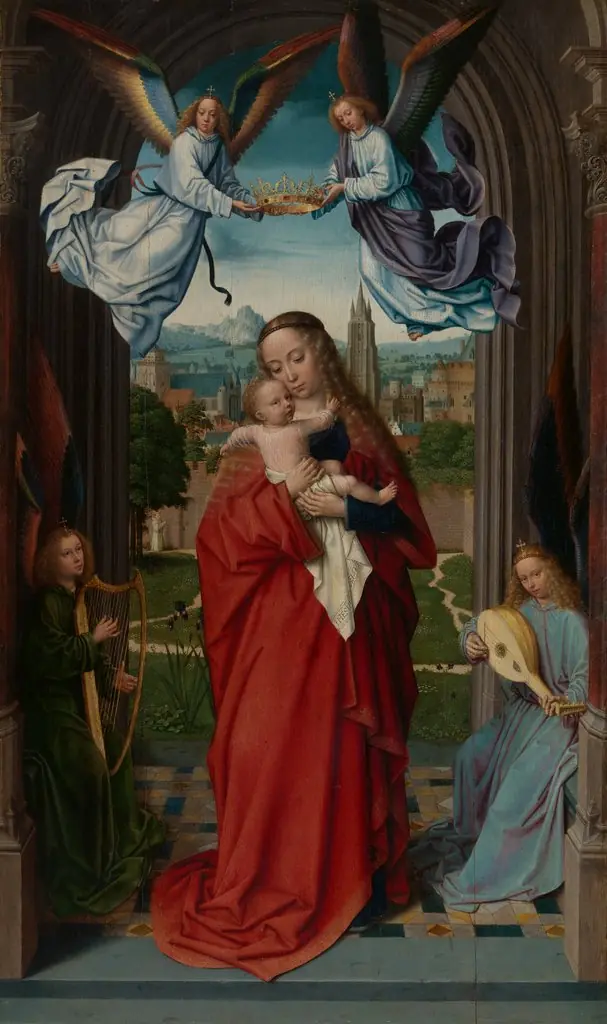
The central subject is the Virgin Mary, identifiable by her traditional dark blue or black dress with a red mantle lined in gold, seated and holding the nude Christ Child on her lap. Six angels with curly blonde hair and large feathered wings encircle the holy pair, each playing a different musical instrument: a lute, harp, trumpet, pipe, portable organ, and another stringed instrument. The Christ Child wears a string of red beads and reaches toward a musical score held by the angel at the lower left. The iconography draws on the tradition of the Madonna and Child accompanied by angelic musicians, symbolising the harmony of heaven and the divine celebration of the Incarnation. The musical performance by angels serves to glorify the Virgin and Child, while the score and instruments suggest the celestial music of the spheres and the liturgical celebration of Christ's birth. The shallow stone ledge, arched openings framed by columns and red drapery, and the gold-embroidered red canopy with Gothic tracery create a sacred architectural setting that elevates the figures into a space between the earthly and the divine.
Technique & Style
The painting is executed in oil on panel, a medium that allowed for the smooth, detailed brushwork visible in the faces and fabrics. The artist employed a rich palette of saturated reds, golds, and blues set against a green and blue distant landscape visible through the arched openings. Gold leaf accents appear on the halos and costume details, adding luminosity to the sacred figures. The paint surface shows fine craquelure, consistent with its age and the oil medium on wood panel. The composition is structured with the figures arranged on a shallow stone ledge before a deep landscape, creating a layered spatial effect. The handling of the drapery, the delicate rendering of the angels' curly hair, and the precise depiction of the musical instruments demonstrate careful observation and technical skill characteristic of late fifteenth-century panel painting. The overall style suggests Northern European influences in its attention to surface detail and jewel-like colour, though the specific regional attribution remains unresolved due to the artist's unknown identity.
History & Provenance
The painting is dated to 1490 based on stylistic analysis, with the Wikidata record suggesting a possible range of 1490 to 1500. The artist remains unknown, and no documentation of the commission has survived. The work's provenance before its acquisition by the Gemäldegalerie Berlin is not recorded in the available sources. It is currently located in the Gemäldegalerie Berlin, specifically in the Bode Museum, though the exact date and circumstances of its accession are not specified. Exhibition history is not documented in the provided sources.
Context
The theme of the Virgin and Child with angels playing musical instruments enjoyed considerable popularity in late fifteenth-century European art. The subject appears across various media and regions, as evidenced by a carved mother-of-pearl medallion from South Germany, also late fifteenth century, depicting the Virgin and Child with angels playing a lute and rebec, now in the Victoria and Albert Museum. This parallel demonstrates the widespread appeal of the iconography in devotional objects. More famously, Leonardo da Vinci's Virgin of the Rocks altarpiece, commissioned in 1483 for the Confraternity of the Immaculate Conception in Milan, originally included side panels with angelic musicians, though these were executed by associates rather than Leonardo himself. Albrecht Dürer also explored this theme in a 1521 study for a great picture of the Virgin with saints and angels playing, now in the Louvre. The Berlin painting shares with these works an interest in combining sacred figures with musical celebration, though its unknown authorship prevents more precise art historical placement. Critical reception and scholarly literature specifically devoted to this painting are not documented in the available sources.
Legacy
The specific later influence and cultural afterlife of Virgin with Angels Playing Musical Instruments are not documented in the available sources. As a work by an unknown artist, its individual reputation has not been widely established in art historical scholarship. However, its preservation in the Gemäldegalerie Berlin, one of Europe's major collections of Old Master paintings, ensures its continued availability for study and public viewing. The painting contributes to the broader understanding of late fifteenth-century devotional imagery and the popular theme of angelic musicianship in Renaissance art. Its display in the Bode Museum places it within a significant institutional context for the appreciation of early Netherlandish and German painting.
Artist & collection