Artwork
Landscape
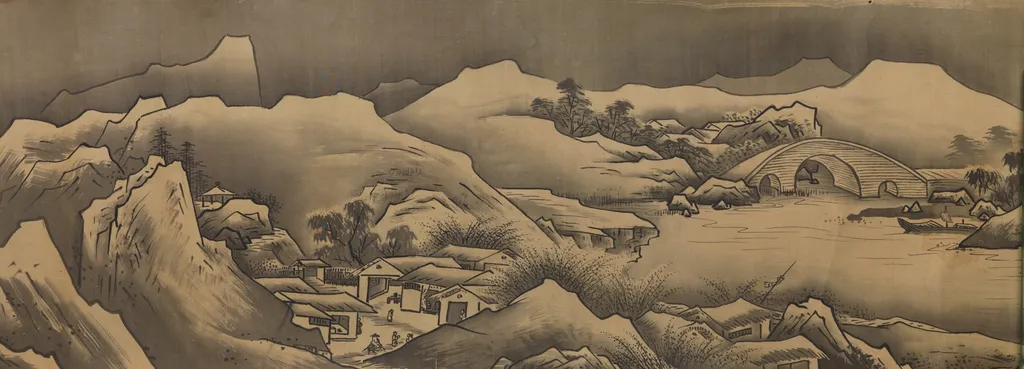
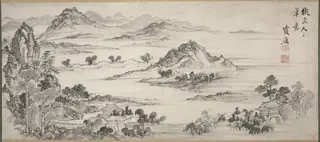
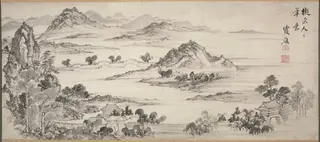
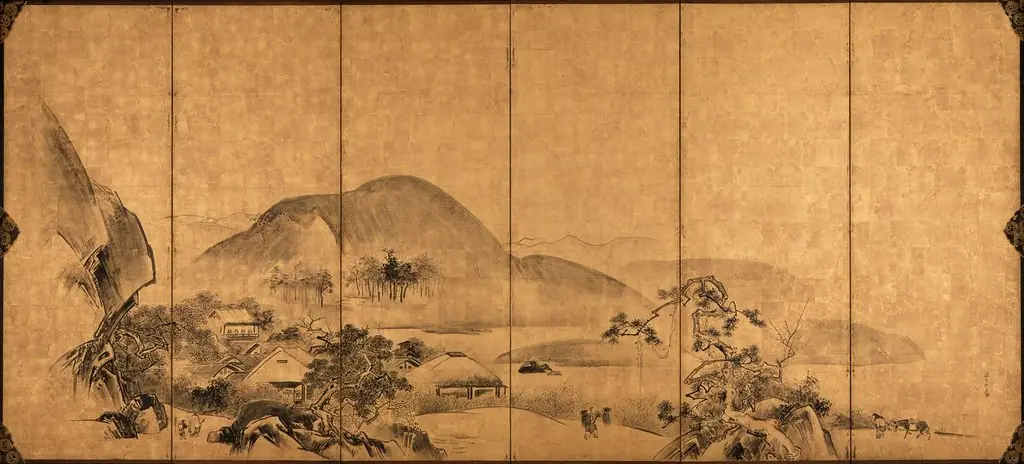
Landscape is an unspecified painting by the Nanga artist Unkoku Tōban. It dates from 1657 and is held in the collection of the Metropolitan Museum of Art.
About this work
History & Provenance
The painting titled Landscape by the Japanese artist Unkoku Tōban, dated 1657, is part of the Metropolitan Museum of Art's collection and is housed in New York.
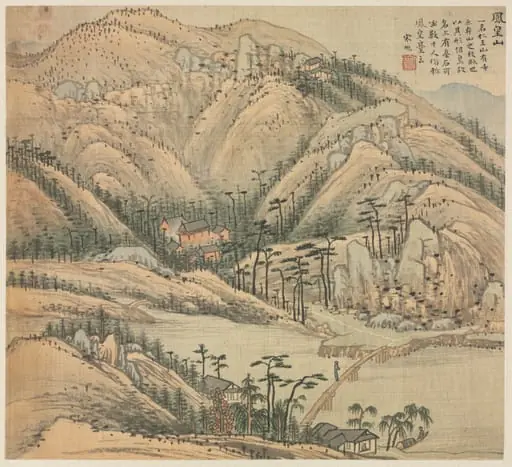
The painting Landscape was created by the artist Unkoku Tōban in 1657. Originating in Japan, this work is classified as a landscape painting that depicts a bridge. The piece is currently held in the collection of the Metropolitan Museum of Art.
The painting titled Landscape by the Japanese artist Unkoku Tōban, dated 1657, is part of the Metropolitan Museum of Art's collection and is housed in New York. Its accession is recorded as part of the museum's holdings, though a specific inventory number is not provided in the cited documentation. The work falls under the genre of landscape painting and was created in Japan.
Exhibition records are not mentioned in the available sources, indicating that the piece has not been listed in publicly documented exhibitions up to the present.
Overview
This painting, titled Landscape, was created by the artist Unkoku Tōban in 1657. It presents a serene winter scene featuring a mountain village traversed by a river and spanned by a prominent bridge. The work is part of the collection at The Metropolitan Museum of Art, offering a glimpse into Japanese ink painting traditions of the 17th century.
Subject & Meaning
The composition portrays a secluded mountain village nestled among steep, snow-covered hills. A river meanders through the foreground, its banks dotted with a few modest structures. A large, arched bridge serves as a focal point on the right, connecting the riverbanks.
Further in the distance, additional peaks rise under a soft, pale sky, contributing to the tranquil atmosphere of a winter morning.
Technique & Style
Unkoku Tōban utilized a restrained ink wash technique to convey depth and texture. Simple, fluid ink lines define the forms, with darker, more concentrated strokes delineating trees and buildings against the lighter, expansive areas representing snow. This minimalist approach creates a sense of quietude and stillness, characteristic of traditional East Asian landscape painting, emphasizing the stark beauty of the winter environment.
Artist & collection

- Landscape
 Recluse Dwellings in the Autumn Mountains
 明/清 佚名 劉松年 偽款 山水人物圖|Garden estate
 清 佚名 米芾(僞款) 雲山圖 卷|Mountain Landscape
 West Lake
 Landscape Album in Various Styles: Landscape after Wu Zhen
 West Lake
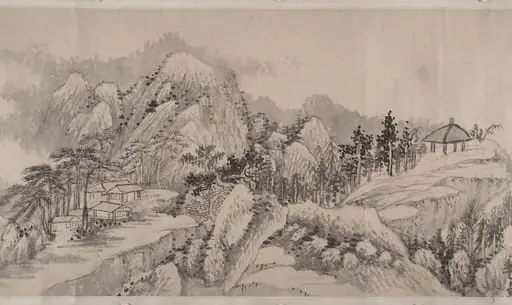 清 柳堉 幽谷深林圖 卷|Remote Valleys and Deep Forests
 Landscape
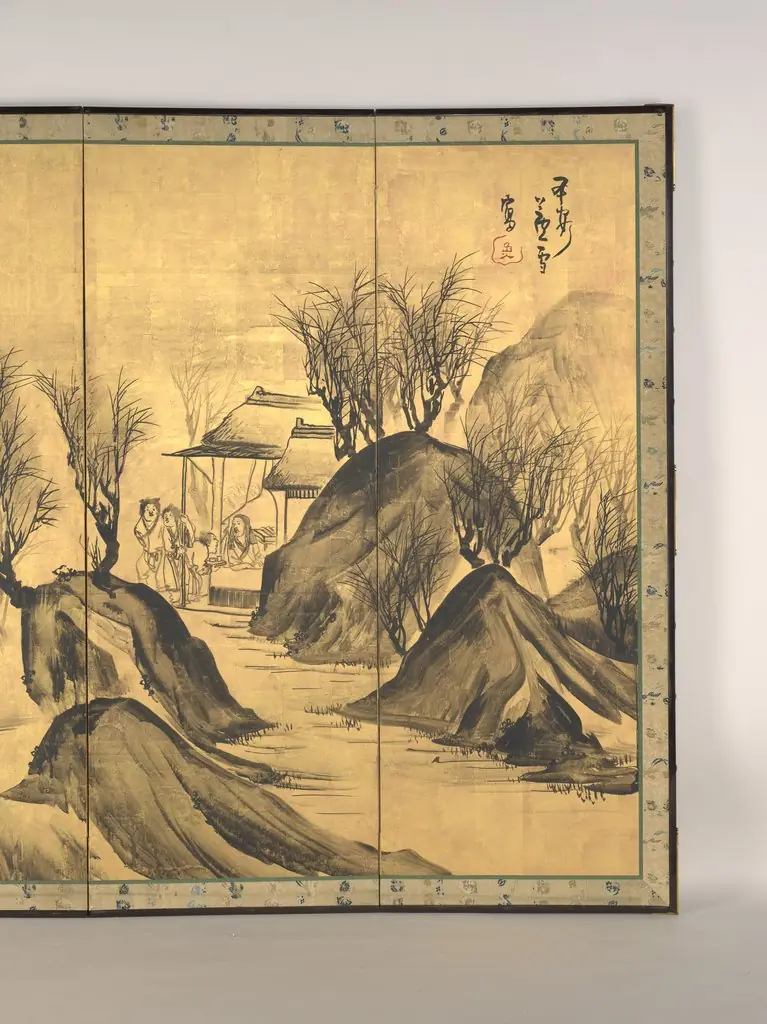 Mountain God with Tiger and Attendants
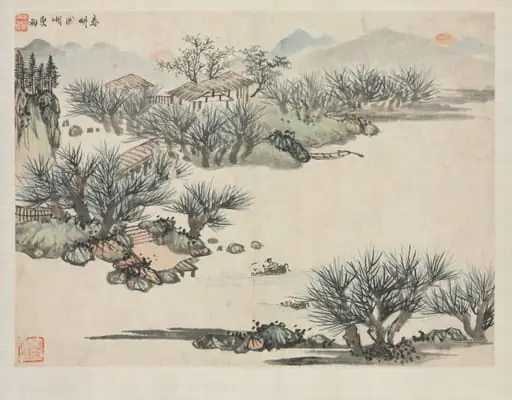 Landscape Album in Various Styles: Spring Plowing
 Mt. Fenghuang (Mt. Phoenix)