Artwork
The Camera Obscura
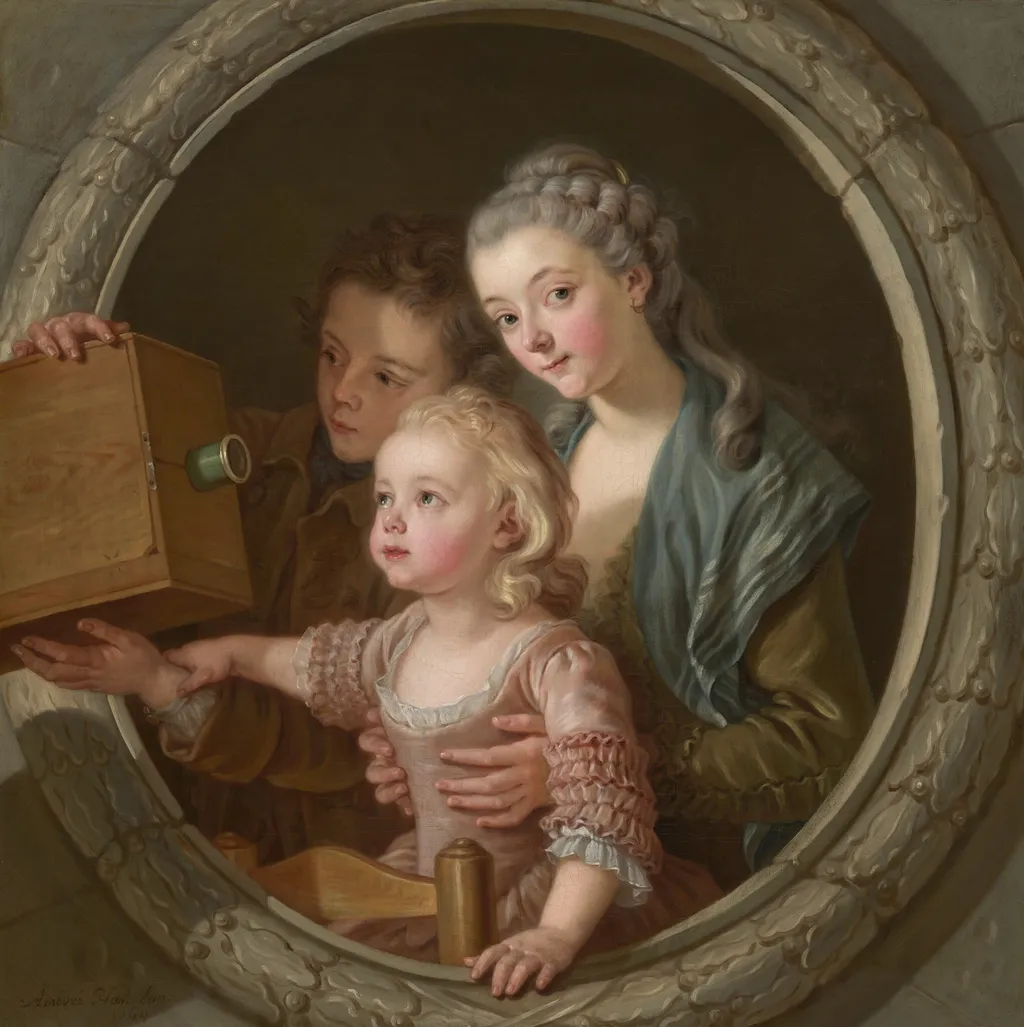
The Camera Obscura is an oil painting by the Rococo painting artist Charles-Amédée-Philippe van Loo. It dates from 1764 and is held in the collection of the National Gallery of Art.
- Inscription
- Inscribed:lower left: Amedee Van Loo. / 1764
About this work
Subject & Meaning
As a genre scene, the composition aligns with contemporary interests in everyday subjects rendered with technical precision.
The painting titled "The Camera Obscura" (1764) by Charles‑Amédée‑Philippe Van Loo is an oil‑on‑canvas genre work that depicts a camera obscura as its central subject. The title indicates the presence of this optical device, which in the context of 18th‑century art often signified ideas of observation and the capture of reality. As a genre scene, the composition aligns with contemporary interests in everyday subjects rendered with technical precision.
The work entered the National Gallery of Art collection through a documented chain of ownership that traces back to Prussian royal collections and Emperor Wilhelm II before its 1945 donation.
History & Provenance
The oil-on-canvas work was created by Charles-Amédée-Philippe van Loo in 1764. Although the original patron remains unidentified, the painting entered the Prussian royal collection by the late eighteenth century and was recorded in 1786 hanging in the Palais der Prinzessin Amalie in Berlin. It remained in the imperial holdings, moving to the Charlottenburg palace by 1800 and staying there through the nineteenth century, as noted by Seidel in 1892 and 1900.
After the fall of the monarchy, the piece descended to Emperor Wilhelm II, who possessed it until it was offered through Wildenstein & Co. in Paris, New York and London. Wildenstein sold it in 1929 to New York collectors Robert W. and Florence Steuber Gaines Harkness Schuette, and their heirs donated it to the National Gallery of Art in 1945.
The Camera Obscura is held in the National Gallery of Art, Washington, D.C., under accession number 1945.10.2. Its provenance traces the work from the Prussian royal collection, possibly belonging to Princess Anna Amalie of Prussia or Princess Luise Amalie of Brunswick-Lüneburg, through descent to Emperor Wilhelm II, then via Wildenstein & Co. to Robert W. and Florence Steuber Gaines Harkness Schuette in 1929, and finally as a gift to the NGA in 1945. Exhibition history includes a showing at Wildenstein & Co. in 1929 and at the Metropolitan Museum of Art in 1935.
Overview
Charles-Amédée-Philippe van Loo's 1764 oil on canvas, The Camera Obscura, is a genre painting from the Rococo period. It captures a domestic scene where individuals engage with a camera obscura, a device known for projecting images. The composition features three figures within a distinctive round frame, suggesting an intimate glimpse into their interaction with this early optical instrument. The artist, a French painter, was recognized for his allegorical works and portraits.
Technique & Style
Van Loo employed smooth brushstrokes, particularly evident in the rendering of the figures' faces, to achieve a lifelike quality. The artist paid close attention to the subtle play of light across their skin, contributing to the painting's soft illumination. Shadows gradually recede into the dark background, enhancing the intimate atmosphere.
The circular format of the canvas, resembling a framed mirror, was a stylistic choice often used in Rococo portraiture to suggest a scene viewed through an opening.
Own this work as a print
Artist & collection

Artist
Charles-Amédée-Philippe van Loo
Charles-Amédée-Philippe van Loo (25 August 1719 – 15 November 1795) was a French painter of allegorical scenes and portraits.

 Family Portrait
 Madame Marsollier and Her Daughter
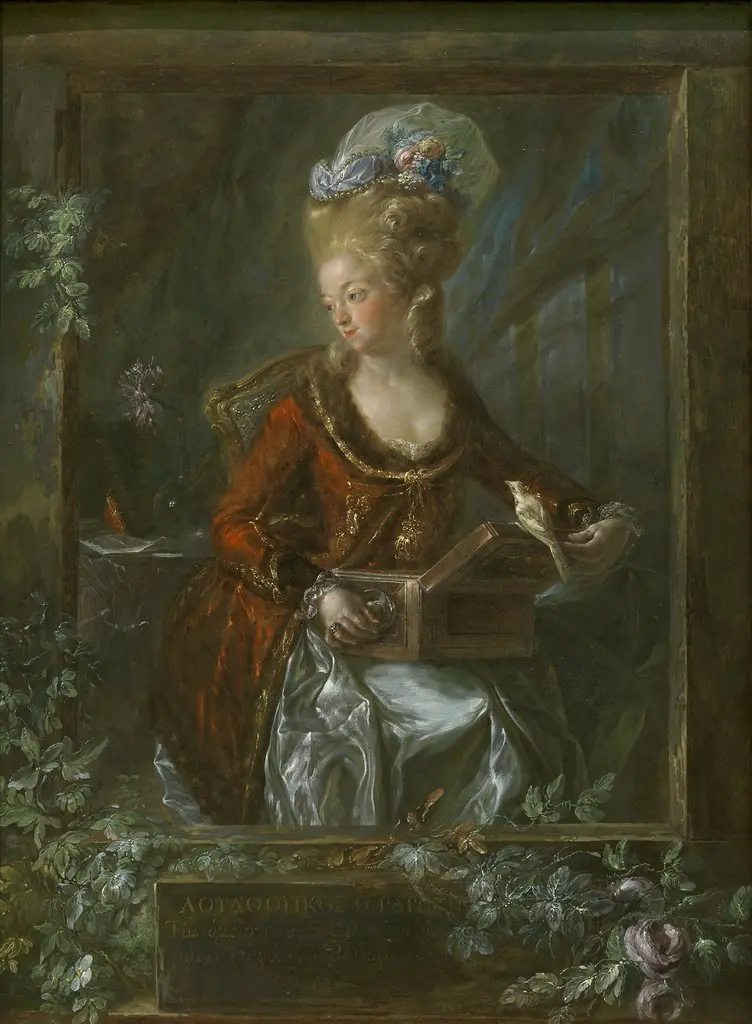 María de las Nieves Micaela Fourdinier, the Painter's Wife
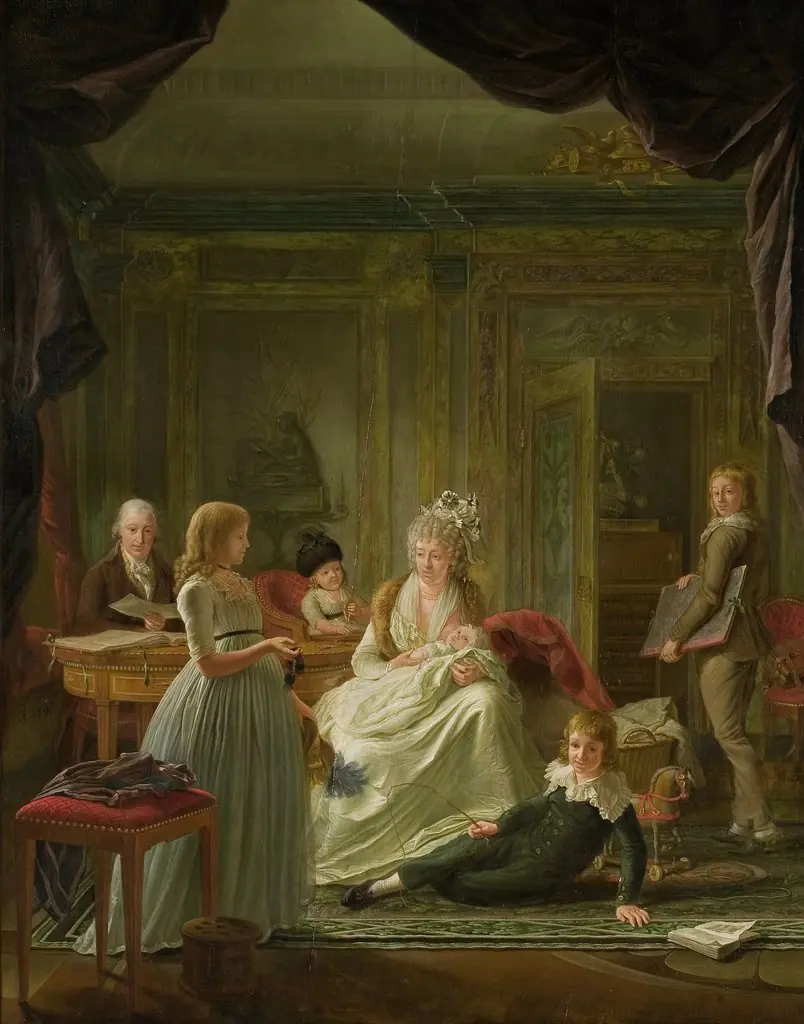 Portrait of Aernout van Beeftingh, his Wife Jacoba Maria Boon and their Children
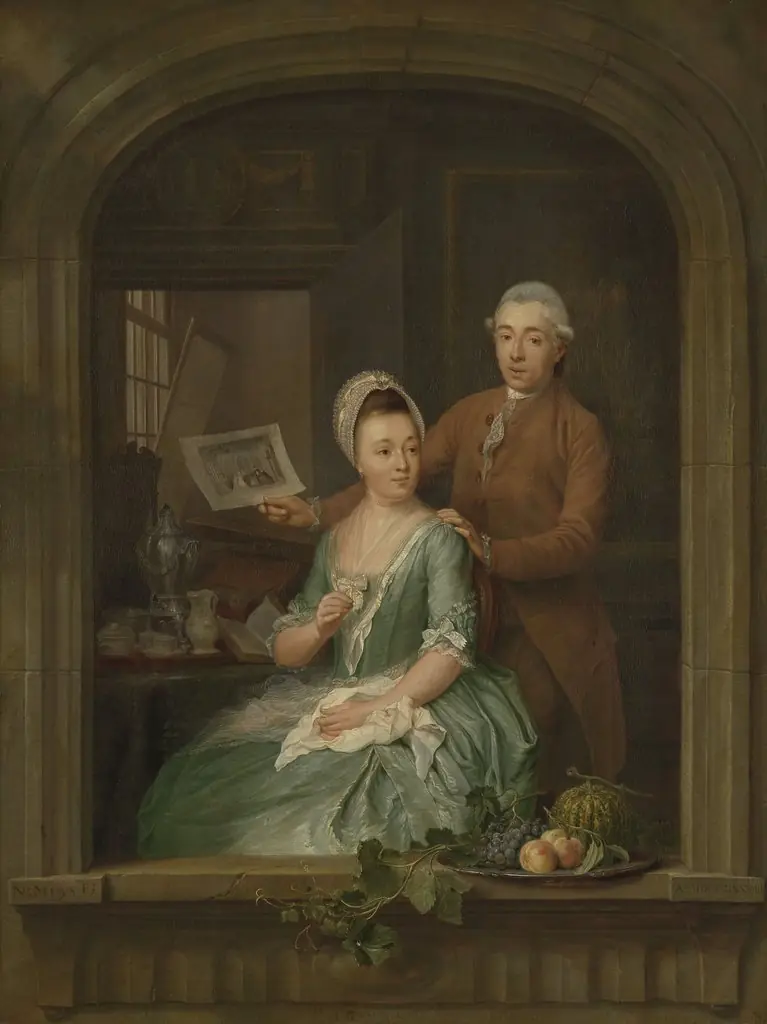 Portrait of Robert Muys and his Wife Maria Nozeman
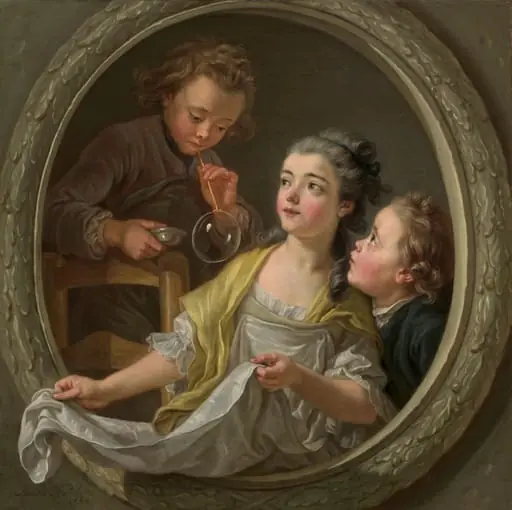 Soap Bubbles
 Princess Anne-Henriette of France - The Fire
 Maria Christina of Naples and Sicily
 Portrait of Waleria Tarnowska née Stroynowska (1782–1849), Wife of Jan Feliks Tarnowski from 1800
 Portrait of Madame Royale and Louis Joseph, Dauphin of France
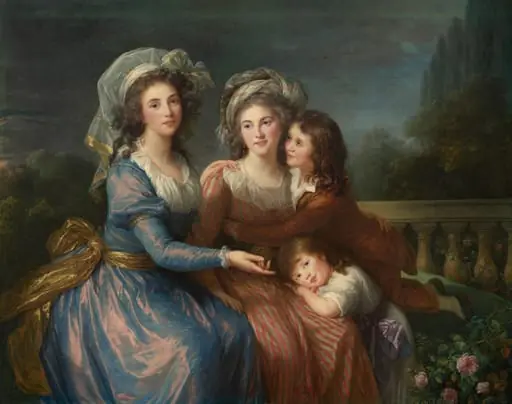 The Marquise de Pezay, and the Marquise de Rougé with Her Sons Alexis and Adrien
- Self-portrait by artificial light