Artwork
Self-Portrait
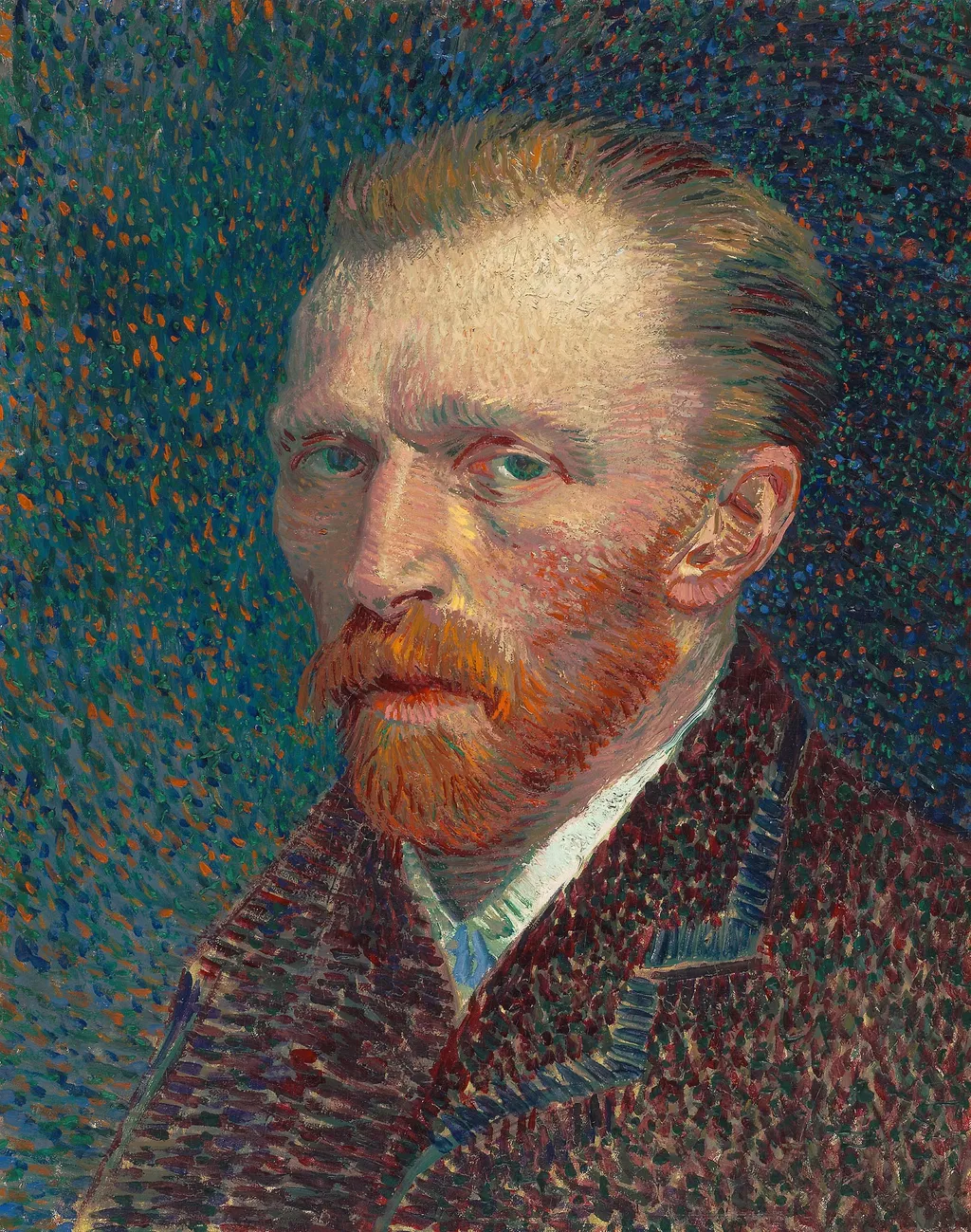
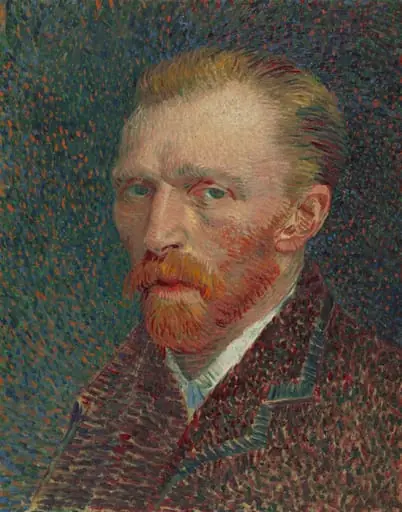
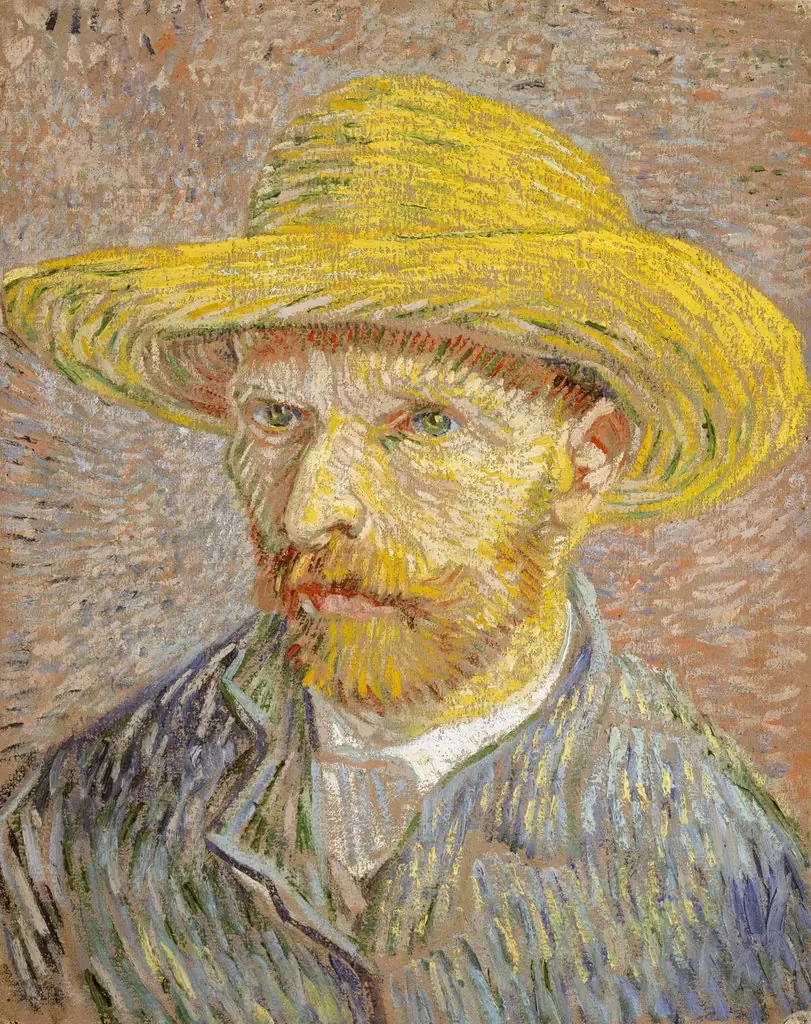
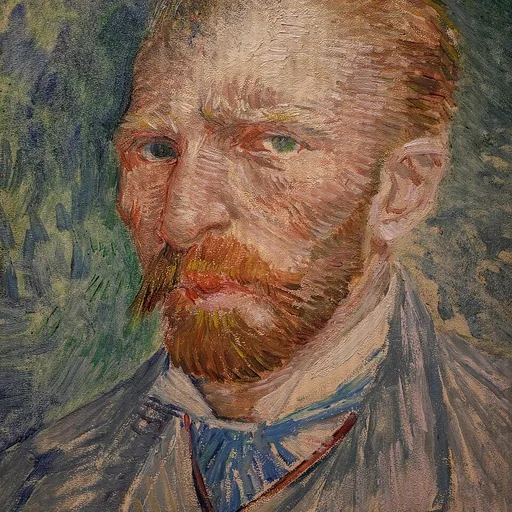
Self-Portrait is an oil painting by the Post-Impressionist artist Vincent van Gogh. It is held in the collection of the Art Institute of Chicago.
About this work
Subject & Meaning
Van Gogh applied this technique partially, using luminous points for the jacket and background while rendering the face with distinct, unmixed brushstrokes.
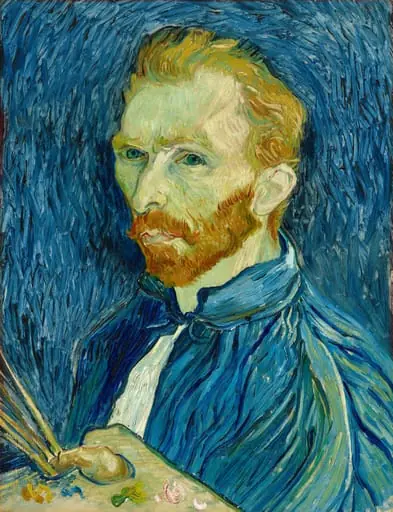
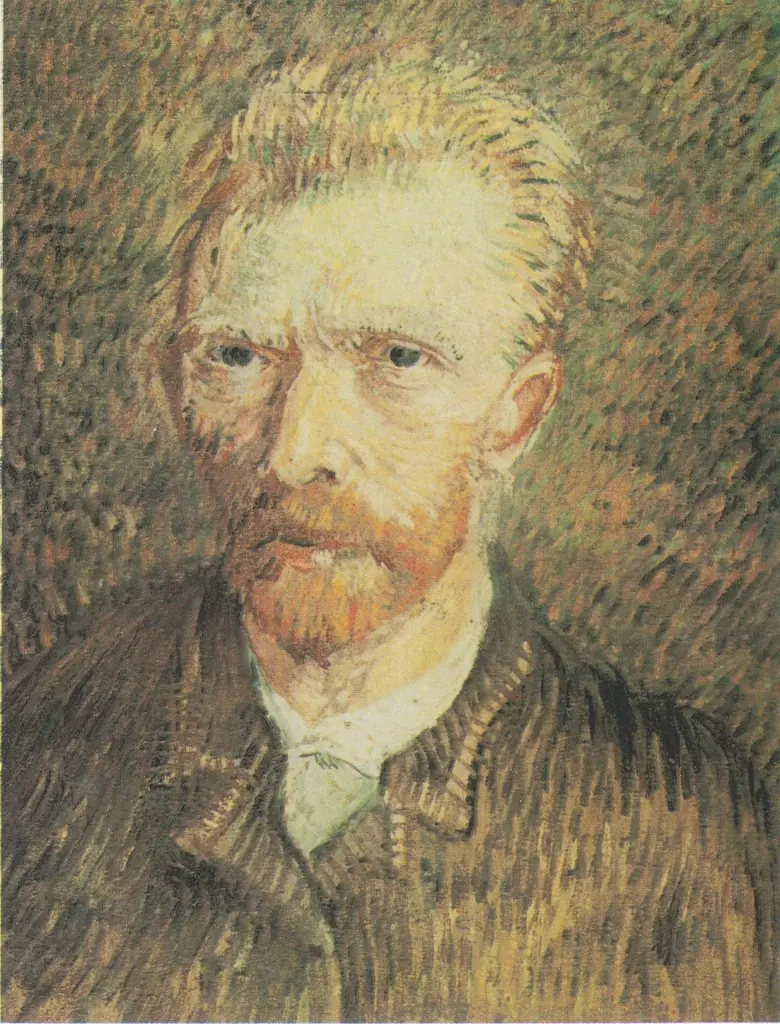
This work depicts Vincent van Gogh in a bust-length view, turned in three-quarter profile with his gaze directed at the observer. The composition features a blue-green background punctuated by orange touches that echo the coloring of the artist's mustache and beard. Executed during his Paris period, the painting reflects the influence of Georges Seurat and Pointillism, utilizing contrasting dots of pure red and blue against a dark green ground to create optical vibration and a sense of liveliness.
Van Gogh applied this technique partially, using luminous points for the jacket and background while rendering the face with distinct, unmixed brushstrokes. The reddish-brown coat is depicted as a mosaic of greenish-blue, orange-red, and yellow hues. Although the artist did not document his specific thoughts on this piece due to a lapse in correspondence with his brother Theo during their cohabitation, the work represents a significant, albeit temporary, engagement with contemporary theories of color mixing and visual panic.
Technique & Style
Painted in the spring of 1887, this Self-Portrait is an oil on cardboard mounted on panel, measuring 41 cm in height by 32.5 cm in width. The vertical-format composition shows the artist bust-length, turned three-quarters to his left in profile, gazing toward the viewer against a blue-green background punctuated by touches of orange. The same orange tones are picked up in the mustache and beard.
Stylistically, the work reflects Van Gogh's partial engagement with the pointillist technique developed by Georges Seurat. Contrasting dots of pure color populate the jacket and background, while the face is rendered more conventionally. The reddish-brown coat is built up as a mosaic of greenish-blue, orange-red, and yellow strokes, and the orange beard and yellowish hair are formed from strong, separated brushstrokes, with unblended green accents in the eyebrows, hair, and beard. This optical mixing of juxtaposed hues produces a vibrating, luminous surface.
History & Provenance
Vincent van Gogh created this oil-on-cardboard self-portrait in the spring of 1887 while residing in Paris. Following the artist's death, the work passed to his sister-in-law, Johanna van Gogh-Bonger. She sold the painting through the Frankfurter Kunstverein to Leonhard Tietz in 1912.
Upon Leonhard Tietz's death, the piece was inherited by his son, Alfred Leonhard Tietz, who retained ownership at least until 1930. The artwork subsequently changed hands, passing through the furniture workshop of E.J. van Wisselingh & Co. and the gallery of Étienne Bignou. Joseph Winterbotham Jr. acquired the painting in 1935 and donated it to the Art Institute of Chicago in 1954, where it remains part of the Joseph Winterbotham Collection.
Vincent van Gogh's 1887 Self-Portrait is held by the Art Institute of Chicago in the United States. The work is part of the museum's Joseph Winterbotham Collection and bears the catalog number F345. It was acquired by the institution in 1954 following a donation from Joseph Winterbotham, Jr.
Prior to entering the museum, the painting passed through several private hands. After the artist's death, it was owned by his sister-in-law, Johanna van Gogh-Bonger, who sold it to Leonhard Tietz in 1912. The work subsequently remained in the possession of Tietz's son, Alfred Leonhard Tietz, before being purchased by Winterbotham. The provided sources do not list specific exhibition dates or venues for this work.
Context
The critical reception of Van Gogh's Self-Portrait (1887) is primarily understood through its scholarly context within Post-impressionism and its placement in the artist's Parisian period. Art historians note its significance as one of his early self-portraits painted during his time in Paris, where he engaged with contemporary movements like Pointillism, though he adapted the technique selectively rather than fully embracing it. The work's distinctive use of contrasting dots of pure color, particularly in the background and jacket, was analyzed by scholars as reflecting optical theories of contemporaries such as Charles Henry, creating a vibrant visual effect.
This painting, executed in oil on cardboard, was created during Van Gogh's stay in Paris in the spring of 1887 and later entered the collection of the Art Institute of Chicago following its donation by Joseph Winterbotham in 1954. Its journey through private collections, including those of Leonhard Tietz and Alfred Tietz, before its acquisition, underscores its transitional importance in Van Gogh's artistic development within the broader Post-impressionist movement.
Overview
Vincent van Gogh painted this self‑portrait in 1894 using oil on canvas. The work belongs to the Post‑Impressionist period and is part of the collection of the Art Institute of Chicago. It presents the artist looking directly at the viewer, his features rendered with vivid, expressive brushwork.
Own this work as a print
Artist & collection
Artist
Vincent Willem van Gogh was a Dutch Post-Impressionist painter who is among the most famous and influential figures in the history of Western art.