Artwork
The Vision of Saint Francis of Assisi
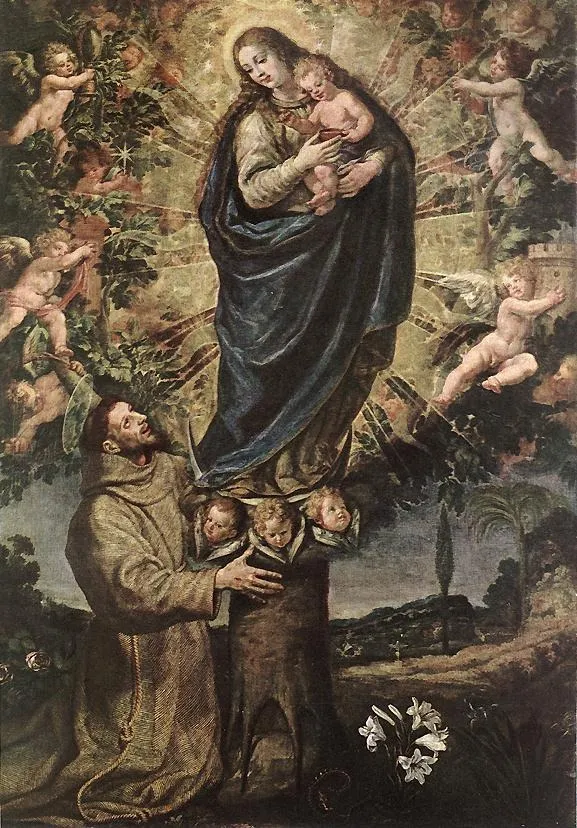
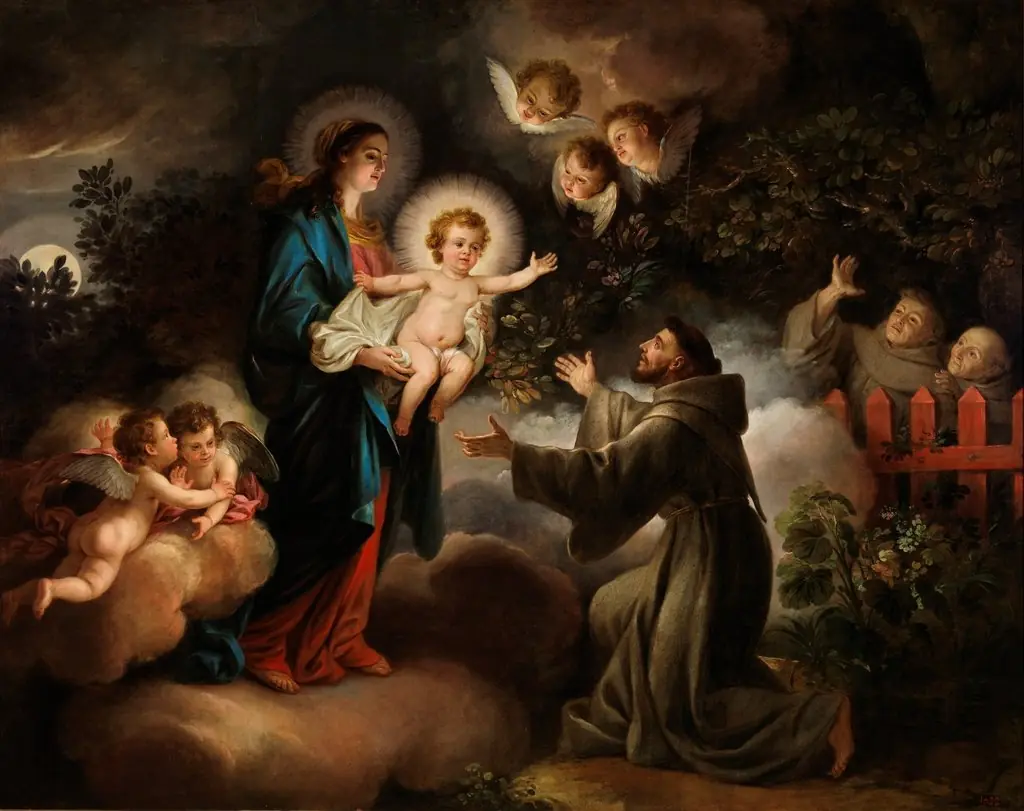
The Vision of Saint Francis of Assisi is an oil painting by the Early Baroque Italian artist Vincenzo Carducci. It dates from 1631 and is held in the collection of the Museum of Fine Arts, Budapest.
About this work
Overview
The painting is part of the early Baroque tradition, reflecting the period’s emphasis on emotional intensity and spiritual clarity.
Painted in 1631 by Vincenzo Carducci, an Italian artist working in Spain, this oil-on-canvas work captures a moment of divine revelation experienced by Saint Francis of Assisi. The painting is part of the early Baroque tradition, reflecting the period’s emphasis on emotional intensity and spiritual clarity. It resides today in the Museum of Fine Arts, Budapest, where it remains a quiet example of Counter-Reformation devotional art.
Subject & Meaning
The scene portrays Saint Francis kneeling in prayer before a luminous figure of the Virgin Mary, holding the Christ Child. The Virgin, elevated on a pedestal and encircled by radiant light, represents divine grace descending upon the saint. Francis, dressed in the simple brown habit of his order, holds a book, likely the Gospels, symbolizing his devotion to Christ’s teachings. The surrounding angels reinforce the sacred nature of the vision, affirming Francis’s spiritual authority.
Technique & Style
Carducci employs oil paint with restrained chiaroscuro to model forms gently, avoiding dramatic contrasts in favor of serene illumination. The Virgin’s blue robe and golden halo draw the eye, while the background figures are rendered with soft focus, enhancing the foreground’s intimacy. Brushwork is precise yet unobtrusive, supporting the painting’s contemplative mood rather than theatrical spectacle, aligning with Spanish devotional aesthetics of the time.
History & Provenance
Commissioned during Carducci’s tenure at the Spanish court, the painting likely served a religious institution or private patron devoted to Franciscan spirituality. It entered the collection of the Museum of Fine Arts, Budapest, in the 19th century, possibly through European art acquisitions following the Napoleonic upheavals. Its journey reflects broader patterns of religious art dispersal across Central Europe in the post-Reformation era.
Context
Created during the height of the Counter-Reformation, the painting responds to Church efforts to reaffirm the power of visions and saintly intercession. Franciscan themes were especially popular in Spain and Italy, where devotion to Francis’s humility and mystical experiences was widespread. Carducci, trained in Italy but working in Madrid, bridged these traditions, producing works that satisfied both doctrinal rigor and emotional resonance.
Legacy
Though not widely exhibited outside Hungary, the painting exemplifies the quiet, inward-focused devotional style favored in early 17th-century religious art. It stands as a testament to Carducci’s ability to adapt Italian compositional clarity to Spanish spiritual sensibilities. Its preservation in Budapest underscores the role of Central European collections in safeguarding lesser-known works of the Baroque era.
Artist & collection
Artist
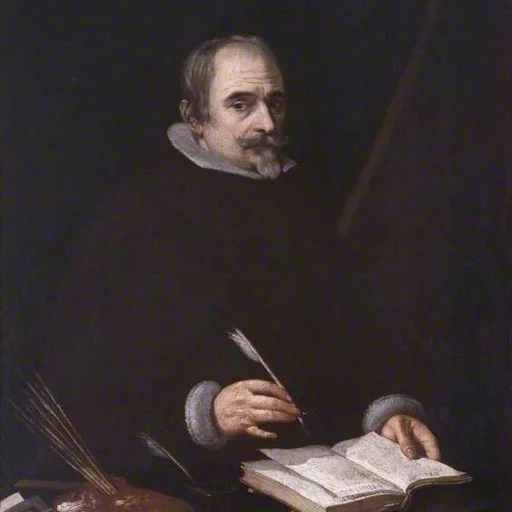
Vincenzio Carduccio (in Spanish, sometimes Vicencio or Vicente Carducho; 1576 or 1578–1638) was an Italian painter who spent his career in Spain.

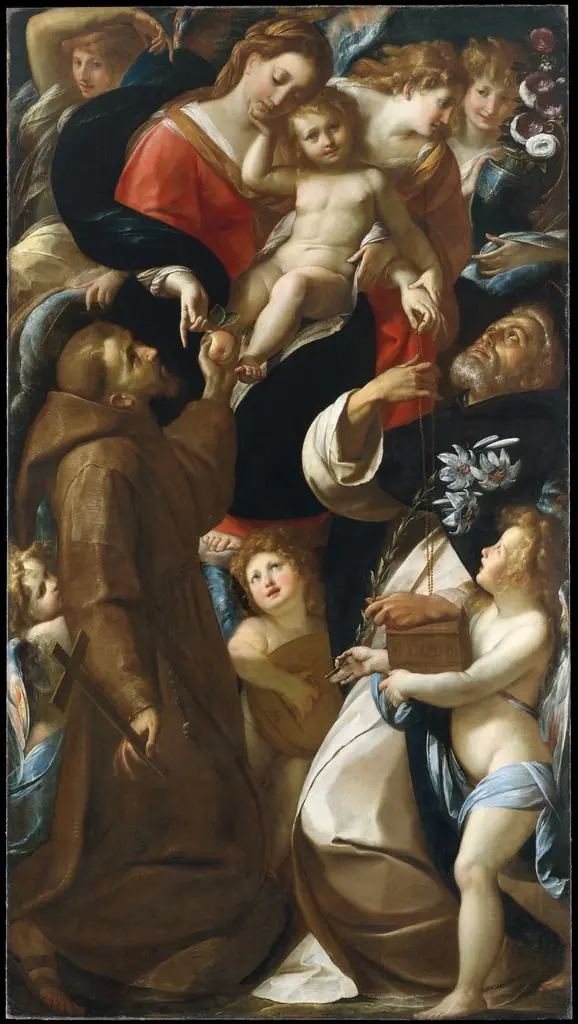 Madonna and Child with Saints Francis and Dominic and Angels
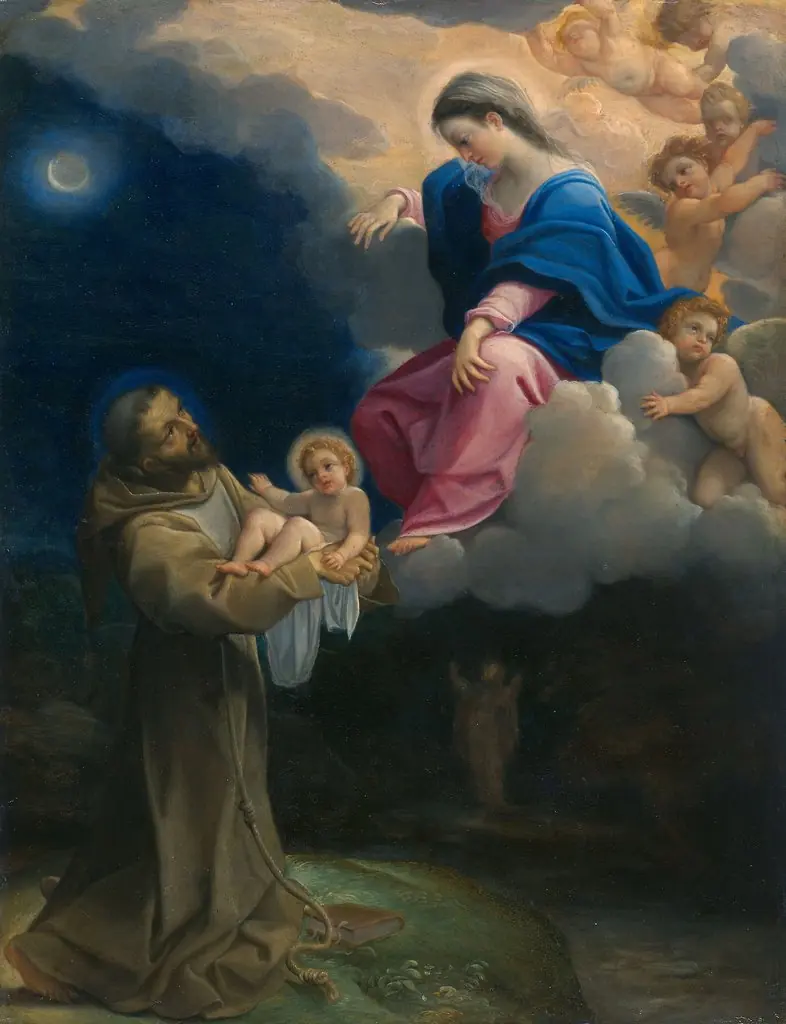
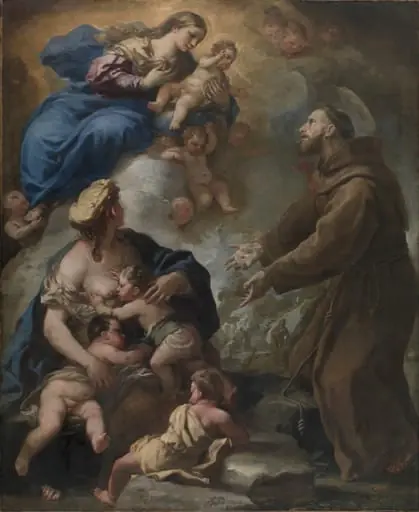 The Virgin and Child Appearing to Saint Francis of Assisi
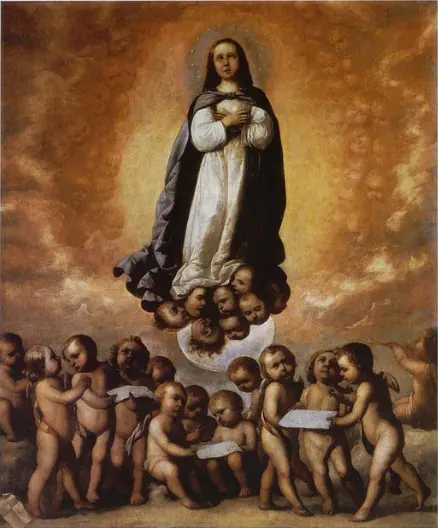 The Immaculate Conception as a Child
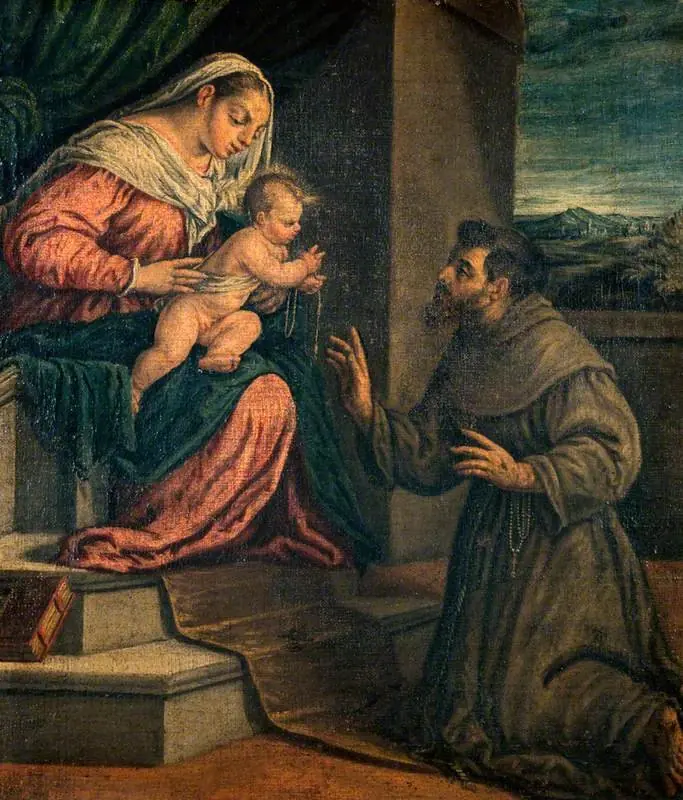 Saint Francis Kneeling before the Virgin and Child
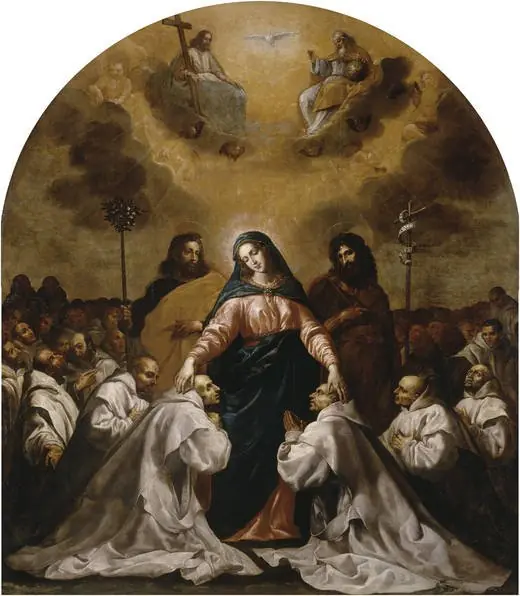 The Virgin Accompanied by Saint Joseph and Saint John the Baptist Shelters the Carthusian Order Beneath her Robes
 The Immaculate Conception
 La Aparición de la Virgen a San Francisco