Artwork
The Immaculate Conception as a Child
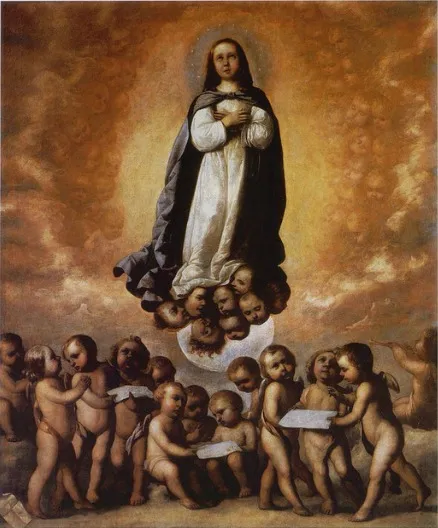
The Immaculate Conception as a Child is an oil painting by the Baroque artist Francisco de Zurbarán. It dates from 1656 and is held in the collection of the Museo del Prado.
About this work
Subject & Meaning
The work was created in 1656, as confirmed by scholarly research, and was originally signed and dated on a label in the lower left corner.
The painting depicts the Virgin Mary as a young child, embodying the doctrine of the Immaculate Conception without traditional Marian attributes such as lilies or rosaries. The child stands upright with hands crossed over her chest, eyes lifted upward, and is surrounded by golden angels and a full moon, symbolizing divine purity and celestial grace. A frieze of musical putti in the lower register may allude to a biblical passage about praise from children, while the angelic imagery may have drawn from Baroque engravings by artists like Guido Reni and Domenico Campagnola. This iconography reflects Zurbarán’s late‑period theological focus on the innocence and spiritual readiness of the Virgin.
The work was created in 1656, as confirmed by scholarly research, and was originally signed and dated on a label in the lower left corner. It entered the Museo del Prado collection through a donation by Plácido Arango in 2015, after a documented provenance that includes ownership by the dean Manuel López Cepero, the collection of Dolores Muñi, and later the Bilbao collector Félix Valdés.
Technique & Style
Executed in 1656, this work is an oil painting on canvas, measuring 194.3 cm in height by 157 cm in width. The composition features a static, youthful figure of the Virgin, approximately six or seven years old, positioned against a luminous solar background. Uncharacteristic of Zurbarán's earlier depictions, the artist omits traditional laurel litany symbols, instead presenting the subject suspended above a crescent moon and a base of wingless angel heads.
The lower section includes a frieze of musical putti rather than a landscape. The signature and date appear on a cartouche in the lower left corner, originally inscribed as "16S6" where the numeral five was mistaken for a one due to a flawed restoration that overpainted the character.
History & Provenance
La obra fue pintada en 1656 por Francisco de Zurbarán. Se encuentra en el Museo del Prado desde 2015, tras su donación por Plácido Arango Arias en 1985. Antes de su adquisición por Arango en 1985, la pintura pasó por varias manos: estuvo en la colección del deán Manuel López Cepero desde 1836, luego en la colección de Dolores Muñi, viuda de López Cepero, y se vendió en Sevilla en 1860.
Posteriormente fue propiedad de César López Guerrero y de Félix Valdés en Bilbao antes de ser adquirida por Plácido Arango Arias. La obra está catalogada como número 248 en el catálogo razonado de Odile Delenda.
The Immaculate Conception as a Child is held by the Museo del Prado in Madrid, where it is recorded under inventory number P000001 (Museo del Prado). The painting entered the museum through a donation by Plácido Arango in 2015 after its acquisition in 1985, and it has been part of the museum's collection since then.
Exhibition history includes its presentation in the 1905 Zurbarán exhibition, where it was shown as the first known work of the artist, and later in the 1987-1988 retrospective that re-examined its dating.
Context
Scholarship on this painting has resolved a significant dating controversy stemming from a 1905 exhibition where the work was misidentified as Zurbarán's earliest known piece from 1616. This error resulted from a flawed restoration that obscured the artist's original signature, in which the number five was stylized as an 'S' and mistakenly repainted as a one. While early authorities like Consuelo Sanz Pastor accepted the 1616 date, specialists Diego Angulo Íñiguez and José Gudiol later expressed stylistic doubts, noting the iconography was inconsistent with such an early period.
Art historian Jeannine Baticle ultimately demonstrated the correct date of 1656, a conclusion supported by the absence of traditional Litanies of Loreto symbols, a characteristic of Zurbarán's late Immaculate Conceptions.
The work holds a distinct place in the artist's corpus as his most infantil depiction of the Virgin, potentially portraying his daughter María Manuela. Catalogued as number 248 by Odile Delenda, the painting reflects late Baroque sensibilities and possible influences from Guido Reni and Domenico Campagnola regarding its musical putti frieze.
Overview
Francisco de Zurbarán’s oil on canvas, dated 1656, depicts the theological concept of the Immaculate Conception rendered as a youthful figure. The work is part of the collection of the Museo del Prado in Madrid. It presents a luminous, floating woman surrounded by a group of small, winged children, all arranged within a softly illuminated, cloudy atmosphere.
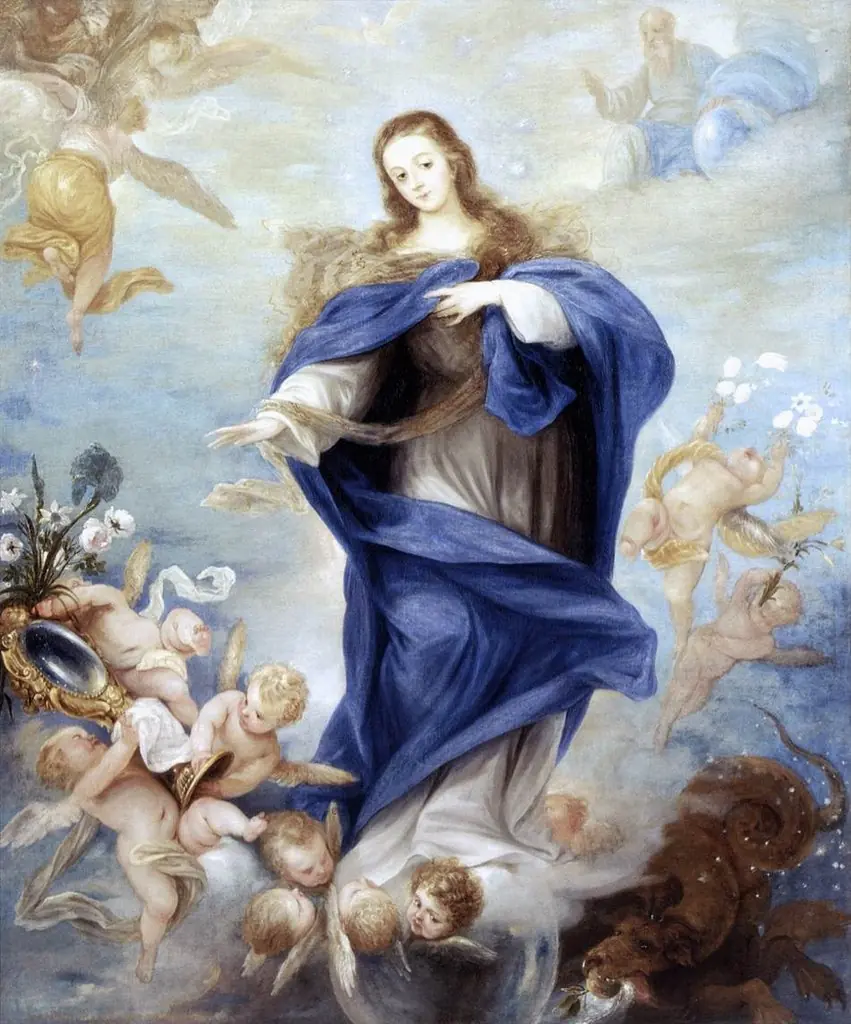
Artist & collection
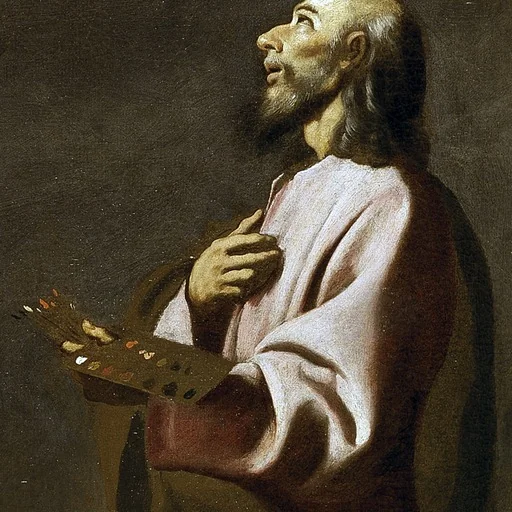
Artist
Francisco de Zurbarán was a Spanish Baroque painter. He is known primarily for his religious paintings depicting monks, nuns, and martyrs, and for his still-lifes. Zurbarán gained the nickname "Spanish Caravaggio",…

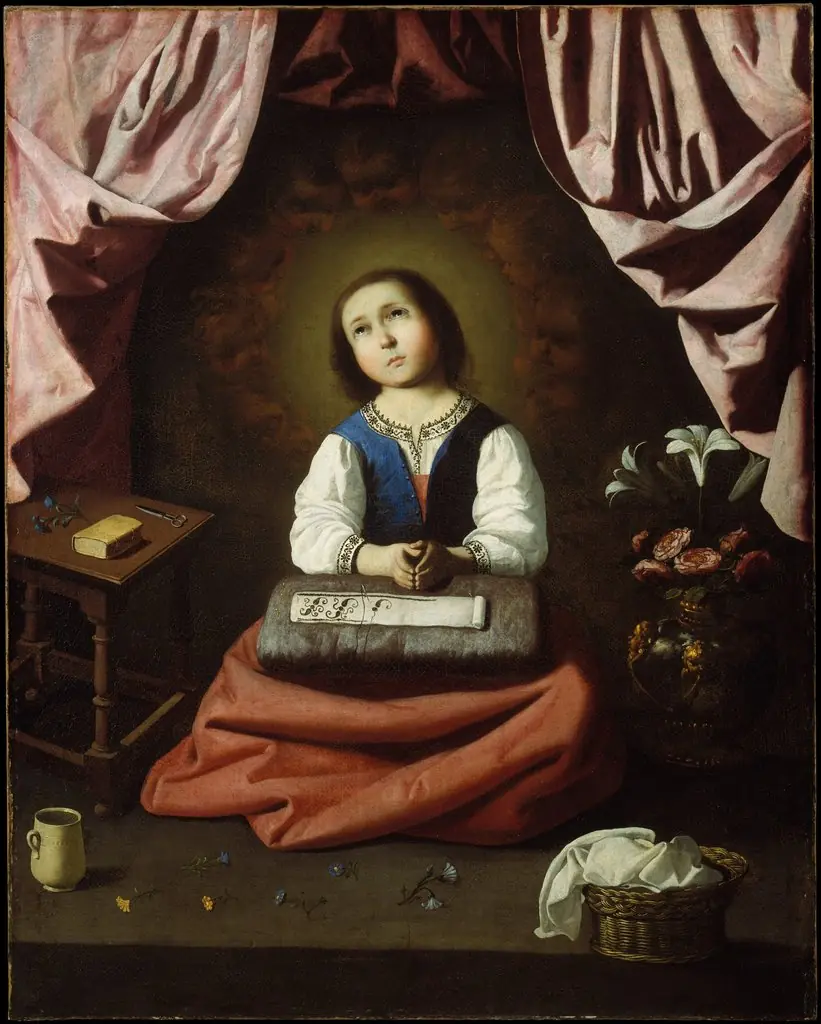
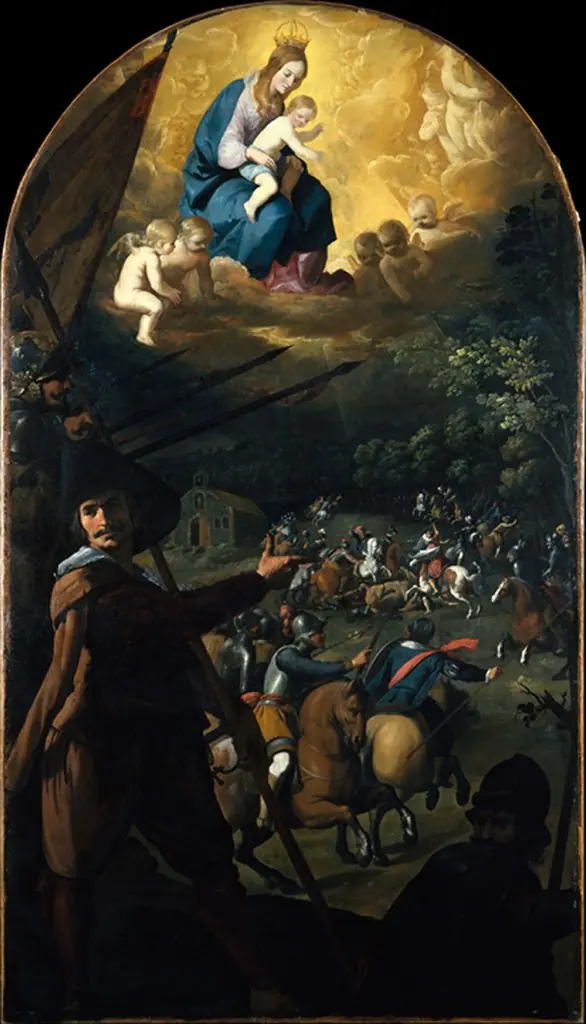
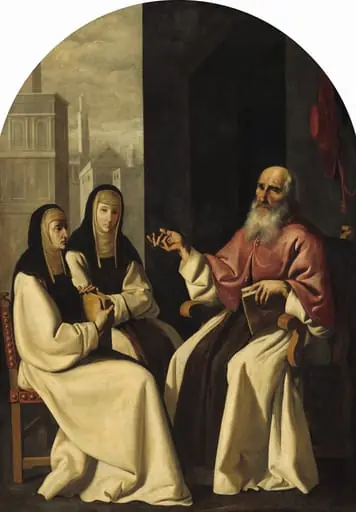
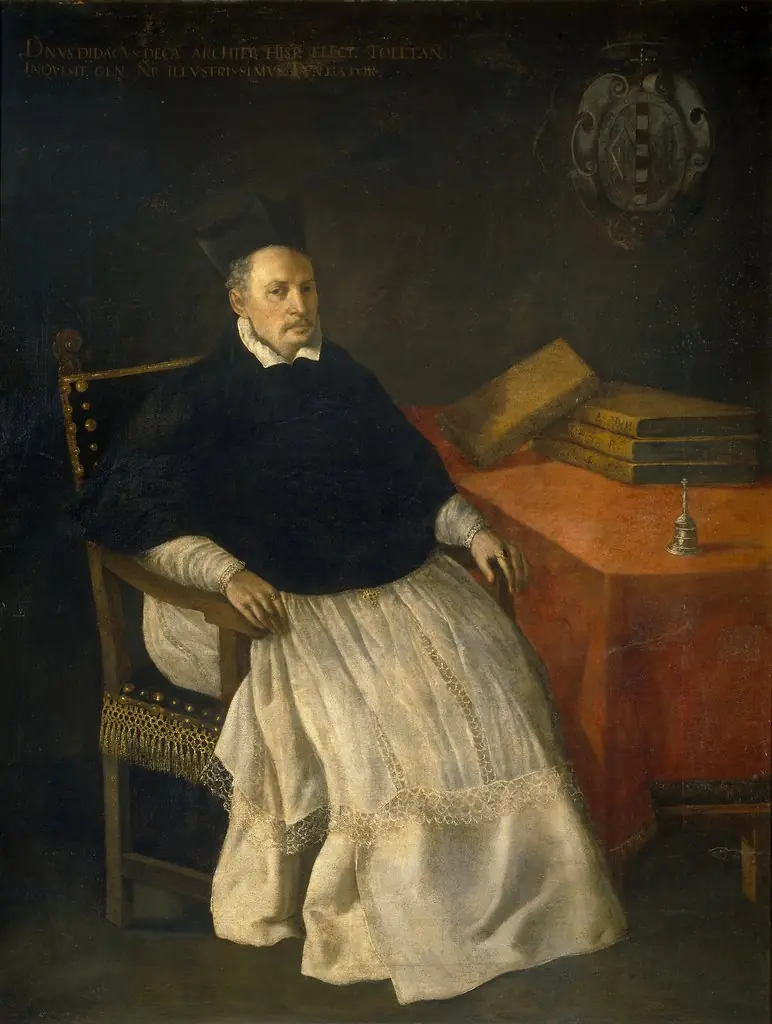
- The Immaculate Conception
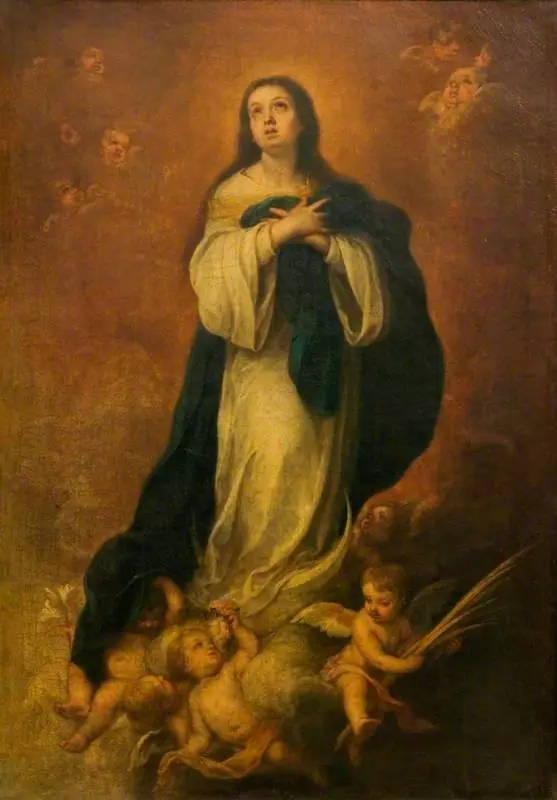 The Immaculate Conception
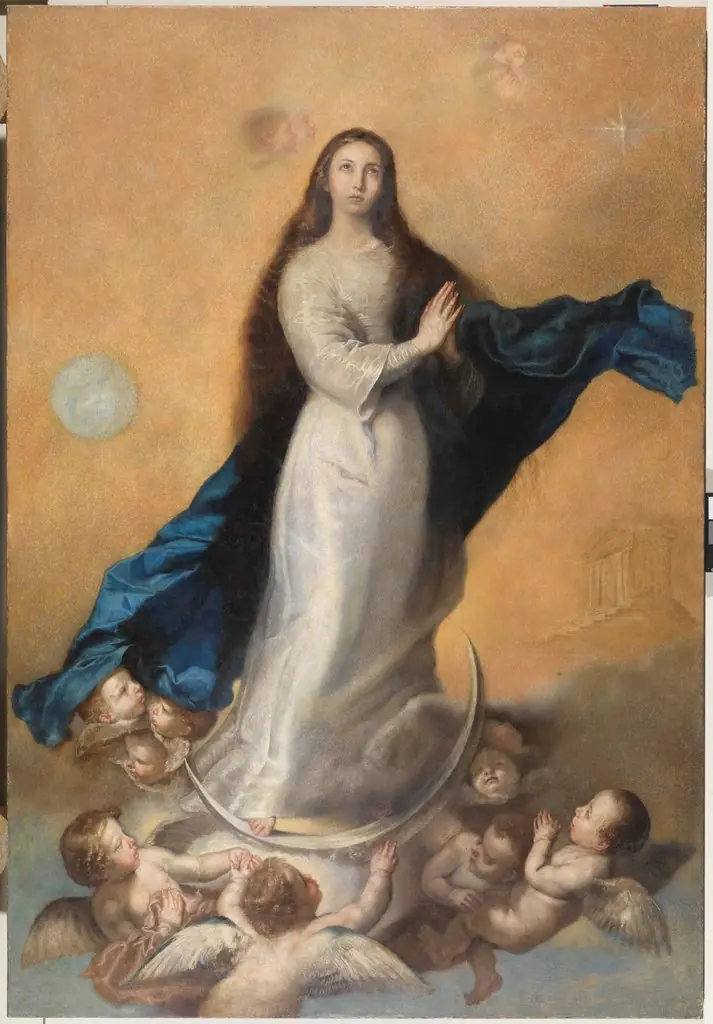 The Immaculate Conception
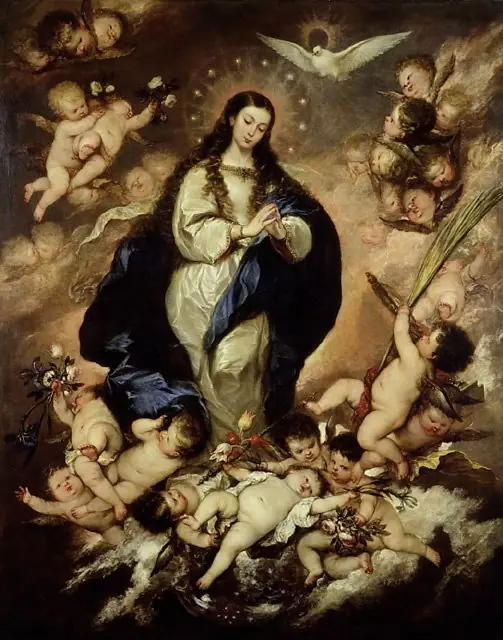 The Immaculate Conception
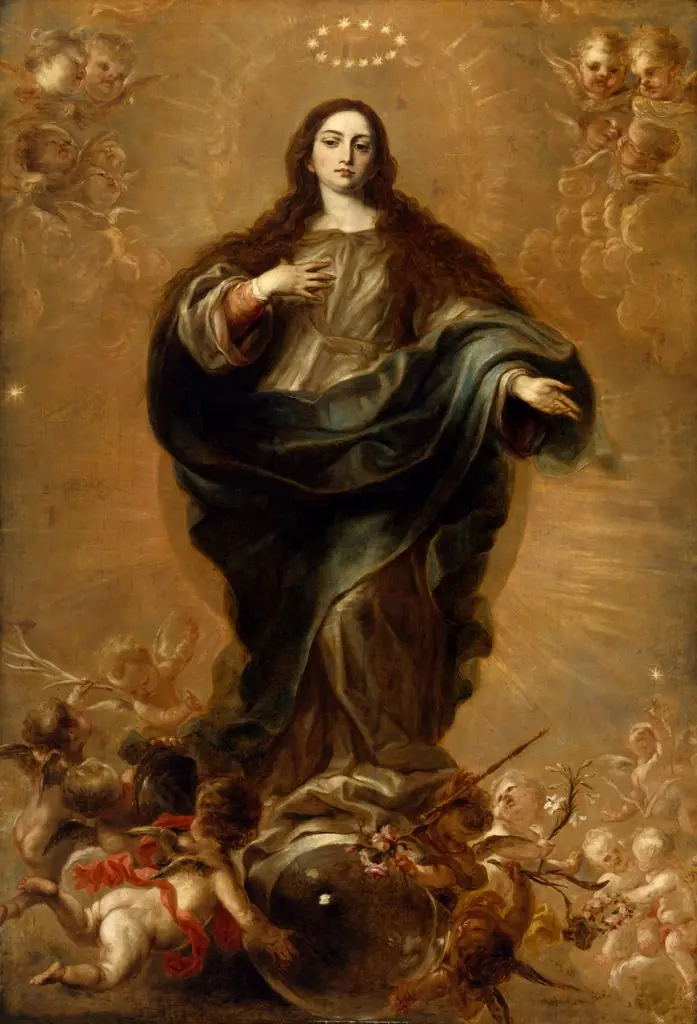 The Immaculate Conception
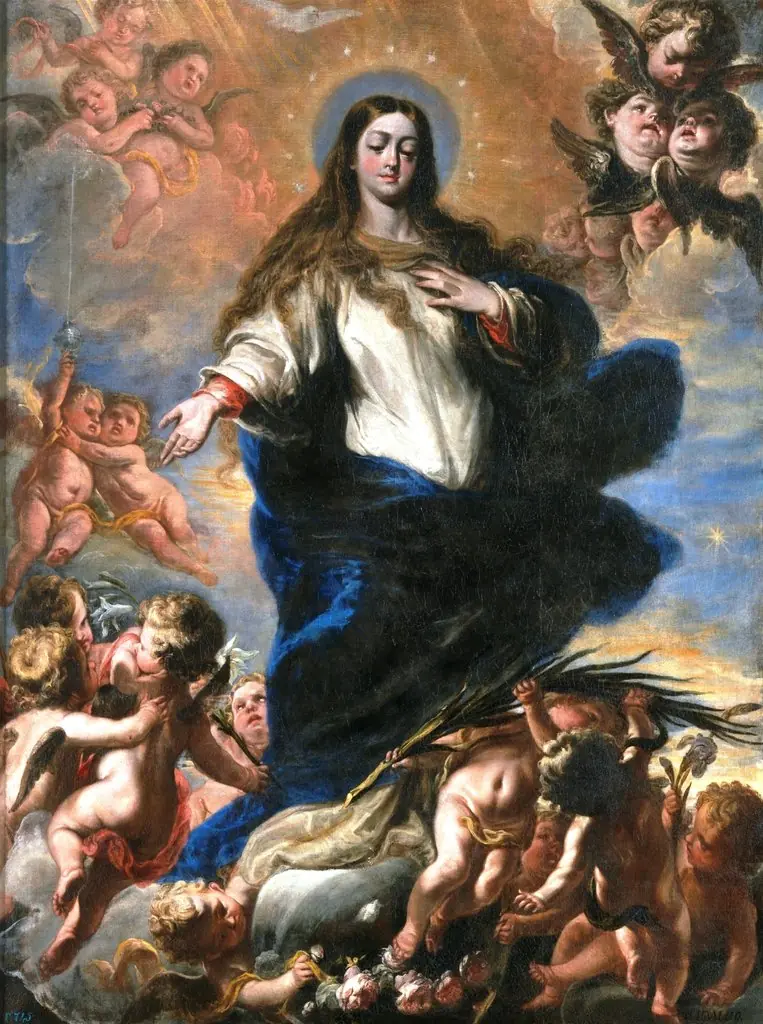 The Immaculate Conception
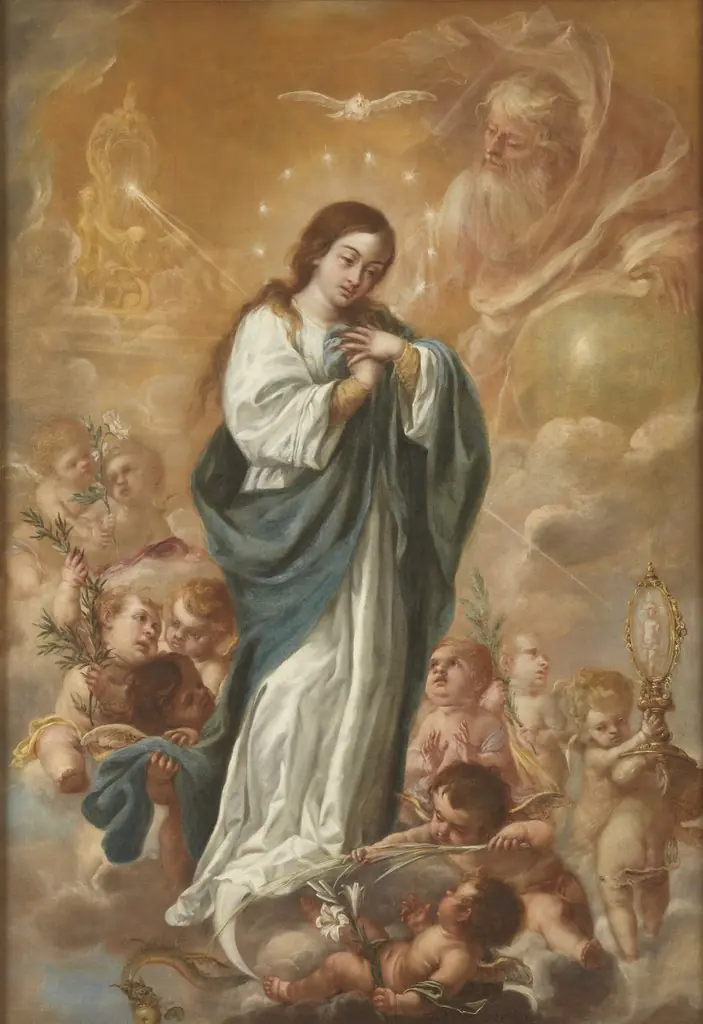 Immaculate Conception
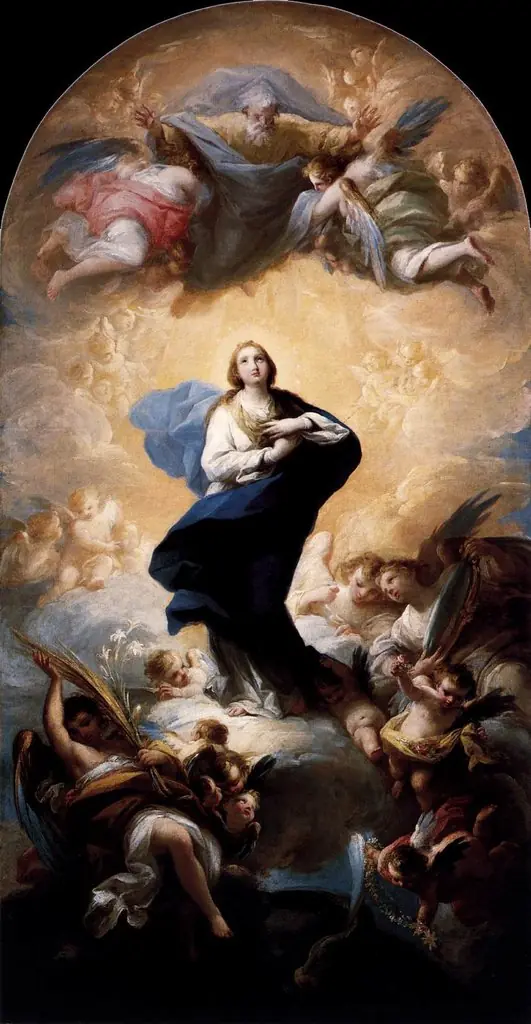 The Immaculate Conception
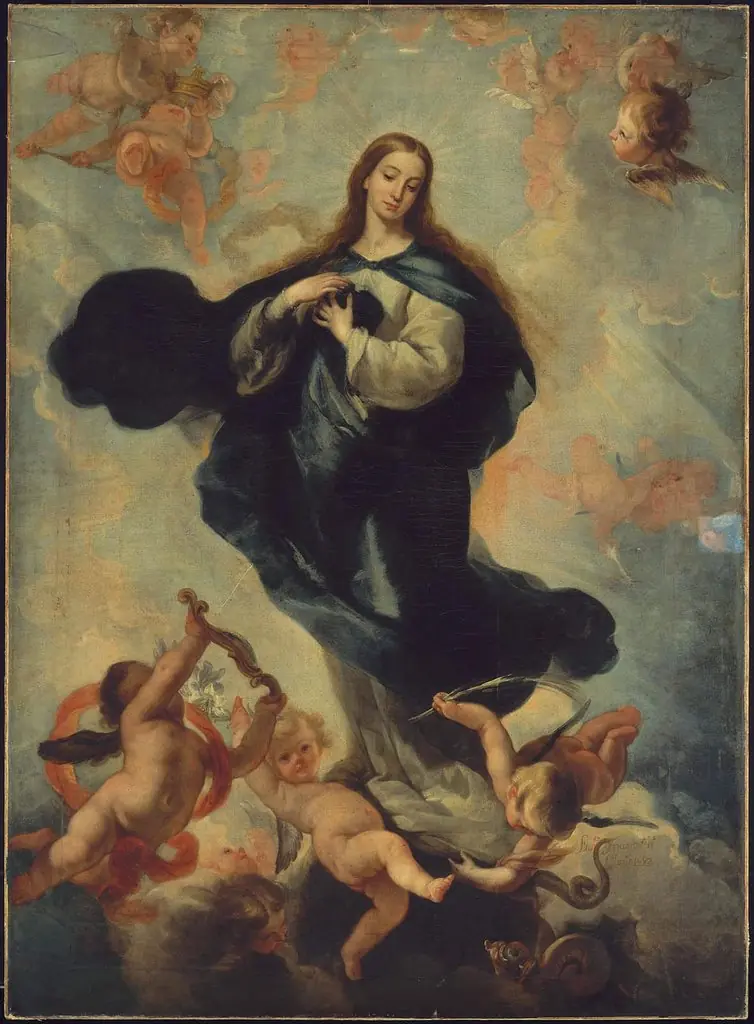 The Virgin of the Immaculate Conception
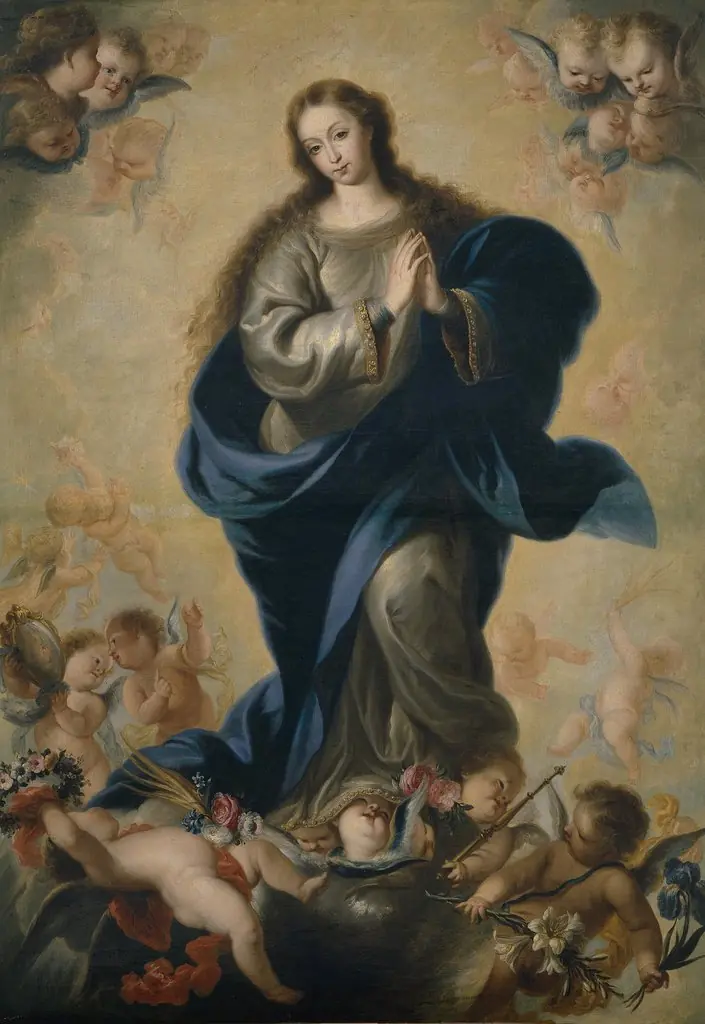 The Immaculate Conception
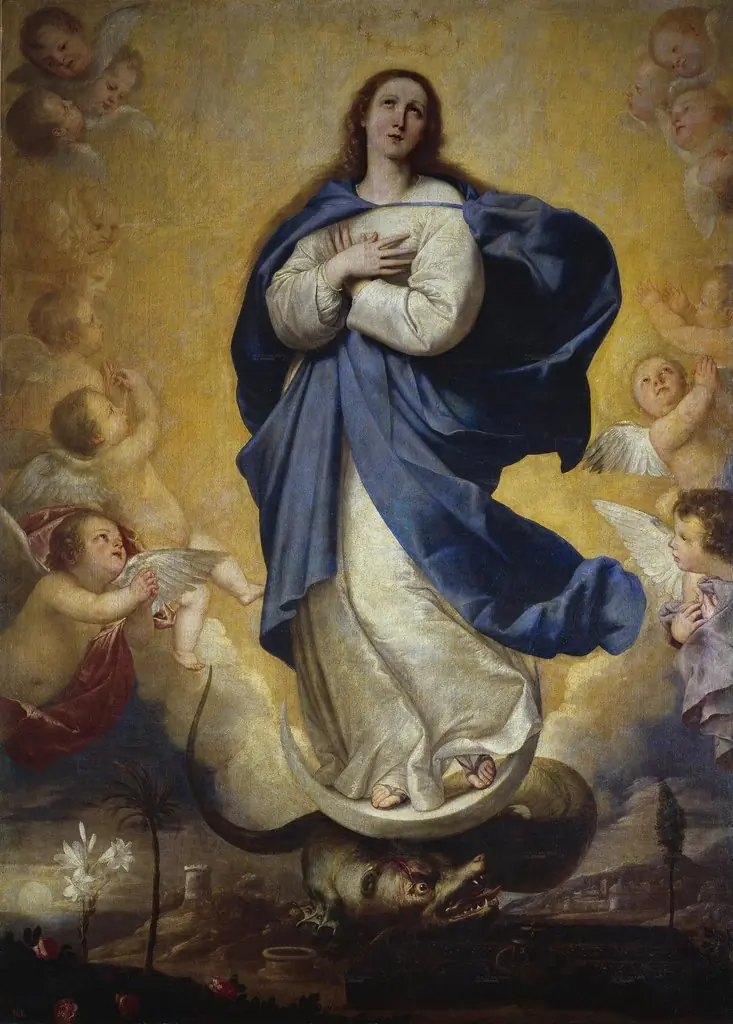 The Immaculate Conception
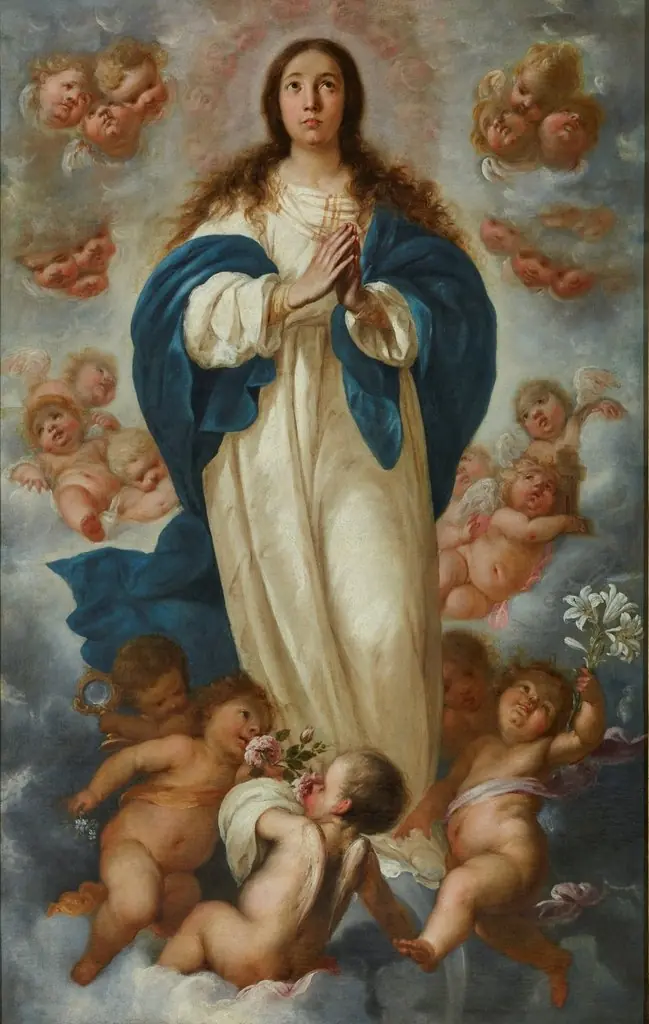 The Immaculate Conception