Artwork
Portrait of Grand DuchessYelena Pavlovna
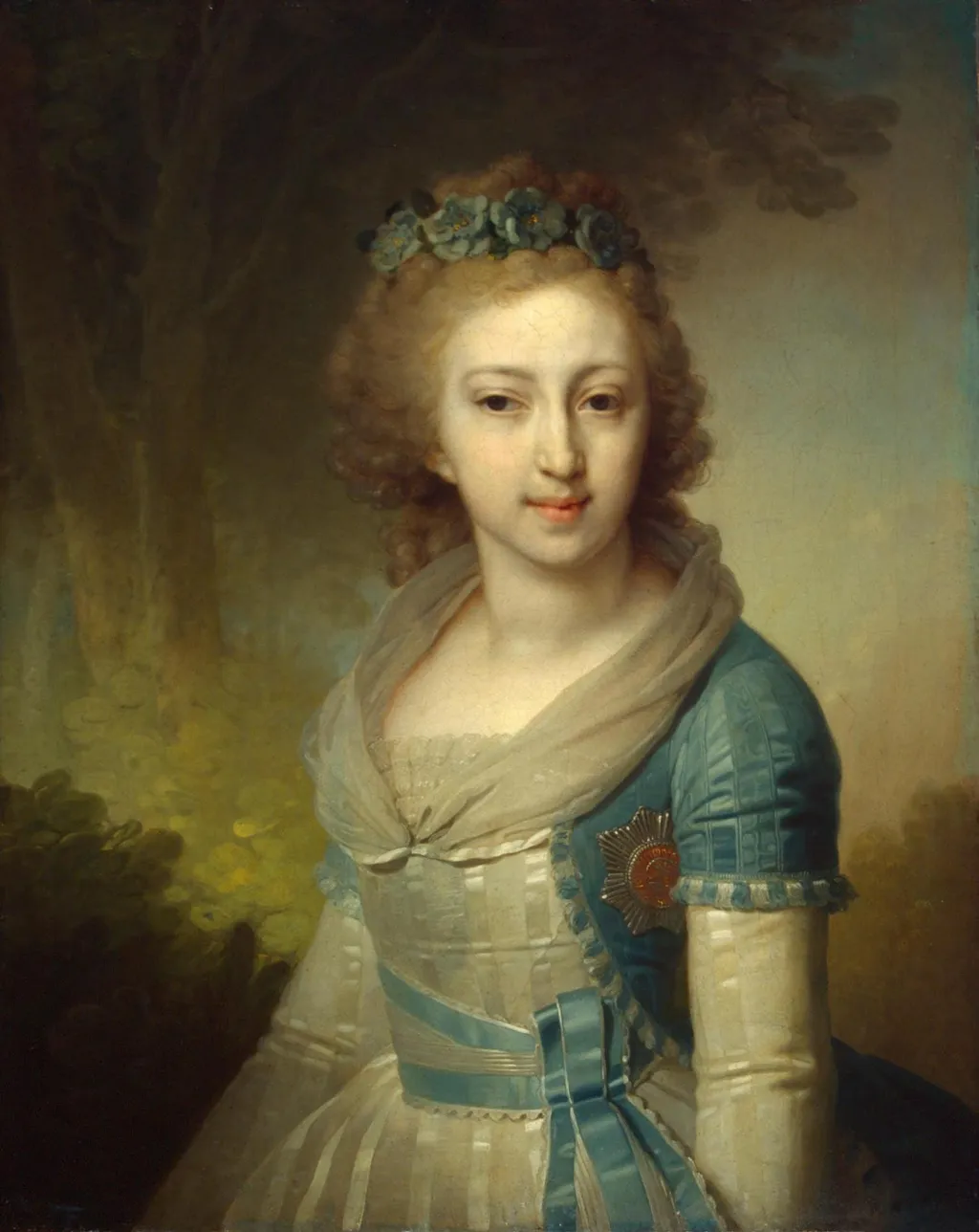
Portrait of Grand DuchessYelena Pavlovna is an oil painting by the Neoclassicist artist Vladimir Borovikovsky. It dates from 1798 and is held in the collection of the Hermitage Museum.
About this work
Overview
Portrait of Grand Duchess Yelena Pavlovna is an oil on canvas painting by the Russian artist Vladimir Borovikovsky, dated to 1796.
Portrait of Grand Duchess Yelena Pavlovna is an oil on canvas painting by the Russian artist Vladimir Borovikovsky, dated to 1796. Measuring 72 by 58 centimeters, the artwork is held in the State Hermitage Museum in St. Petersburg. The painting is a half-length portrayal of Grand Duchess Elena Pavlovna of Russia, capturing her in an informal setting that diverges from traditional, rigid court portraiture. The work is significant for its blend of aristocratic representation with a burgeoning sensibility for intimacy and naturalism in late eighteenth-century Russian art.
Subject & Meaning
The painting depicts Grand Duchess Elena Pavlovna of Russia (1784 to 1803), a daughter of Tsar Paul I of Russia and Sophie Dorothea of Wurttemberg. She is shown as a young woman adorned with a wreath of pale blue flowers in her powdered auburn hair. She wears a white gown with a striped bodice and a sheer fichu, along with a blue satin sash crossing from her right shoulder to her left hip. A silver star-shaped badge with a red center is pinned to her left breast. Her right arm is bare, while her left arm is covered by a long white glove. The informal pose and simple attire, set against an indistinct natural background, reflect a progressive shift in Russian aristocratic society, where some nobility began embracing modern ideas and less rigid social structures, moving away from conventional symbols of absolute status.
Technique & Style
Borovikovsky executed the portrait using oil paint on canvas, employing a smooth and refined brushwork to model the flesh and render the delicate fabrics of the sitter's clothing. The palette is dominated by cool blues, creamy whites, and warm earth tones, utilizing soft and pastel colors to enhance the sitter's natural features. Light falls evenly across her face and decolletage, creating soft shadows that define her serene expression. In contrast to the meticulous handling of the figure, the background of muted greens and browns is treated with looser, more impressionistic brushwork, suggesting an atmospheric landscape. This combination of precise detail in the figure and relaxed handling in the background aligns with Rococo sensibilities while capturing an atmosphere of refinement and distinction.
History & Provenance
Created in Russia in 1796, the portrait dates to the period just before Elena Pavlovna married the heir of the Grand Duke of Mecklenburg-Schwerin, after which she relinquished her Russian title. While the canonical date of the work's inception is 1796, some sources suggest a creation or completion date after 1799. The painting has been housed in the State Hermitage Museum in St. Petersburg, where it remains part of the collection. Specific details regarding its early ownership chain and exhibition history prior to entering the Hermitage are not firmly established in the available record.
Context
Vladimir Borovikovsky was active as a court painter in Russia during the late eighteenth and early nineteenth centuries. In this role, he was well versed in the conventions of royal portraiture, which typically emphasized formality and the reinforcement of noble status. This portrait, however, departs from those established norms. By presenting the Grand Duchess in a simple dress and flower crown against a naturalistic background, Borovikovsky captured a broader cultural shift within the Russian aristocracy. The work reflects the influence of European painting of the era, adapted to highlight a uniquely Russian grace and elegance, and stands as a commentary on evolving social structures at the turn of the century.
Own this work as a print
Artist & collection
Artist
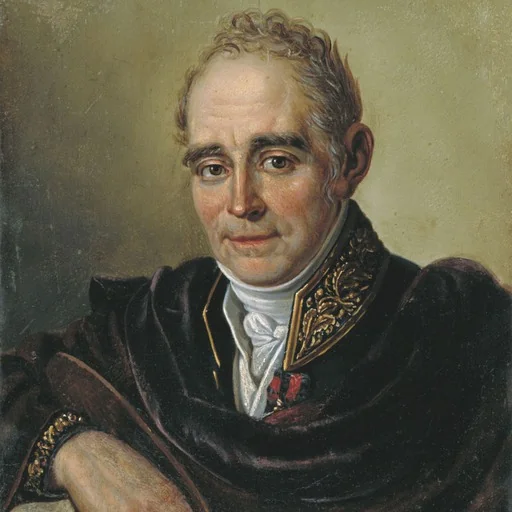
Vladimir Lukich Borovikovsky (August 4 1757 – April 18 1825) was a Russian artist of Ukrainian Cossack origin. He served at the court of Catherine the Great and dominated portraiture in Russia at the turn of the 19th century.

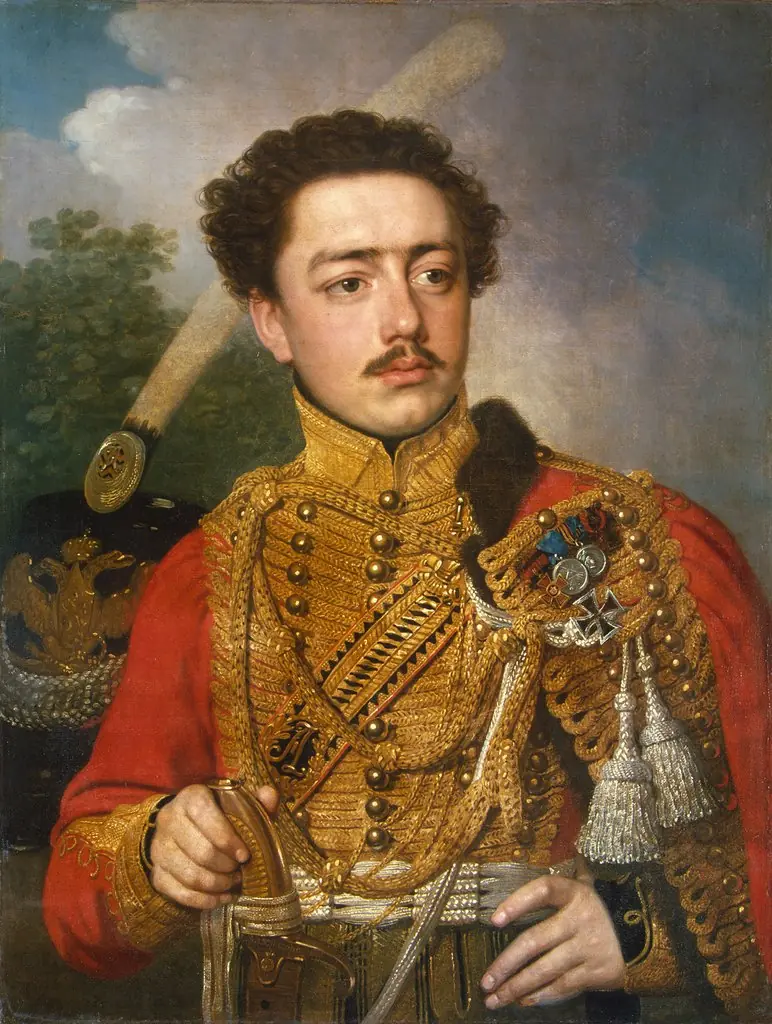 Portrait of Pavel Masyukov, the Cavalry Captain of the Life-Guards Hussar Regiment
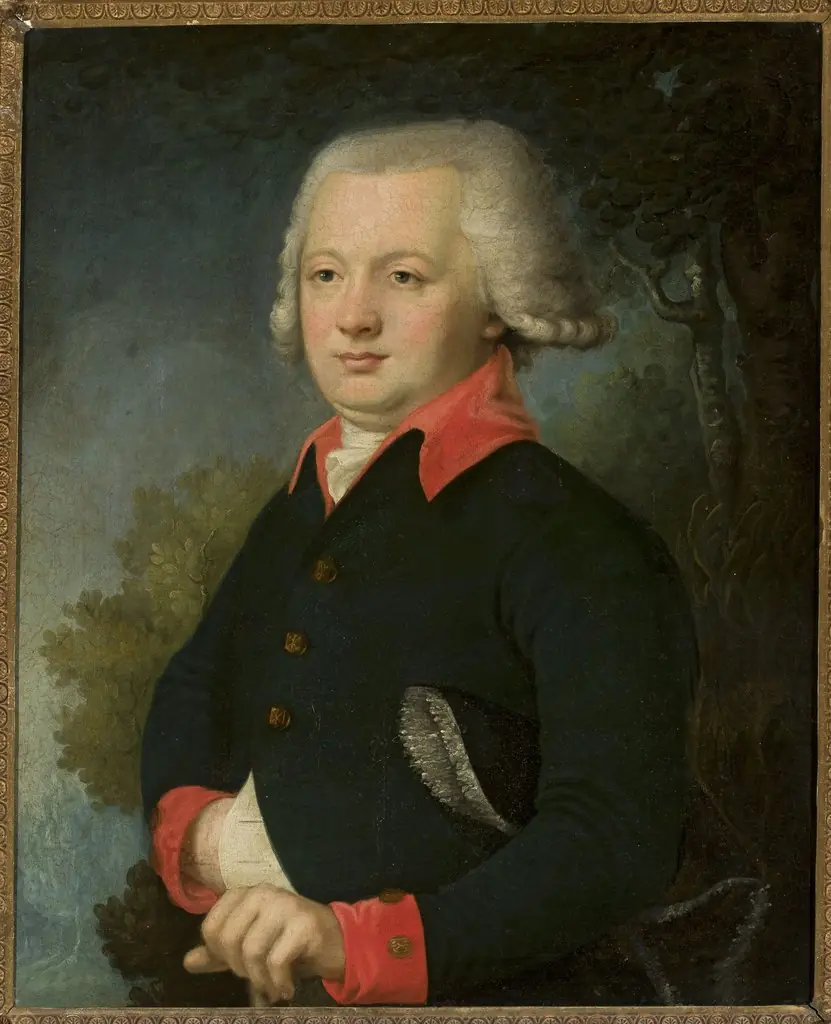 Portrait of a young man
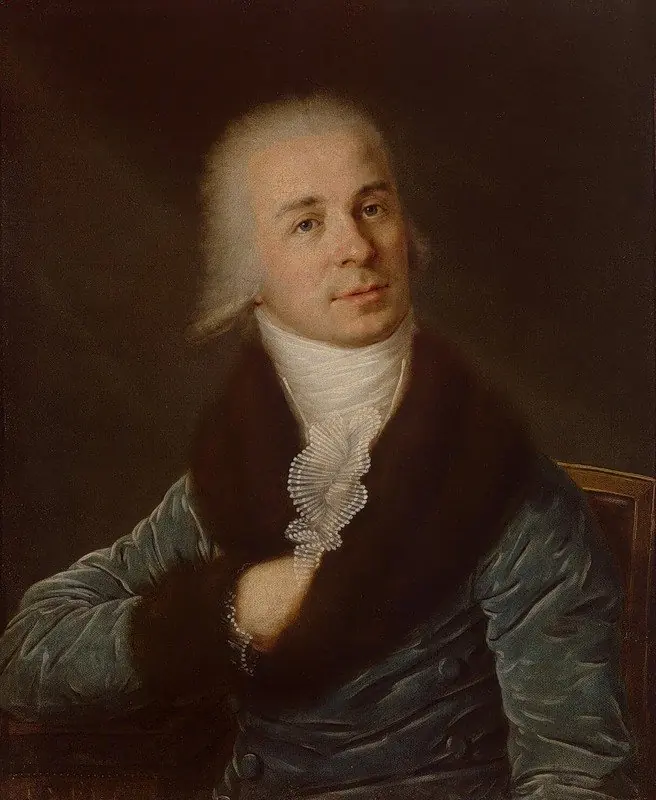 Portrait of Gavrila Derzhavin
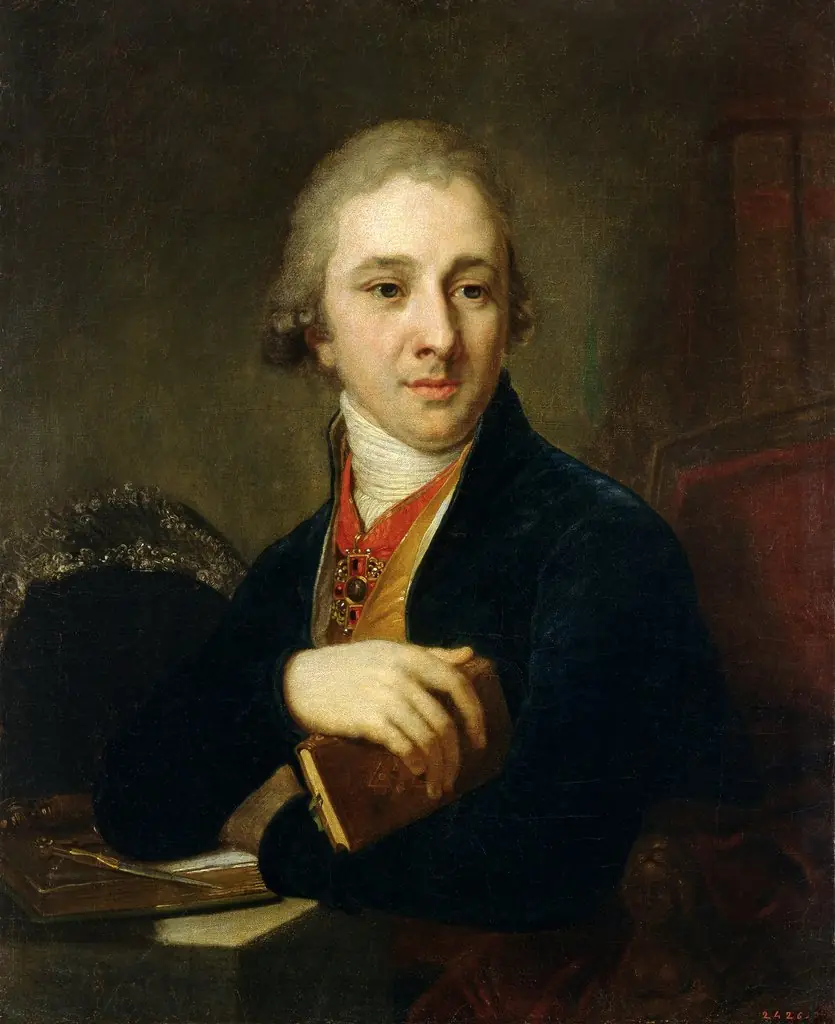 "Portrait of Alexander Labzin" (1766-1825)
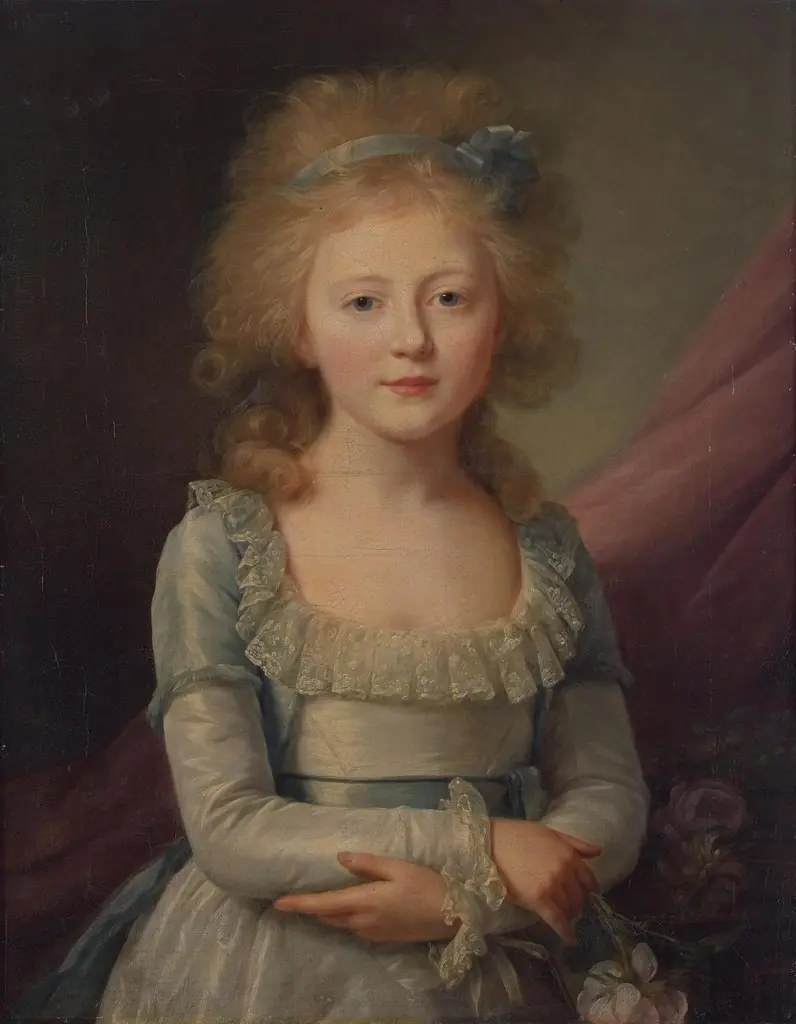
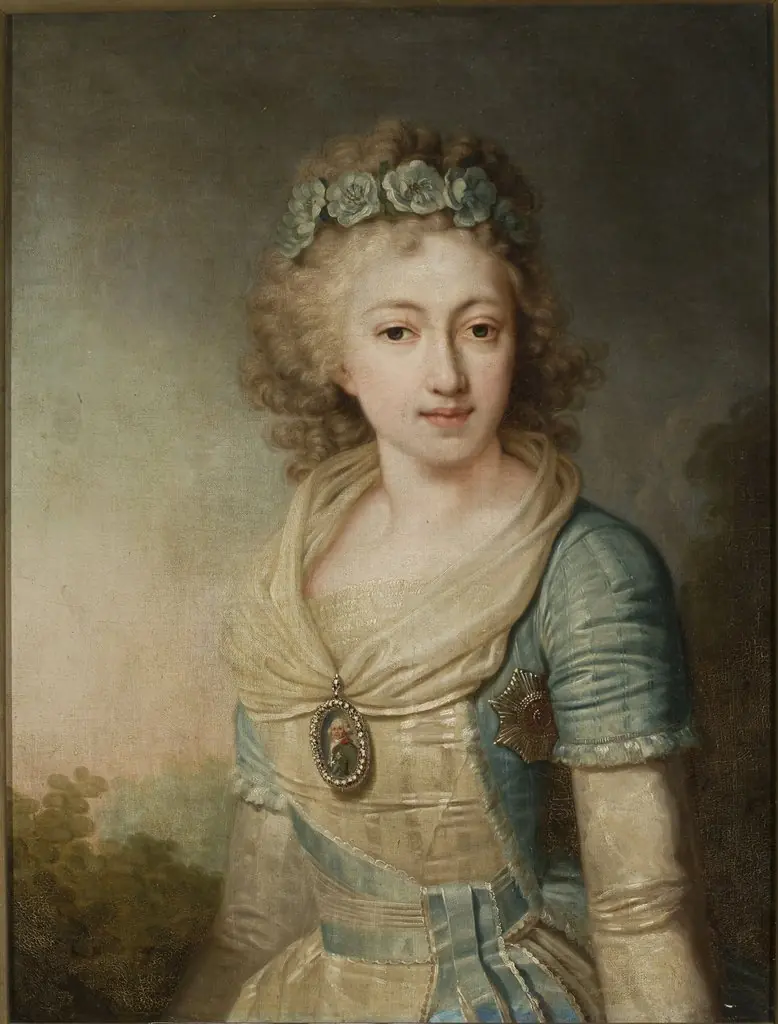 Portrait of Paul I’s daughter – Helena
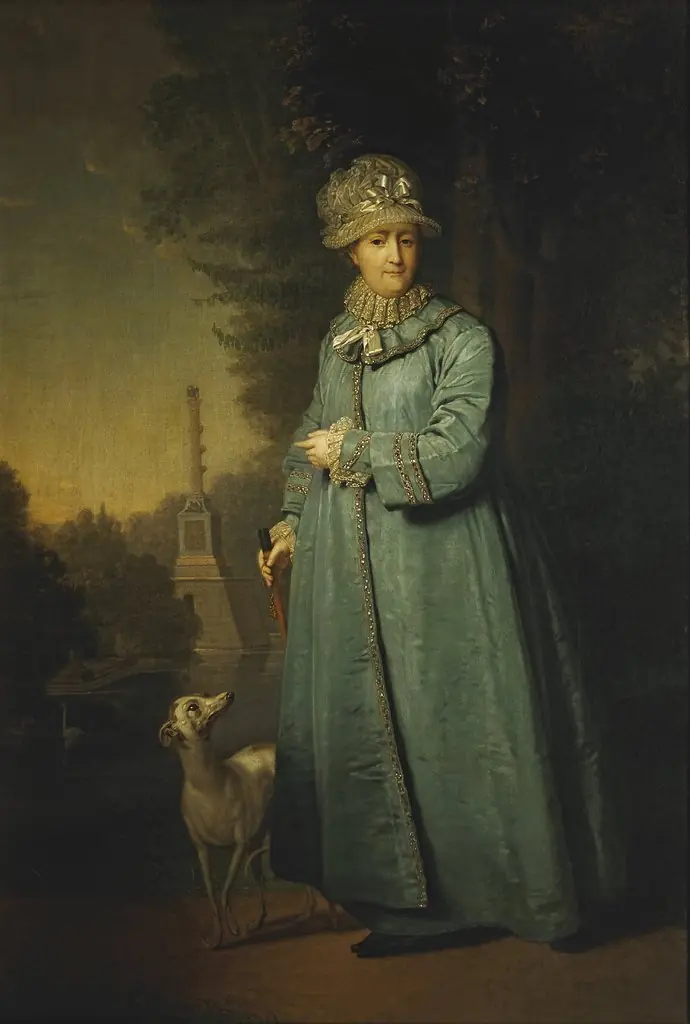 Catherine II during a walk in the Tsarskosyelsky Park
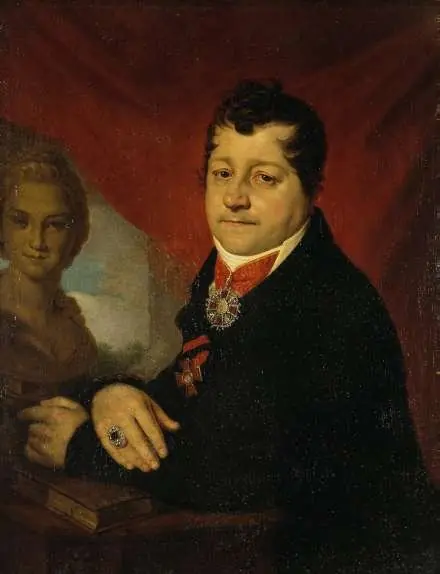 Portrait of Sergei Yakovlev
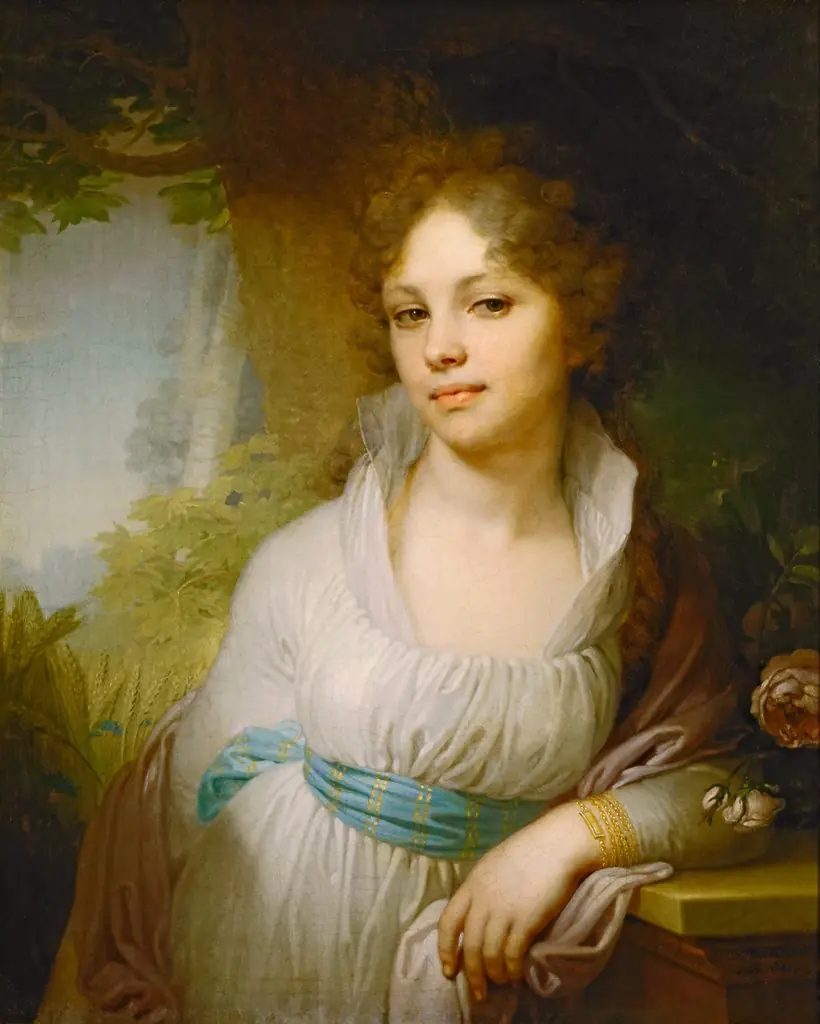 Portrait of Maria Ivanovna Lopukhina
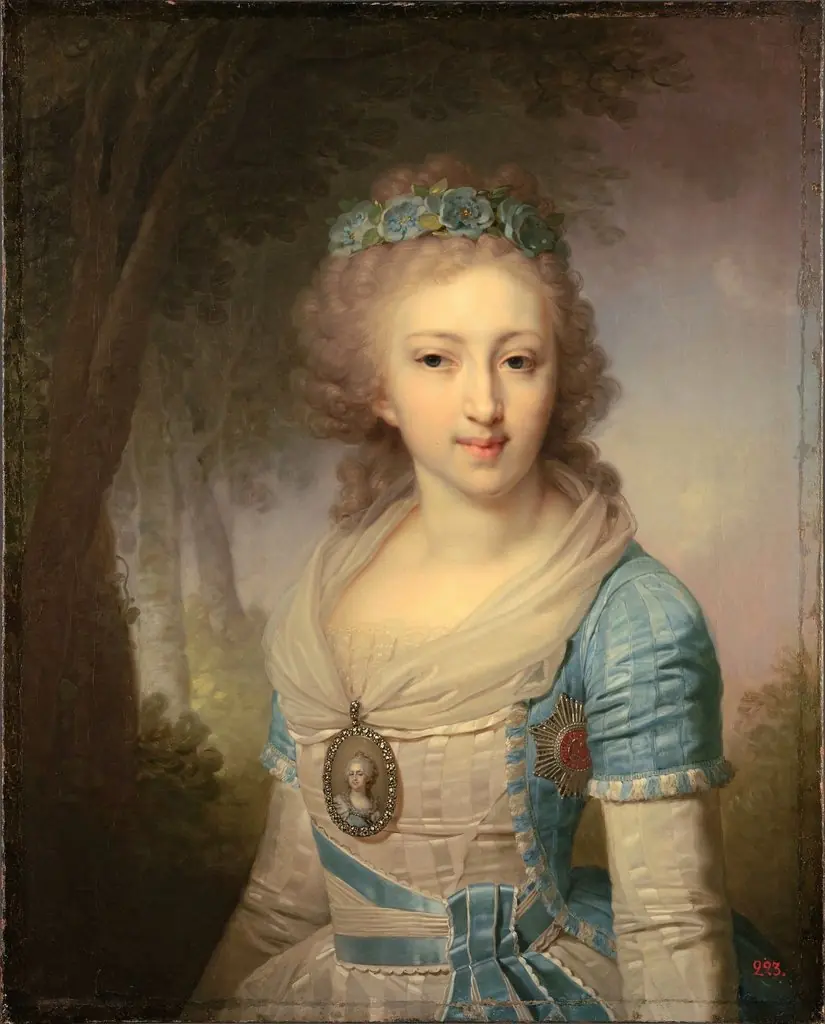 Grand Duchess Elena Pavlovna of Russia (1784-1803), later duchess of Mecklenburg-Schwerin
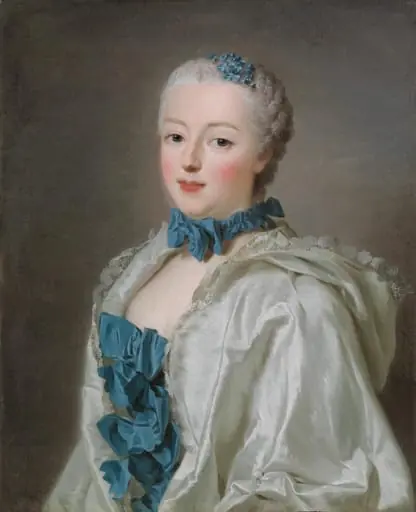 Françoise Marguerite de Sévigné, Grignanin kreivitär
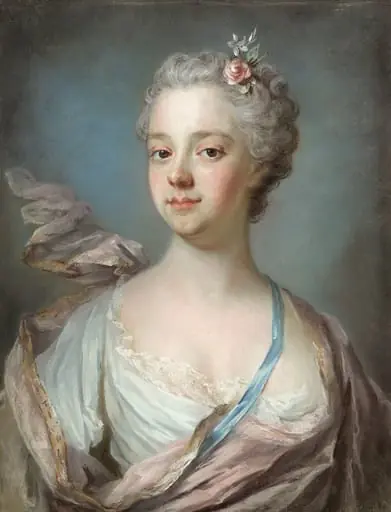 Kreivitär Ulrika Eleonora von Fersen
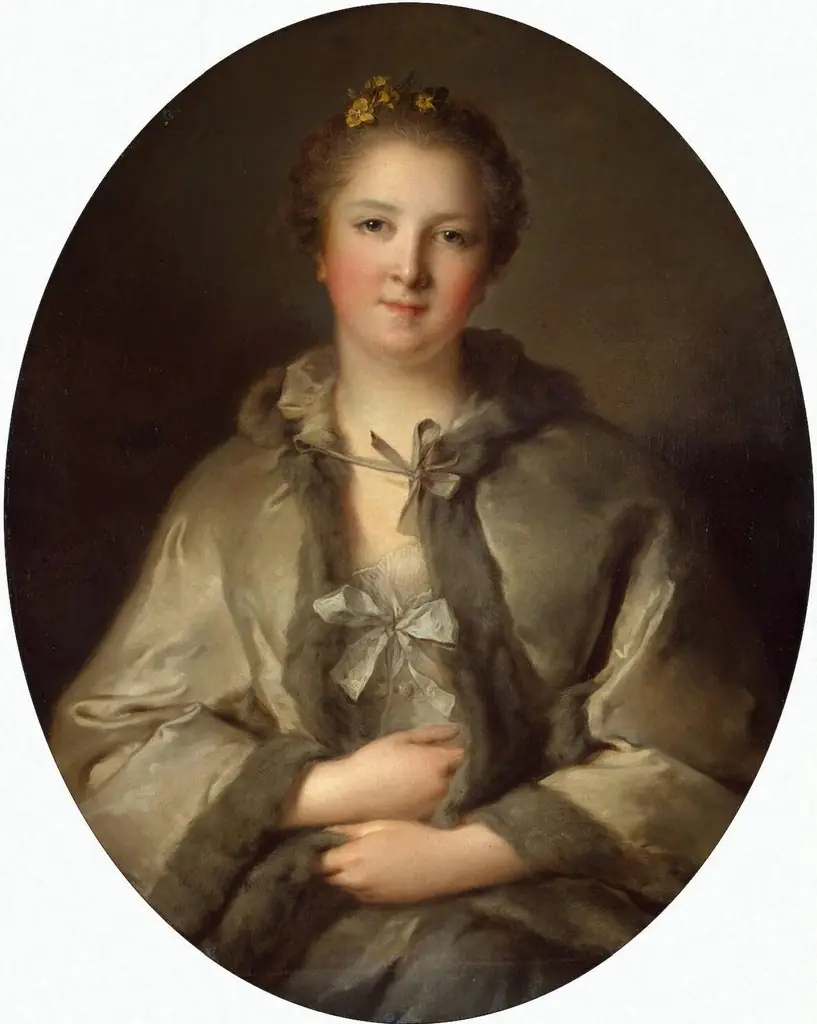 Portrait of a Woman in Grey
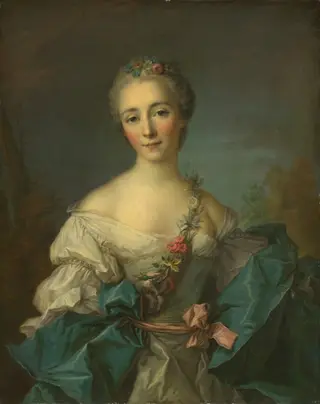 Portrait of a Young Woman
 Portrait of an Unknown Woman with a Rose
 Madame Louise of France
 Mlle. Marguerite Catherine Haynault, later the Marquise de Montmelas in Turkish Costume