Artwork
明 王上宮 忠孝圖 卷|Paragons of Loyalty and Filial Piety
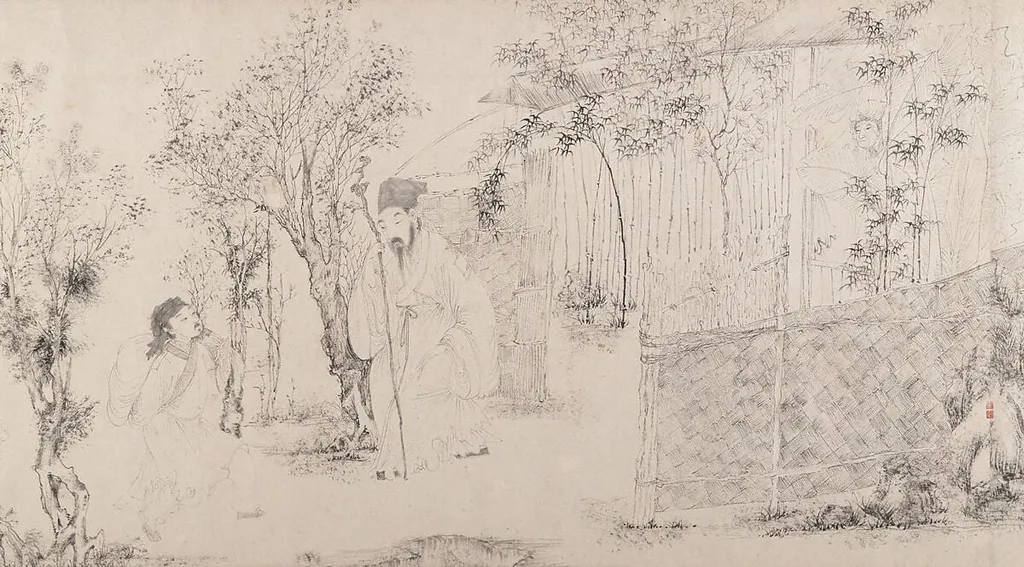
明 王上宮 忠孝圖 卷|Paragons of Loyalty and Filial Piety is an ink painting by the Ming dynasty painting artist Wang Shanggong. It dates from 1593 and is held in the collection of the Metropolitan Museum of Art.
About this work
A long, narrow ink scroll follows tiny scholars through misty mountains, where they pause to read stone tablets or point at waterfalls. Each figure is a real Chinese official who chose duty over comfort, their stories already a thousand years old when Wang Shanggong painted them in 1593. Crosshatched lines make the rocks look solid without any color.
Subject & Meaning
" The composition uses the surrounding terrain to frame the figure, suggesting a harmonious relationship between human conduct and natural order.
The handscroll by Wang Shanggong, dated 1593 and housed in the Metropolitan Museum of Art, presents a solitary male figure within an idealized landscape, embodying the Confucian virtues of loyalty and filial piety as suggested by its title "Paragons of Loyalty and Filial Piety." The composition uses the surrounding terrain to frame the figure, suggesting a harmonious relationship between human conduct and natural order. By situating a man in a serene setting, the work conveys moral exemplarity without explicit attributes, allowing viewers to interpret the subject as a virtuous scholar whose conduct reflects the core values of Chinese elite culture.
Technique & Style
Executed in 1593 by Wang Shanggong, this work is a handscroll painted with ink on paper. As a landscape painting, the composition depicts natural scenery alongside human figures integrated within the environment. The choice of ink on paper as the medium and the handscroll format as the support reflects traditional Chinese painting practices of the Ming dynasty.
The artwork's classification within the landscape genre indicates a stylistic focus on the representation of nature, while the inclusion of figures suggests a narrative element consistent with the title's themes of loyalty and filial piety. The piece is held in the collection of the Metropolitan Museum of Art.
History & Provenance
The handscroll titled 明 王上宮 忠孝圖 卷 | Paragons of Loyalty and Filial Piety was painted by Wang Shanggong in 1593 in China. Executed in ink on paper, the work belongs to the landscape genre and portrays a solitary figure within a natural setting. It is held in the collection of the Metropolitan Museum of Art.
The available sources do not document a detailed chain of ownership between its creation in Ming-dynasty China and its acquisition by the museum.
Legacy
The handscroll 明王上宮忠孝圖卷, painted by Wang Shanggong in 1593, exemplifies Ming-dynasty narrative landscape painting and the theme of loyalty and filial piety. Classified as a landscape work depicting a man, it was acquired by the Metropolitan Museum of Art, where it is catalogued as part of the museum's collection of Chinese paintings. Its presence in a major public institution has supported continued scholarly attention to the visual culture of filial devotion in late-Ming art.
Overview
Wang Shanggong's handscroll, Paragons of Loyalty and Filial Piety, created in 1593, presents a continuous landscape rendered in ink on paper. This work depicts a series of historical figures within expansive mountain settings, illustrating ancient tales of moral rectitude. As a handscroll, it is designed for intimate viewing, unfolding gradually to reveal its narrative and artistic details.
Context
This work belongs to the venerable tradition of Chinese landscape painting, a genre often imbued with philosophical and moral significance. Created during the Ming dynasty, it reflects a continued interest in depicting historical narratives and moral exemplars within idealized natural settings. The handscroll format itself encourages a journey through the depicted world, aligning with scholarly contemplation.
Artist & collection
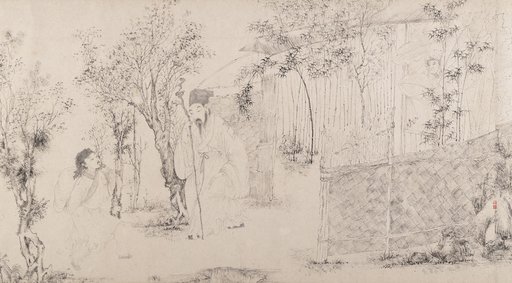

- New Year's Day in a Village at Stone Lake
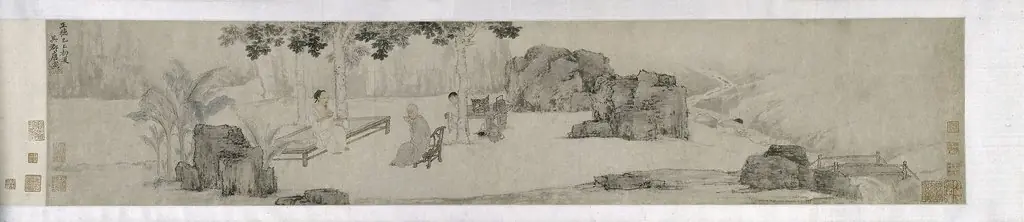 Tea Drinking Under the Wutong Tree
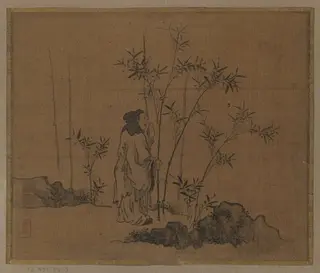 Album Leaf Painting: Scholar and Bamboo
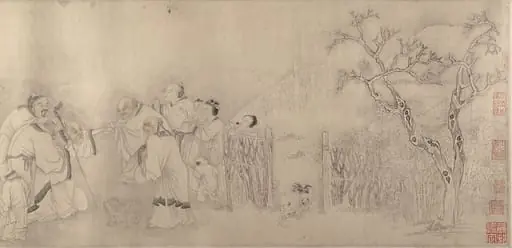 明/清 佚名 人物故事圖 卷|Family Visit
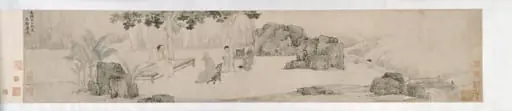 Tea Drinking Under the Wutong Tree
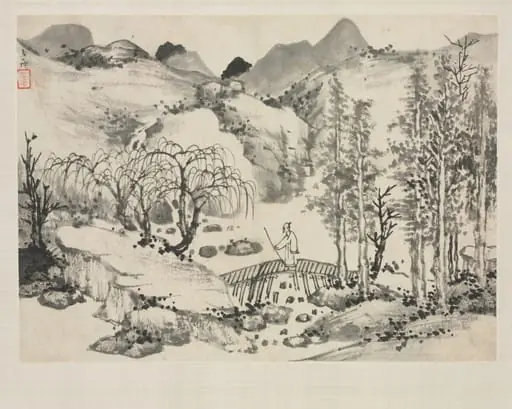 Landscape Album in Various Styles: Landscape with Artist on a Bridge
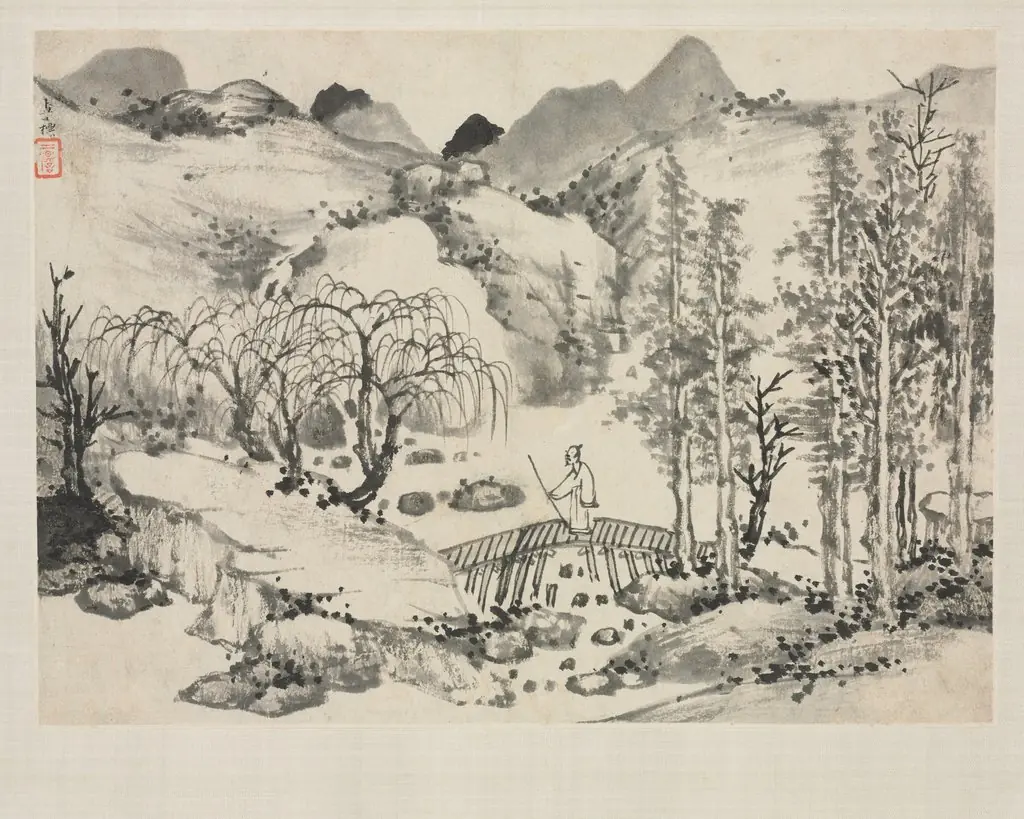 Landscape Album in Various Styles: Landscape with Artist on a Bridge
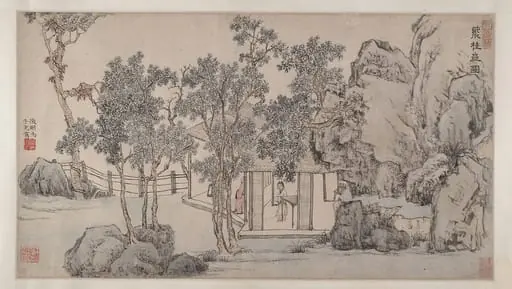 明 文徵明 叢桂齋圖 卷|The Cassia Grove Studio
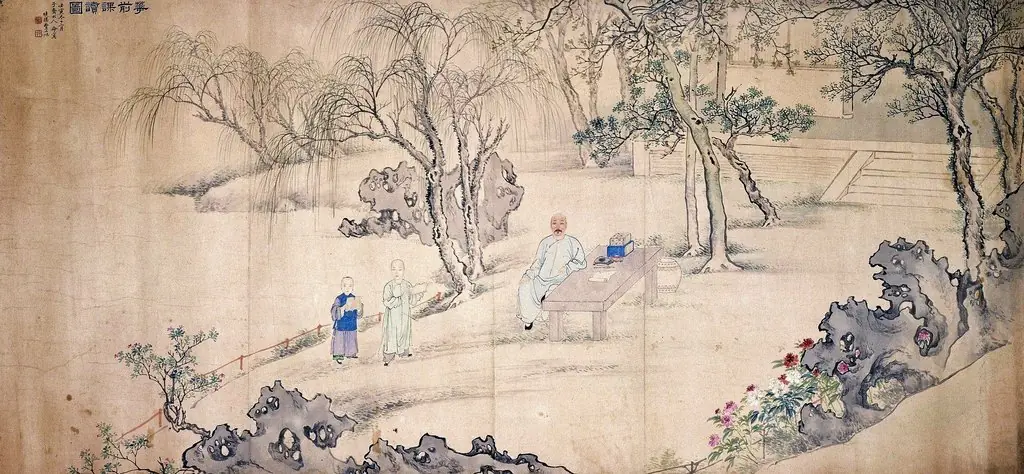 Lesson among the flowers.
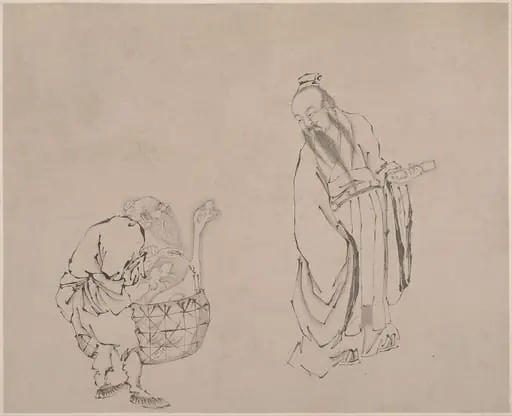 Untitled
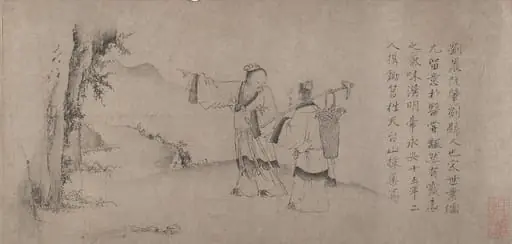 元 趙蒼雲 劉晨阮肇入天台山圖 卷|Liu Chen and Ruan Zhao Entering the Tiantai Mountains
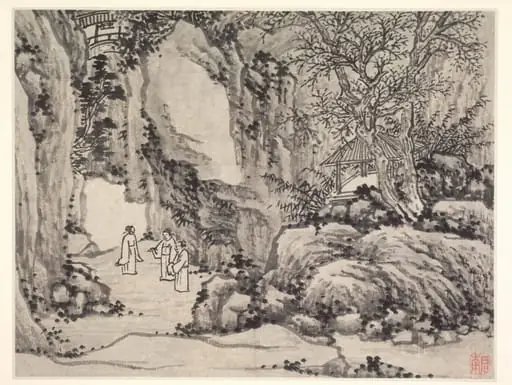 The Sword Spring, Tiger Hill, from Twelve Views of Tiger Hill, Suzhou