Artwork
Study for "Jephthah's Daughter"
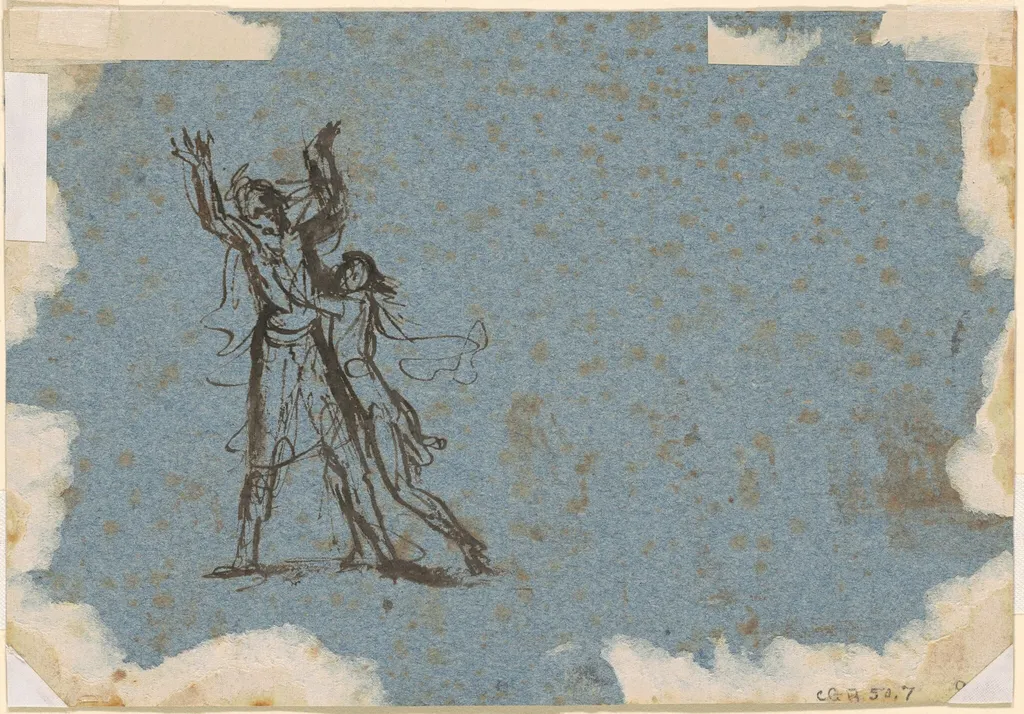
Study for "Jephthah's Daughter" is an ink drawing by the Romanticist artist Benjamin West. It dates from 1780 and is held in the collection of the National Gallery of Art.
About this work
Overview
Created in 1780, this ink drawing by Benjamin West serves as a preparatory study for his larger painting 'Jephthah's Daughter.
Created in 1780, this ink drawing by Benjamin West serves as a preparatory study for his larger painting 'Jephthah's Daughter.' Executed on blue wove paper, the work employs only black ink to define form and emotion. The paper’s aged surface, with frayed edges and subtle wear, suggests frequent handling during the creative process.
The contrast between the dark lines and the blue ground enhances the figure’s presence, emphasizing immediacy over finish.
Subject & Meaning
The figure depicts Jephthah’s daughter, a biblical character who, according to the Book of Judges, mourns her fate after her father fulfills a vow that dooms her to a life of seclusion. Her raised arms and loose hair convey anguish and resignation. The solitary figure against an empty field focuses attention on her emotional state, reflecting West’s interest in psychological depth over narrative detail in his preparatory work.
Technique & Style
West uses precise, fluid lines of black ink to model the figure’s form, with delicate cross-hatching suggesting the folds of fabric and the texture of rocky terrain. The blue paper acts as a mid-tone, allowing the ink to read as shadow and highlight without gradation. Tiny ink dots, possibly for atmospheric effect or texture, are scattered sparingly across the background, adding subtle depth without distracting from the central figure.
History & Provenance
The drawing remained in West’s possession until his death in 1820 and was later acquired by the Royal Academy of Arts in London, where it is held today. Its condition, worn edges, faint staining, and visible creases, indicates it was used repeatedly in the studio, likely as a reference during the development of the final painting. Its survival offers rare insight into West’s working methods.
Context
In the late 18th century, British artists increasingly turned to biblical and historical subjects as vehicles for emotional expression. West, a leading figure in this movement, used preparatory drawings to refine composition and gesture before committing to oil. This study reflects the era’s shift toward dramatic, psychologically charged narratives rooted in classical and scriptural sources.
Legacy
This drawing stands as a testament to West’s commitment to expressive draftsmanship. Though overshadowed by his finished paintings, such studies reveal the intensity of his creative process. It remains a key example of how 18th-century artists used simple materials to explore complex human emotion, influencing later generations focused on the expressive potential of line and paper.
Own this work as a print
Artist & collection

Artist
Benjamin West (October 10, 1738 – March 11, 1820) was an American-born British painter who specialised in history painting, creating such works as The Death of Nelson, The Death of General Wolfe, the Treaty of Paris,…

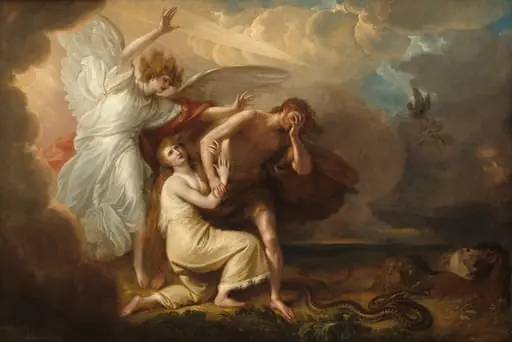 The Expulsion of Adam and Eve from Paradise
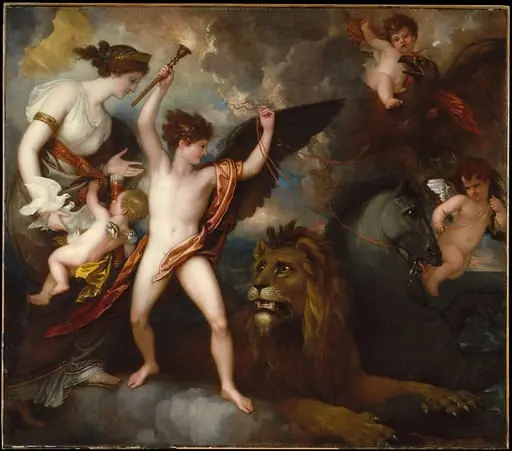 Omnia Vincit Amor, or The Power of Love in the Three Elements
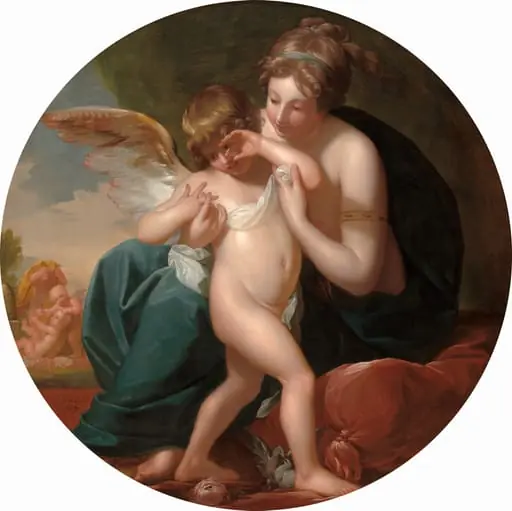 Cupid, Stung by a Bee, Is Cherished by his Mother
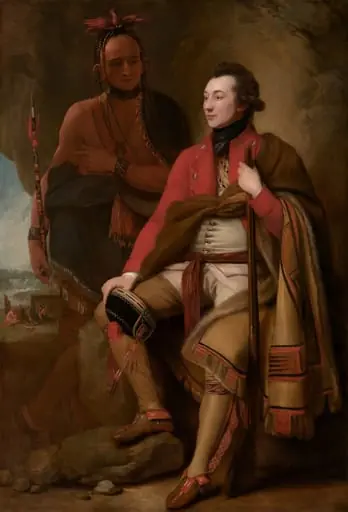 Colonel Guy Johnson and Karonghyontye (Captain David Hill)
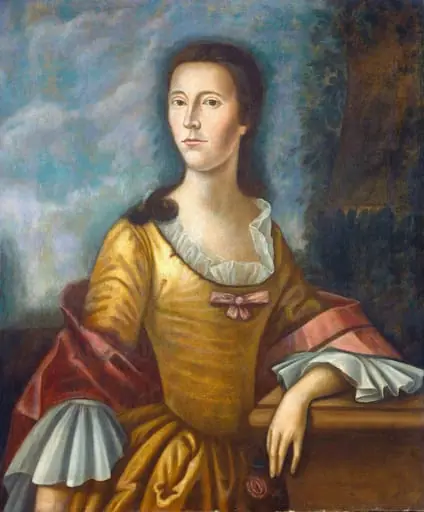 Mary Bethel Boude (Mrs. Samuel Boude)
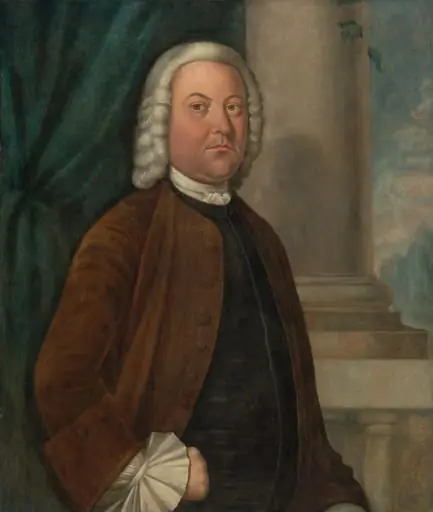 Dr. Samuel Boude
 Moses Shown the Promised Land
 Hagar and Ishmael
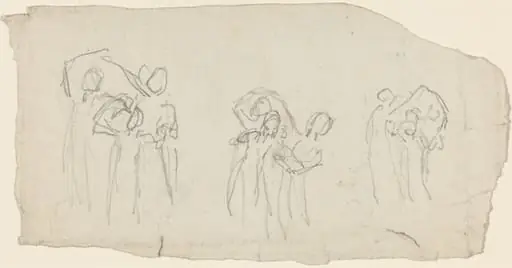
- Three Groups of Dancers
 Three Seated Figures
 Study of a Seated Woman and other Sketches
 Two Seated Female Figures with Arms Lifted Overhead
 Duel after the Masked Ball (recto)
 Two drawings of Indian figures
 Scene in a Palace of Justice
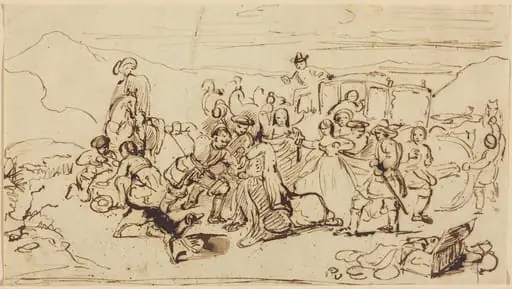 The Murder of Archbishop Sharpe
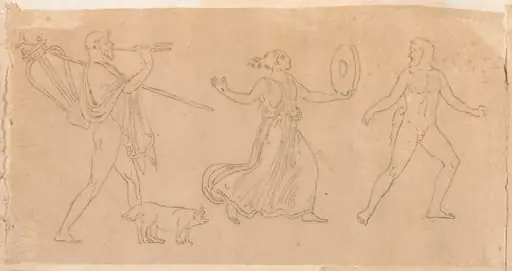 Dancing and Piping Figures
![Sheet of Studies [recto and verso], by John Flaxman](https://artifactworldgallery.com/img/john-flaxman--sheet-of-studies-recto-and-verso--5d19d38e20f446c0-w320.webp) Sheet of Studies [recto and verso]
Sheet of Studies [recto and verso] Only a Shower.
 Antique Battle Scene (?)