Artwork
Alexander Arnold Hannay
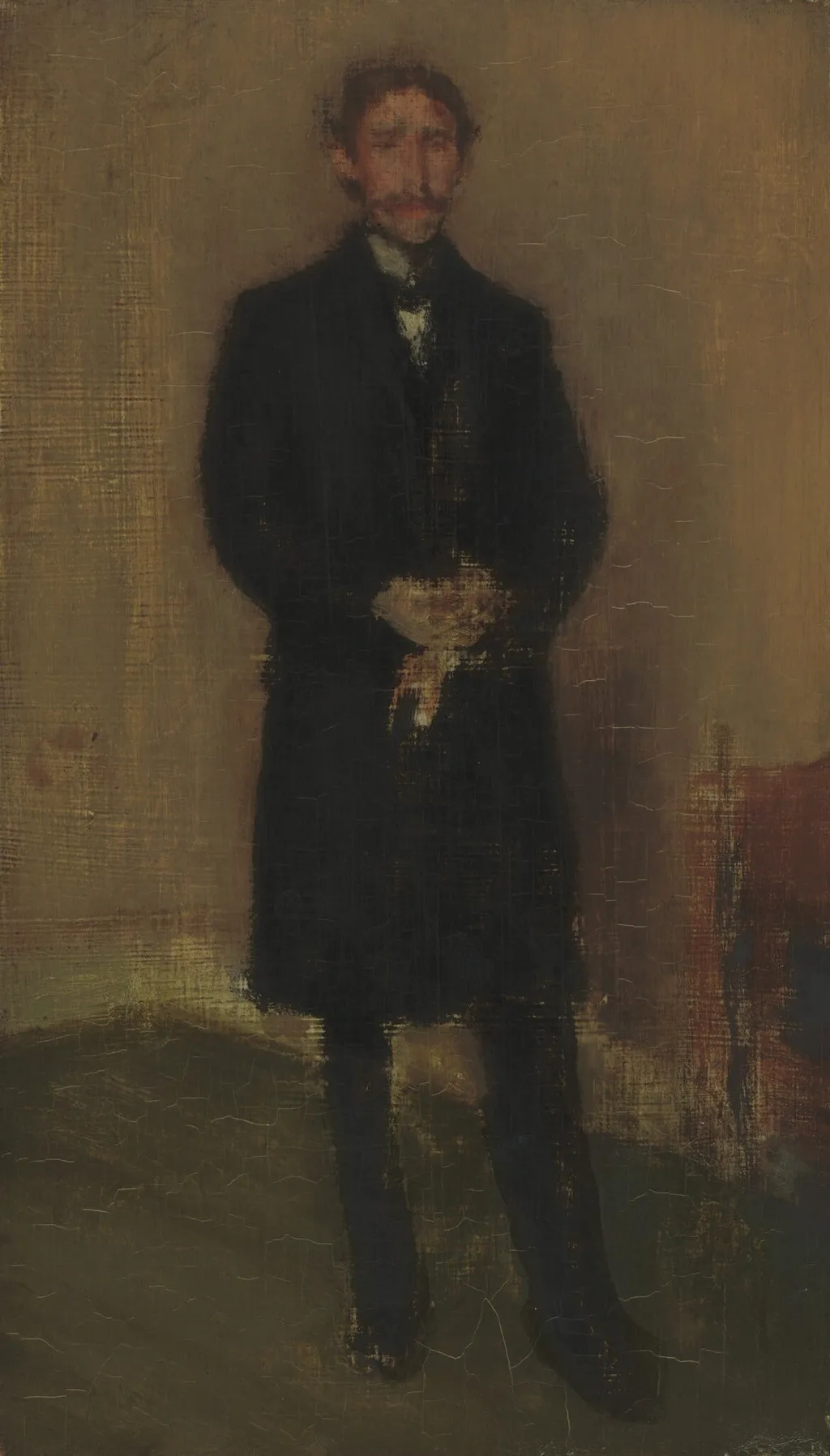
Alexander Arnold Hannay is an oil painting by the American Impressionist artist James McNeill Whistler. It dates from 1896 and is held in the collection of the National Gallery of Art.
- Inscription
- Inscribed:center left with the artist's butterfly mark
About this work
Technique & Style
The work is classified as a portrait painting and is held in the collection of the National Gallery of Art in Washington, D.
Alexander Arnold Hannay is executed in oil on a wood panel, a support that Whistler favored for its smooth surface and ability to hold thin, translucent layers of pigment. The portrait, measuring 22.3 by 13.3 centimeters, is rendered in a restrained, tonal palette consistent with Whistler's late manner, in which economy of means and subtle gradations of value take precedence over descriptive detail. The narrow format and modest scale encourage an intimate handling of the sitter, with brushwork kept deliberately understated so that the focus remains on the sitter's presence rather than surface incident.
The work is classified as a portrait painting and is held in the collection of the National Gallery of Art in Washington, D.C., having entered the institution as a 1943 gift.
The panel support and small dimensions align with Whistler's preference during the 1890s for compact, jewel-like portraits that emphasize tonal harmony and refined finish over bravura execution.
History & Provenance
Alexander Arnold Hannay was painted by James McNeill Whistler in 1896 in oil on wood. The portrait was held by the sitter, Alexander Arnold Hannay, in London until at least 1912, after which it entered the trade through the Chester H. Johnson Gallery in Chicago. In May 1929 the painting was sold to the collector Lessing Julius Rosenwald of Jenkintown, Pennsylvania.
Rosenwald later gave the work to the National Gallery of Art in 1943, where it remains in the collection.
The portrait of Alexander Arnold Hannay by James McNeill Whistler is held at the National Gallery of Art, Washington, D.C. It was accessioned as 1943.3.99 after being gifted in 1943 by Lessing Julius Rosenwald.
Its exhibition history includes a 1929 sale to Rosenwald, followed by a 1943 donation to the National Gallery of Art, where it has remained in the permanent collection.
Legacy
The portrait of Alexander Arnold Hannay, painted by James McNeill Whistler in 1896, stayed in the sitter’s possession at least until 1912 before being sold in May 1929 to Lessing Julius Rosenwald, who later gifted it to the National Gallery of Art in 1943; it has remained in the museum’s collection ever since. Its presence in a major public institution has ensured continued scholarly discussion of Whistler’s portrait practice and contributed to the artist’s lasting reputation as a master of psychological portraiture.
Overview
James McNeill Whistler's portrait of Alexander Arnold Hannay, painted around 1896 in oil on wood, exemplifies the artist's distinctive approach to figural representation. An American expatriate based in the United Kingdom, Whistler created this piece during a period when American Impressionism was prominent. The work captures its subject with a reserved demeanor, reflecting the artist's consistent emphasis on refined aesthetic principles rather than overt emotional expression.
Subject & Meaning
The painting depicts Alexander Arnold Hannay as a composed figure, standing with hands clasped, dressed in a long black coat and dark trousers against a muted brown backdrop. This understated portrayal aligns with Whistler's rejection of sentimentality in portraiture. Instead, the focus remains on the sitter's quiet presence and the subtle interplay of form and tone, reflecting the artist's dedication to aesthetic principles and a belief in "art for art's sake."
Context
Created around 1896, this portrait emerged during a flourishing period for American Impressionism, though Whistler's expatriate status in the United Kingdom and his unique artistic vision set him apart. He consistently advocated for art's autonomy, famously promoting "art for art's sake." This painting reflects his mature style, where he meticulously balanced precise observation with an overarching commitment to refined aesthetic principles rather than a purely mimetic approach.
Artist & collection
Artist
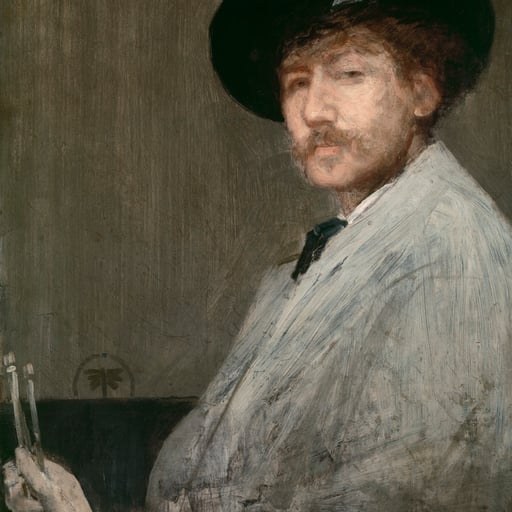
James Abbott McNeill Whistler (; July 10, 1834 – July 17, 1903) was an American painter in oils and watercolor, and printmaker, active during the American Gilded Age and based primarily in the United Kingdom.

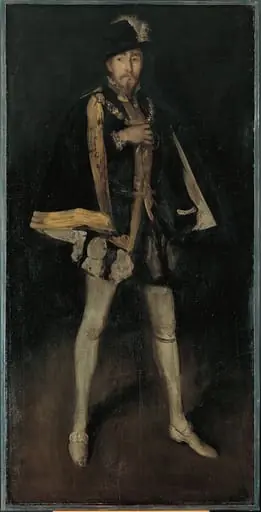 Arrangement in Black, No. 3: Sir Henry Irving as Philip II of Spain
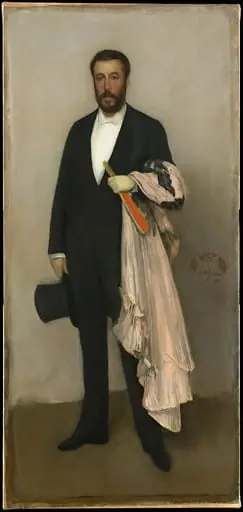 Arrangement in Flesh Colour and Black: Portrait of Theodore Duret
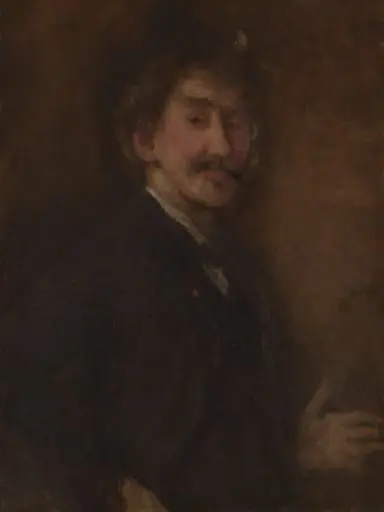 Gold and Brown: Self-Portrait
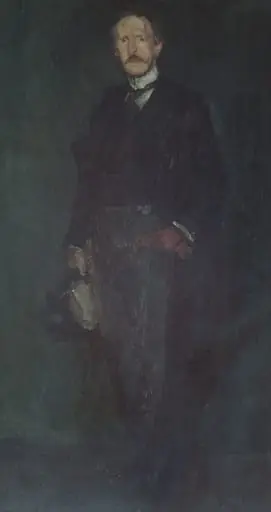 Edward Guthrie Kennedy
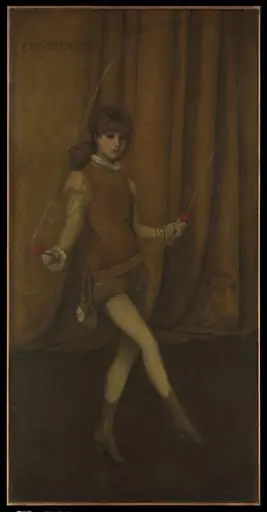 Harmony in Yellow and Gold: The Gold Girl—Connie Gilchrist
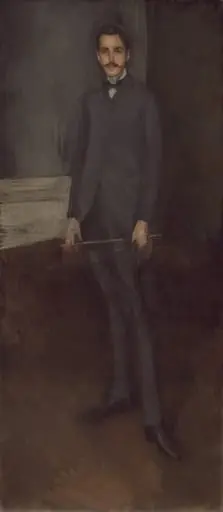 George W. Vanderbilt
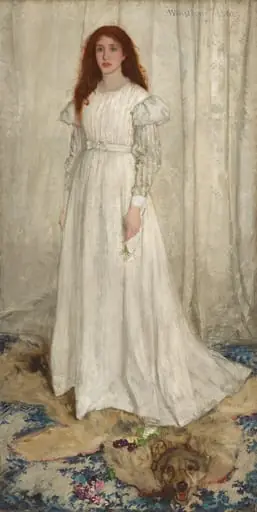 Symphony in White, No. 1: The White Girl
 Henry Irving as Philip II of Spain
- Portrait Study of a Man
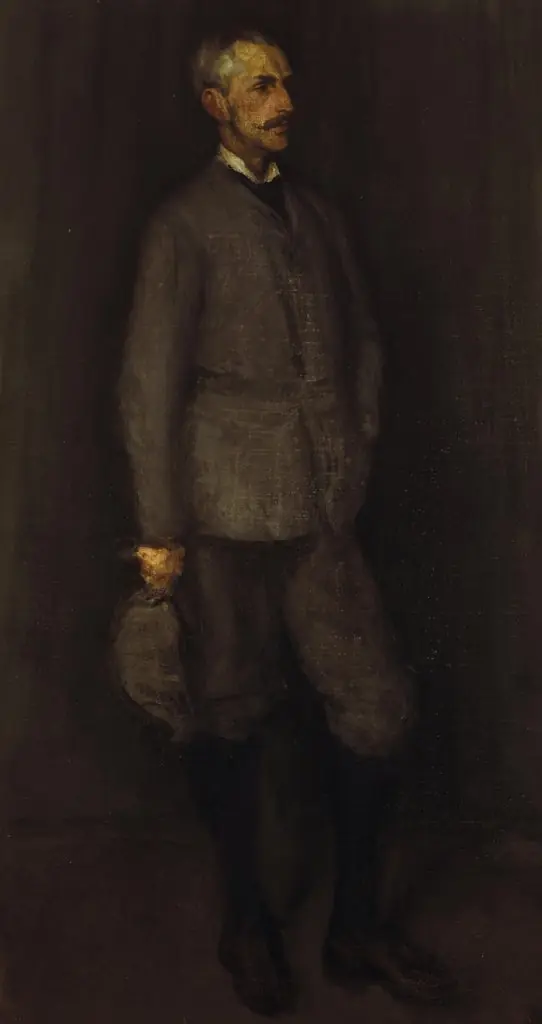 Arrangement in Grey and Green. Portrait of John James Cowan
 Autorretrato de cuerpo entero (María Roësset Mosquera)
 Dr van Hoorn
 Cyril Jones
 James MacAlister (Sketch)
 Kalman Ze'ev Wissotzky
 Ruukinpatruuna A.N:son Keirkner, muotokuvaharjoitelma
 Self Portrait
 Portrait of Professor Jerzy Mycielski