Artwork
Fumette
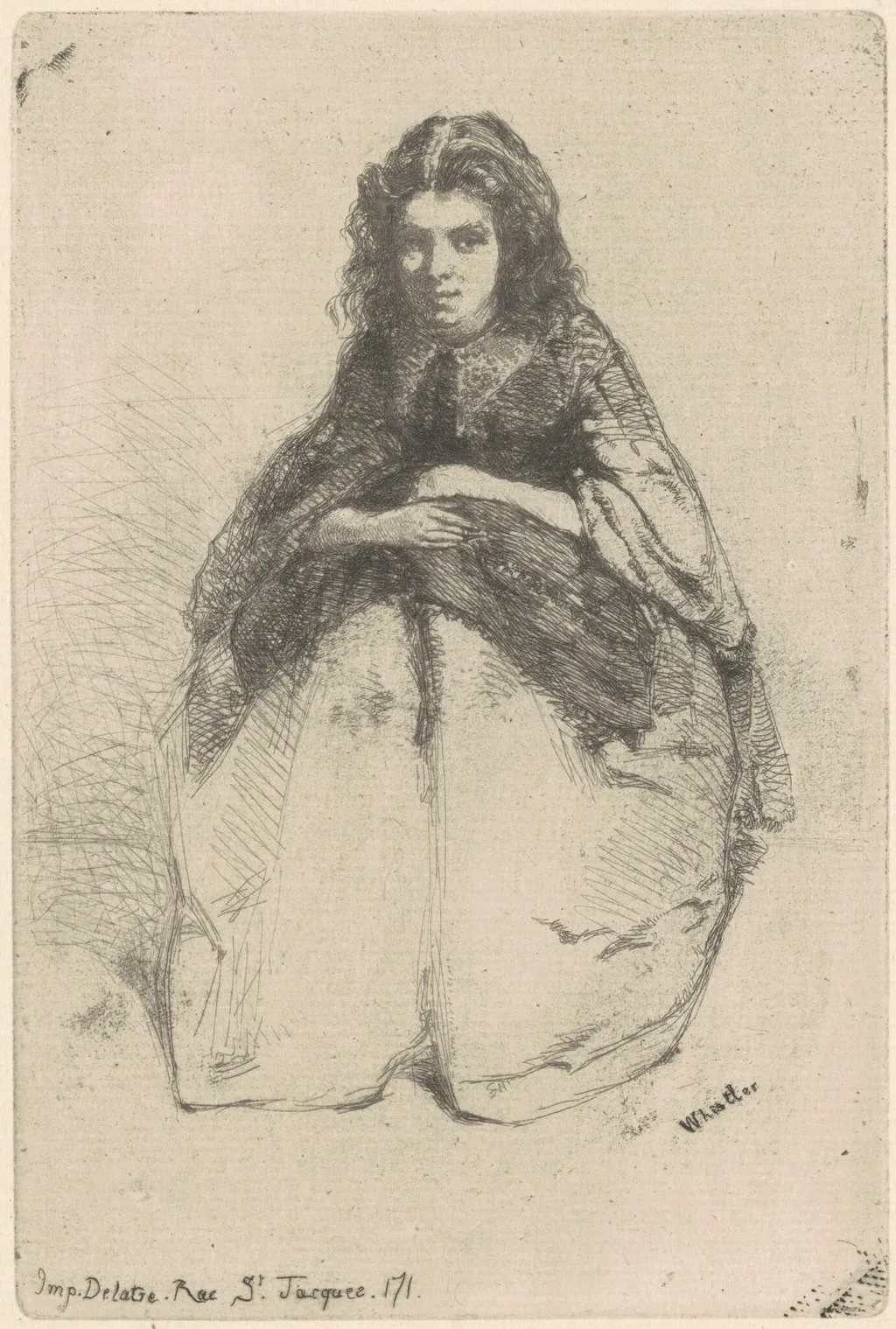
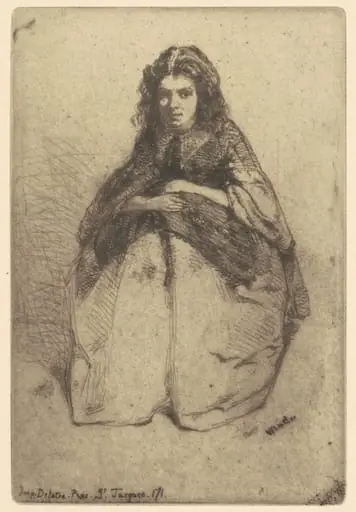
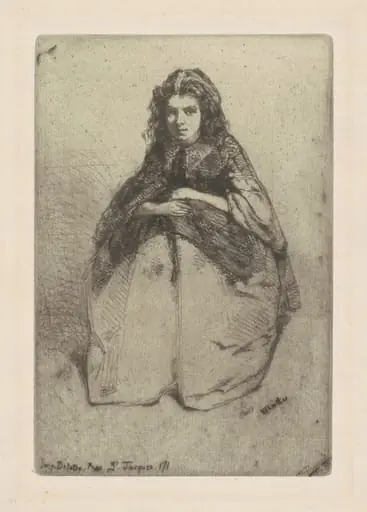
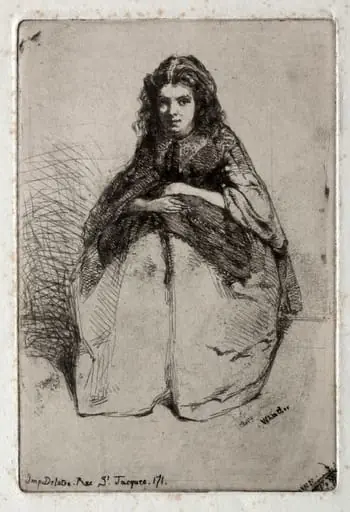
Fumette is an ink print by the Impressionist artist James McNeill Whistler. It dates from 1858 and is held in the collection of the National Gallery of Art.
- Inscription
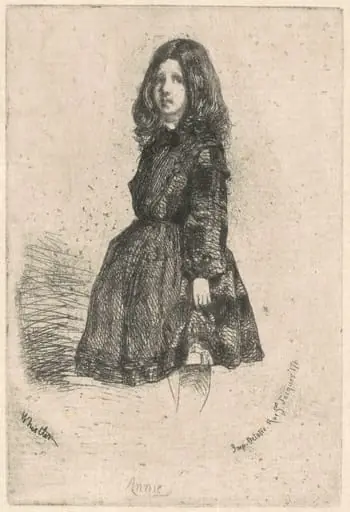
- Inscribed:lower right in plate: Whistler; lower left in plate: Imp. Delâtre. Rue St. Jacques. 171.; lower left edge in graphite by unknown hand: FUMETTE
- Markings
- Marked:stamped center verso in black ink (twice): F.B.B. [circled]
About this work
Overview
As a print, it reflects Whistler’s early engagement with intimate portraiture and his interest in quiet, contemplative subjects.
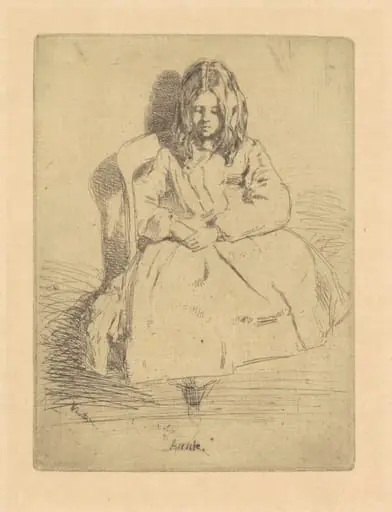
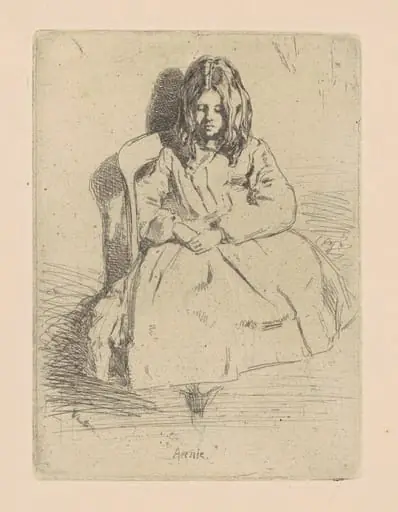
Fumette is an etching by James McNeill Whistler, completed in 1858. Executed in black ink on laid paper, it presents a solitary young girl seated in a straightforward pose. The composition is restrained, focusing attention on the figure through minimal background elements.
As a print, it reflects Whistler’s early engagement with intimate portraiture and his interest in quiet, contemplative subjects.
Subject & Meaning
The subject is a young girl, depicted frontally with a composed, serious gaze and hands gently folded in her lap. Her expression conveys introspection rather than narrative action, inviting quiet contemplation. Whistler avoids theatricality, instead emphasizing psychological presence over storytelling.
The stillness and directness of the figure suggest a sensitivity to inner life, characteristic of his approach to portraiture.
Technique & Style
Whistler employed etching to achieve fine, controlled lines that define the folds and textures of the girl’s dress with precision. The background is left largely untouched, creating contrast that heightens the figure’s presence. The technique allows subtle gradations of tone, enhancing the softness of the fabric and the delicacy of the form without overt modeling or shading.
History & Provenance
Created during Whistler’s early years in Paris, Fumette belongs to a series of intimate etchings he made while studying under Charles-Émile Jacque. It was likely produced for personal or small-scale circulation, not public exhibition. The work reflects his formative years exploring printmaking as a medium for expressive, non-monumental portraiture.
Context
In the late 1850s, Whistler was influenced by Japanese prints and the French Realist tradition, both of which favored simplicity and observational clarity. Fumette aligns with this aesthetic, rejecting grand historical themes in favor of everyday presence. The work stands apart from academic portraiture of the time, favoring quietude over drama.
Legacy
Fumette exemplifies Whistler’s early commitment to tonal harmony and psychological nuance in printmaking. Though not widely exhibited in his lifetime, it contributed to his reputation as a printmaker attuned to subtle expression. The work influenced later artists interested in the emotional potential of minimal composition and refined line work.
Own this work as a print
Artist & collection
Artist
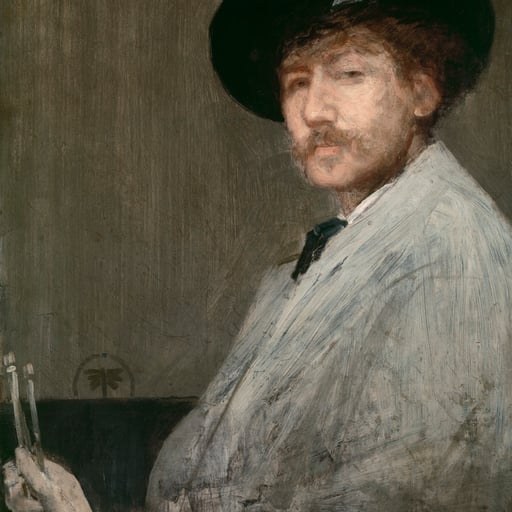
James Abbott McNeill Whistler (; July 10, 1834 – July 17, 1903) was an American painter in oils and watercolor, and printmaker, active during the American Gilded Age and based primarily in the United Kingdom.

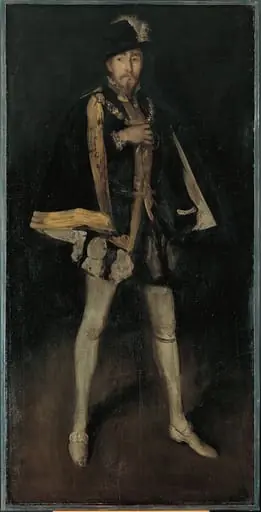 Arrangement in Black, No. 3: Sir Henry Irving as Philip II of Spain
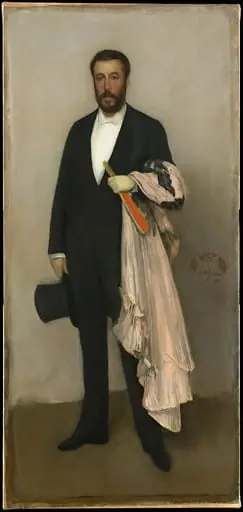 Arrangement in Flesh Colour and Black: Portrait of Theodore Duret
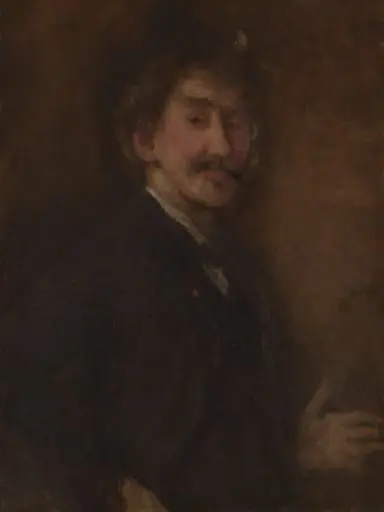 Gold and Brown: Self-Portrait
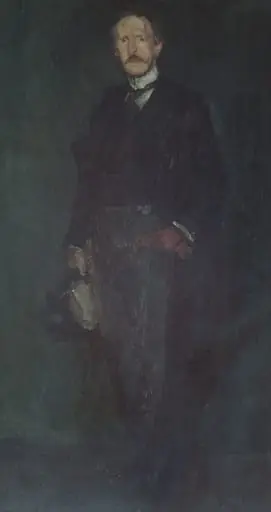 Edward Guthrie Kennedy
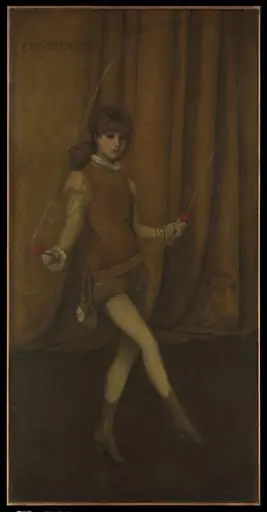 Harmony in Yellow and Gold: The Gold Girl—Connie Gilchrist
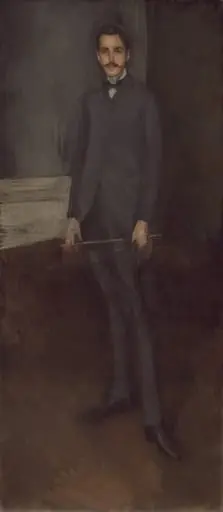 George W. Vanderbilt
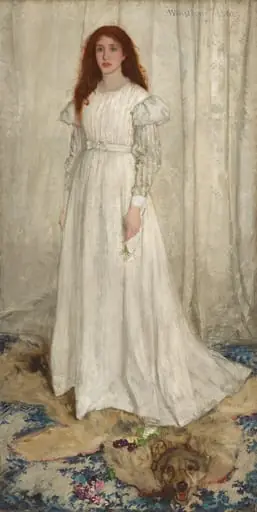 Symphony in White, No. 1: The White Girl
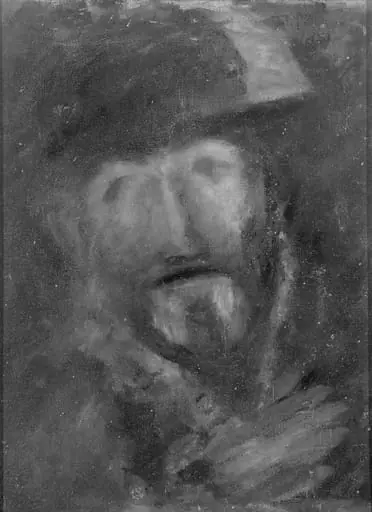 Henry Irving as Philip II of Spain