Artwork
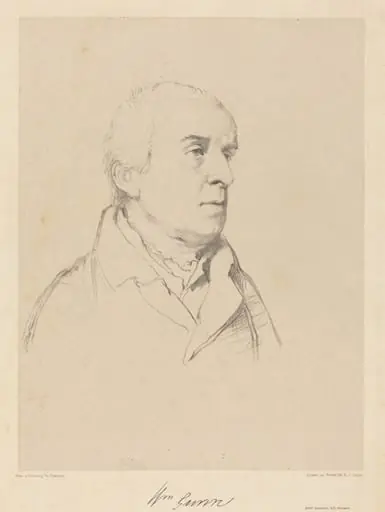
William Cowper
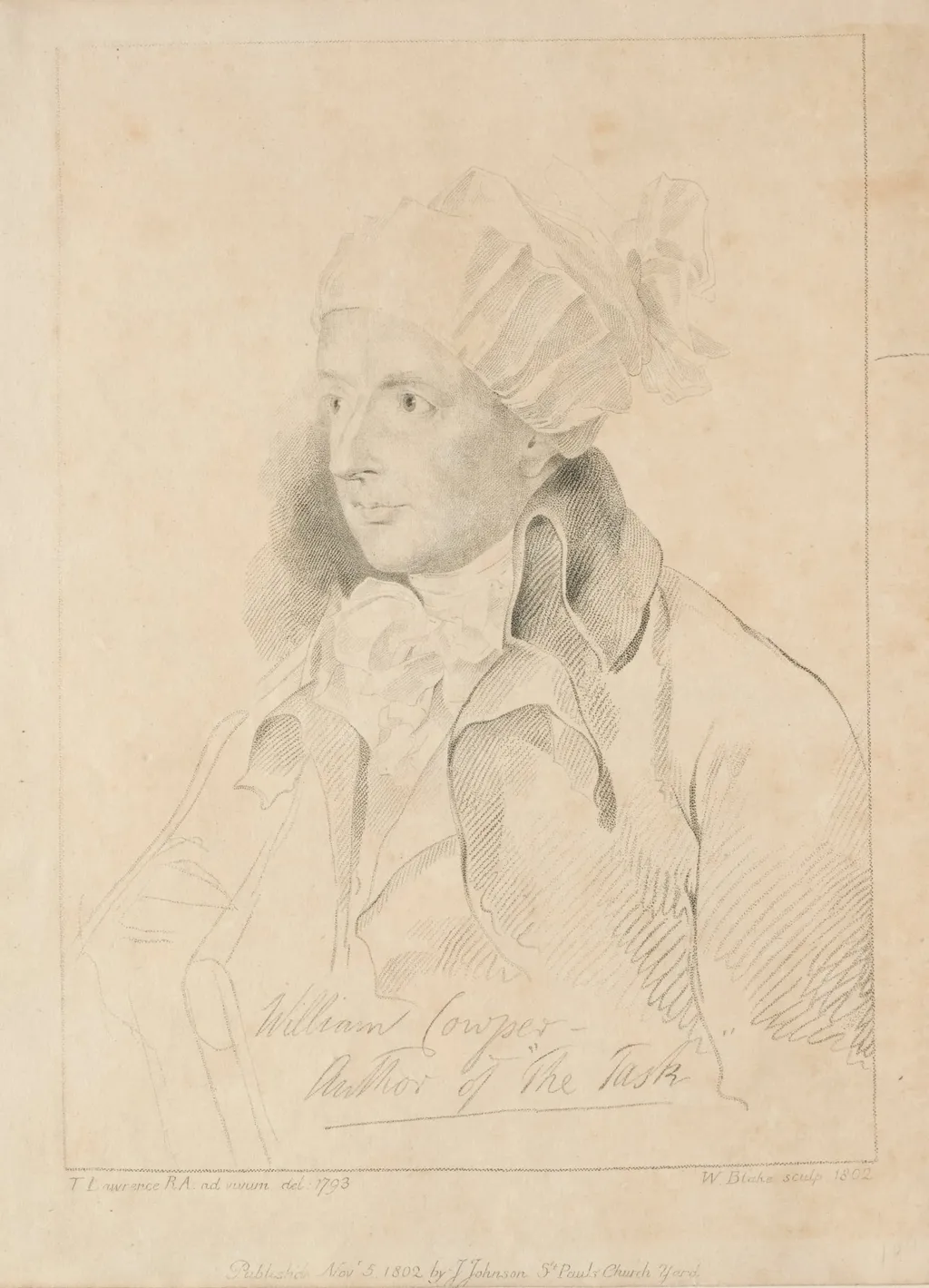
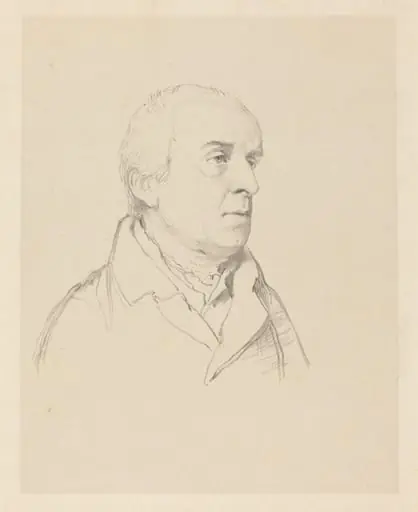
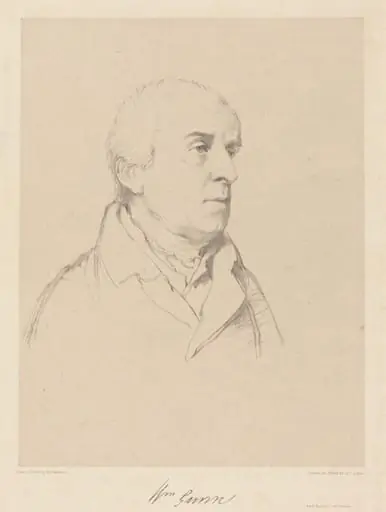
William Cowper is a print by the Romanticist artist William Blake. It dates from 1802 and is held in the collection of the Cleveland Museum of Art.
- Accession no.
- 1930.555
- Credit line
- Charles W. Harkness Endowment Fund
About this work
The name "William Cowper" is written below him, and the date "1802" appears at the bottom.
This sketch shows a man in a high-collared coat, his hand resting on his chest. His hair is powdered and curled, and he wears a serious expression. The lines are loose and scratchy, almost like quick notes.
The name "William Cowper" is written below him, and the date "1802" appears at the bottom. This was made as an engraving, not a painted portrait.
Next, look into William Blake, the artist who made this.
Overview
Created in 1802, this print by William Blake is a portrait of the poet William Cowper. Executed as an engraved line drawing, it reflects Blake’s practice of combining literary and visual expression. Unlike traditional painted portraits, this work was produced through hand-drawn etching, emphasizing immediacy and personal interpretation over formal polish. Blake, a lifelong Londoner, often rendered subjects with psychological depth rather than conventional likeness.
Subject & Meaning
William Cowper, a revered 18th-century poet known for his introspective verse and struggles with mental illness, is depicted with solemn stillness. His hand resting on the chest suggests contemplation or inner turmoil, aligning with his literary themes of solitude and spiritual reflection. The powdered wig and high collar mark his era, but Blake’s rendering avoids flattery, instead capturing a quiet vulnerability that resonates with Cowper’s poetic voice.
Technique & Style
Blake employed a freehand engraving technique, using fine, irregular lines that resemble sketch notes rather than polished contours. The scratchy, fluid strokes convey texture and movement, rejecting the smooth finish typical of academic portraiture. This method allowed him to prioritize emotional resonance over physical accuracy.
The inscription of the subject’s name and date reinforces the work’s function as a personal, almost intimate record rather than a public commission.
History & Provenance
The print was made during Blake’s return to London after a brief stay in Felpham, a period marked by renewed focus on literary figures. It likely served as an illustration for a projected edition of Cowper’s poems, though no such publication materialized. The work remained in Blake’s possession and was later included in posthumous collections of his drawings and engravings, preserving its connection to his broader artistic project.
Context
In early 19th-century England, portraiture was dominated by formal oil paintings commissioned by the elite. Blake’s approach stood apart: he favored intimate, hand-crafted prints that merged poetry and visual art. His depiction of Cowper reflects Romantic ideals valuing inner life over social status.
The choice of an engraving over a painting also aligned with Blake’s belief in artistic autonomy and his rejection of commercial art institutions.
Legacy
Though not widely circulated in Blake’s lifetime, this print contributes to the understanding of his unique fusion of literary and visual expression. It exemplifies his commitment to portraying inner states through unconventional means. Today, it is studied as part of his broader oeuvre, illustrating how he redefined portraiture as a vehicle for psychological and spiritual insight rather than mere representation.
Own this work as a print
Artist & collection
Artist
William Blake (28 November 1757 – 12 August 1827) was an English poet, painter and printmaker.