Artwork
A Clam-Bake
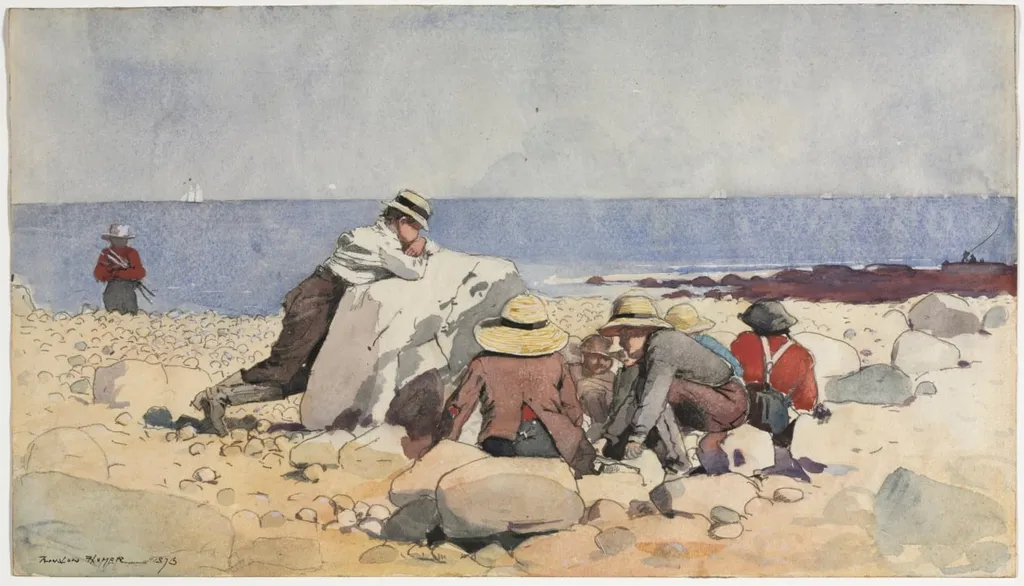
A Clam-Bake is a drawing by the Impressionist artist Winslow Homer. It dates from 1873 and is held in the collection of the Cleveland Museum of Art.
- Accession no.
- 1945.229
- Credit line
- Gift of Mrs. Homer H. Johnson
About this work
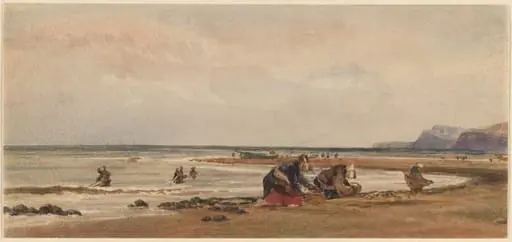
You see boys in rolled-up pants digging for clams at low tide, a steaming pot on driftwood, gulls circling, and a sky full of thin clouds.
You see boys in rolled-up pants digging for clams at low tide, a steaming pot on driftwood, gulls circling, and a sky full of thin clouds.
Homer sketched this on a Massachusetts beach in 1873, right after he switched from black-and-white illustrations to watercolor. The paint is so light it almost looks like a colored drawing, you can still see pencil lines under the washes.
If you like this quiet, sunlit scene, look up more paintings of america from the same time.
Overview
A Clam-Bake is a watercolor drawing by Winslow Homer, created in 1873, depicting a serene beach scene in Gloucester, Massachusetts, featuring boys engaged in clam digging and preparing a meal.
Subject & Meaning
The artwork captures a moment of everyday life, showcasing boys at leisure on a beach, highlighting themes of youth, simplicity, and the intersection of work and play in a coastal setting.
Technique & Style
Characterized by a tentative yet effective use of watercolor, the piece retains visible pencil lines beneath light, translucent washes, giving it the appearance of a colored line drawing.
History & Provenance
Originally a standalone watercolor, elements of this piece were later incorporated into Homer's illustration 'A Clam-Bake' published in Harper's Weekly on August 23, 1873, marking a transitional period in Homer's shift towards watercolor.
Artist & collection
Artist
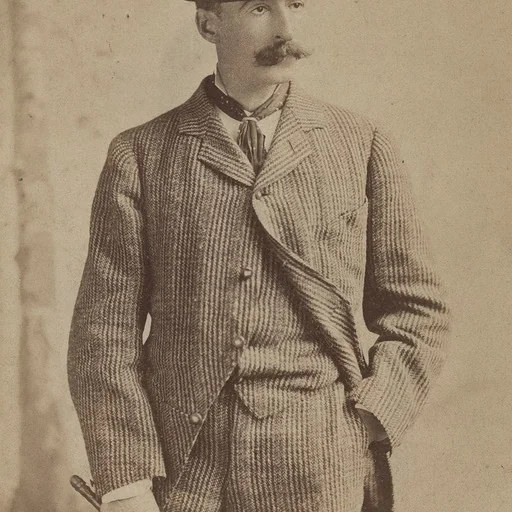
Winslow Homer (February 24, 1836 – September 29, 1910) was an American landscape painter and illustrator, best known for his marine subjects.