Artwork
"Allow Me to Examine the Young Lady"
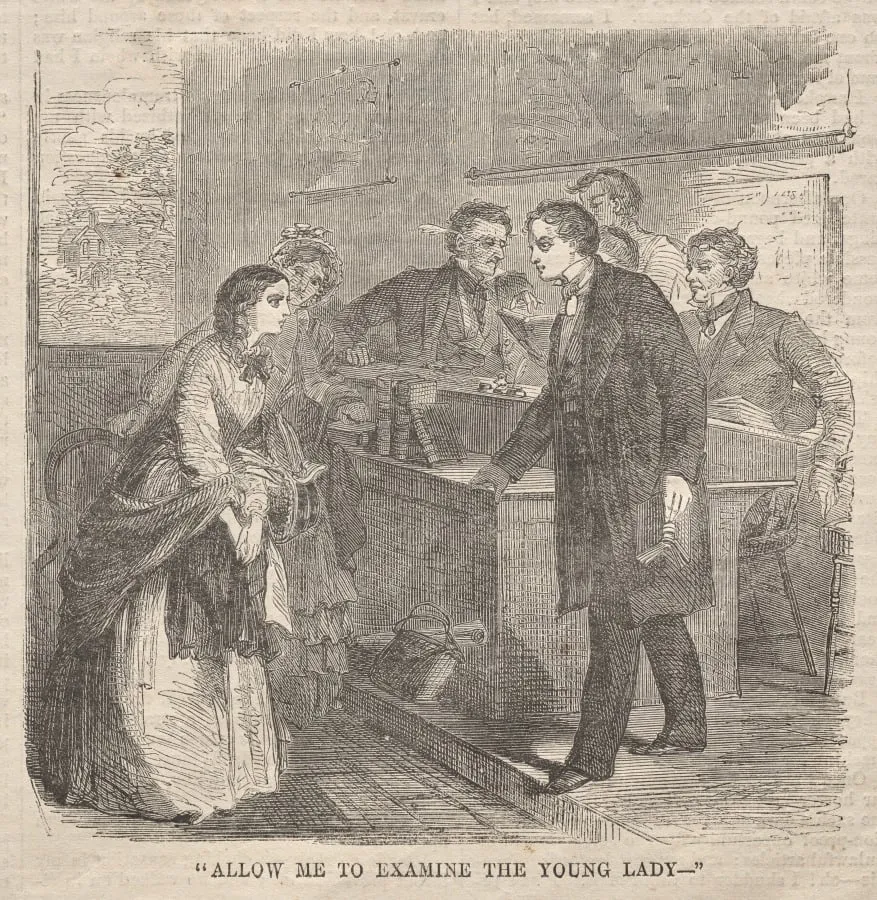
"Allow Me to Examine the Young Lady" is a print by the Impressionist artist Winslow Homer. It dates from 1860 and is held in the collection of the Cleveland Museum of Art.
- Accession no.
- 1942.1450.b
- Credit line
- Purchase from the J. H. Wade Fund
About this work
Overview
At this stage, Homer was transitioning from commercial illustration to fine art, experimenting with narrative scenes drawn from everyday observation.
Created in 1860, this oil sketch by Winslow Homer predates his later fame for seascapes and rural life. At this stage, Homer was transitioning from commercial illustration to fine art, experimenting with narrative scenes drawn from everyday observation. The work reflects his early interest in capturing subtle social interactions, rendered with restrained detail and a focus on quiet psychological tension rather than dramatic spectacle.
Subject & Meaning
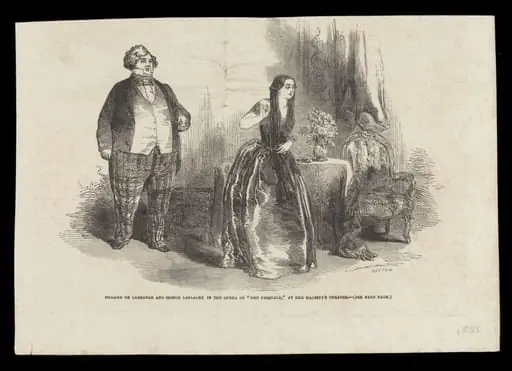
The scene depicts four figures in a modest interior: a woman stands near a table, her posture suggesting discomfort, while two men lean over it, one holding a small object, and a fourth watches from the side. The title implies a moment of scrutiny, possibly medical or social, where the woman’s unease contrasts with the men’s detached inquiry. The work suggests an unspoken power dynamic, typical of Homer’s interest in the quiet tensions of ordinary life.
Technique & Style
Homer employs a muted palette and loose brushwork to suggest dim interior light, emphasizing atmosphere over precision. Forms are suggested rather than fully rendered, with shadows deepening the sense of intimacy and ambiguity. The composition is tightly framed, drawing attention to the figures’ gestures and spatial relationships. This approach reflects his illustrative background, prioritizing narrative clarity and emotional nuance over polished finish.
History & Provenance
This work originates from Homer’s formative years, created before his reputation as a painter was established. It was likely produced for personal study or as a preparatory piece, not for public exhibition. Its survival offers insight into his artistic development during a period when he was refining his observational skills, moving away from commercial illustration toward more personal, narrative-driven subjects.
Context
In the 1860s, American artists increasingly turned to scenes of daily life, influenced by European Realism and a growing interest in democratic subject matter. Homer’s work aligns with this trend, avoiding idealization in favor of unembellished moments. The painting’s focus on a private, potentially awkward encounter reflects broader cultural anxieties about gender, authority, and personal autonomy in mid-century America.
Legacy
Though not widely exhibited during Homer’s lifetime, this sketch remains a key indicator of his early artistic priorities. It reveals his commitment to psychological realism and his ability to convey complex social dynamics through minimal means. Later works built upon this foundation, but few capture the same immediacy and quiet unease found in this early study.
Artist & collection
Artist
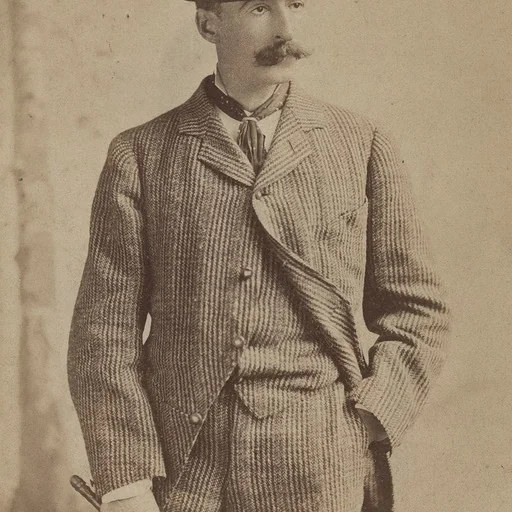
Winslow Homer (February 24, 1836 – September 29, 1910) was an American landscape painter and illustrator, best known for his marine subjects.

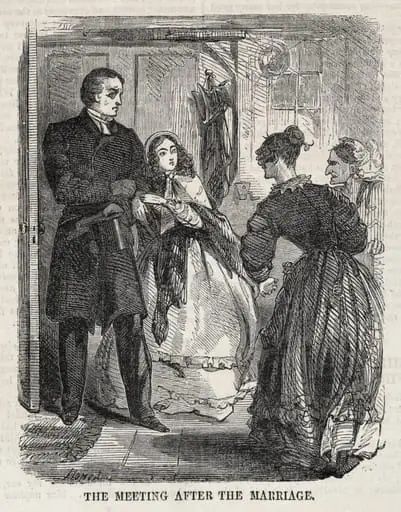
- The Meeting After the Marriage
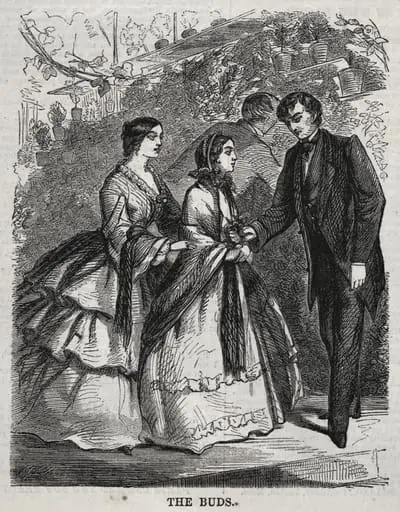 The Buds
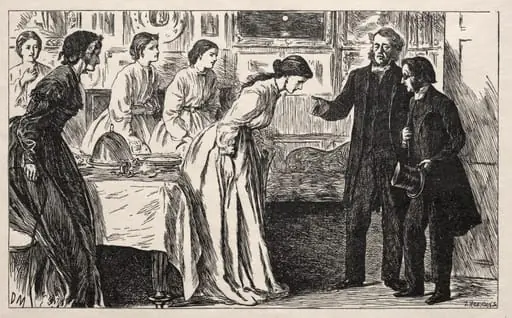 Wanted a Curate. Rather an Ordeal for the Reverend M. Green
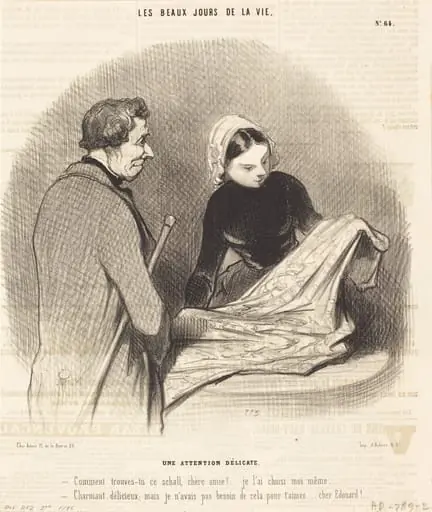 Une Attention délicate
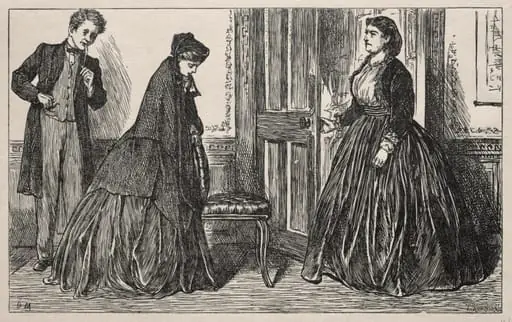 The Other Mrs. Johnson
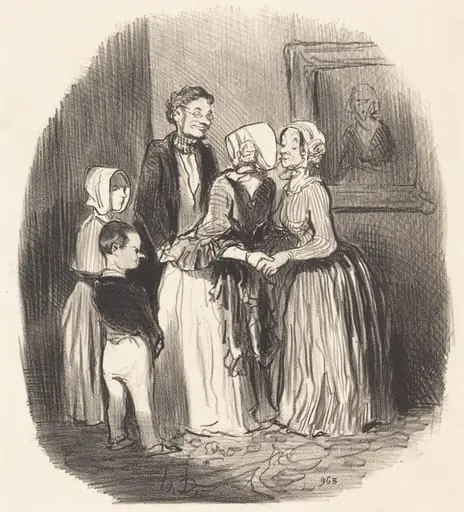 Au novel an, visite... a la tante Rabourdin
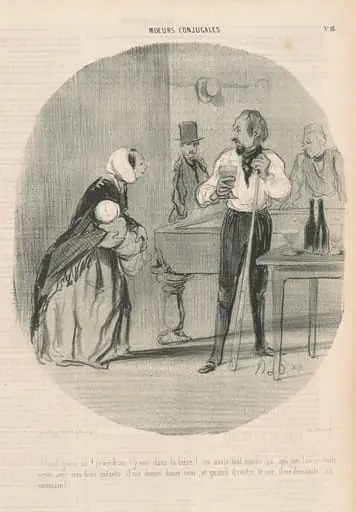 Grand Gueux va! je voudrais t'y voir
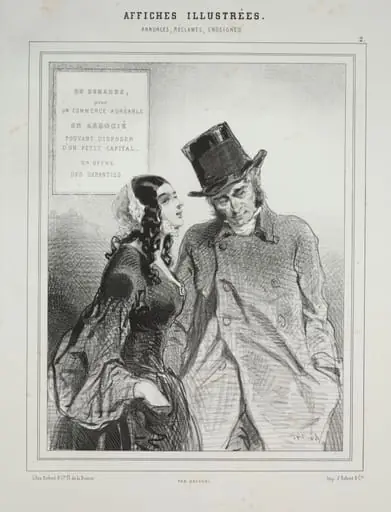 Affiches Illustrées
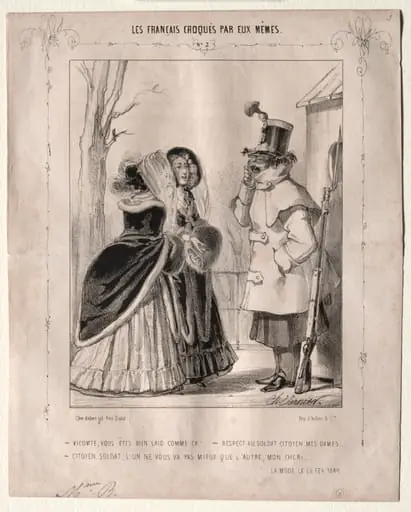 Les Français croquès par eux-mêmes: Vicomte, vous êtes bien laid comme ca!,,,Respect au soldat citoyen, mes dames...Citoyen, soldat, l'un ne vous va pas mieux que l'autre, mon cher!
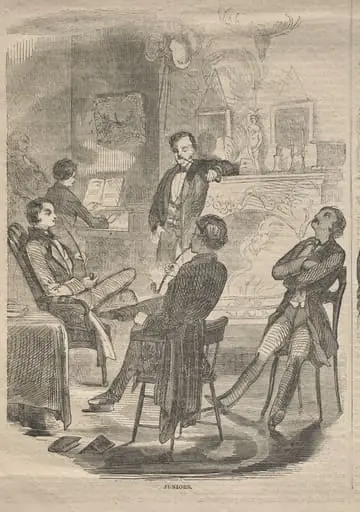 Juniors
 H Beard Print Collection
 Dis donc ... mon mari ...j'ai bien envie d'appeler mon drama ...