Artwork
The Wheelbarrow Polka - Sheet Music Cover
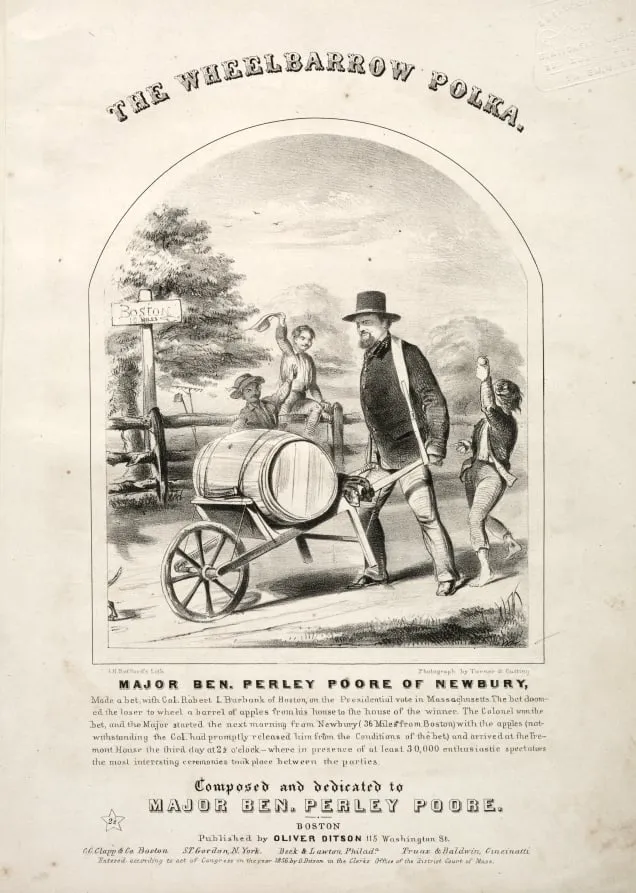
The Wheelbarrow Polka - Sheet Music Cover is a print by the Impressionist artist Winslow Homer. It dates from 1856 and is held in the collection of the Cleveland Museum of Art.
- Accession no.
- 1942.1172
- Credit line
- Purchase from the J. H. Wade Fund
About this work
Overview
At the time, he was working as a freelance graphic artist in Boston, producing imagery for popular publications and musical prints.
Created in 1856, this sheet music cover is among Winslow Homer’s earliest known commercial illustrations. At the time, he was working as a freelance graphic artist in Boston, producing imagery for popular publications and musical prints. The cover was designed to accompany a light-hearted dance tune, reflecting the era’s demand for visually engaging printed materials tied to domestic entertainment. This piece predates his later reputation as a painter of rural and maritime life.
Subject & Meaning
The image depicts a man in formal attire pushing a wheelbarrow with a large barrel, strolling along a rural path. Figures in the background suggest a casual outdoor gathering. The scene evokes a lighthearted, everyday moment, possibly illustrating a folk dance or community celebration.
No narrative is explicitly stated, but the composition invites association with popular pastimes of the time, blending humor and observation in a manner typical of 19th-century American genre imagery.
Technique & Style
Executed in ink and watercolor, the cover employs clear outlines and flat, tonal areas typical of commercial printing of the period. Details like the man’s top hat and the fence are rendered with precision, while the background remains loosely suggested. The style leans toward illustration rather than fine art, prioritizing clarity and reproduction over brushwork or atmospheric depth. It reflects the conventions of mass-produced visual culture rather than the expressive techniques Homer would later develop.
History & Provenance
The print was produced for a published musical composition titled 'The Wheelbarrow Polka,' a common practice in mid-19th-century America. Such covers were often sold alongside sheet music in music stores or through mail-order catalogs. Homer’s involvement was likely through a publishing house, as he frequently took on commissioned work.
The original print survives in a few institutional collections, including the Library of Congress and the Metropolitan Museum of Art.
Context
In the 1850s, American visual culture was dominated by printed media, newspapers, magazines, and sheet music covers, that relied on illustrators to convey mood and narrative quickly. Homer’s work in this field was part of a broader trend where artists transitioned from commercial roles to fine art. The polka, a lively dance imported from Europe, was immensely popular in U.S. homes, making such covers both commercially viable and culturally resonant.
Legacy
Though minor in Homer’s overall oeuvre, this cover illustrates his early engagement with American life through accessible imagery. It demonstrates the artistic foundation he built before turning to oil and watercolor painting. Scholars view it as evidence of how commercial work shaped his eye for ordinary scenes, later refined in his more celebrated paintings of laborers, fishermen, and coastal landscapes.
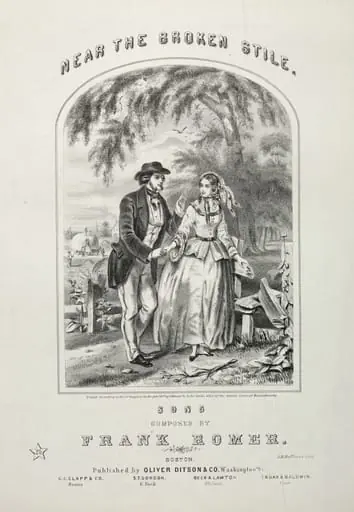
Artist & collection
Artist
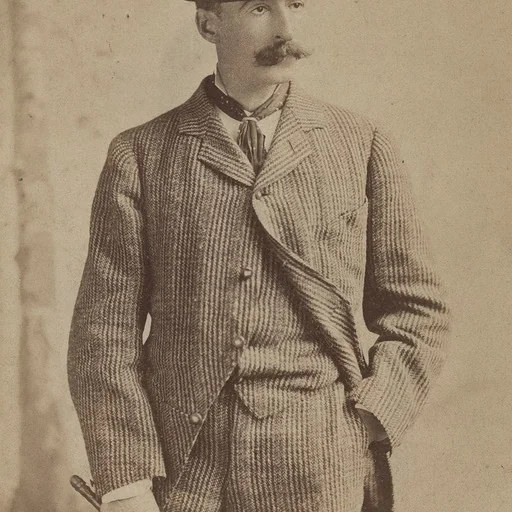
Winslow Homer (February 24, 1836 – September 29, 1910) was an American landscape painter and illustrator, best known for his marine subjects.



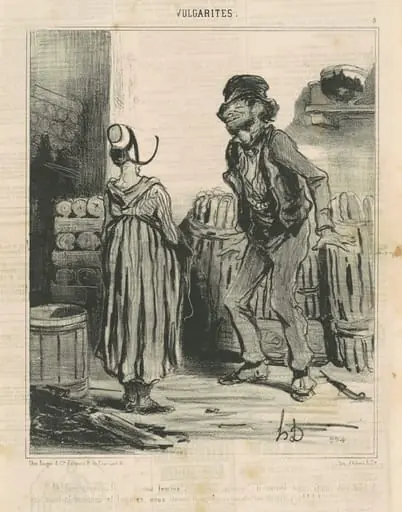
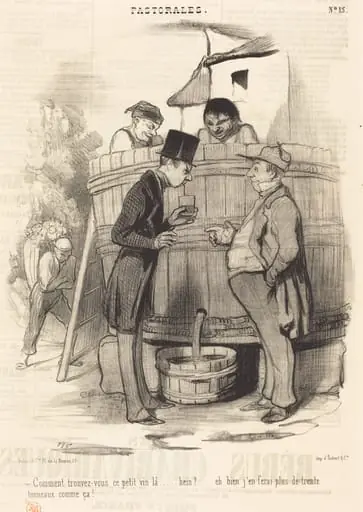 Comment trouvez-vous ce petit vin-la...
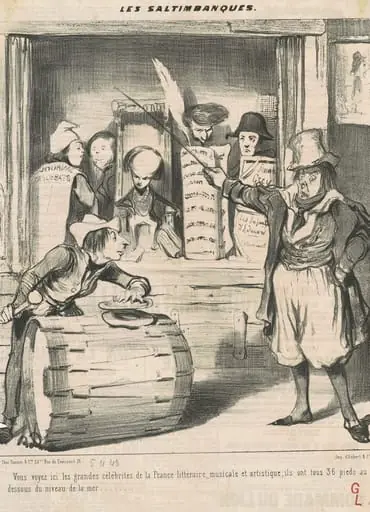 Vous yoyez ici les grandes célébrités...
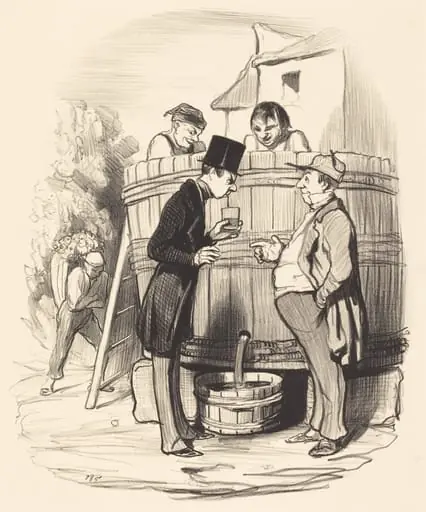 Comment trouvez-vous ce petit vin-la...
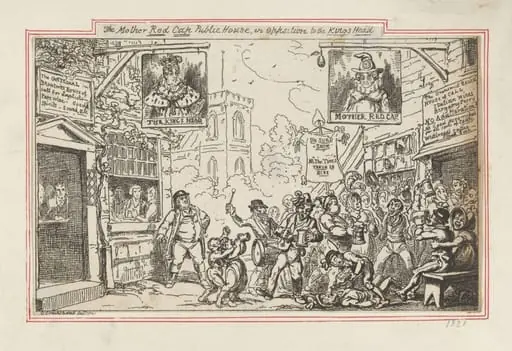 H Beard Print Collection
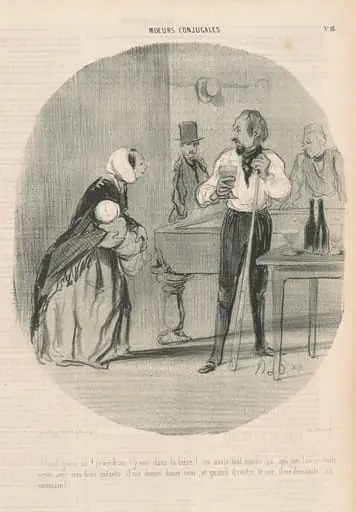 Grand Gueux va! je voudrais t'y voir
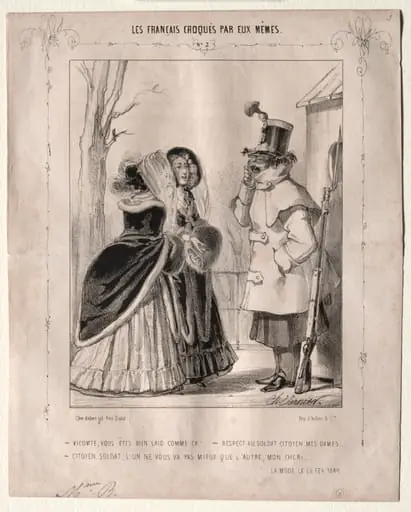 Les Français croquès par eux-mêmes: Vicomte, vous êtes bien laid comme ca!,,,Respect au soldat citoyen, mes dames...Citoyen, soldat, l'un ne vous va pas mieux que l'autre, mon cher!
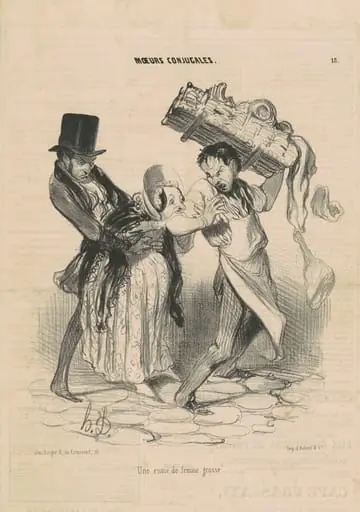 Une envie de femme grosse
 Ah! Fouchtrra! ... Ma femme ...
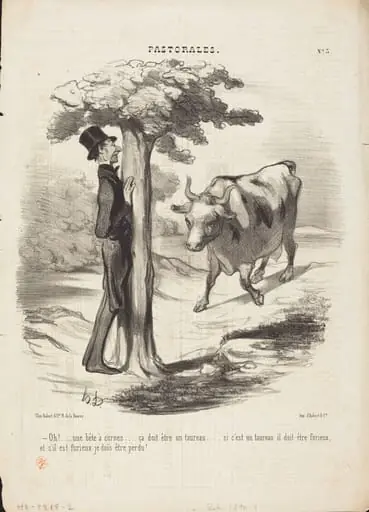 Oh!... une bête a cornes...