Artwork
Saco Bay
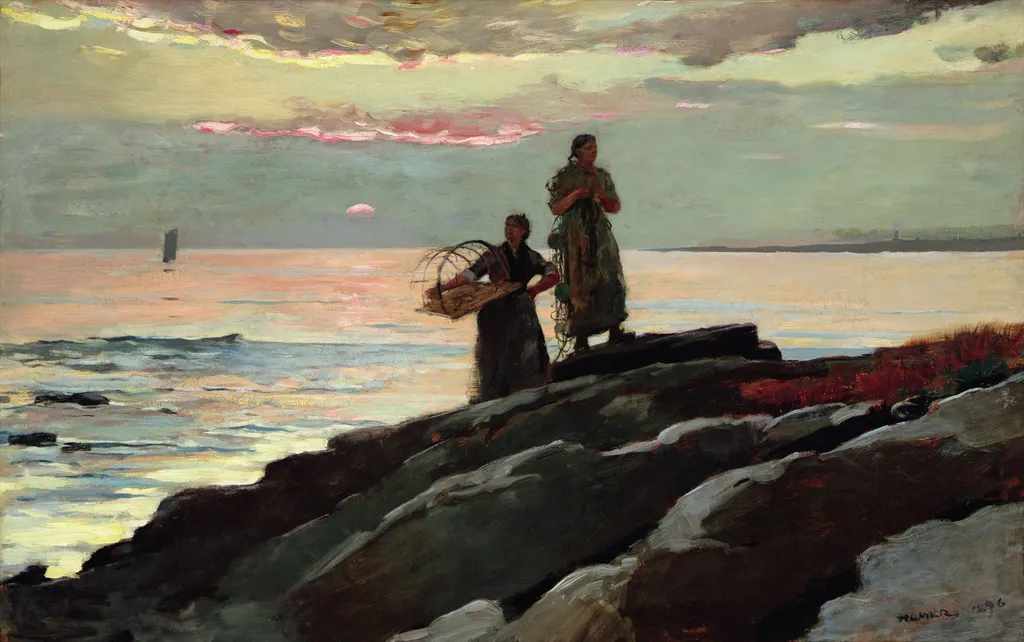
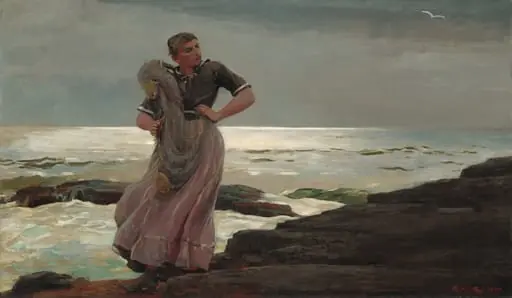
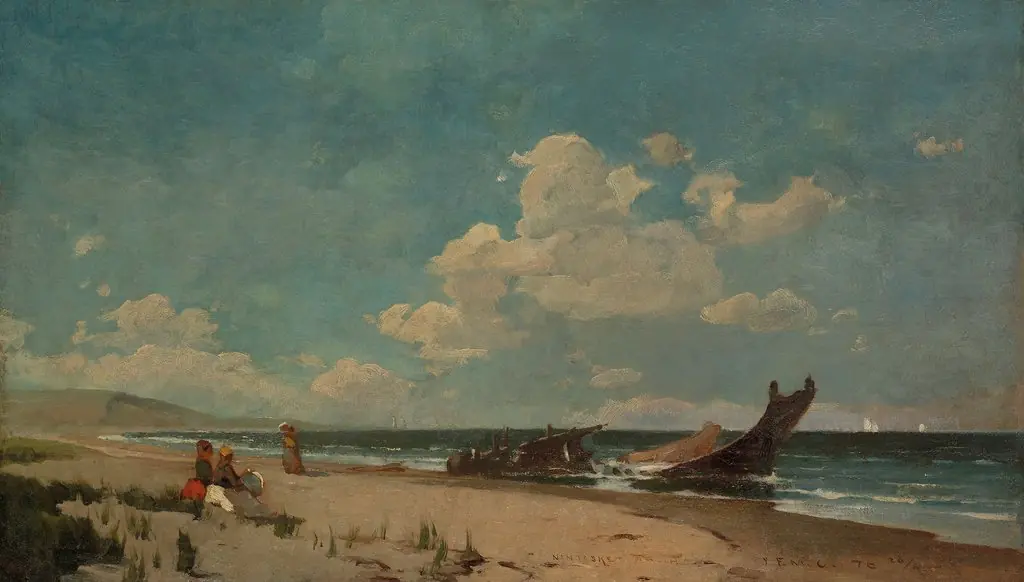
Saco Bay is an oil painting by the American Impressionist artist Winslow Homer. It dates from 1898 and is held in the collection of the Clark Art Institute.
About this work
Overview
Winslow Homer painted Saco Bay in 1898, employing oil on canvas to capture a coastal scene in Maine. The work belongs to the later phase of his career, when he turned increasingly toward marine subjects and the atmospheric effects of light on water and shore.
Subject & Meaning
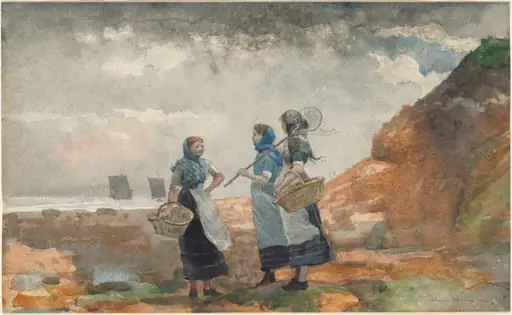
The composition shows two women on a rocky beach, each engaged with tools, a basket in the left figure’s hands and a net in the right’s grasp, while they stare out toward a distant sailboat. The quiet vigilance of the figures suggests a connection between daily labor and the expansive sea beyond.
Technique & Style
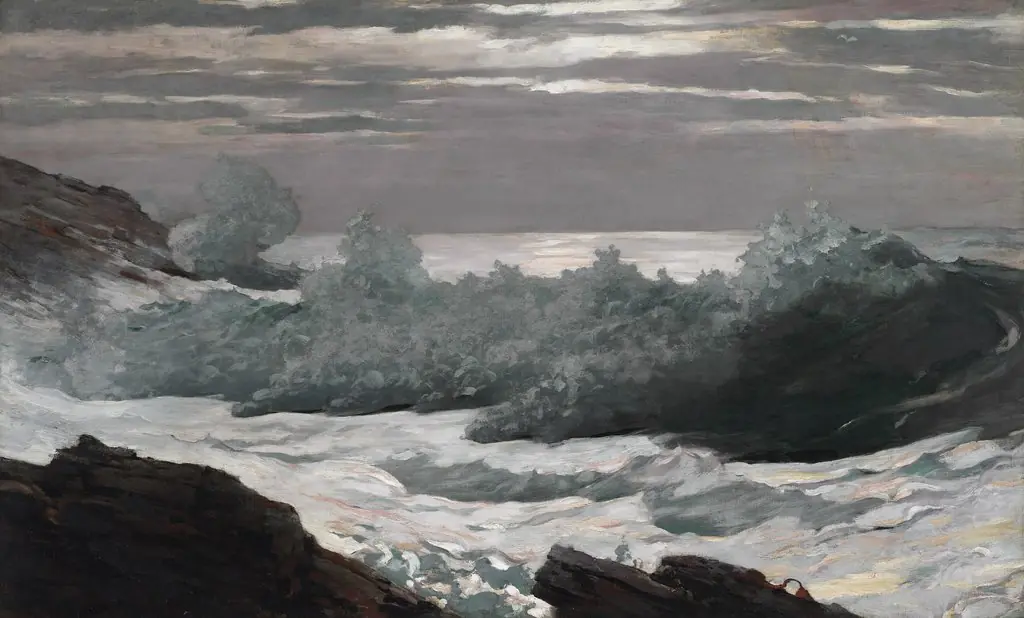
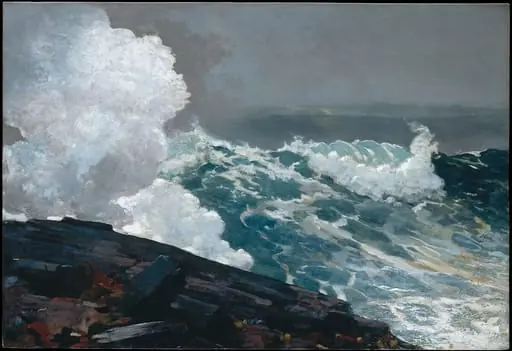
Homer’s palette is dominated by muted blues and grays, punctuated by soft pink and yellow hues in the sky. His brushwork is loose and energetic, creating a sense of movement in the water and wind. Subtle contrasts of light and shadow give depth, echoing the chiaroscuro techniques he refined in his oil practice.
History & Provenance
After its completion, Saco Bay entered private collections before being acquired by the Clark Art Institute, where it remains on view. The painting reflects Homer’s mature period, during which he solidified his reputation as a leading American painter of maritime life.
Context
Created at the close of the 19th century, the work aligns with American Impressionism’s interest in plein‑air observation and fleeting light. It also continues Homer’s long‑standing fascination with New England’s shoreline, a theme he explored repeatedly after moving to Prouts Neck, Maine.
Own this work as a print
Artist & collection
Artist
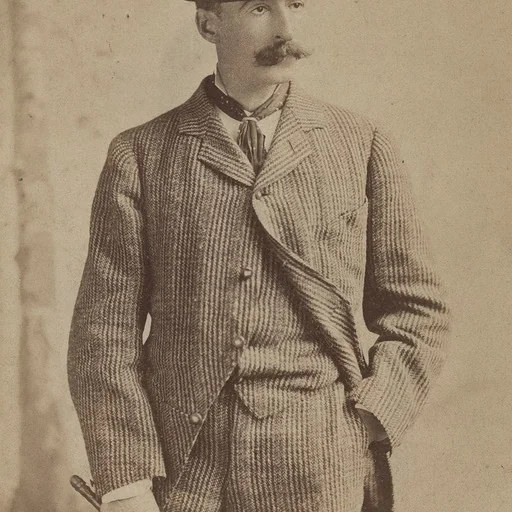
Winslow Homer (February 24, 1836 – September 29, 1910) was an American landscape painter and illustrator, best known for his marine subjects.