Artwork
Fishing in Reclusion on Lake Tung-t'ing
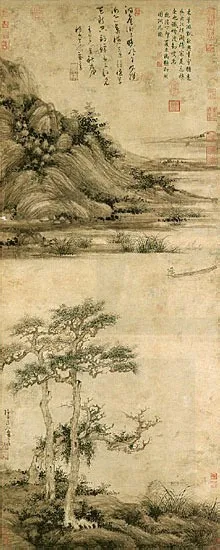
Fishing in Reclusion on Lake Tung-t'ing is an unspecified painting by the Yuan dynasty literati painting artist Wu Zhen. It dates from 1327 and is held in the collection of the National Palace Museum.
About this work
Overview
The artist’s restrained palette and deliberate use of empty space reflect the aesthetic values of scholarly painters of the Yuan dynasty.
Painted around 1327 by Wu Zhen, this ink-on-paper work depicts a quiet lakeside scene in the style of Southern Song literati painting. It is part of the National Palace Museum’s collection in Taipei. The composition emphasizes stillness and solitude, aligning with Daoist ideals of withdrawal from worldly affairs.
The artist’s restrained palette and deliberate use of empty space reflect the aesthetic values of scholarly painters of the Yuan dynasty.
Subject & Meaning
The painting portrays a lone fisherman in a small boat on Lake Tung-t'ing, surrounded by sparse vegetation and distant hills. Rather than depicting activity, it conveys contemplation and detachment. The fisherman, a common symbol in Chinese art, represents the reclusive scholar who chooses harmony with nature over political engagement.
The absence of human figures beyond the fisherman reinforces the theme of solitude as a path to inner peace.
Technique & Style
Wu Zhen employed wet and dry brush techniques to vary texture, using ink washes to suggest mist and distance. Bold, expressive strokes define tree trunks and rocks, while delicate lines outline distant shorelines. Large areas of untouched paper function as water and sky, creating spatial depth without perspective. This method, rooted in literati tradition, prioritizes emotional resonance over realistic detail, favoring suggestion over description.
History & Provenance
The painting was likely created during Wu Zhen’s later years, when he lived in seclusion in Zhejiang. It passed through private collections before entering the imperial collection of the Qing dynasty. Following the fall of the Qing, it was moved to Taiwan with other artifacts from the Beijing palace in the mid-20th century. Its continuous preservation within elite collections underscores its recognized status among scholar-painters of later eras.
Context
Created under Mongol rule during the Yuan dynasty, the painting reflects the retreat of Han Chinese scholars from public service. Many turned to art as a means of expressing moral integrity and cultural continuity. Wu Zhen, one of the Four Masters of the Yuan, aligned his work with this ethos, rejecting courtly patronage in favor of personal expression. His landscapes became models for later generations seeking spiritual refuge in nature.
Legacy
Wu Zhen’s approach to ink landscape influenced subsequent generations of Chinese painters, particularly those in the Ming and Qing dynasties who valued introspection over spectacle. His use of negative space and calligraphic brushwork became standard elements in literati aesthetics. Though not widely known outside scholarly circles, his work remains a touchstone for understanding the philosophical underpinnings of Chinese ink painting.
Artist & collection




- After Wang Meng's Mountain Dwelling on a Summer Day
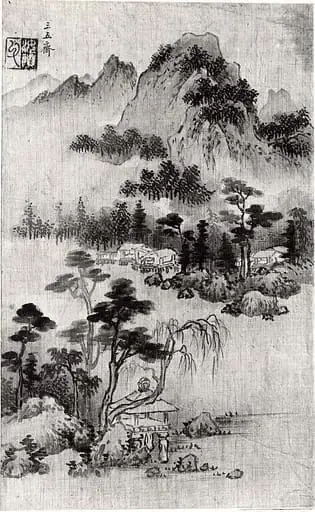 Untitled
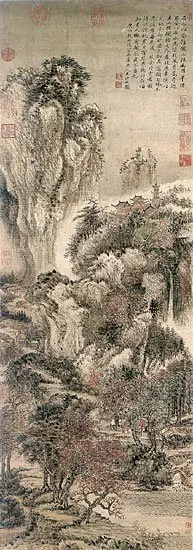 Mountains, Rivers, and Autumn-tinted Trees
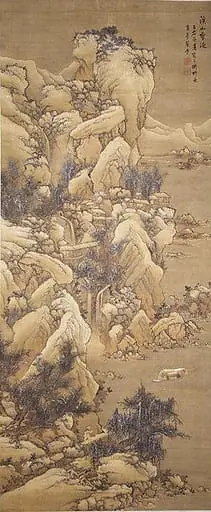 明/清 藍孟 溪山雪泛圖 軸|Boating amid Snowy Streams and Mountains
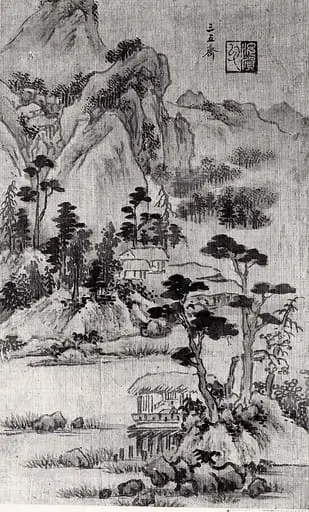 Untitled
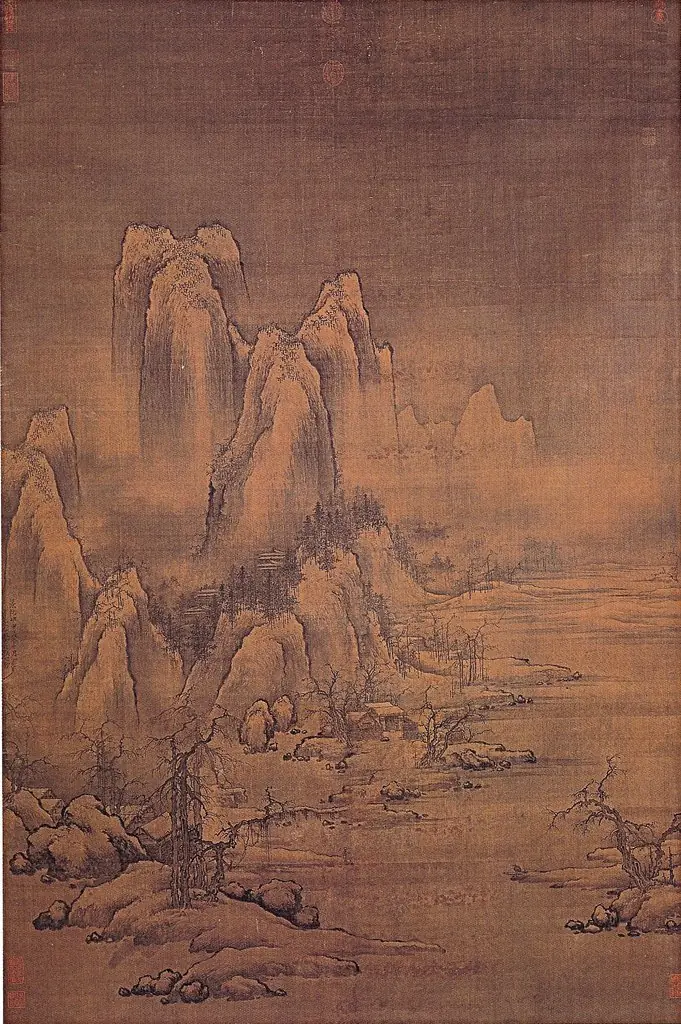 Fisherman on a Snowy River
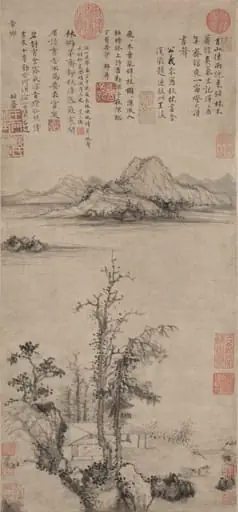 A Scholar's Retreat amid Autumn Trees
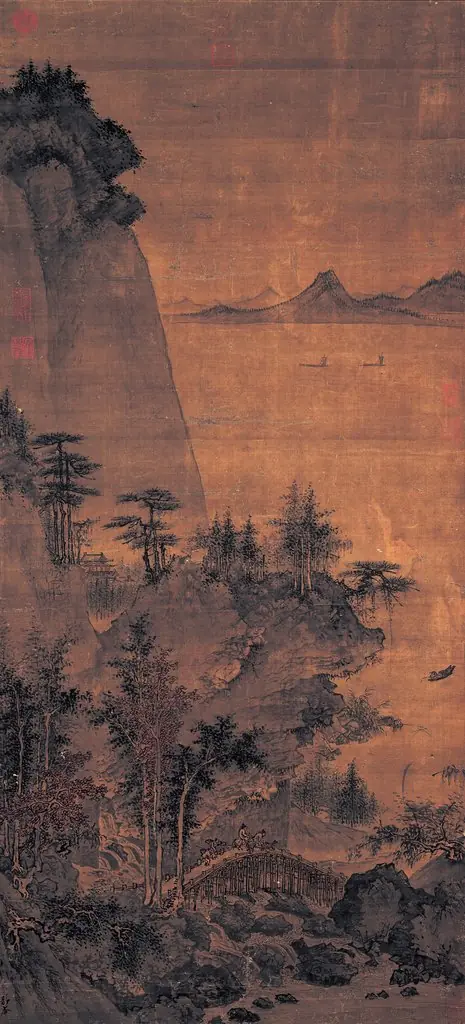 Crossing a Bridge over a Stream
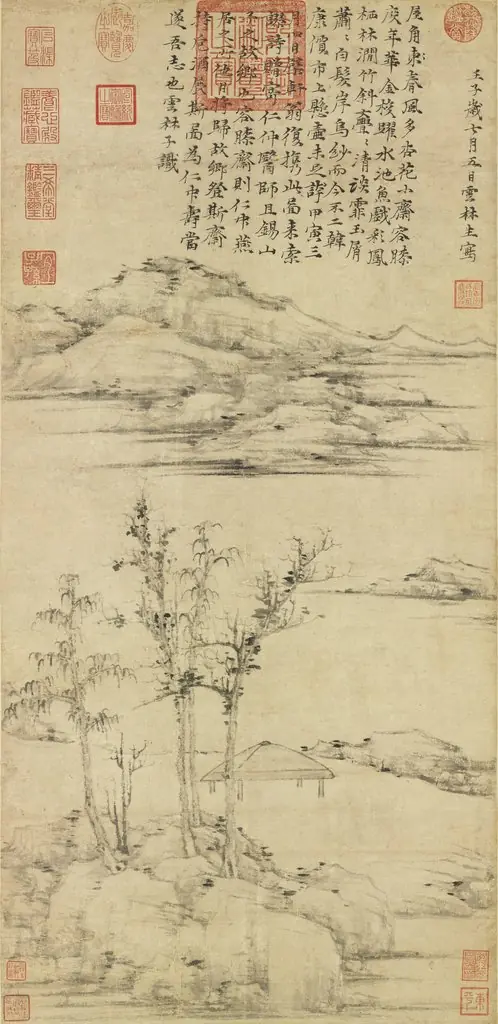 The Jung-hsi Studio
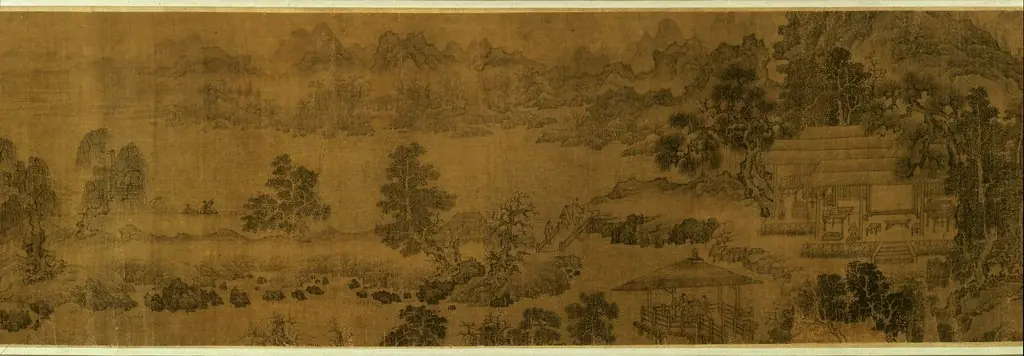 The Wangchuan Villa
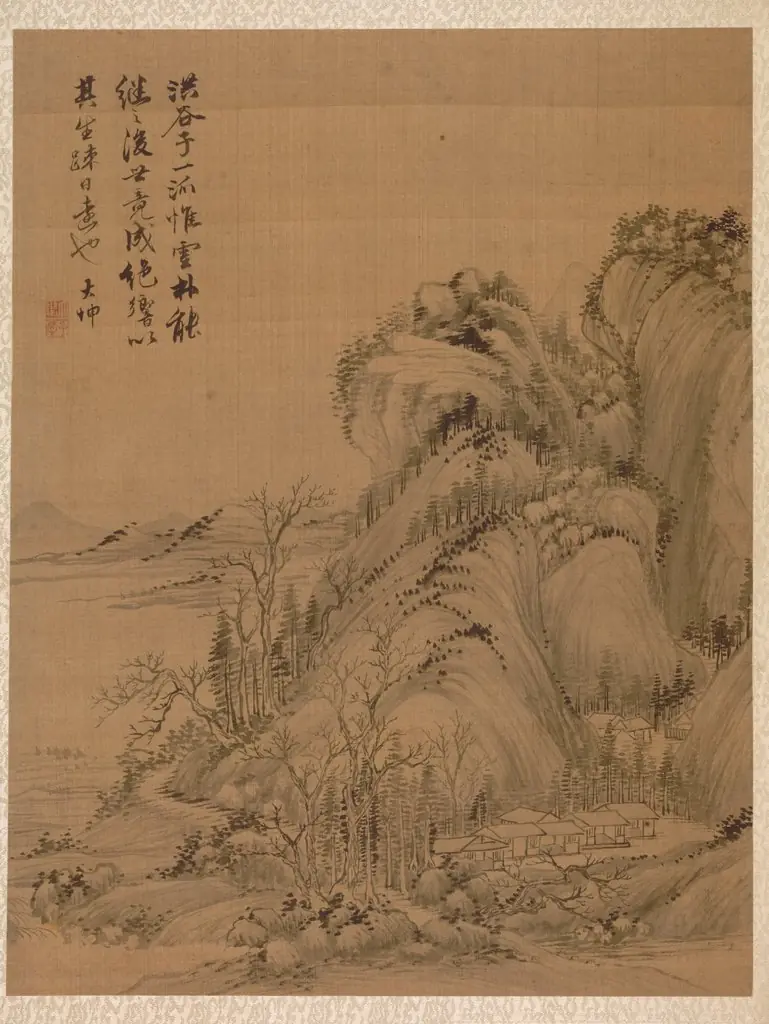 Landscape in the Style of Ching Hao
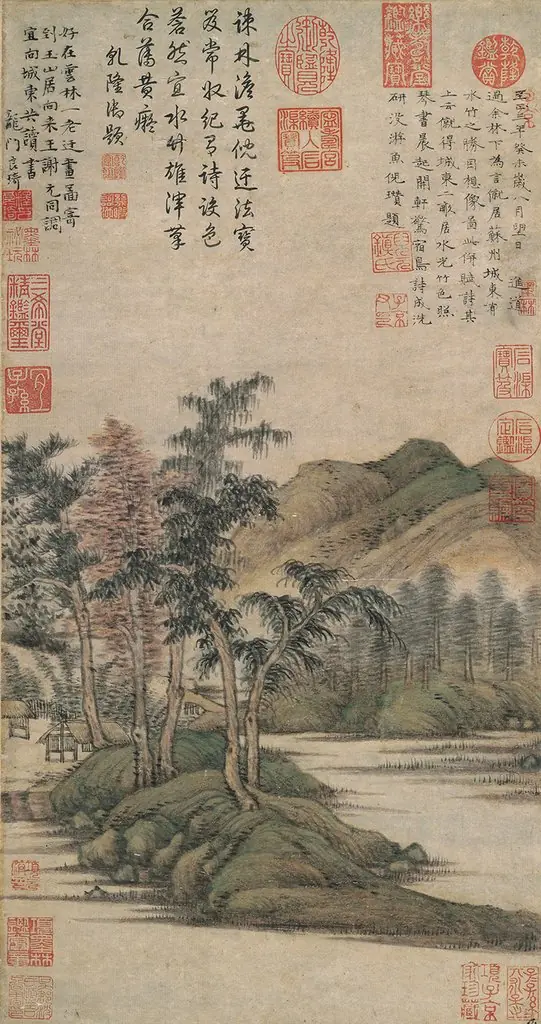 水竹居图轴
水竹居图轴