Artwork
Cleansing Medicinal Herbs in the Stream on a Spring Day
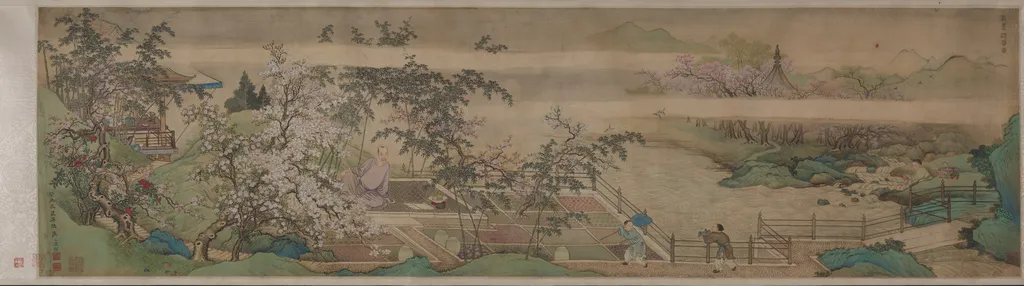
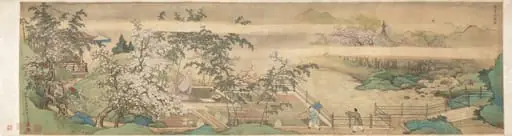
Cleansing Medicinal Herbs in the Stream on a Spring Day is an unspecified painting by the Qing dynasty painting artist Yu Zhiding. It dates from 1703 and is held in the collection of the Cleveland Museum of Art.
About this work
History & Provenance
Since its acquisition, the work has been part of the Cleveland Museum of Art's collection under accession number 2000.
Yu Zhiding painted Cleansing Medicinal Herbs in the Stream on a Spring Day in 1703 while working in China. The painting is signed by the artist and classified as a Chinese painting of that period. Since its acquisition, the work has been part of the Cleveland Museum of Art's collection under accession number 2000.69. No earlier owners or commissioning details are documented in the available sources.
Legacy
Cleansing Medicinal Herbs in the Stream on a Spring Day (1703) by Yu Zhiding has secured a lasting reputation as a masterwork of Qing-dynasty scholar-amateur painting. Since entering the Cleveland Museum of Art in 2000, it has become a benchmark for the delicate, lyrical mode of late Ming–early Qing literati landscapes. Curators frequently cite the scroll in exhibitions devoted to botanical accuracy and seasonal symbolism in Chinese art, reinforcing its pedagogical value.
While not as widely reproduced as Yuan or Ming archetypes, the painting’s inclusion in the museum’s permanent collection has ensured steady scholarly attention and public exposure, cementing its status as a touchstone for understanding Yu Zhiding’s contribution to the transition from professional to literati aesthetics.
Overview
Created in 1703 by the Qing dynasty painter Yu Zhiding, Cleansing Medicinal Herbs in the Stream on a Spring Day exemplifies the refined natural themes prevalent in the Qing painting movement. The artwork presents a tranquil spring landscape where individuals gather by a flowing stream. It highlights a figure engaged in washing medicinal herbs, surrounded by lush vegetation and other figures, establishing a harmonious and detailed natural setting.
Subject & Meaning
This painting captures a peaceful outdoor gathering on a spring day, centered around a flowing stream. A prominent figure carefully washes medicinal herbs in the water, while other individuals are depicted in various activities amidst the verdant surroundings. The composition, rich with trees and flowers, evokes a sense of tranquility and an appreciation for the natural world, characteristic of the period's focus on refined landscape and genre scenes.
Technique & Style
Yu Zhiding's approach to Cleansing Medicinal Herbs demonstrates a careful use of color and compositional elements to achieve a sense of depth and visual harmony. The artist's meticulous rendering is evident in the delicate forms of the herbs and the subtle movement of the stream, contributing to the painting's overall serene atmosphere. This attention to detail and naturalistic depiction aligns with his broader reputation for skilled landscapes and portraiture.
Context
Yu Zhiding, born around 1647 in Jiangdu (modern-day Yangzhou), was a significant figure in Chinese art during the Qing dynasty. His career included service within the Imperial Painting Academy under the Kangxi Emperor, a period known for its cultural flourishing. This work, completed in 1703, reflects the aesthetic trends of the Qing painting movement, which often emphasized a blend of natural observation and scholarly refinement in its artistic expressions.
Artist & collection
Artist
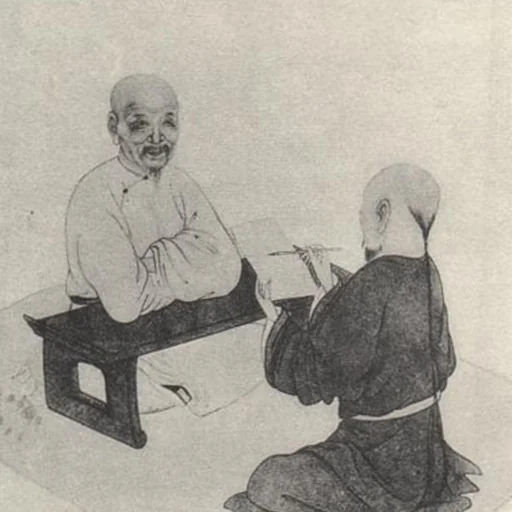
Yu Zhiding (Yü Chih-ting, traditional: 禹之鼎, simplified: 禹之鼎); ca. (1647–1709) was a Chinese painter during the Qing dynasty (1644–1912). Yu was a native of Jiangdu (present-day Yangzhou) in Jiangsu province. His style…

 Landscapes and Figures: Landscape
 Untitled
 The Peach Blossom Spring 桃花源圖
 石山師香筆 源氏物語八景 絵巻|Eight Views from The Tale of Genji
 Scene from A Long Tale for an Autumn Night
 Untitled
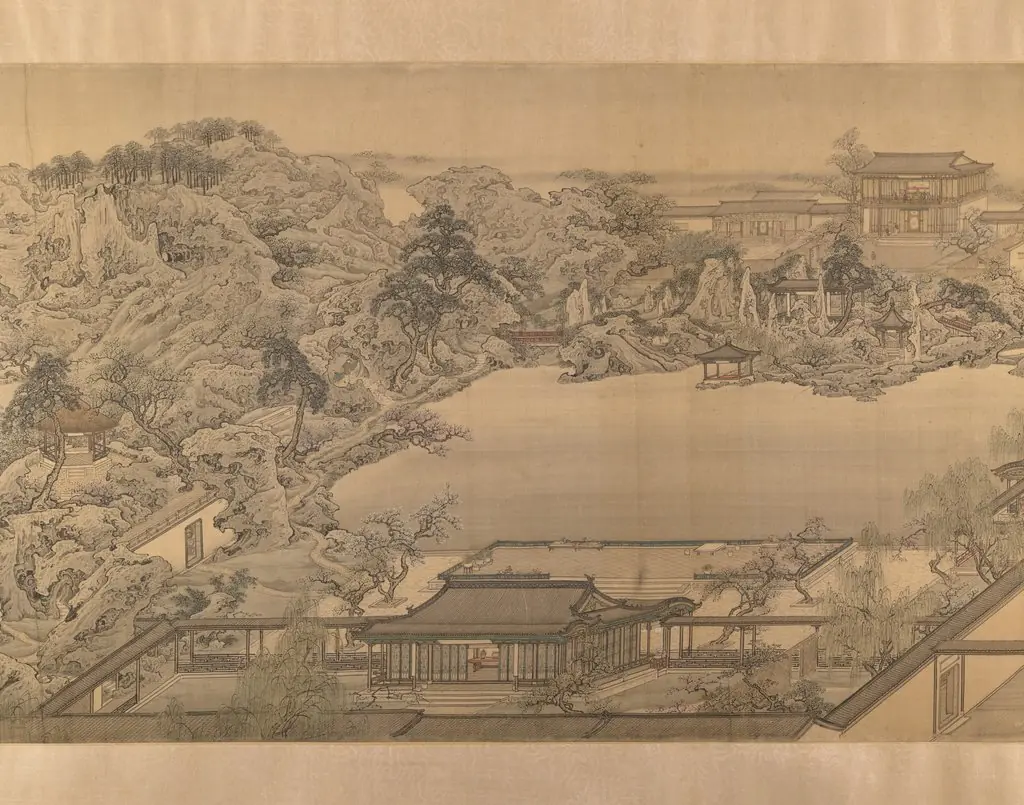 清 佚名 臨袁江瞻園圖 卷|View of a Garden Villa
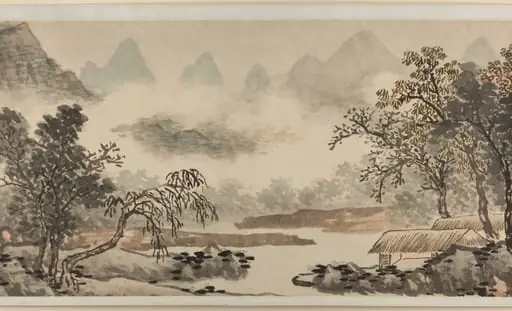 Clouds over the River before Rain 溪雲欲雨圖
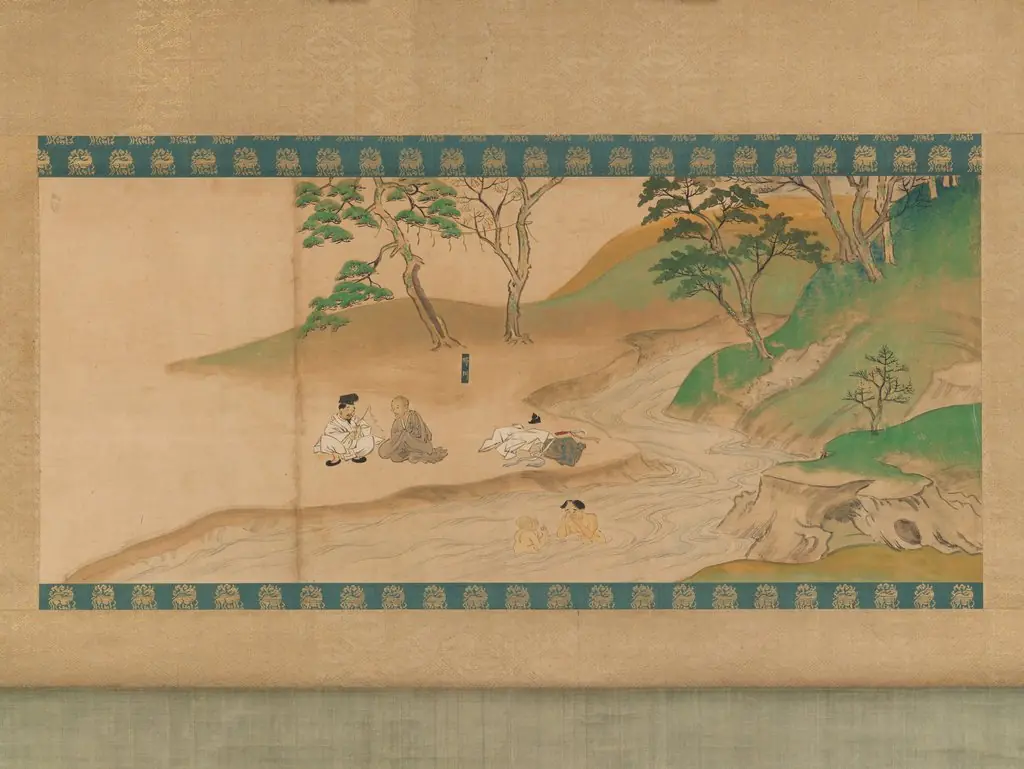 Section of Jin'o-ji Engi Emaki (Konin Shonin E-den)
 The Peach Blossom Spring
 Untitled
- Cleansing Medicinal Herbs in the Stream on a Spring Day