Artwork
清 張宗蒼 山水 冊 紙本|Miniature landscapes
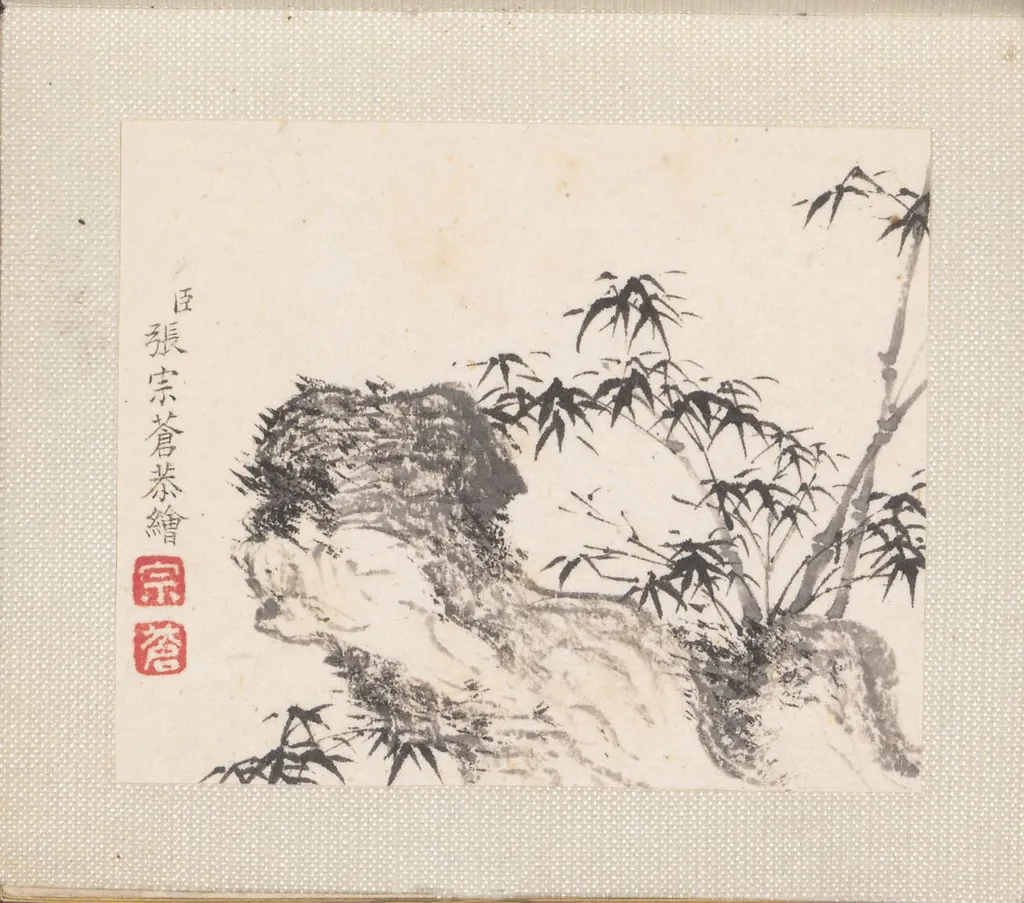
清 張宗蒼 山水 冊 紙本|Miniature landscapes is an ink painting by the Baroque artist Zhang Zongcang. It dates from 1752 and is held in the collection of the Metropolitan Museum of Art.
- Accession no.
- 42.74.1a–h
- Credit line
- Fletcher Fund, 1942
About this work
Technique & Style
Zhang Zongcang employed ink and pigment to render the compositions, following the stylistic conventions of the genre during the Qing dynasty.
Created in 1752, this album of eight leaves features miniature landscapes executed in ink and colour on paper. The work is classified as landscape painting in the traditional album format common in Chinese art. Each leaf measures 3.7 centimetres in height and 4.4 centimetres in width, a compact, intimate scale suited to close viewing.
Zhang Zongcang employed ink and pigment to render the compositions, following the stylistic conventions of the genre during the Qing dynasty.
History & Provenance
The album of eight miniature landscape leaves was created by the Chinese artist Zhang Zongcang in 1752. Executed in ink and colour on paper, the work originated in China during the Qing dynasty and later entered the collection of the Metropolitan Museum of Art, where it is held and classified as a landscape painting. Each leaf measures 3.7 by 4.4 centimetres, consistent with its miniature format. No accession number or exhibition history is documented in the available sources.
Overview
Created in 1752 by Zhang Zongcang (1686–1756), this work is an album leaf from a set of eight miniature landscapes executed in ink and color on paper. A prominent figure of the Qing Dynasty court painting, Zhang Zongcang served the Qianlong Emperor and is celebrated for synthesizing the rigorous brushwork of the Southern School with the decorative clarity favored by the imperial court. This specific leaf depicts a rocky cliff face rendered in layered shades of gray ink, juxtaposed with bamboo stalks defined by darker, more assertive strokes.
The composition balances the vertical mass of the rock with the organic rhythm of the vegetation, demonstrating the artist's mastery of texture and spatial depth within a compact format. The signature and two red seal stamps are positioned on the left, adhering to traditional conventions of placement and balance. As part of a larger album, this piece reflects Zhang's mature style, characterized by a refined palette and precise execution that distinguishes his work from the more spontaneous literati traditions of his predecessors.
The album format allowed for varied thematic exploration while maintaining a cohesive aesthetic, serving as both a display of technical skill and a vehicle for poetic expression within the imperial collection.
Subject & Meaning
The composition centers on a rugged rocky cliff, rendered with varying tones of gray ink to suggest its texture and depth. Delicate bamboo plants emerge from the cliff face, depicted with darker, more concentrated ink, providing a visual contrast. This pairing of resilient rock and flexible bamboo is a recurring motif in East Asian art, often symbolizing endurance and integrity in the face of adversity.
Artist & collection

 明/清 陳洪綬 山水人物花卉圖 冊|Landscapes, Figures, and Flowers
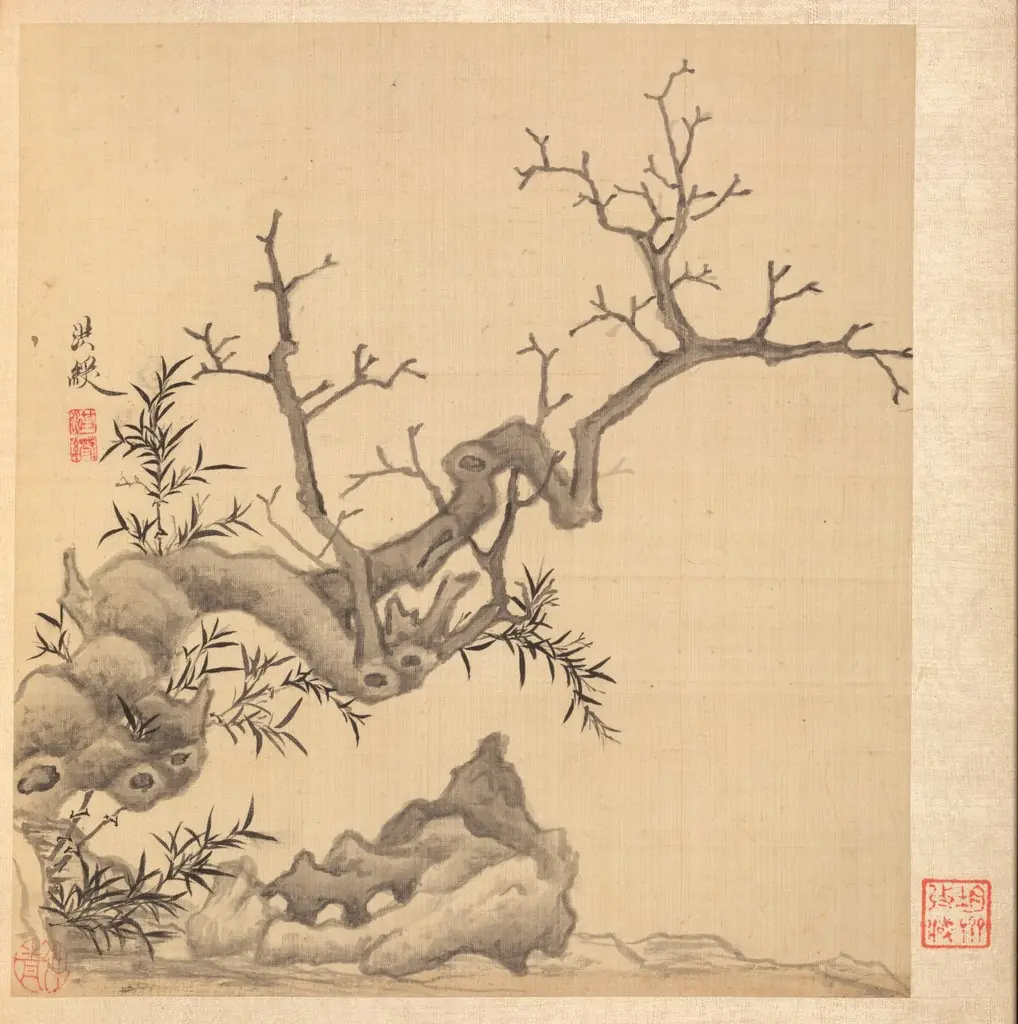 Paintings after Ancient Masters: Rock, Old Tree, and Bamboo
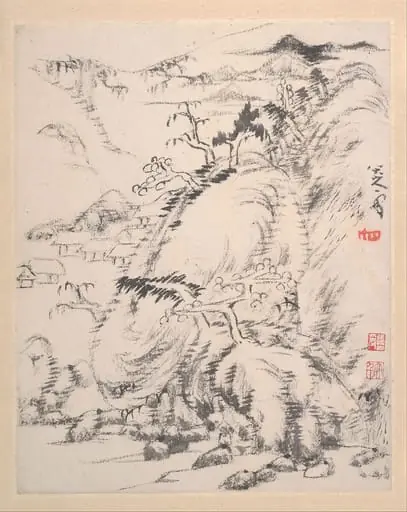 清 朱耷 (八大山人) 山水圖 冊|Landscape album
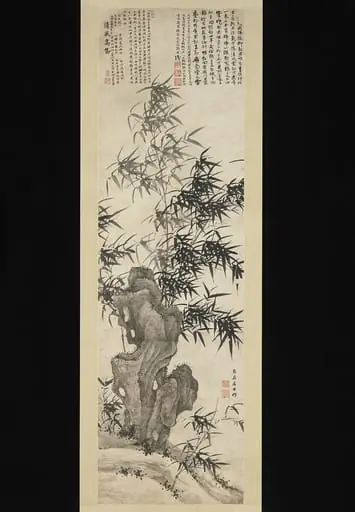 明 夏昶 清風高節圖 軸|Windblown bamboo
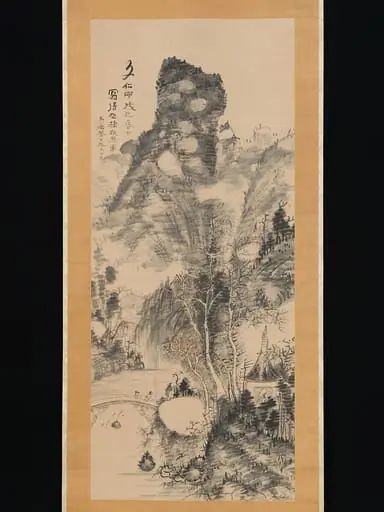 Untitled
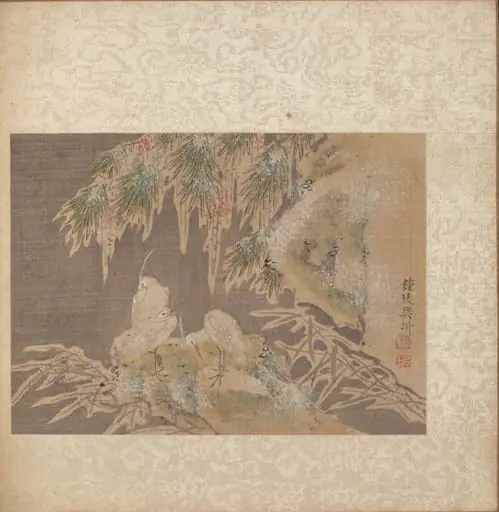 Album of Miscellaneous Subjects, Leaf 10
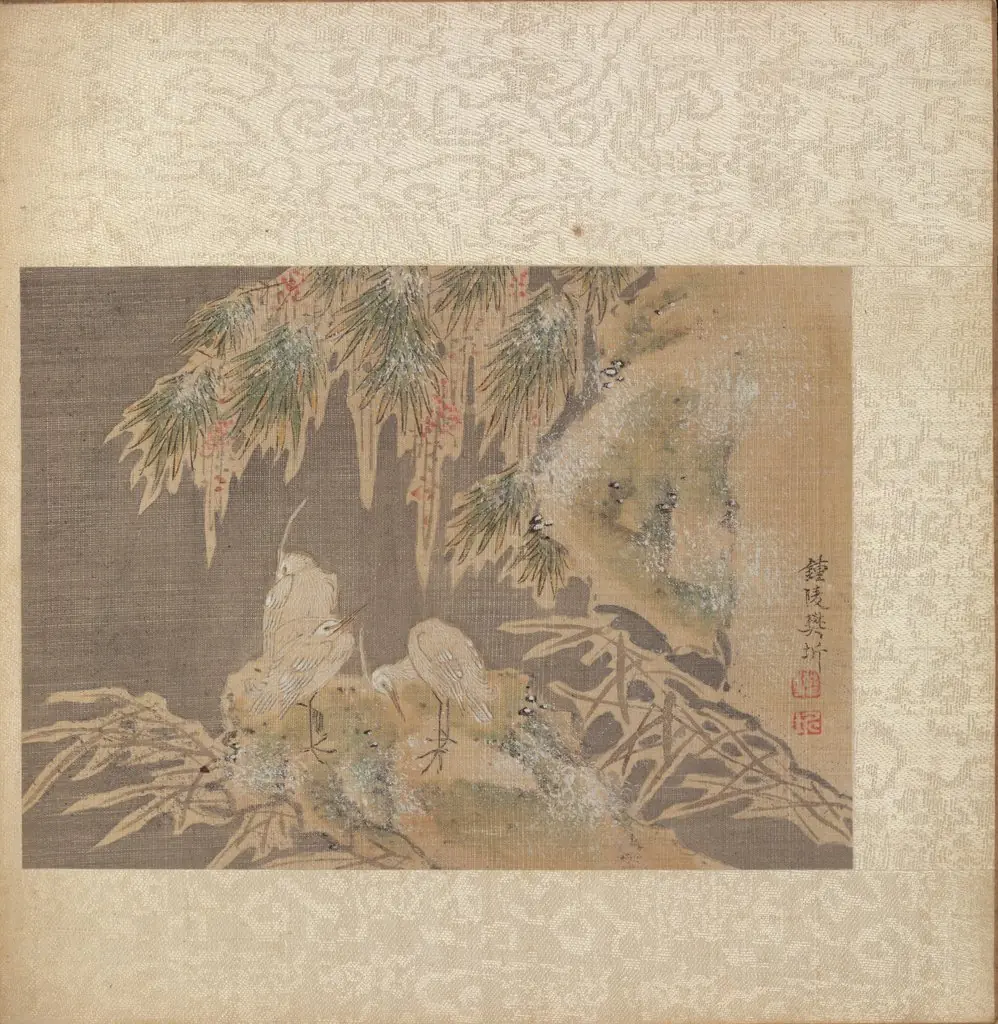 Album of Miscellaneous Subjects, Leaf 10
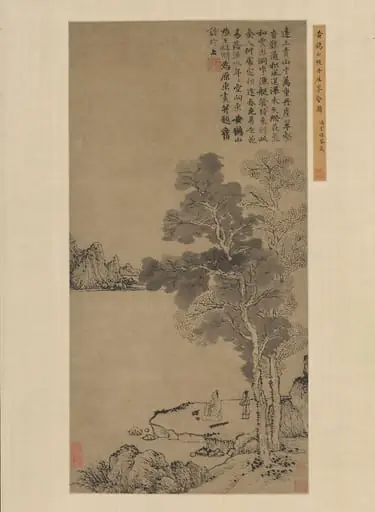 元 王蒙 丹崖翠壑圖 軸|Red Cliffs and Green Valleys
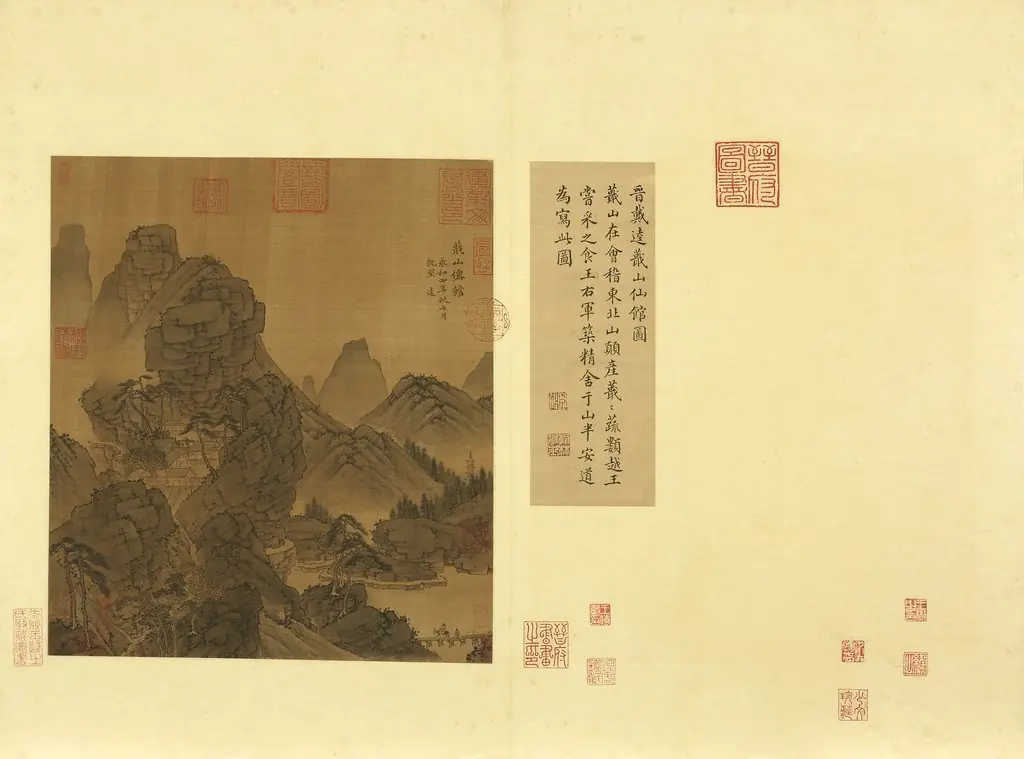 天下名山圖(亨) 冊 晉戴逵蕺山仙館圖
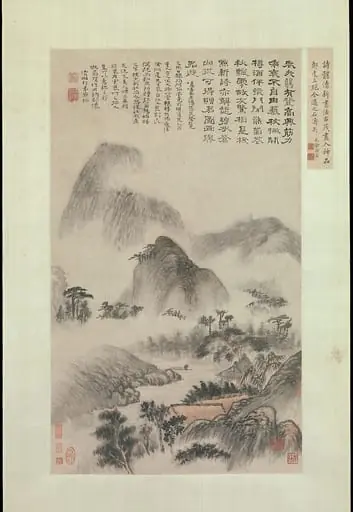 清 石濤(朱若極) 重陽山水圖 軸|Landscape Painted on the Double Ninth Festival
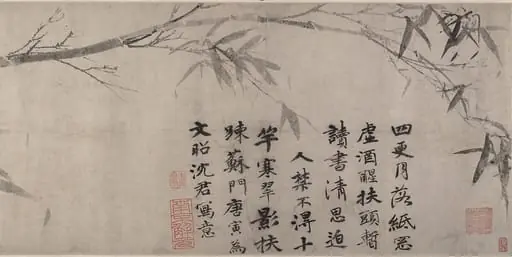 明 唐寅 墨竹圖 卷|Ink bamboo
- 清 戴本孝 山水圖 冊|Landscapes