
Subject
Goddes
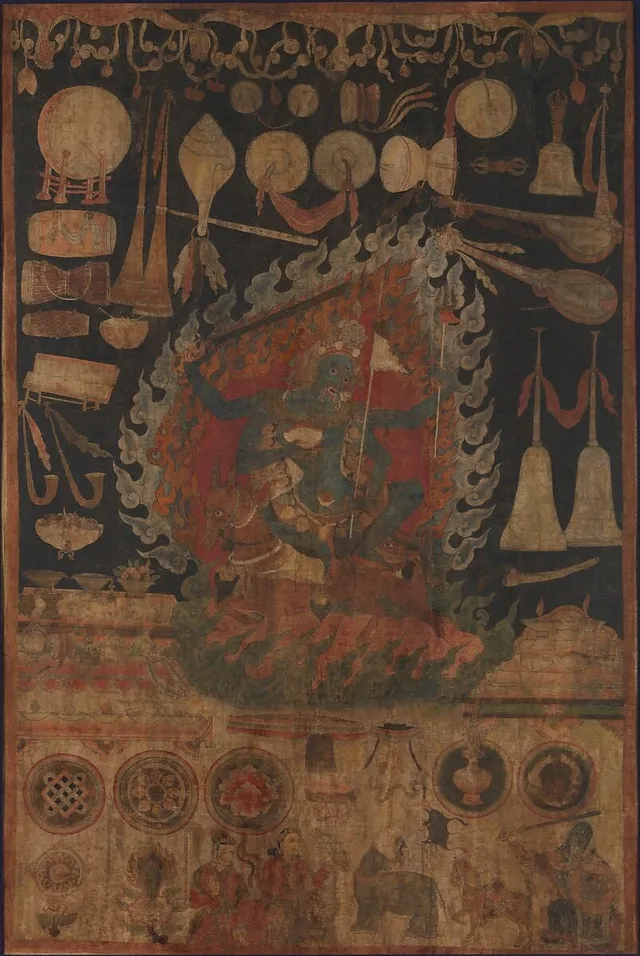
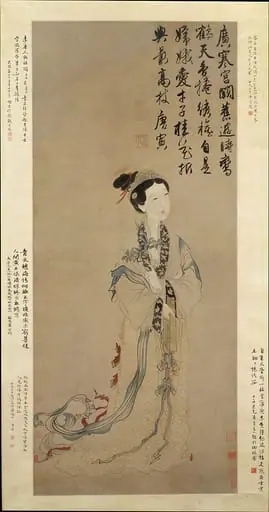
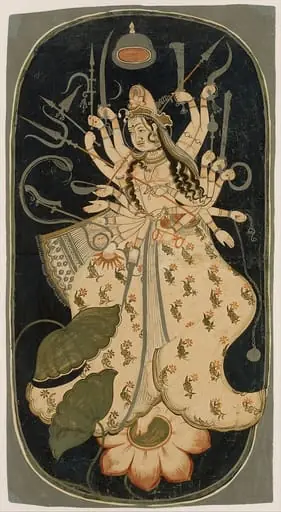
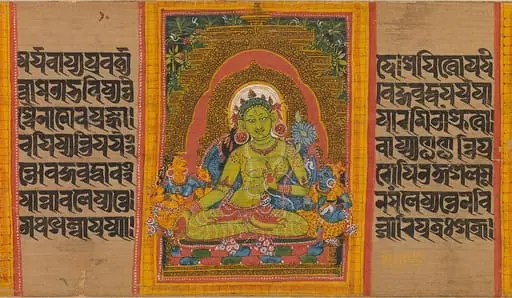
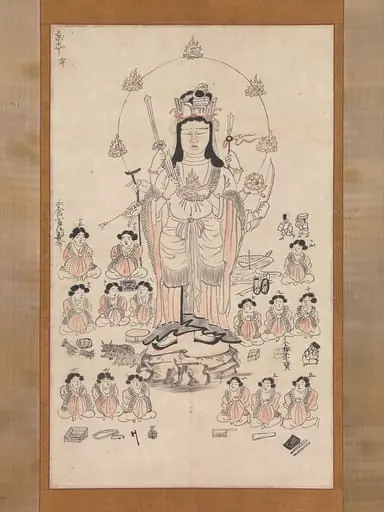
Goddes is a subject in art. The gallery holds 25 works in this subject in art, including works by Katsushika Hokusai, William Morris Hunt and Tang Yin.
A deity or god is a supernatural being considered to have authority over some aspect of the universe and/or life, with many also being considered as sacred and worthy of worship. The Oxford Dictionary of English defines deity as a god or goddess, or anything revered as divine.
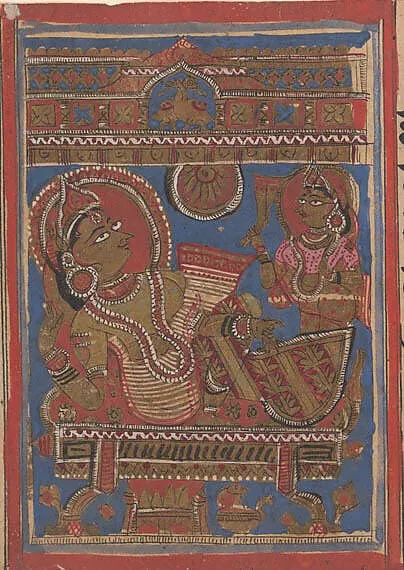
Key artists


Overview
The goddess is a supernatural female deity, a divine being vested with authority over aspects of the universe, nature, or human life, and regarded as sacred and worthy of worship. As a motif in art, the goddess recurs across virtually every culture and period because she embodies fundamental human concerns: fertility and creation, power and protection, love and destruction, the cosmic and the chthonic. The term derives from the Proto-Indo-European root *deiwos, "to shine," yielding Latin dea and Greek thea, cognates that underscore the luminous, exalted nature attributed to divine femininity. Whether conceived as a singular supreme being, one figure within a pantheon, or an emanation of a universal principle, the goddess has served as a enduring subject for artistic representation, appearing in 54 works within this collection alone.
Iconography & meaning
The iconography of goddesses varies enormously by cultural and religious context, yet certain patterns emerge. Goddesses are frequently depicted in human or anthropomorphic form, often idealized, and are distinguished by attributes signaling their domain: fertility goddesses may be shown with abundant vegetation, animals, or pronounced maternal features; warrior goddesses bear arms and armor; celestial goddesses are associated with heavenly bodies or luminous auras. In polytheistic traditions, goddesses typically personify natural phenomena, ethical concepts, or primal forces. The ancient Mesopotamians, Egyptians, Greeks, Romans, and Germanic peoples all personified natural phenomena as deliberate causes or effects, often as female deities. In Indian religions, deities have been envisioned as manifesting within the body of every living being, as sensory organs and mind. The Wicca movement of the mid-twentieth century developed a particularly rich goddess iconography, centered on the "Grande Déesse" as Earth and source of all life, paired with a horned god representing the fertilizing sky. This dualistic imagery draws on Celtic beliefs in which the goddess annually engenders and marries the god before his death at Samhain.
Across movements & periods
The treatment of the goddess has shifted dramatically across movements, periods, and cultures. In ancient polytheistic civilizations, goddesses were fully integrated into civic and religious life, their images serving cultic functions. Egyptian, Greek, and Roman goddesses received monumental temple sculptures and votive offerings. With the rise of monotheistic religions, particularly Christianity and Islam, the singular male God displaced goddess worship, though Marian devotion in Catholicism preserved certain feminine divine qualities. The Neoplatonic philosophers of late antiquity, notably Proclus and Syrianos, developed elaborate hierarchies of divine beings that included feminine principles, though these were increasingly abstracted. The modern period witnessed significant revival: the Wicca movement, founded in the first half of the twentieth century and developed by figures such as Zsuzsanna Budapest in the 1960s, explicitly reclaimed goddess worship as part of feminist and ecological agendas. Dianic Wicca practices goddess worship exclusively within women-only groups, linking divine femininity to political empowerment. Contemporary art continues to draw on this reservoir of meanings, often with critical or revisionist intent.
Notable depictions
While the sources do not specify particular canonical artworks depicting goddesses, the scholarly record indicates that goddess imagery permeates the history of art at every level. Ancient examples include the Venus of Willendorf and other prehistoric female figurines, the numerous statuettes of Egyptian goddesses Isis and Hathor, Greek sculptures of Athena and Aphrodite, and Roman imperial representations of Diana and Ceres. In the collection itself, the 54 works depicting goddesses constitute a significant body of material, though specific attributions to named artists are not provided in the available sources. The Wicca movement's visual culture, while more recent, represents a deliberate reconstruction and reinvention of goddess imagery, drawing eclectically on Celtic, Greek, and other mythological sources to create a new iconographic tradition.
Legacy
The goddess retains substantial cultural afterlife as both a religious figure and an artistic motif. In religious studies, the concept of deity continues to organize fundamental debates about transcendence and immanence, the knowability of the divine, and the relationship between humanity and the sacred. Theological positions range from theism through deism, pantheism, and atheism, with the goddess variously affirmed, reinterpreted, or rejected. In feminist theory and practice, goddess worship has served as a tool for reclaiming female authority and reimagining spiritual life outside patriarchal structures. The Wicca movement's ecological pantheism represents one contemporary formulation, linking the goddess to nature and sustainability. In art, the goddess persists as a vehicle for exploring identity, power, and the sacred, her ancient forms continually reactivated by new generations of artists. The collection's 54 works testify to this ongoing vitality, demonstrating that the goddess remains a generative subject capable of sustaining repeated artistic engagement across changing cultural circumstances.
Works
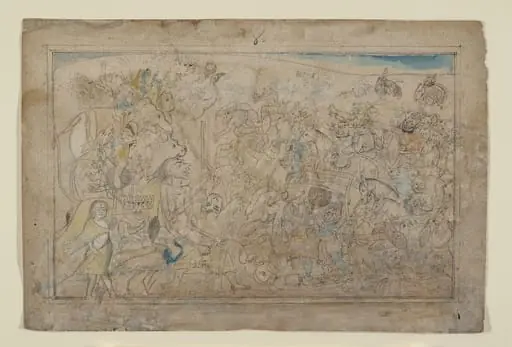 Untitled
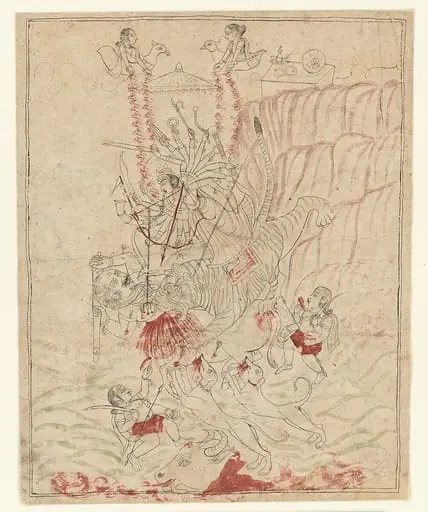 Untitled
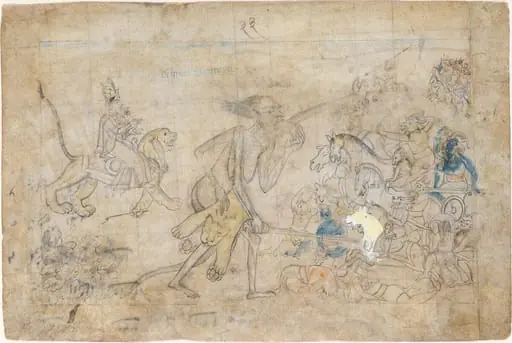 Untitled
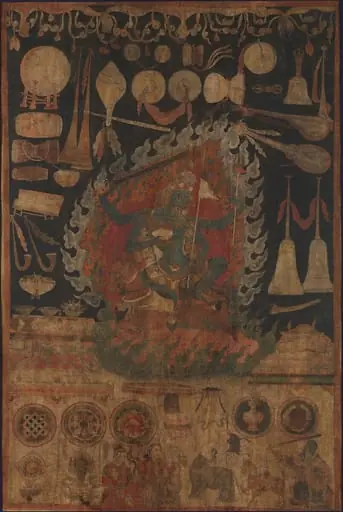 Untitled
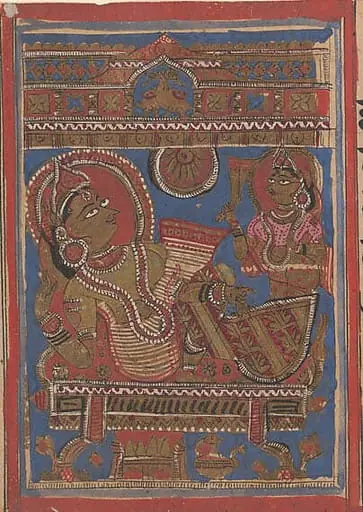 Untitled
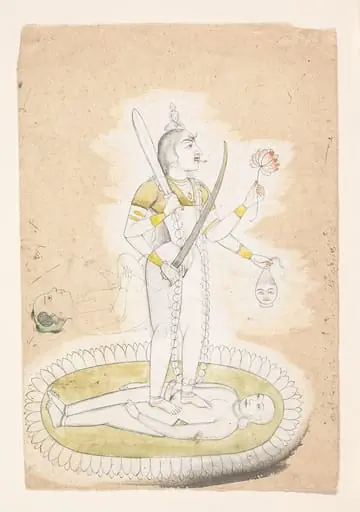 Untitled
 Untitled
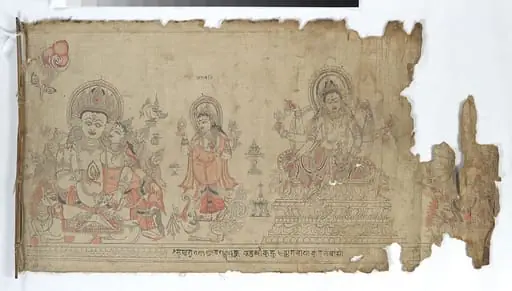 Untitled
 Untitled
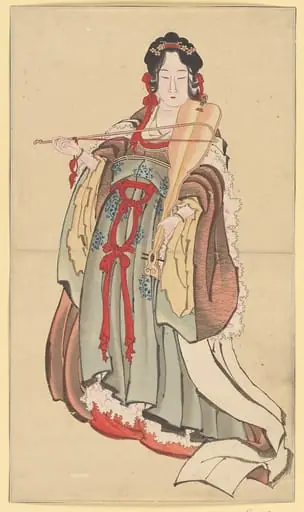 Untitled
 Untitled
 Untitled
 Untitled
 Untitled
 Untitled
 Untitled
 Untitled
 Untitled
 弁財天十五童子像|Benzaiten and Fifteen Attendants
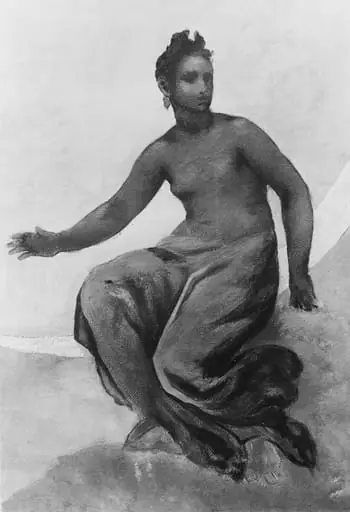 Anahita: A Study for "The Flight of Night"
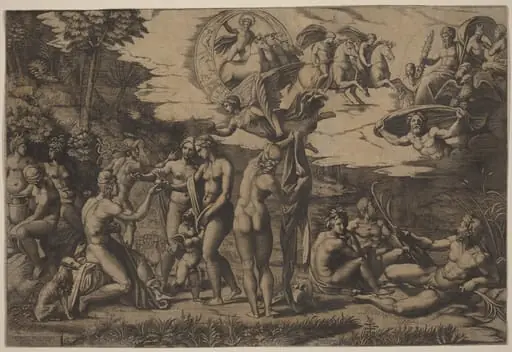 The Judgment of Paris
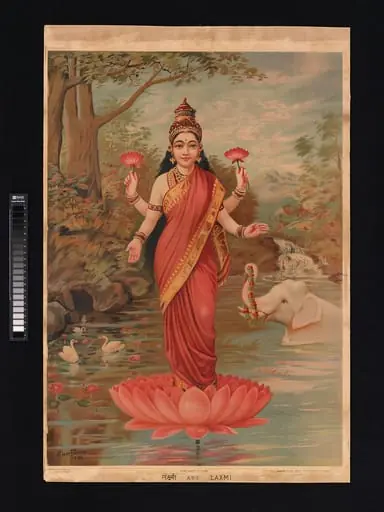 Untitled
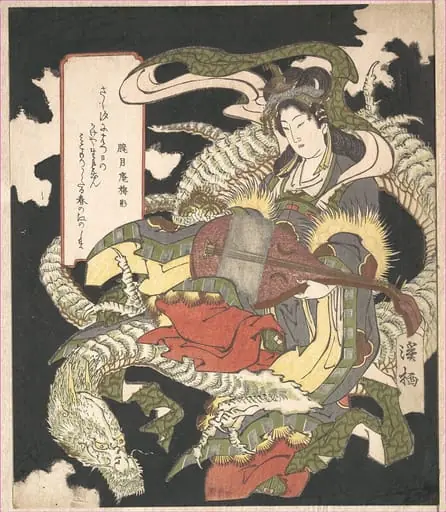 騎龍弁財天|Benzaiten (Goddess of Music and Good Fortune) Seated on a White Dragon
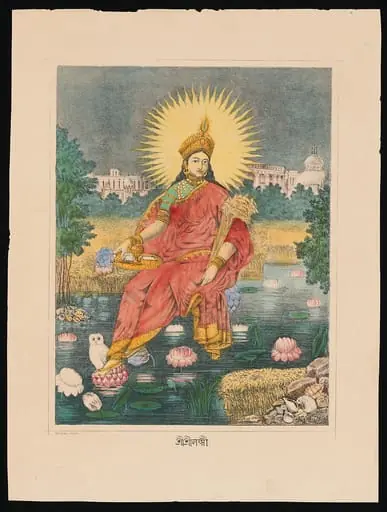 Untitled
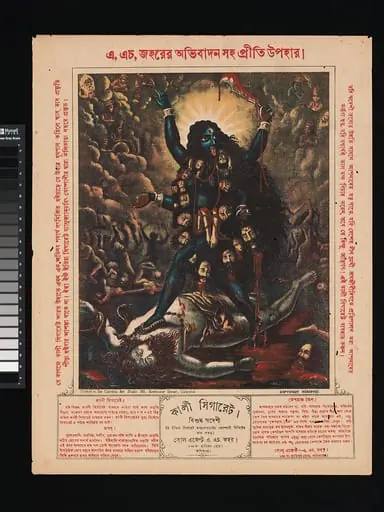 Untitled
Frequently asked questions
What is Goddes?
Goddes is a subject in art. A deity or god is a supernatural being considered to have authority over some aspect of the universe and/or life, with many also being considered as sacred and worthy of worship.
How many Goddes works does Artifact World Gallery have?
Artifact World Gallery holds 25 public-domain Goddes works, all free to view and download.
Who are the key Goddes artists?
Key Goddes artists in the collection include Katsushika Hokusai, William Morris Hunt and Tang Yin.
Where can I see Goddes works?
Goddes works in the collection are held by Metropolitan Museum of Art.