Artwork
Equestrian Portrait of Charles V
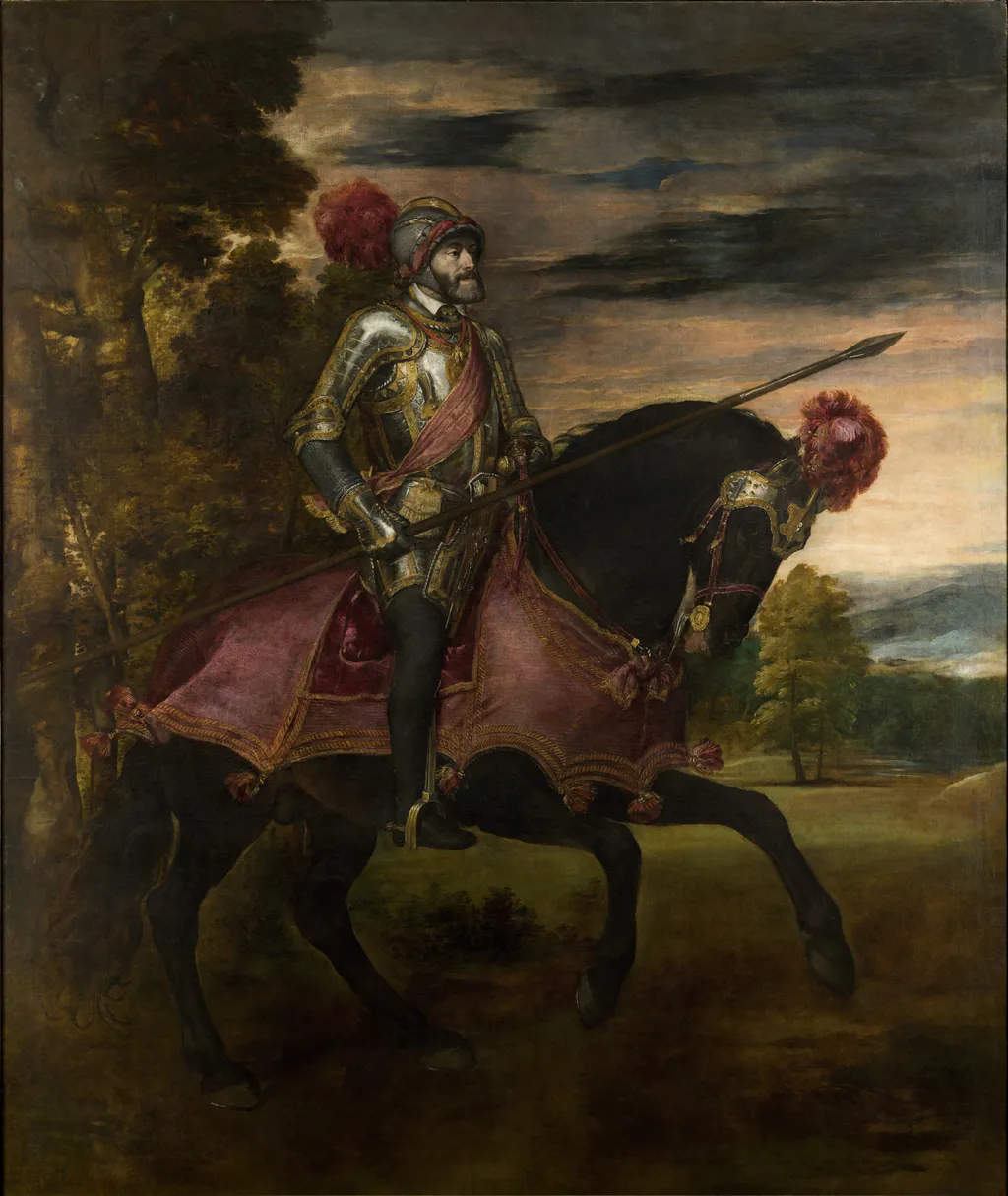
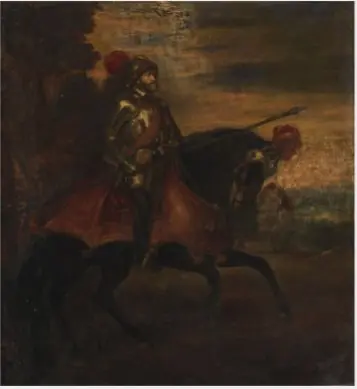
Equestrian Portrait of Charles V is an oil painting by the High Renaissance artist Titian. It dates from 1548 and is held in the collection of the Museo del Prado.
About this work
الموضوع والمعنى
Titian synthesizes medieval Burgundian chivalric ideals with classical Roman imperial imagery, positioning the Emperor as the heir to Roman Caesars.
تصوّر اللوحة تشارلز الخامس، إمبراطور الإمبراطورية الرومانية المقدّسة portrayed as a 'soldier of Christ' defending Christianity against the internal threat of Protestantism following his victory at the Battle of Mühlberg in 1547. Titian synthesizes medieval Burgundian chivalric ideals with classical Roman imperial imagery, positioning the Emperor as the heir to Roman Caesars. The composition includes specific iconographic elements: a long lance alluding to Saint George slaying the dragon (a symbol of heresy) or the lance of Longinus, and a red sash and helmet trim representing the Catholic faith. The Emperor is shown in full armor, holding the reins with a detached, steely gaze that conveys resolve despite his physical frailty and the dark, brooding landscape. By omitting the defeated enemy and the chaos of battle, the work presents Charles not as a triumphant exulter but as a dignified, pensive, and controlled ruler, harmonizing the roles of warrior and sovereign.
Technique & Style
The painting is an oil on canvas executed in 1548, measuring 335 cm in height and 283 cm in width. Titian employed a layered technique, building up passages of warm reds and ochres in the costume, armor, and landscape, while retaining a more linear, descriptive handling for the harness and metalwork. The composition plays on controlled dynamism: the horse is shown rearing on its hind legs rather than the conventional raised foreleg, conveying restrained motion, while Charles holds the reins lightly, underscoring his command. The setting is a calm dawn landscape with a brooding sky of flaming gold and shadowed clouds, evoking both victory and inner resolve. Radiographic examination confirms earlier damage to the horse's hindquarters, later repaired by Christoph Amberger after a mishap during drying.
History & Provenance
The *Equestrian Portrait of Charles V* was commissioned in 1548 by Mary of Hungary, the emperor's sister, to commemorate his victory at the Battle of Mühlberg the previous year. Titian executed the oil-on-canvas work while residing at the imperial court in Augsburg between April and September 1548, utilizing armor and horse tack actually employed during the battle. During the drying process, the painting was reportedly knocked over by the wind, damaging the horse's rear; the artist Christoph Amberger was subsequently engaged to repair the canvas. The work remained within the Spanish royal collection for centuries, surviving the 1734 fire at the Alcázar of Madrid, though the lower portion retains darkening from the event. It was transferred to the Museo del Prado in Madrid in 1827, where it has been held since.
The Equestrian Portrait of Charles V is housed in the Museo del Prado in Madrid, where it has been part of the museum's collection since its transfer from the Spanish royal inventory in 1827 (source 3). Its official accession is recorded as part of the museum's royal collection, though a specific inventory number is not published (source 2). The work was featured in the exhibition "The Art of Power: Royal Armor and Portraits from Imperial Spain," highlighting its significance within the royal portraiture of the period (source 2).
Context
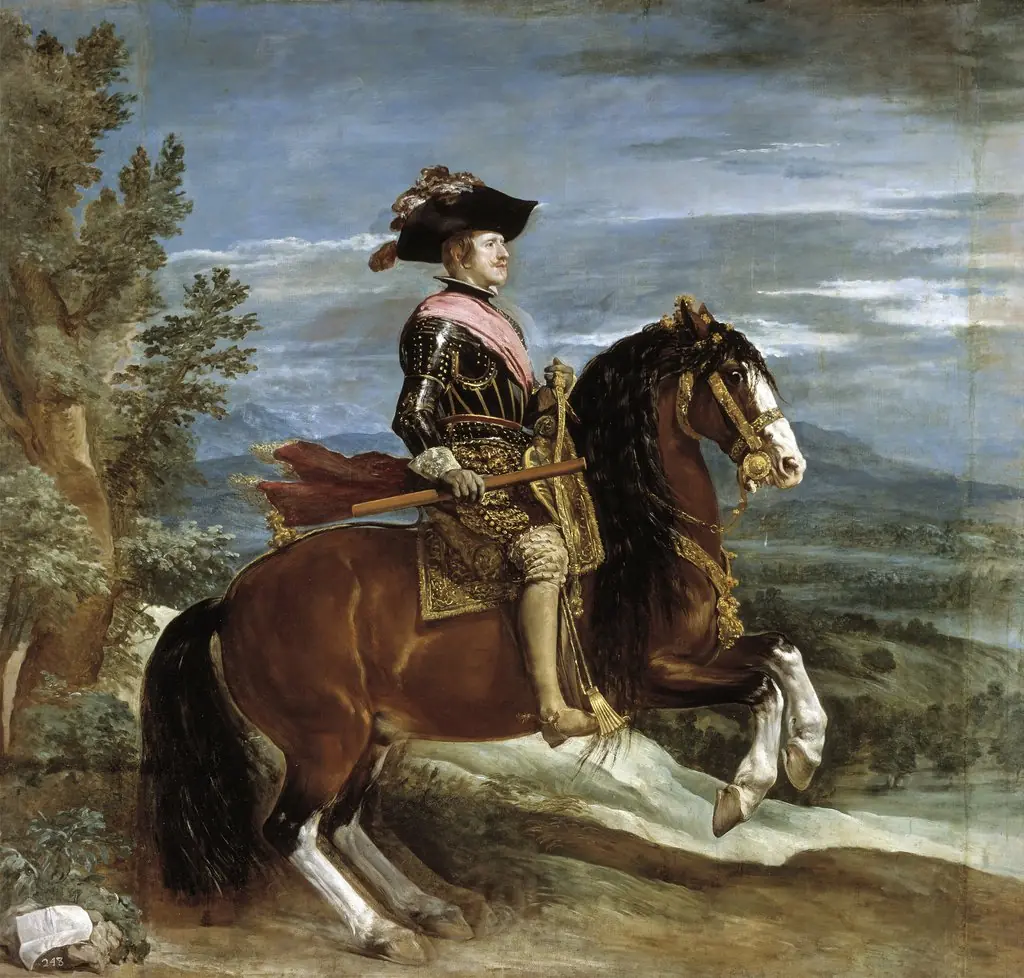
Titian's Equestrian Portrait of Charles V, painted in 1548 at the imperial court in Augsburg, became the defining dynastic image of the House of Habsburg and exerted an extraordinary influence on Baroque equestrian portraiture. Commissioned by Charles V's sister, Mary of Hungary, to commemorate the emperor's 1547 victory at the Battle of Mühlberg, the work fused Burgundian chivalric ideals with classical references to Roman imperial imagery, notably the equestrian statue of Marcus Aurelius, while softening the emperor's pronounced Habsburg jaw and omitting his gout. Hugh Trevor-Roper described Charles as "staid, controlled, pensive, but serene," and the painting's restrained triumph shaped later portraits by Rubens, Van Dyck, Velázquez, and Goya.
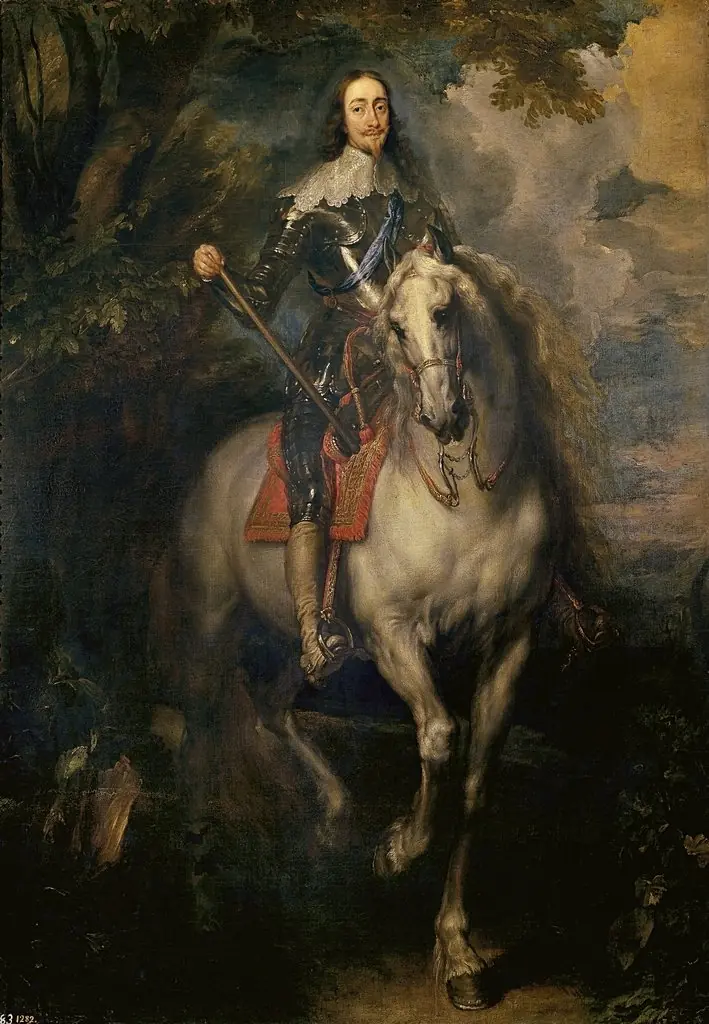
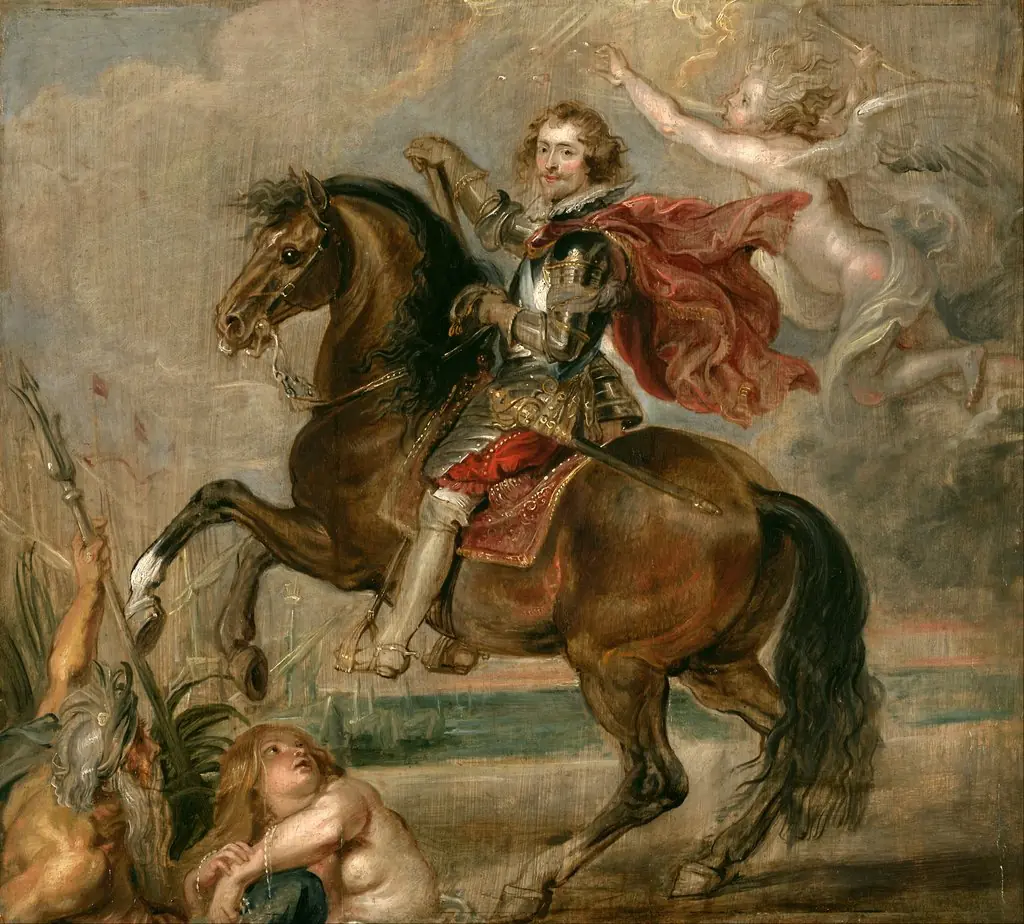
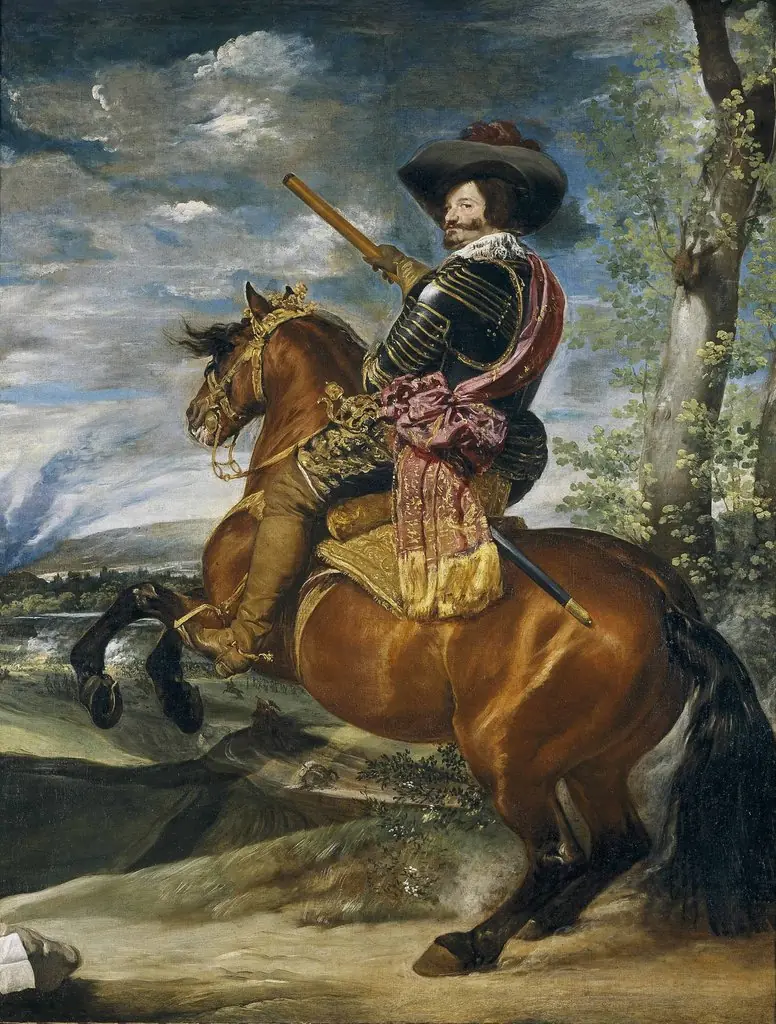
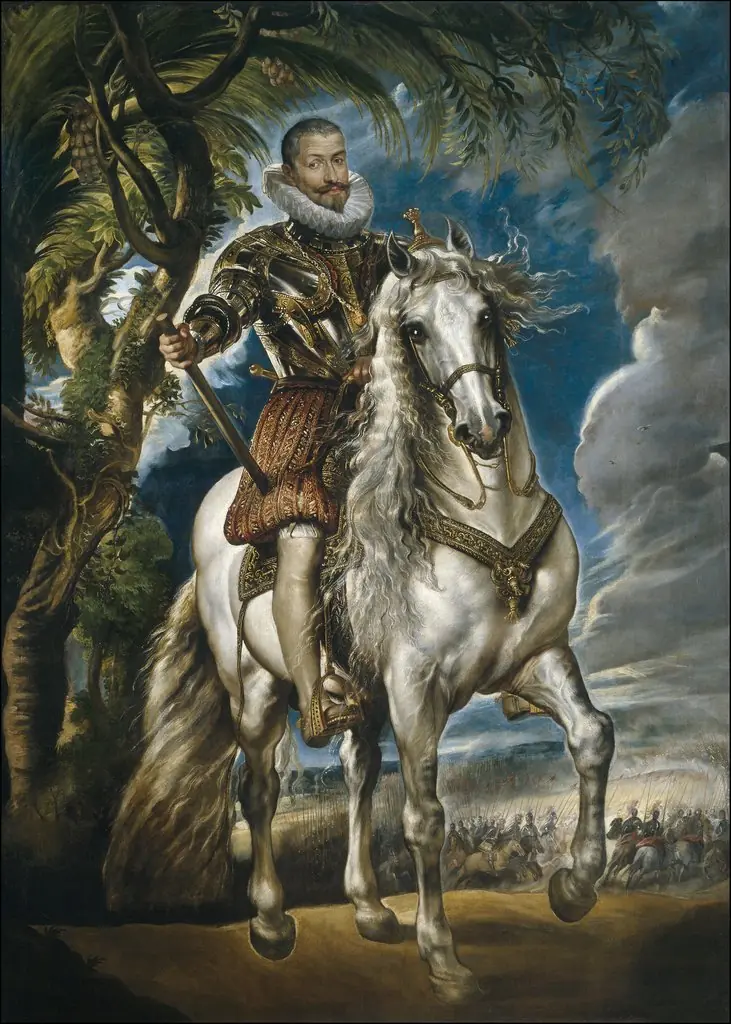
The portrait established a new typology in which horse and rider face the viewer frontally, a formula Rubens adopted in his Equestrian Portrait of the Duke of Lerma (1603) and Portrait of the Cardinal-Infante Ferdinand of Spain (c. 1634), and which Van Dyck combined with Titian's ideals in his 1633 Charles I with M. de St. Antoine. The work's transfer to the Museo del Prado in 1827 cemented its canonical status within European art history.
Legacy
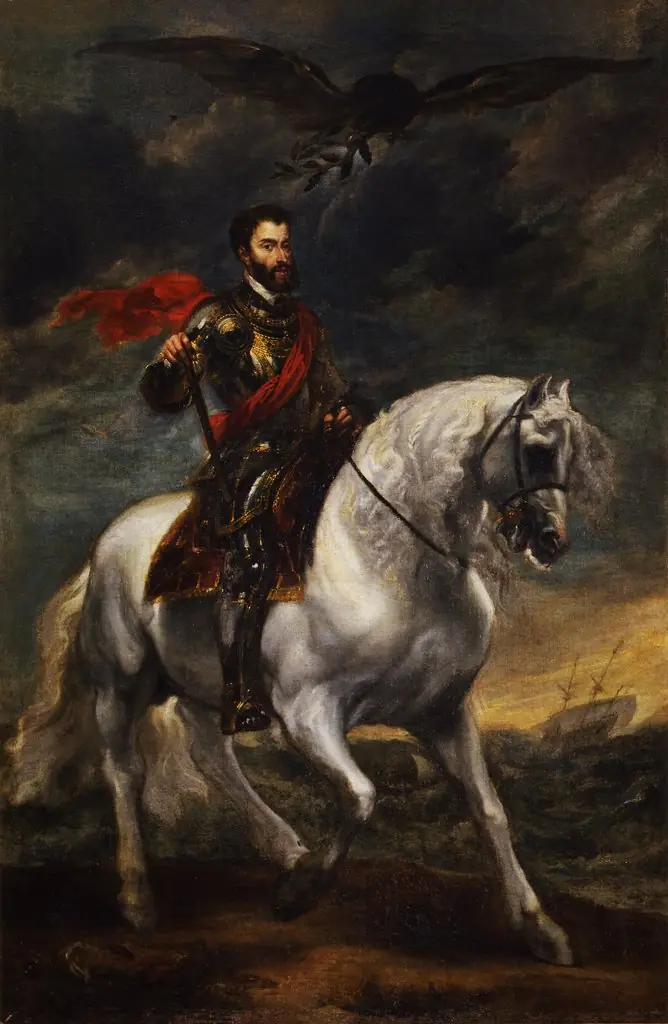
Titian's *Equestrian Portrait of Charles V* established a definitive model for royal equestrian imagery that profoundly influenced Baroque portraiture. The work's composition and ideals were directly adopted by Anthony van Dyck in his 1620 portrait of Charles I, which incorporated similar visual strategies. Peter Paul Rubens further developed this typology in works such as the *Portrait of the Duke of Lerma* (1603) and the *Portrait of Cardinal-Infante Ferdinand of Spain* (c. 1634), often utilizing the frontal presentation and elevated viewpoint pioneered by Titian. These elements subsequently shaped the equestrian portraits of Diego Velázquez. By synthesizing medieval chivalric ideals with Roman imperial classicism, the painting became the quintessential dynastic image of the House of Austria, exerting a significant impact on the visual language of monarchy throughout the 17th century.
Artist & collection
Artist
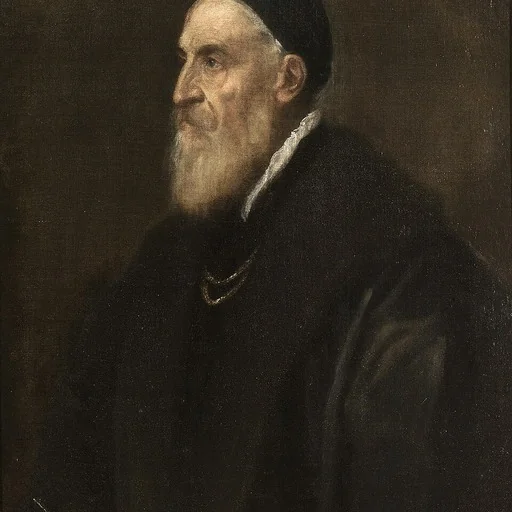
Tiziano Vecellio (Italian:; c. 1488/1490 – 27 August 1576), Latinized as Titianus, hence known in English as Titian ( TISH-ən), was an Italian Renaissance painter. The most important artist of Renaissance Venetian…