Artwork
The Fishmonger
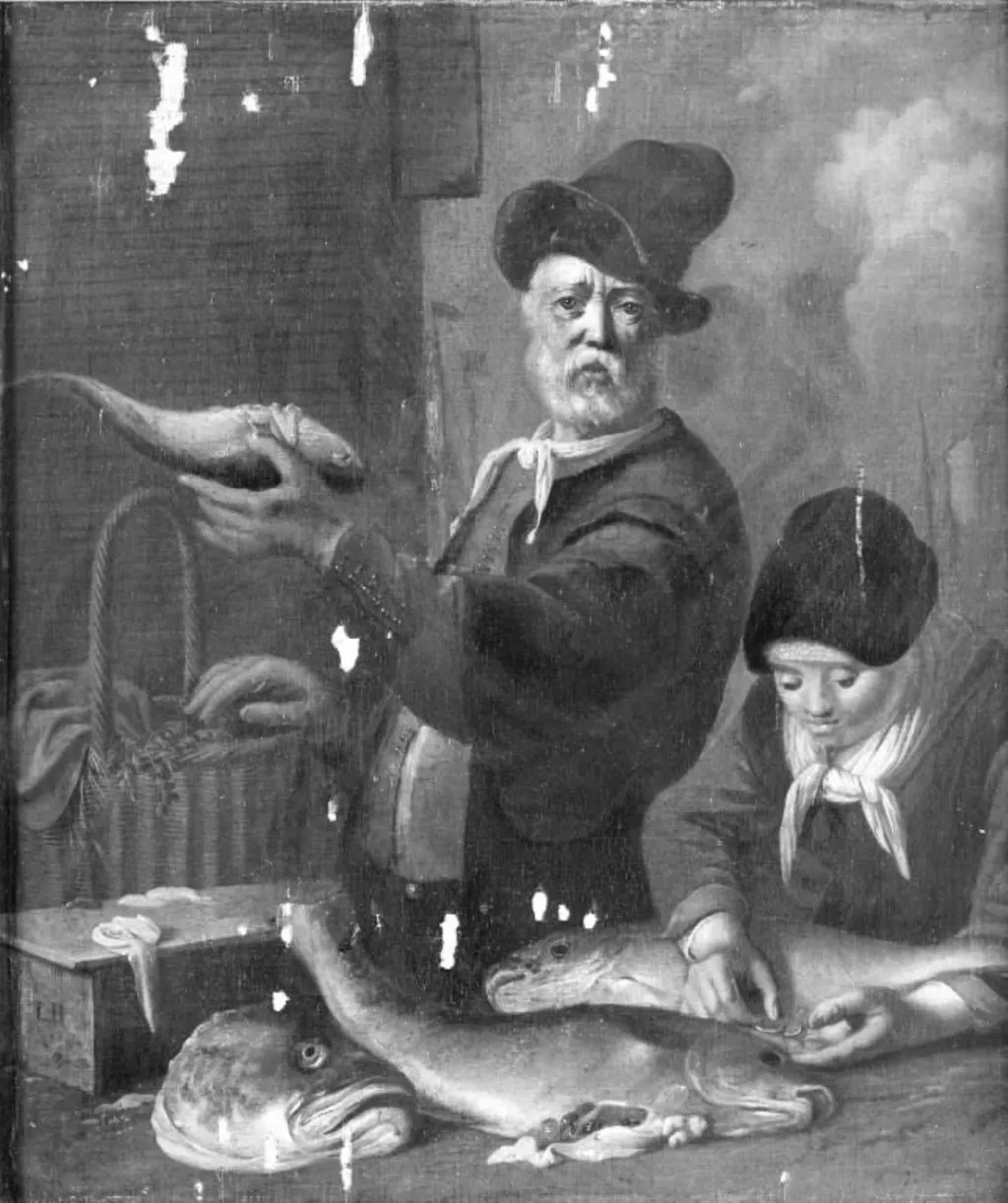
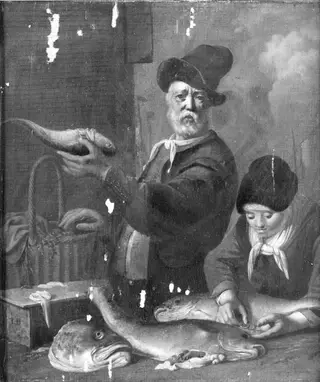
The Fishmonger is a photography by Unknown. It dates from 1677 and is held in the collection of the Statens Museum for Kunst. Created around 1677, this black-and-white image depicts a fishmonger engaged in a quiet transaction.
About this work
Overview
The scene captures an older man, dressed in a dark coat and tall hat, holding a freshly caught fish beside a younger figure reaching toward it.
Created around 1677, this black-and-white image depicts a fishmonger engaged in a quiet transaction. The scene captures an older man, dressed in a dark coat and tall hat, holding a freshly caught fish beside a younger figure reaching toward it. A pile of fish and a woven basket rest on the ground behind them. The composition is rendered with strong contrasts of light and shadow, emphasizing texture and form without color.
Subject & Meaning
The image portrays a moment of commerce between generations, suggesting the transmission of trade knowledge or labor. The fishmonger’s firm grip and weathered face convey experience, while the younger figure’s outstretched hand implies participation or apprenticeship. The setting, stripped of ornament, focuses attention on the exchange of goods and the dignity of daily work in a pre-industrial economy.
Technique & Style
The image employs chiaroscuro to model forms through stark contrasts between light and deep shadow. This technique enhances the three-dimensionality of the figures and the texture of their clothing and the fish’s scales. The absence of color and the sharp delineation of edges reflect a photographic or engraved aesthetic, likely derived from a print or early photographic process of the period.
History & Provenance
The work is held in the collection of the Museum of Ethnography, suggesting its documentation was intended to record social customs rather than serve as fine art. Its origin as a photographic or engraved image remains unconfirmed, but its style aligns with 17th-century Northern European genre depictions of market life, possibly made for scholarly or ethnographic purposes.
Context
In late 17th-century Europe, fishmongers were vital to urban economies, particularly in coastal regions. Scenes of market labor were increasingly documented as societies turned toward empirical observation. This image reflects a broader trend of recording everyday life, often for educational or anthropological interest, rather than for aesthetic glorification.
Legacy
Though not widely exhibited as fine art, the image contributes to historical records of labor and social structure in early modern Europe. Its preservation in an ethnographic collection underscores its value as a visual document of economic practice, offering insight into the rhythms of daily life beyond the realm of elite portraiture.
Artist & collection