Artwork
Nemesis
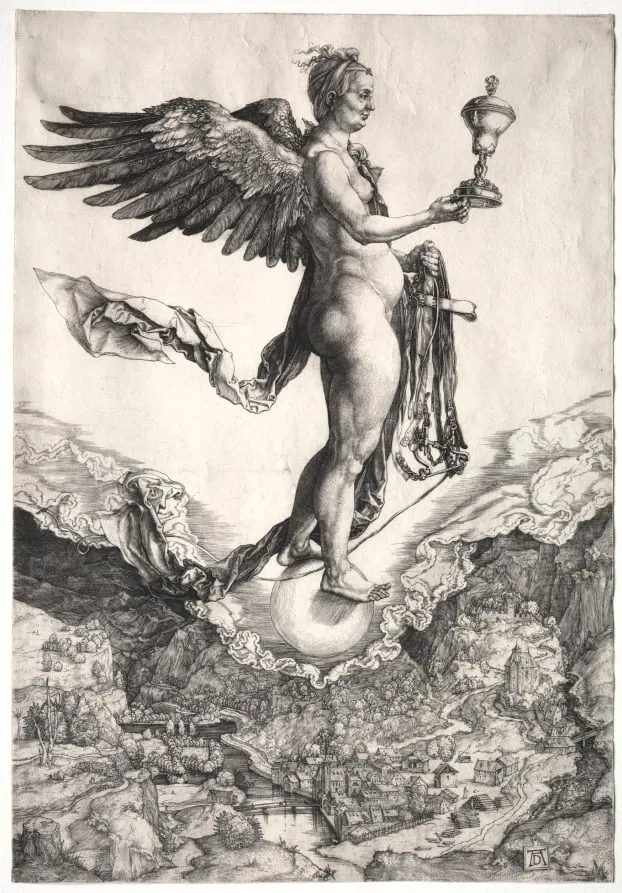
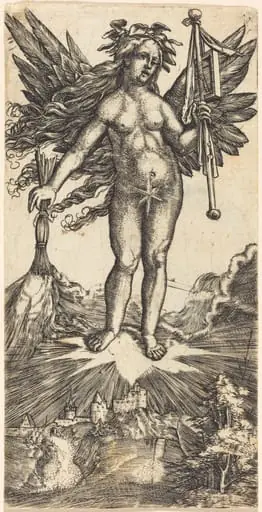
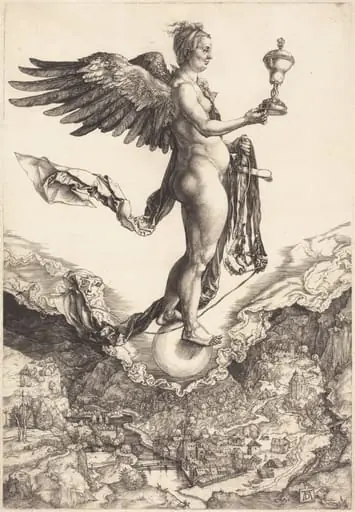
Nemesis is a print by the Renaissance artist Albrecht Dürer. It dates from 1502 and is held in the collection of the Cleveland Museum of Art. This small engraving depicts a winged female figure hovering above a cloud‑laden sky, poised over a diminutive village.
- Accession no.
- 1943.178
- Credit line
- Gift of Mrs. Ralph King
About this work
Look up more prints by Albrecht Dürer (German, 1471–1528) to see how he turned myths into sharp, small pictures.
A winged woman floats above a tiny village, holding a cup in one hand and a bridle in the other. The clouds beneath her feet look solid enough to stand on.
Dürer mixed two Greek goddesses here, Nemesis, who punishes pride, and Fortuna, who hands out luck. The cup rewards the deserving; the bridle yanks the arrogant back in line. It’s a warning, but the village below doesn’t even notice.
Look up more prints by Albrecht Dürer (German, 1471–1528) to see how he turned myths into sharp, small pictures.
Overview
This small engraving depicts a winged female figure hovering above a cloud‑laden sky, poised over a diminutive village. In her right hand she holds a cup, and in her left a bridle, symbols traditionally linked to the Greek goddess Nemesis. The clouds appear solid enough to be stepped upon, emphasizing her elevated, otherworldly presence.
Subject & Meaning
The image draws on a Latin poem that describes Nemesis as the divine force capable of crushing hubris and overturning overreaching ambitions. By presenting her with both a cup of reward and a bridle of punishment, the work conveys a dual warning: virtue will be rewarded, while pride will be reined in. The oblivious village below underscores the disconnect between mortal folly and divine judgment.
Technique & Style
Albrecht Dürer employs fine line work and cross‑hatching typical of his printmaking, creating a crisp contrast between the airy figure and the detailed, miniature settlement. The composition balances vertical emphasis, Nemesis descending from the heavens, with a horizontal spread of rooftops, while the solidified clouds serve as a visual platform that bridges the celestial and terrestrial realms.
History & Provenance
Created by the German artist Albrecht Dürer (1471–1528), the engraving reflects his long‑standing interest in classical mythology and its moral implications. It was produced as part of Dürer’s series of small, narrative prints that circulated among collectors in the early sixteenth century, though specific ownership records for this particular impression remain limited.
Artist & collection
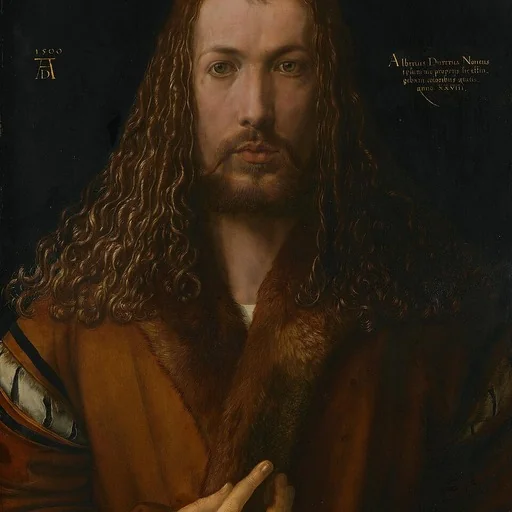
Artist
Albrecht Dürer spent his life in Nuremberg, a busy German city where artists traded prints like currency.

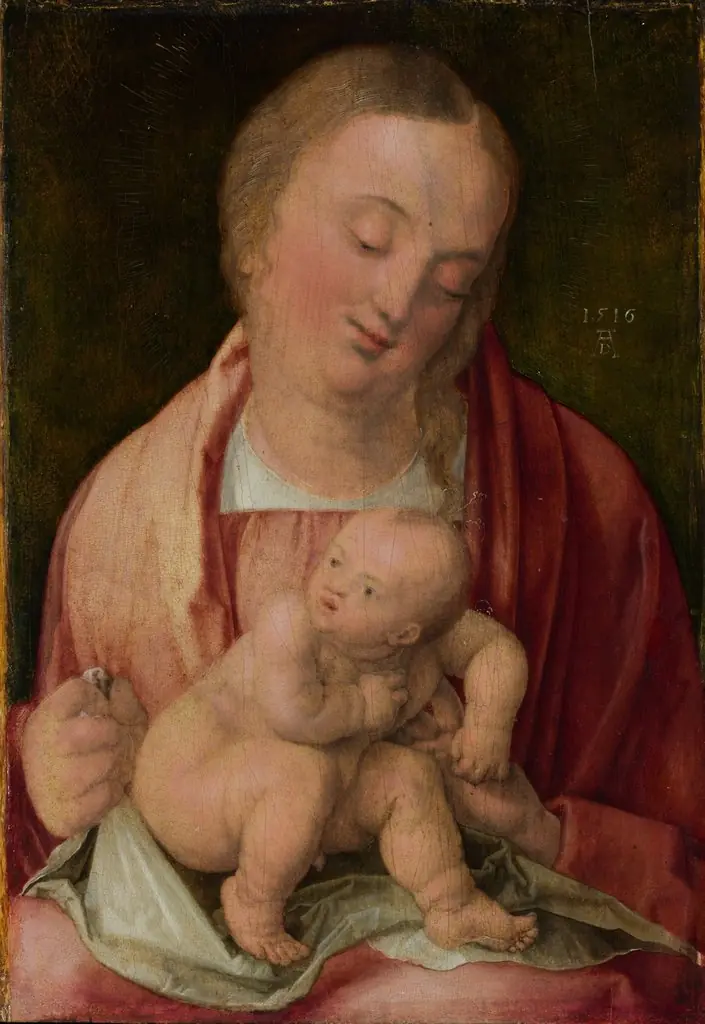
![Madonna and Child [obverse], by Albrecht Dürer](https://artifactworldgallery.com/img/albrecht-durer--madonna-and-child-obverse--d7b8ebf05d22ebe5-w320.webp)
![Lot and His Daughters [reverse], by Albrecht Dürer](https://artifactworldgallery.com/img/albrecht-durer--lot-and-his-daughters-reverse--b4ebf9b282faa17a-w320.webp)