Artwork
Lexington Battle Monument
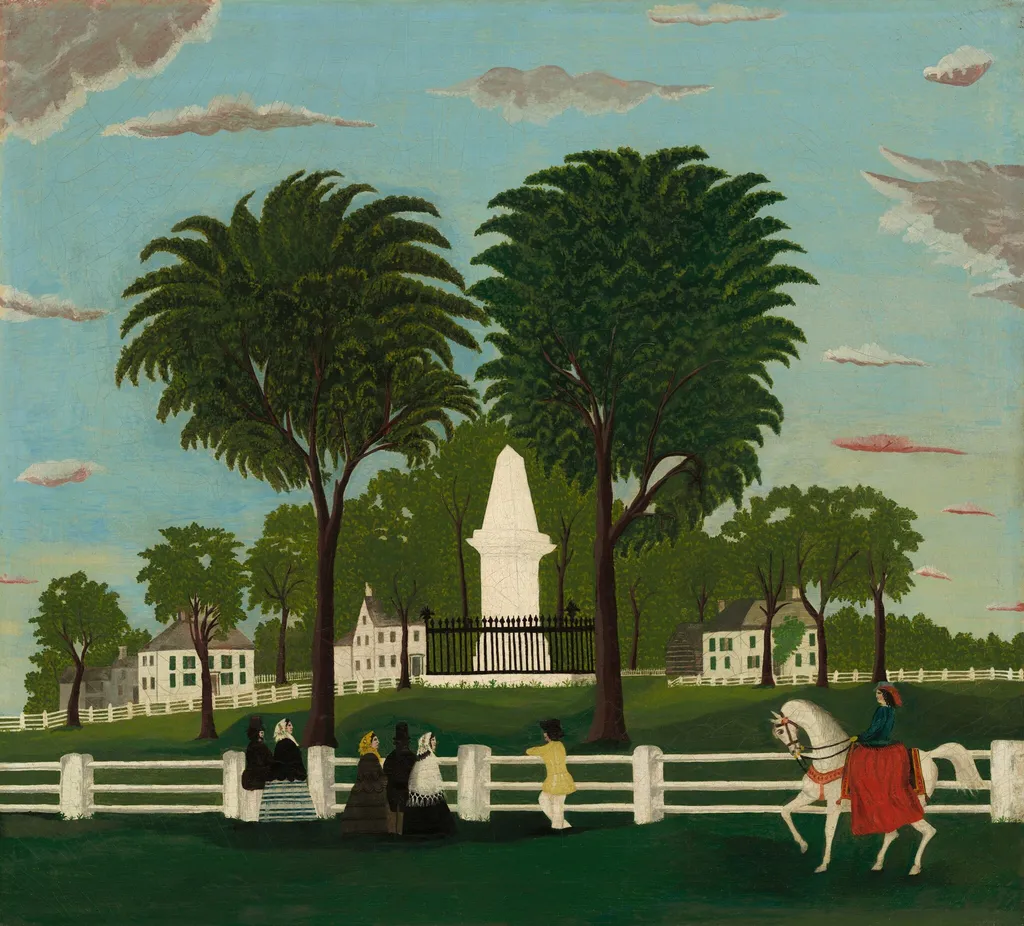
Lexington Battle Monument is an oil painting by the Impressionist artist American 19th Century. It dates from 1853 and is held in the collection of the National Gallery of Art. The canvas portrays a white monument set amid a grove of trees, enclosed by a black fence.
About this work
Overview
Lexington Battle Monument is an unsigned oil on canvas painting by an unidentified artist of the American 19th century, dated 1853 or after.
Lexington Battle Monument is an unsigned oil on canvas painting by an unidentified artist of the American 19th century, dated 1853 or after. Measuring 70.4 by 78.1 centimeters, the work is classified as a history painting. It depicts the commemorative obelisk erected in Lexington, Massachusetts, honoring the 1775 battle. The painting is currently held in the National Gallery of Art in Washington, D.C., under accession number 1953.5.88, entering the collection as a gift from Edgar William and Bernice Chrysler Garbisch.
Subject & Meaning
The painting commemorates the 1775 Battle of Lexington, centering on a white obelisk monument enclosed by a black iron fence. The monument's depiction highlights its stone construction, inscriptions, and architectural features, reflecting public memorial design of the period. The surrounding landscape integrates contemporary community life with the historical memorial. Six figures gather along a white wooden fence in the foreground, while a woman in a red skirt rides a white horse sidesaddle to the right. White houses with green shutters sit among dense foliage behind the monument, connecting the site of revolutionary memory to the ongoing daily life of the town.
Technique & Style
Executed in oil on canvas, the painting employs saturated greens, blues, and whites punctuated by touches of red and yellow. The artist uses flat, stylized forms with minimal modeling, smooth brushwork, and no deep shadows, yielding an even, decorative effect across the horizontal landscape. The composition is structured around contrasting vertical and horizontal elements, positioning the central obelisk between two full green trees, while white picket and wooden fences stretch across the middle and foreground. The canvas surface exhibits visible crackling throughout. The work remains unsigned.
History & Provenance
The work is recorded as originating from Massachusetts. Edgar William and Bernice Chrysler Garbisch purchased the painting in 1948 and subsequently donated it to the National Gallery of Art in 1953. Following its accession, the painting was featured in early exhibitions of the Garbisch collection in 1954 and 1955. It later served on extended loan to various government offices, including the U.S. Department of Justice from 1961 to 1973, the U.S. Embassy in Brunei from 1990 to 1991, the U.S. Department of Energy from 1999 to 2001, and the U.S. Department of Veterans Affairs in 2007 and 2008. It was also loaned to the Utah Museum of Fine Arts from 1976 to 1982, exhibited at the Terra Museum of American Art in 1985, and included in a major international exhibition on archaic innocence in Venice and Paris from 2015 to 2017.
Context
The painting is catalogued within the American naive painting tradition, a classification supported by its inclusion in the National Gallery of Art's systematic catalogue of American Naive Paintings and its appearance in the 1985 exhibition Two Centuries of Naive Painting at the Terra Museum of American Art. Its flat stylization, decorative palette, and lack of academic perspective align with folk art practices of the era. The work's later inclusion in the 2015 to 2017 exhibition Le Douanier Rousseau: L'innocence archaique in Venice and Paris further contextualizes it within broader art historical examinations of archaic and self-taught artistic traditions, drawing parallels between American naive painting and European primitives.
Artist & collection

Artist
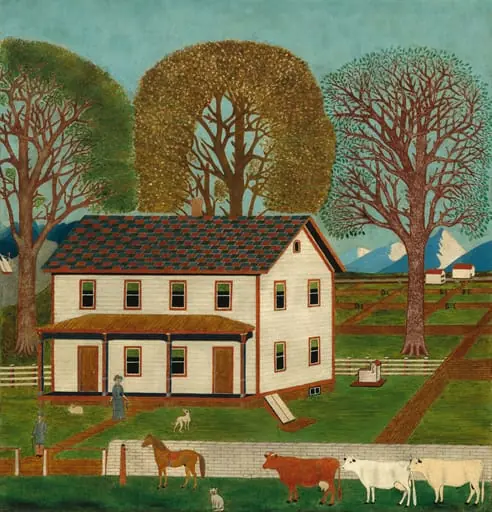
Scenes of everyday American life in the 1800s. Farmhouse in Mahantango Valley is a quiet, sunlit view of rural Pennsylvania; Boy and Girl shows two children standing close, faces turned outward. A small woodcut, The…

 To the Memory of George H. and Ruel T. Hills
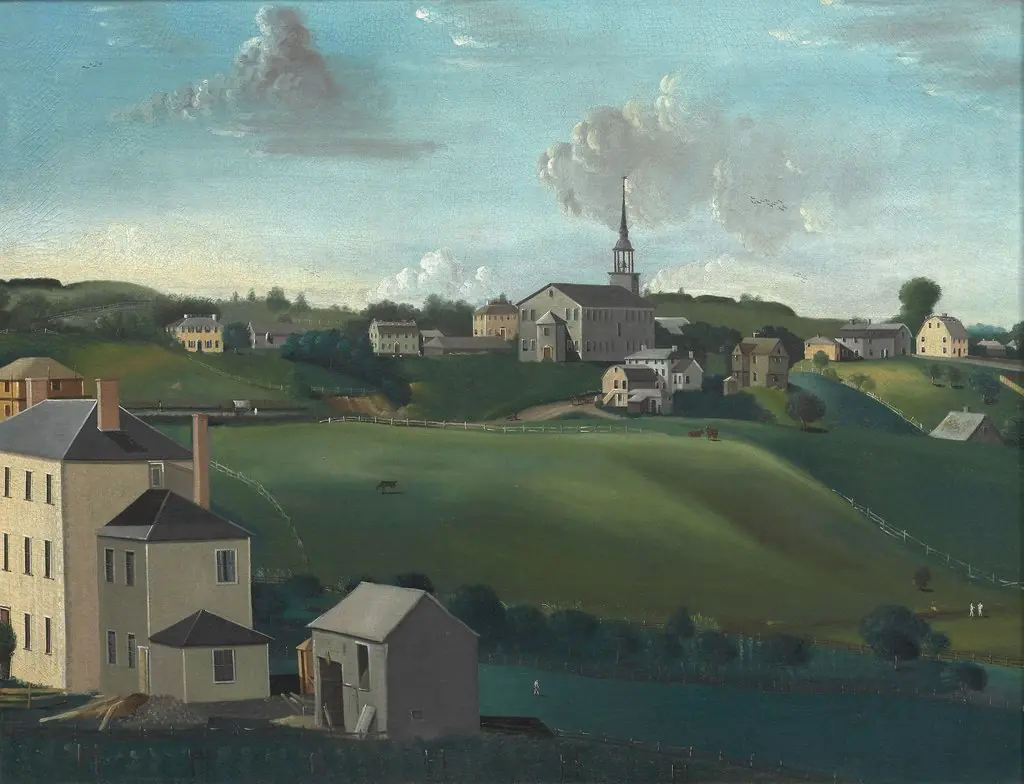 Meetinghouse Hill, Roxbury, Massachusetts
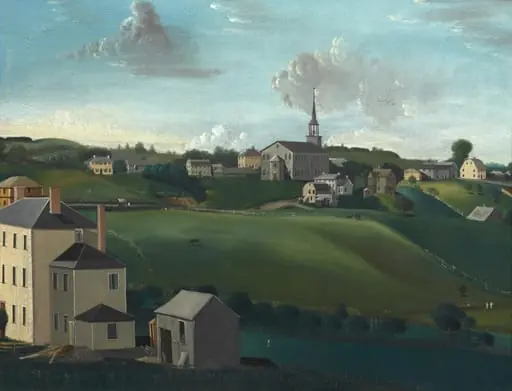 Meetinghouse Hill, Roxbury, Massachusetts
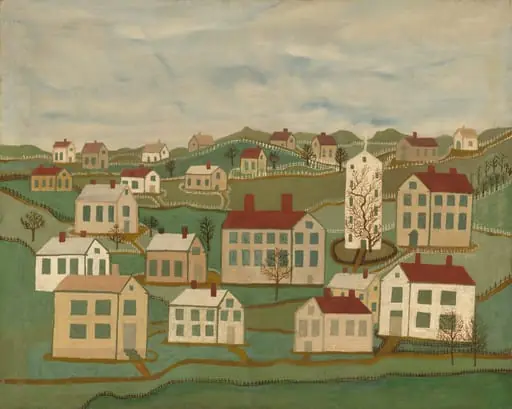 Twenty-two Houses and a Church
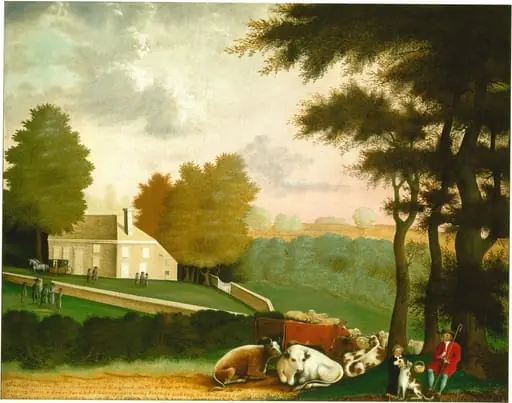 The Grave of William Penn
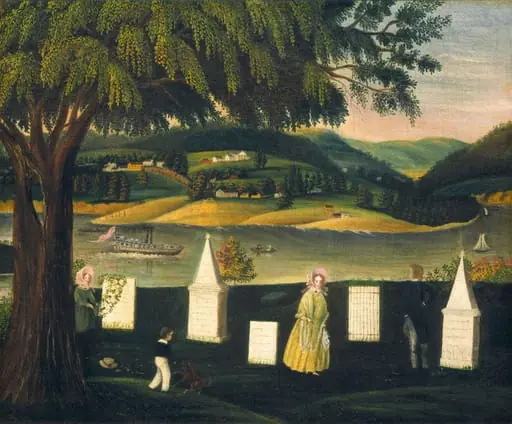 Family Burying Ground
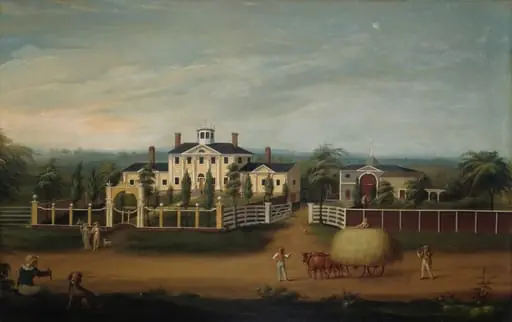 New England Country Seat
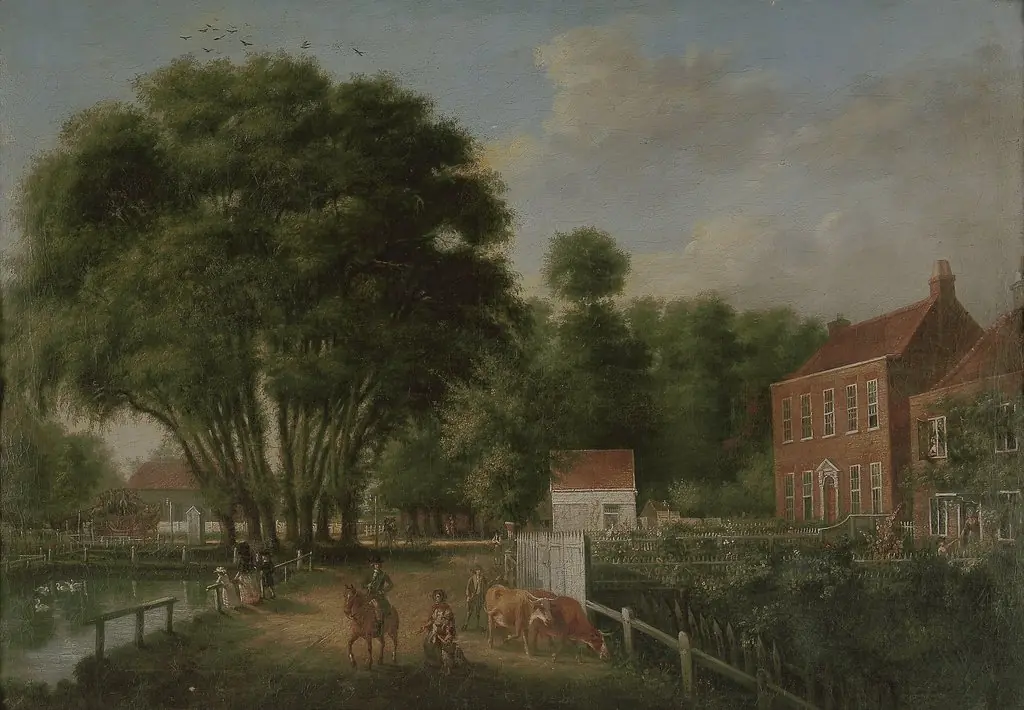 The seven sisters of Tottenham
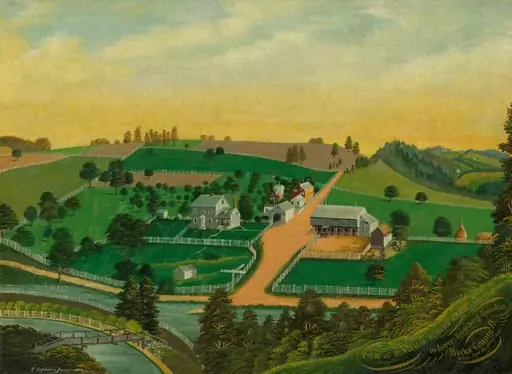 View of Benjamin Reber's Farm
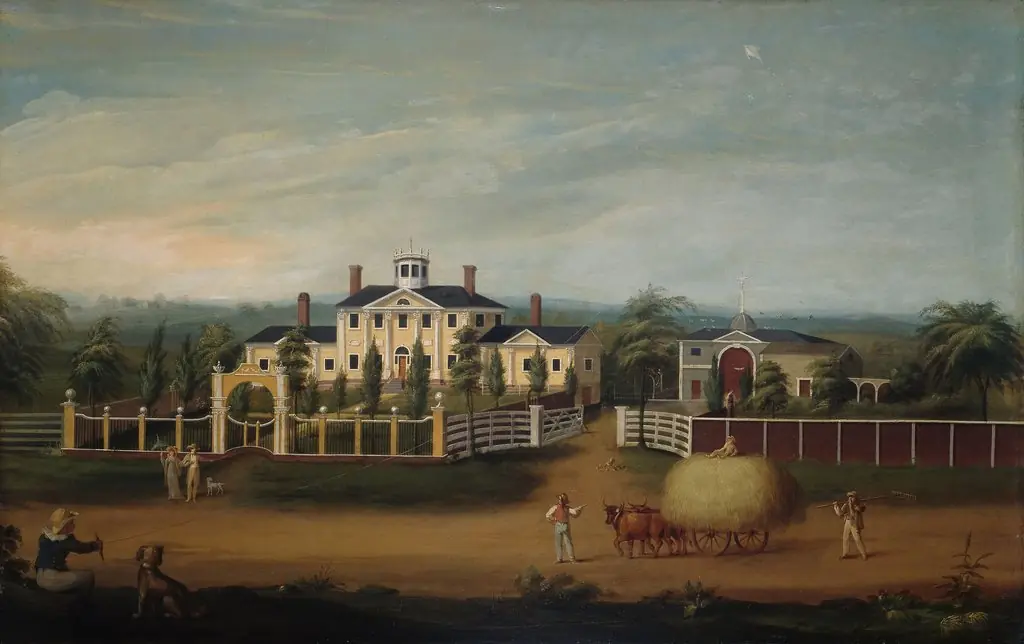 New England Country Seat
- Houses on the Fox River, Illinois