Artwork
Death of the Virgin
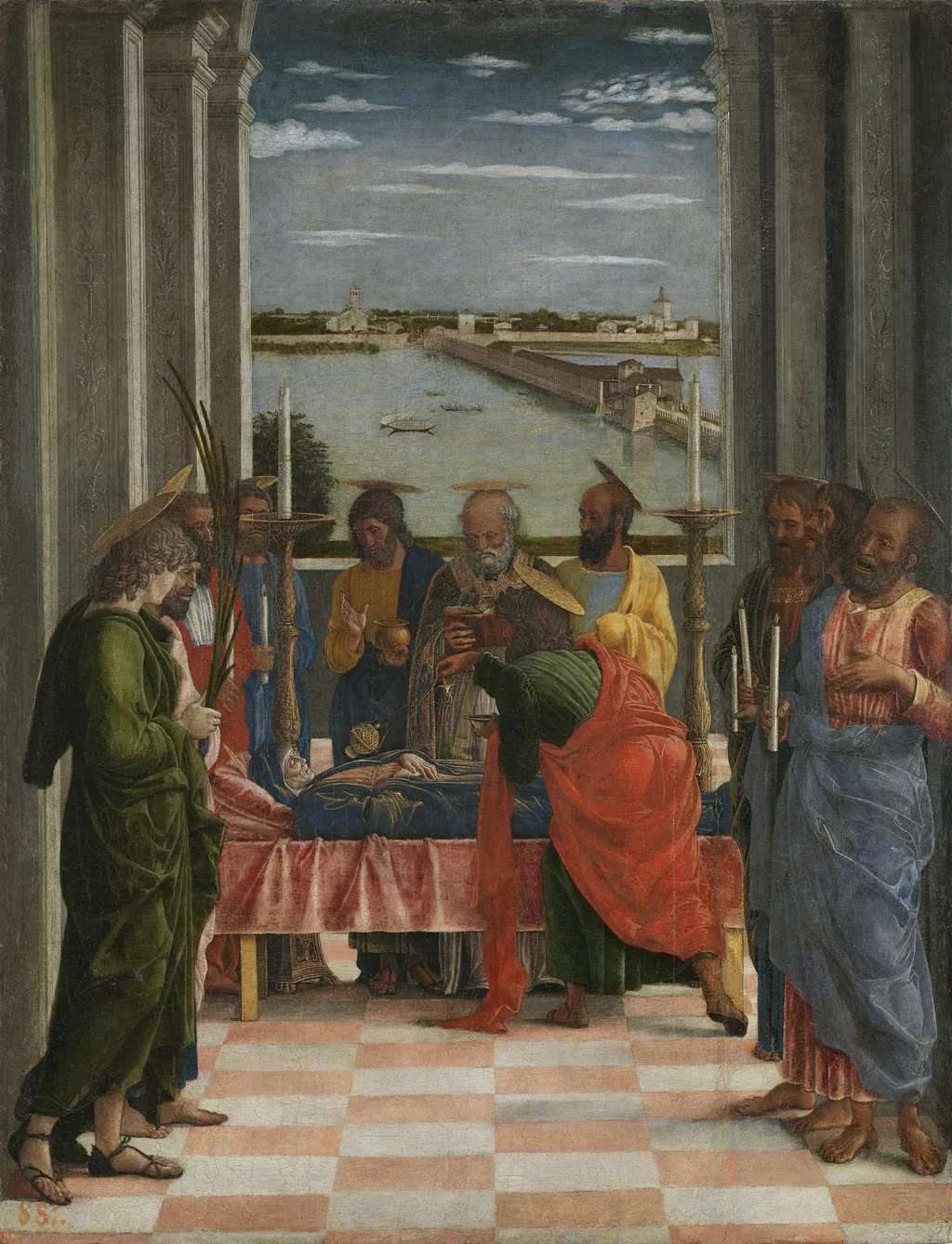
Death of the Virgin is a tempera painting by the Early Renaissance artist Andrea Mantegna. It dates from 1462 and is held in the collection of the Museo del Prado.
About this work
Subject & Meaning
Halos are rendered as elliptical, foreshortened discs consistent with Renaissance perspective rather than the flat gold disks of Byzantine and Gothic art.
The painting depicts the death of the Virgin Mary, known in Christian iconography as the "Transit of the Virgin," a subject drawn from apocryphal gospels and elaborated in Jacobus de Voragine's Golden Legend. Mantegna treats the theme with restrained originality, omitting miraculous accents in favor of a sober, domestic setting. The Virgin lies on a bier at the center of a Renaissance hall framed by pilasters and a checkered marble pavement, while eleven apostles gather around her, eleven rather than twelve because, according to tradition, Thomas was absent, evangelizing distant lands. The apostles carry liturgical funerary attributes: candles, palms, a book of scripture, an ointment jar, and a censer swung by a forward-leaning figure (likely John). Peter reads from the Scriptures. Halos are rendered as elliptical, foreshortened discs consistent with Renaissance perspective rather than the flat gold disks of Byzantine and Gothic art. Red, a color symbolizing divine love and the honor of apostles, evangelists, and martyrs, appears prominently. The composition originally extended upward to include Christ receiving the Virgin's soul, a fragment now in Ferrara, completing the transition from earthly death to heavenly assumption.
Technique & Style
Executed circa 1462, this work is a tempera and gold painting on a wooden panel measuring 54.5 by 42 cm. The composition demonstrates Mantegna's mastery of linear perspective, utilizing a checkered marble floor to guide the viewer's eye toward the Virgin's bier and a background landscape depicting the Castello di San Giorgio in Mantua. Stylistically, the artist replaces traditional circular halos with elliptical forms that adhere to the scene's spatial logic, while the apostles' heavy drapery possesses a sculptural, marble-like quality. Illumination originates from the right rather than the background window, highlighting the metallic sheen of liturgical objects and the naturalistic gestures of the figures. The panel's upper section was removed, leaving the pilasters unfinished; the missing fragment showing Christ receiving the Virgin's soul is now held separately in Ferrara.
History & Provenance
Andrea Mantegna painted *Death of the Virgin* in tempera on panel between 1457 and 1462, originally commissioned by Ludovico III Gonzaga for the private chapel of the Castello di San Giorgio in Mantua. The work was part of a larger decorative scheme that included the *Uffizi Triptych* and a detached upper panel depicting Christ with the Virgin's soul, now held in Ferrara. Following the chapel's 16th-century restructuring, the painting was transferred to Ferrara, appearing in the 1588 inventory of Margherita Gonzaga's collection. It was subsequently acquired by King Charles I of England from the Gonzaga family in 1627. After Charles I's execution in 1649, the work was purchased in early 1650 by the Flemish dealer Jan Baptist Gaspars for 17 pounds and 10 shillings. Spanish ambassador Alonso de Cárdenas then secured the piece for King Philip IV of Spain. The painting entered the Museo del Prado in Madrid in 1829, where it remains today.
The work is held in the Museo del Prado, Madrid, inventoried as
"Tránsito de la Virgen" (accession P003057).
It was originally commissioned by Ludovico III Gonzaga for the private chapel in the Castello di San Giorgio, Mantua, and formed part of a larger decorative scheme that included panels now dispersed to the Uffizi (Florence) and the Pinacoteca Nazionale (Ferrara).
It was purchased in 1627 from the Gonzaga by Charles I of England and later acquired in 1650 by Philip IV of Spain. The painting entered the Prado in 1829.
It was exhibited in the 1992 Mantegna retrospective at the Royal Academy of Arts, London.
Context
Completed around 1462 for the private chapel of Ludovico III Gonzaga in Mantua's Castello di San Giorgio, this tempera panel represents Andrea Mantegna's first official commission as court painter. The work originally formed part of a larger decorative scheme that included the Uffizi Triptych, though the chapel was later dismantled and the paintings dispersed. Art historian Roberto Longhi first reconstructed the painting's original vertical format, identifying a separate panel in Ferrara depicting Christ receiving the Virgin's soul as the missing upper section.
Scholars characterize the composition as a departure from miraculous iconography, favoring a solemn, architectural setting grounded in linear perspective. The background landscape realistically depicts the Bridge of San Giorgio and Lake Mezzo, anchoring the sacred event in the specific geography of Mantua. Following a restoration in 1990, the painting was featured in a major 1992 retrospective at the Royal Academy of Arts, where it was hailed as a sublime masterpiece of the Early Renaissance.
Legacy
Although the original upper section of the painting was likely detached, art historian Roberto Longhi reconstructed its appearance and hypothesized it served as a fourth panel to the Uffizi Triptych. The work is widely regarded as one of Andrea Mantegna's most significant pieces, with the 1992 exhibition catalogue for his retrospective at the Royal Academy of Arts in London describing it as "sublime" and ranking it among the most important paintings of the entire Renaissance. In 2008, the Louvre temporarily reunited the main panel with the detached fragment depicting Christ bearing the Virgin's soul, which is held in Ferrara, allowing viewers to appreciate the composition's original scope. The painting's legacy is further defined by its role in demonstrating Mantegna's synthesis of rigorous perspective, classical architecture, and vivid realism, influencing the trajectory of Northern Italian Renaissance art.
Own this work as a print
Artist & collection
Artist
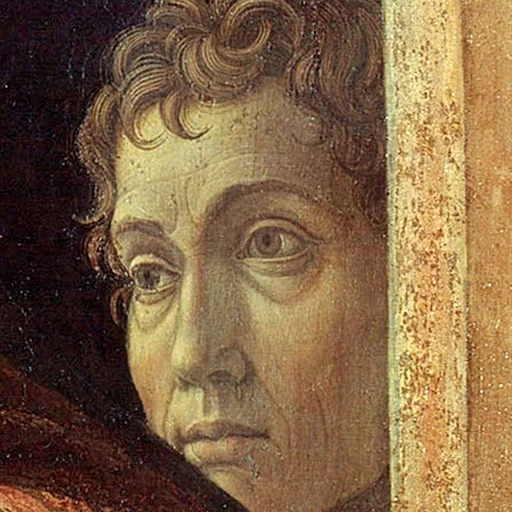
Andrea Mantegna (UK: US:; Italian:; c. 1431 – September 13, 1506) was an Italian Renaissance painter, a student of Roman archaeology, and the son-in-law of Jacopo Bellini. Like other artists of the time, Mantegna…

 Adoración de los Reyes Magos
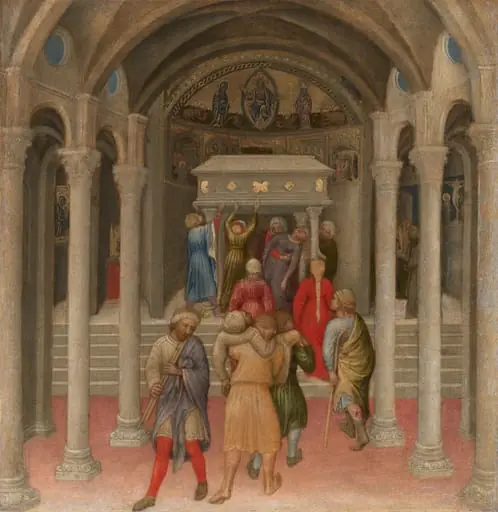 The Crippled and Sick Cured at the Tomb of Saint Nicholas
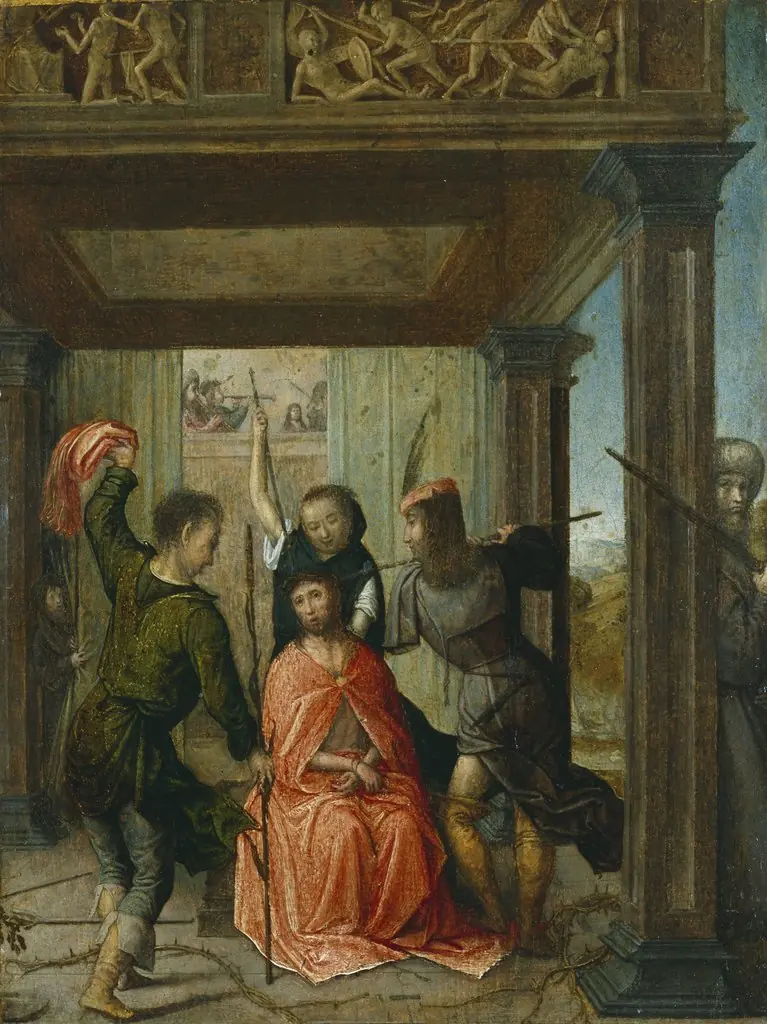 Christ Crowned with Thorns
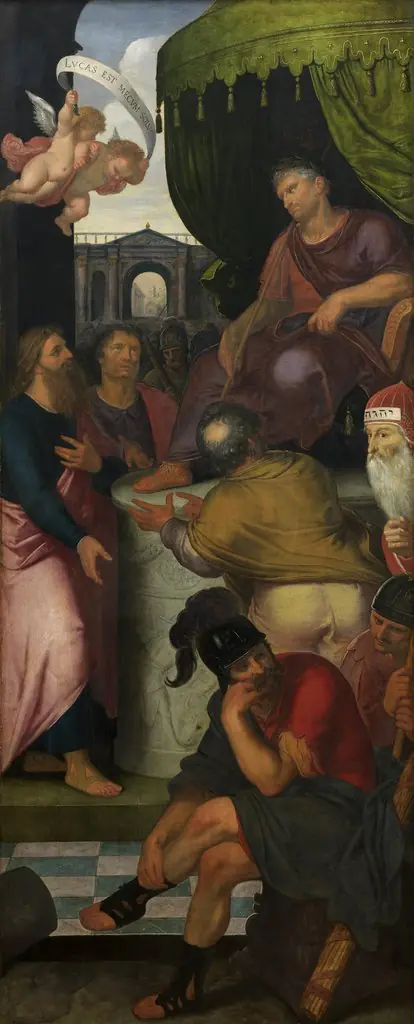 Saint Paul before proconsul Felix of Caesarea
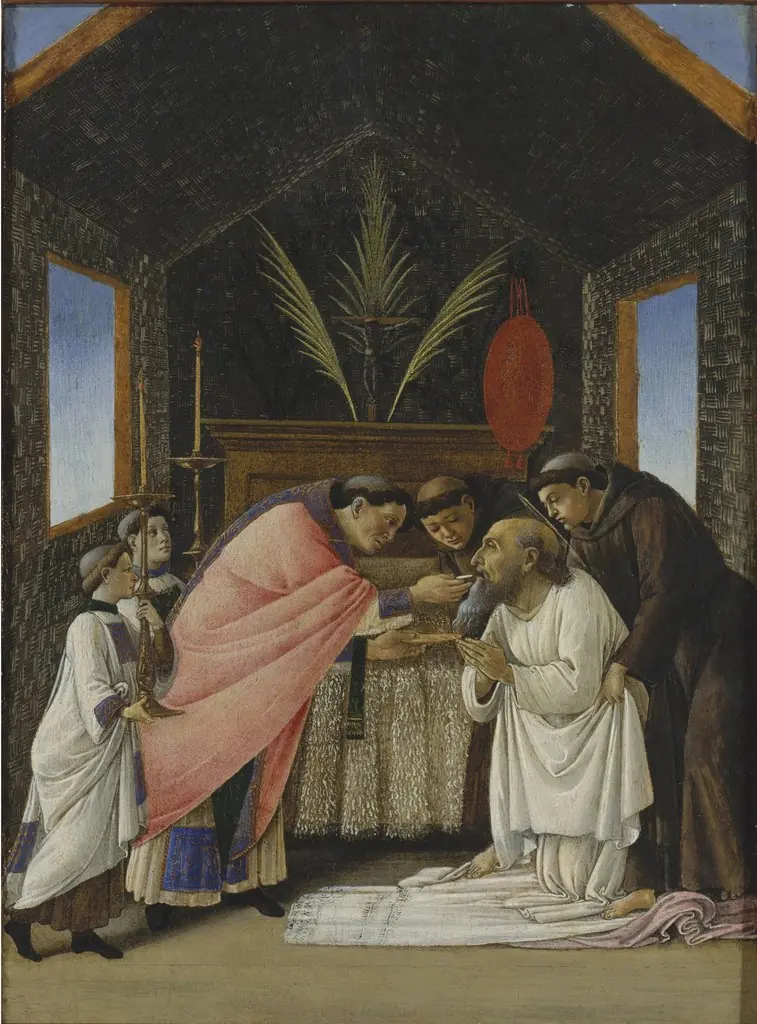 The Last Communion of Saint Jerome
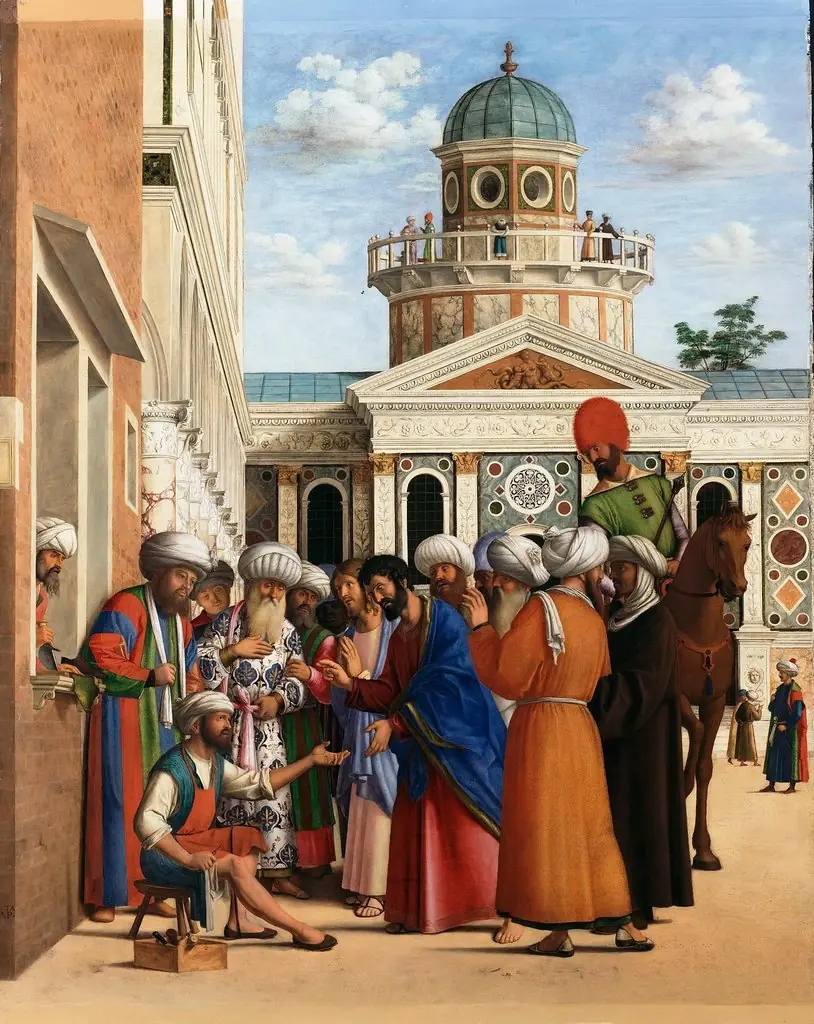 The Healing of Anianus
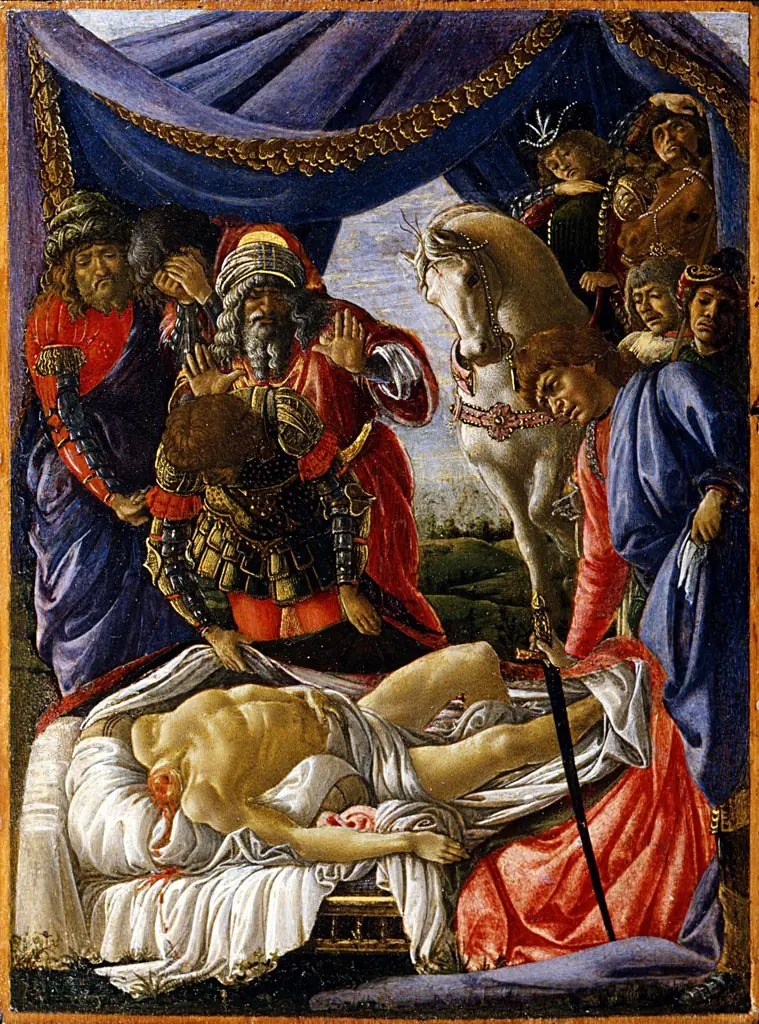 The Discovery of the Body of Holofernes
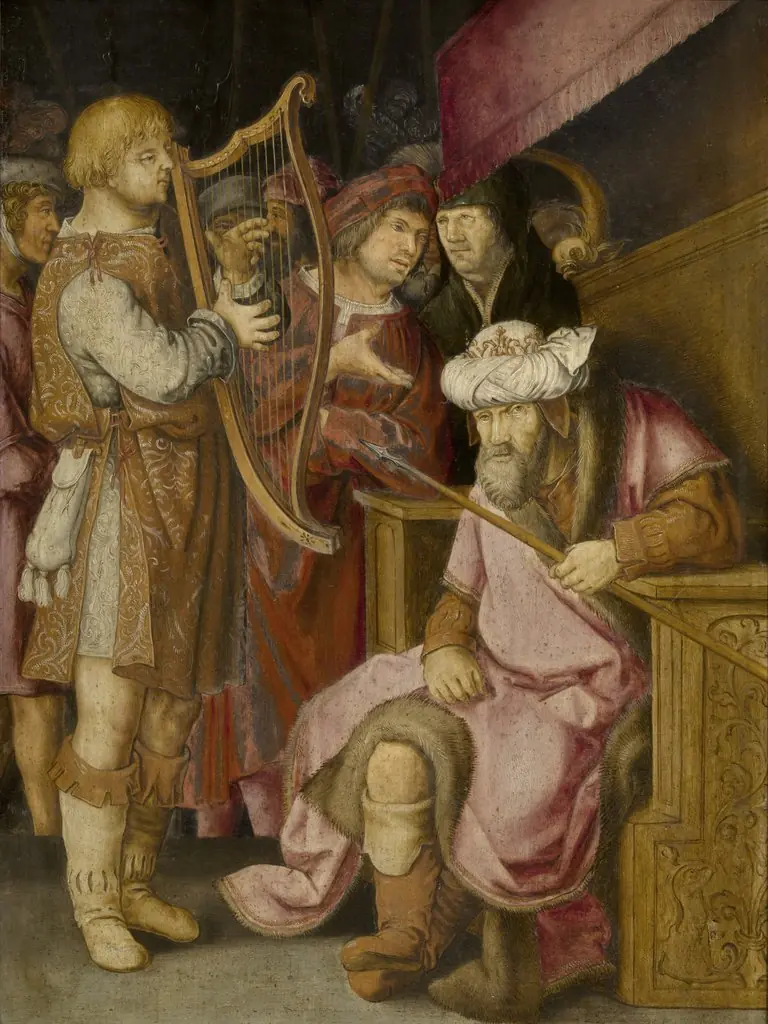 David Playing his Harp for Saul
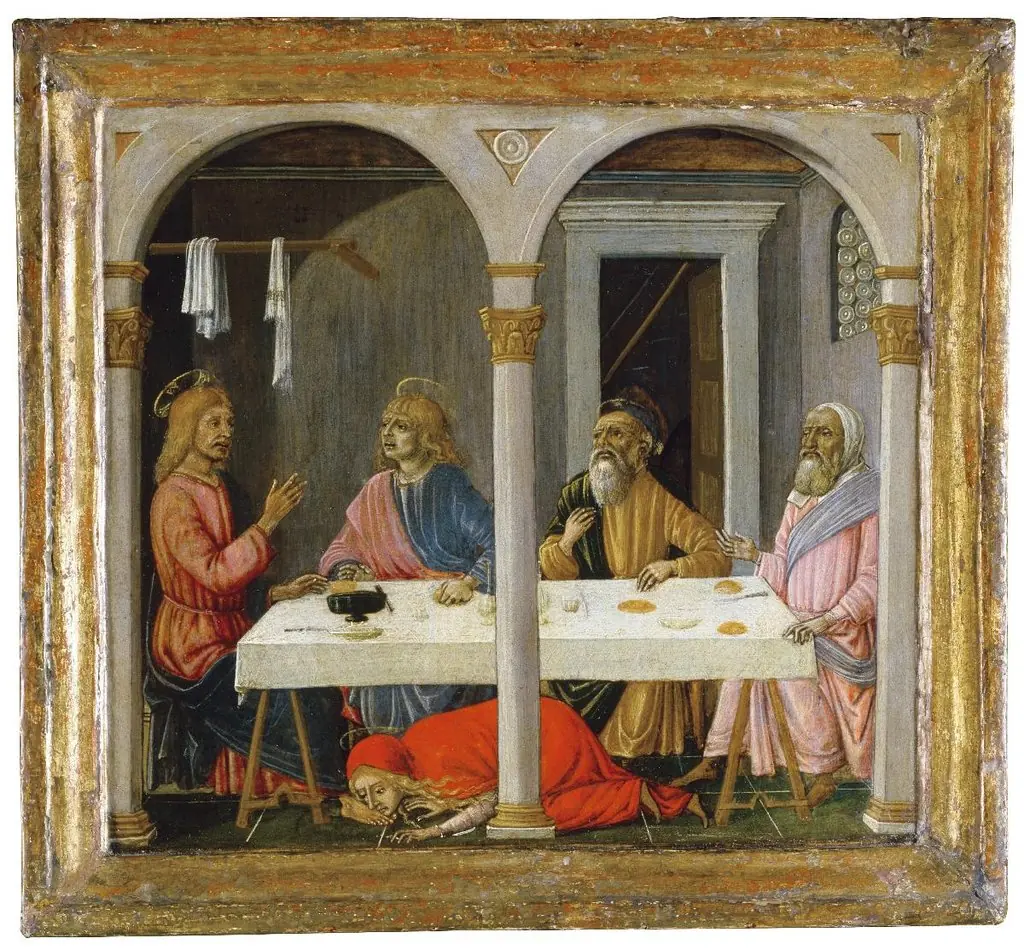 La cena in casa di Simone
 The Last Supper