Artwork
Rest on the Flight into Egypt
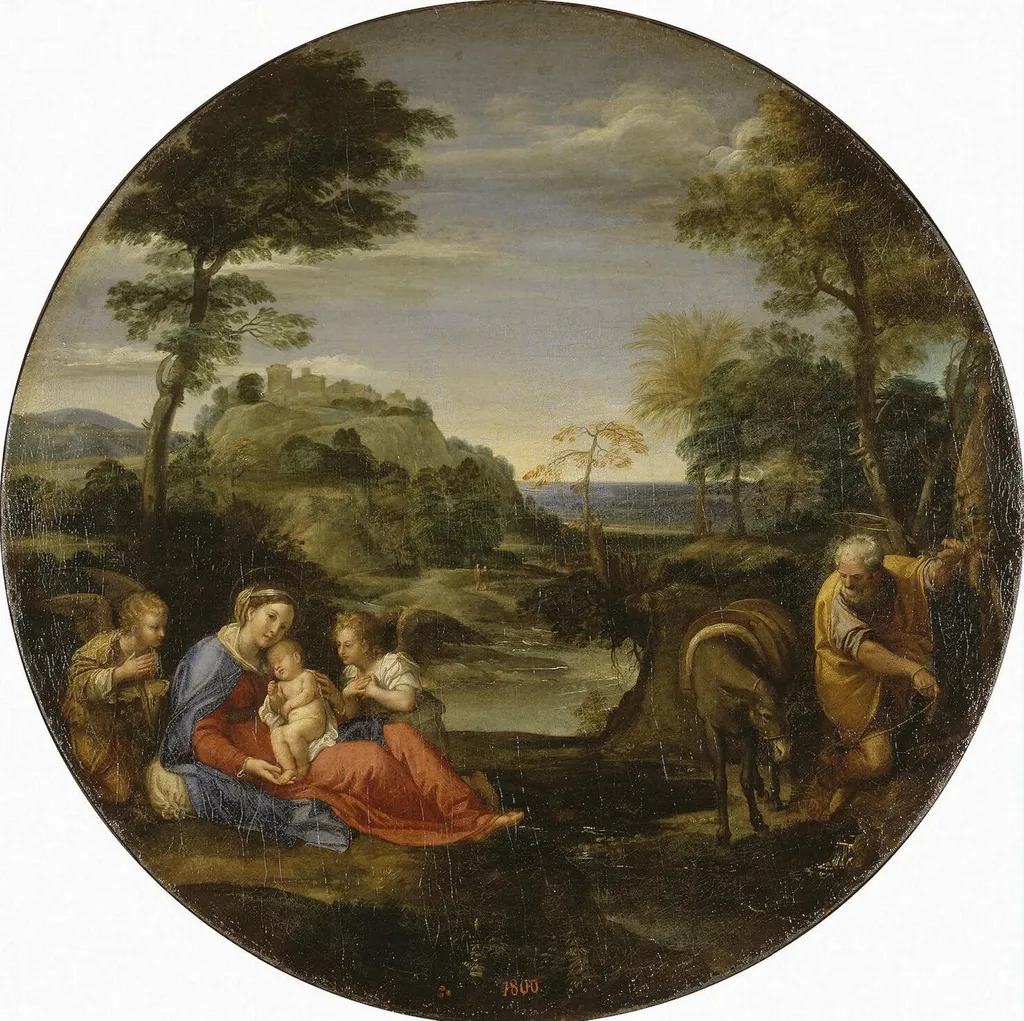
Rest on the Flight into Egypt is an oil painting by the Early Baroque Italian artist Annibale Carracci. It dates from 1604 and is held in the collection of the Hermitage Museum.
About this work
Overview
Rest on the Flight into Egypt is a circular tondo painting executed in oil on canvas around 1604 by the Italian Baroque artist Annibale Carracci.
Rest on the Flight into Egypt is a circular tondo painting executed in oil on canvas around 1604 by the Italian Baroque artist Annibale Carracci. Measuring 82.5 by 82.5 centimeters, the work is currently housed in the Hermitage Museum in Saint Petersburg, Russia, where it is displayed in Room 231 of the New Hermitage Palace as part of the Italian school collection. The painting counts among the foundational acquisitions of the Hermitage, having entered the collection through Catherine the Great, and it exemplifies Carracci's mature synthesis of naturalistic landscape and sacred narrative, a hallmark of the Bolognese reform of painting that he helped pioneer.
Subject & Meaning
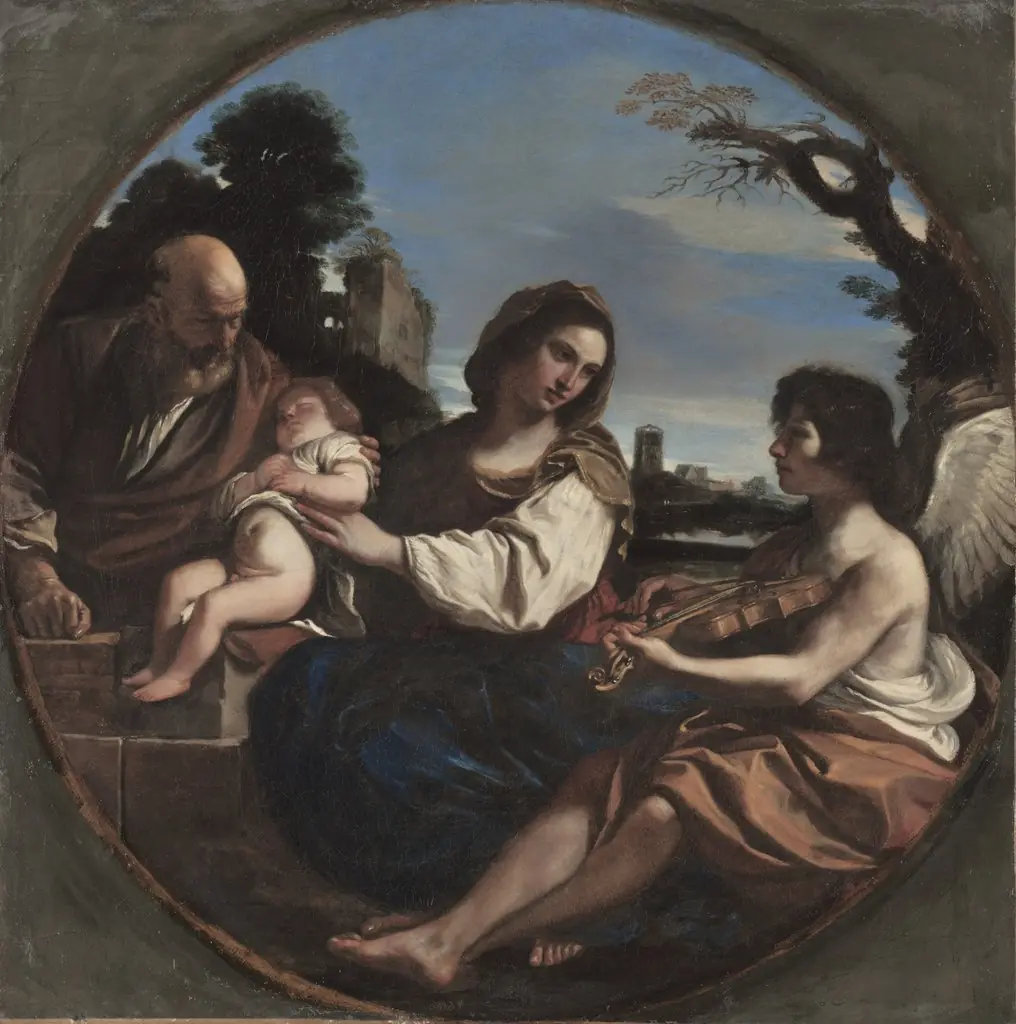
The painting depicts the biblical episode from the Gospel of Matthew (2:13-23), in which the Holy Family flees to Egypt to escape Herod's massacre of the innocents. At left, the Virgin Mary, clad in red and blue garments, holds the sleeping Christ Child on her lap; two small angels stand nearby, one with hands clasped. To the right, an elderly bearded Saint Joseph in yellow-brown robes kneels beside the donkey, holding its reins as the animal quenches its thirst. The apocryphal Gospel of Pseudo-Matthew (chapter XX) provides additional literary elaboration of this resting episode. The composition inverts the traditional hierarchy of figure and landscape: the sacred figures are subordinated to a sweeping natural setting of dense trees, a winding river, distant hills, and a fortified city visible on a mound. This integration of human narrative with an immersive, atmospheric landscape carries symbolic weight, the earthly rest prefiguring the redemptive mission of the Christ Child. Technical examination has revealed a significant revision: X-radiography shows that Carracci originally painted a male figure, probably Christ with angels in the desert, before overpainting it with the Madonna. This pentimento indicates an evolving conception of the work's sacred subject.
Technique & Style
The circular tondo format, executed in oil on canvas, measures 82.5 by 82.5 centimeters. The paint surface exhibits fine craquelure throughout, with smooth, blended brushwork characterizing the landscape passages and more defined handling in the figures. Soft, diffused light bathes the scene, creating gentle shadows across the earthy palette of greens, browns, deep reds, and muted blues beneath a cloudy sky. Carracci's technique demonstrates the naturalistic approach for which the Carracci academy was renowned: the landscape is rendered with atmospheric perspective, while the figures maintain classical solidity without the artificial elongation of mannerist precedent. The orange inscription "1800" at bottom center corresponds to the painting's entry number in the first manuscript catalogue of the Hermitage, begun in 1797, and is not part of the original painted surface. The overall effect is one of serene equilibrium between human drama and the encompassing natural world, a visual philosophy that Annibale Carracci and his Bolognese circle championed against the excesses of late mannerism.
History & Provenance
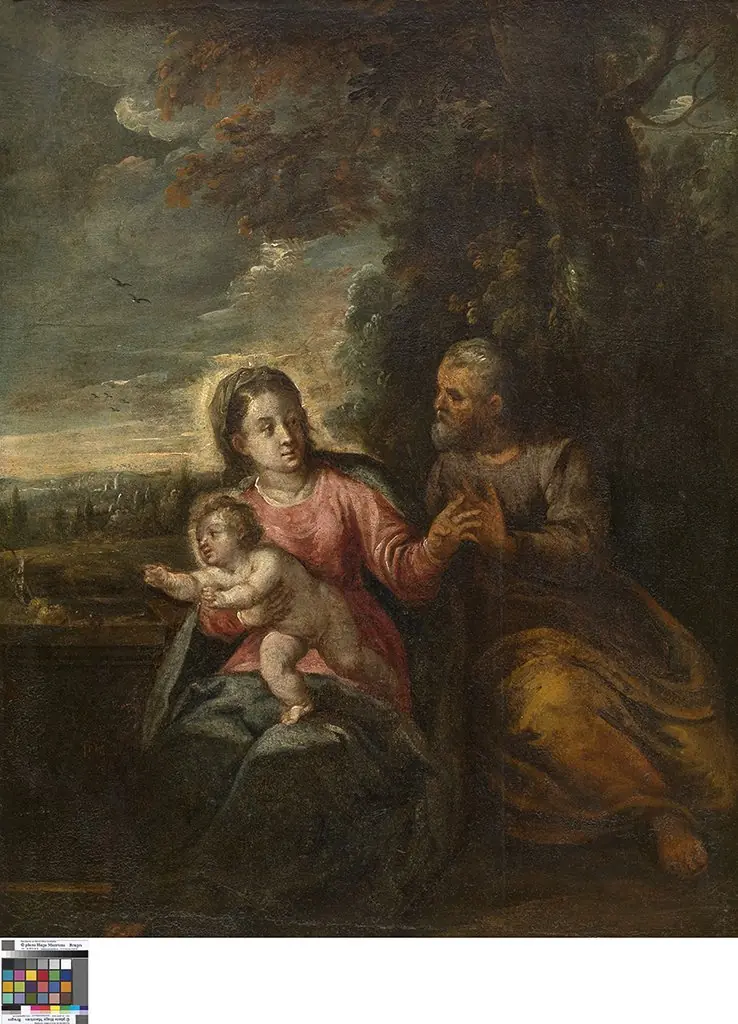
The painting's documented history begins in France, probably as part of Jacques Stella's collection, which was brought from Italy to Paris. By 1672 it was recorded in the collection of Abbot Deno de La Nu, and it likely also belonged to the La Mera family, whose coat of arms is superimposed over that of Francois de Poigli on the reverse of the canvas. In 1772 Pierre Crozat acquired the work, and it subsequently passed to Catherine the Great, Empress of Russia, entering what would become the Hermitage collection. The painting bears the inventory number 1800 from the earliest Hermitage catalogue. Today it remains in the Hermitage Museum, exhibited in Room 231 (Italy) of the New Hermitage Palace. The work's dissemination is attested by several copies: an anonymous seventeenth-century rectangular copy that passed through the Orleans Collection and the Duke of Sutherland to the Princeton University Art Museum; an early round copy in the Kunsthalle Bern; a rectangular copy sold at Christie's on 31 July 1956; and another round copy in a private American collection.
Context
Annibale Carracci, working in Rome during the pontificate of Paul V, stood at the center of a reform movement that sought to restore naturalism and classical balance to Italian painting. The Rest on the Flight into Egypt, dated to circa 1604, belongs to his Roman period, when he had already completed the celebrated ceiling frescoes of the Palazzo Farnese. The painting's subject matter, drawn from the popular Flight into Egypt narrative, allowed Carracci to explore the pastoral mode that would become influential in seventeenth-century Roman and Bolognese art. The work's critical significance lies in its demonstration that sacred narrative could be integrated with landscape without diminishing devotional impact. The X-radiographic discovery of the underlying male figure, probably Christ with angels in the desert, reveals Carracci's working method and suggests that the final composition emerged through revision rather than preconception. This technical finding has contributed to scholarly understanding of how Carracci adapted and redirected compositions during execution. The painting's presence in major French collections before its Russian acquisition also testifies to the international reputation of Carracci's work during the seventeenth and eighteenth centuries.
Legacy
The multiple copies of Rest on the Flight into Egypt, ranging from the seventeenth-century rectangular version now at Princeton to the round copy in Bern and others that appeared at auction and in private hands, attest to the composition's broad appeal and influence. The work's afterlife in reproduction reflects the appetite for Carracci's landscapes among collectors across Europe. Its acquisition by Catherine the Great positioned it as a foundational work of the Hermitage's Italian painting collection, where it continues to represent the achievements of the Bolognese school to international audiences. The painting's current display in the New Hermitage Palace maintains its public accessibility and scholarly visibility, while the technical investigations, particularly the X-radiographic revelation of Carracci's compositional change, continue to inform art historical understanding of his creative process. The work endures as a significant document of the Carracci reform: a demonstration that religious painting could achieve emotional resonance through naturalistic means without abandoning classical decorum.
Artist & collection
Artist
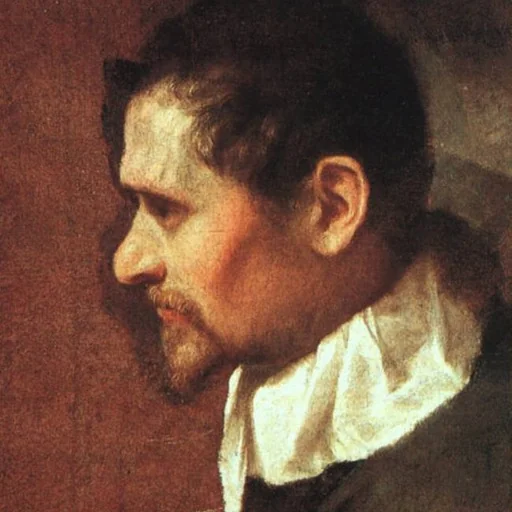
Annibale Carracci ( kə-RAH-chee, UK also kə-RATCH-ee, Italian:; November 3, 1560 – July 15, 1609) was an Italian painter and instructor, active in Bologna and later in Rome.

- Rest on the Flight into Egypt
 Rest on the Flight into Egypt
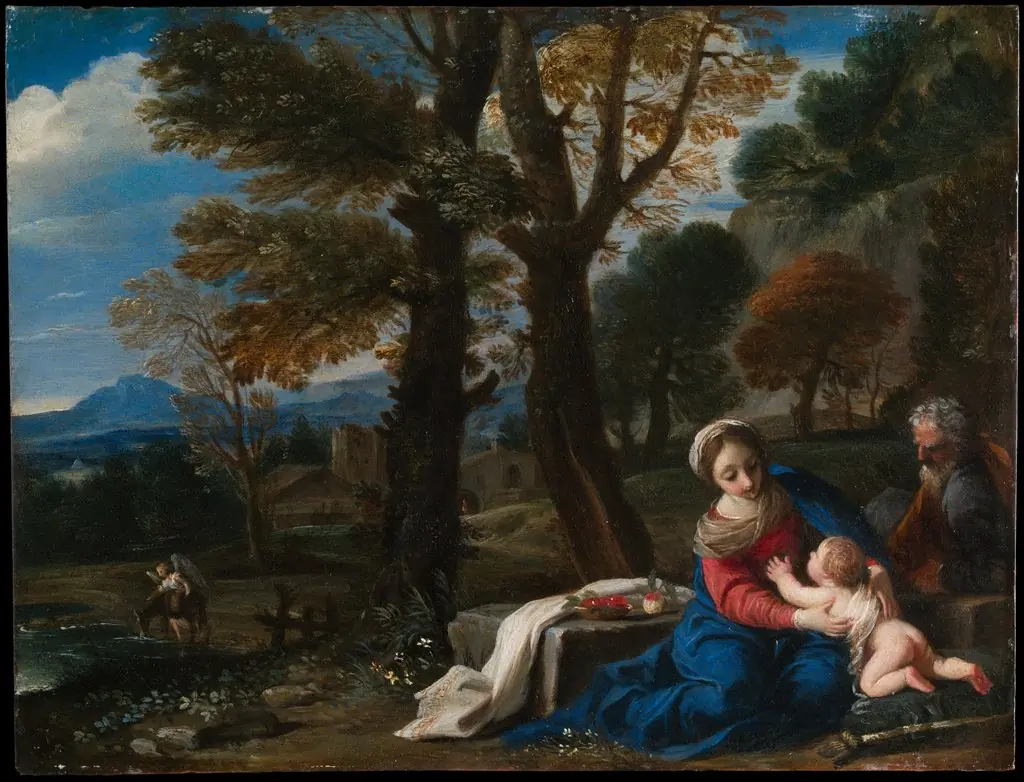 Rest on the Flight into Egypt
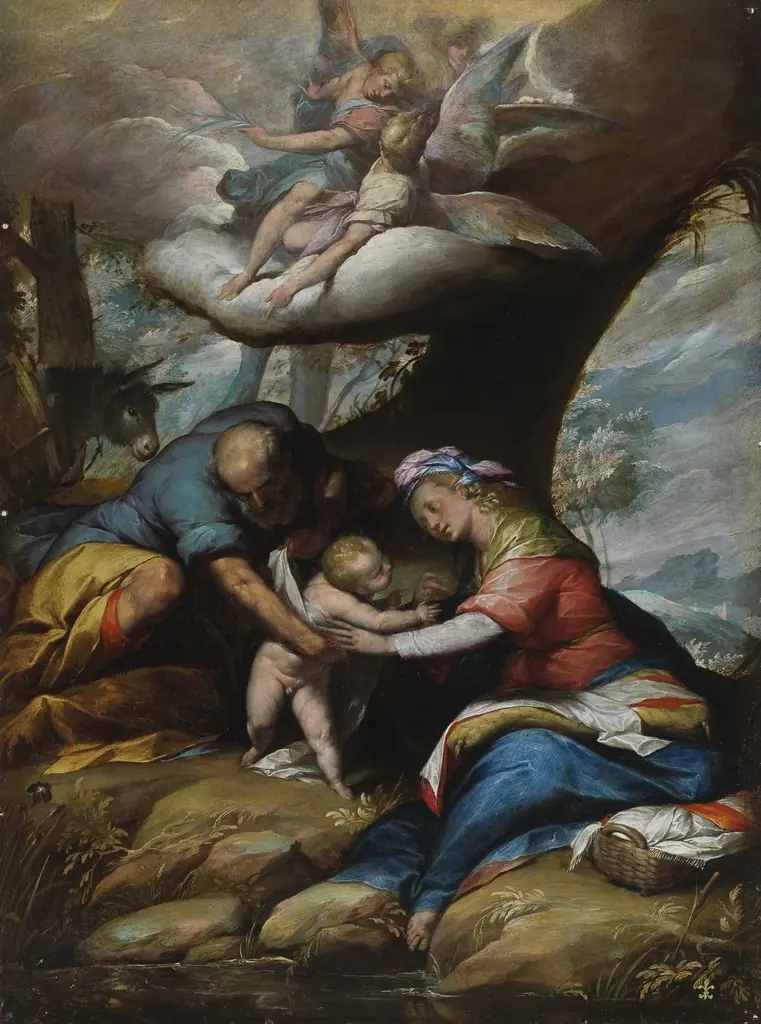 Rest on the Flight into Egypt
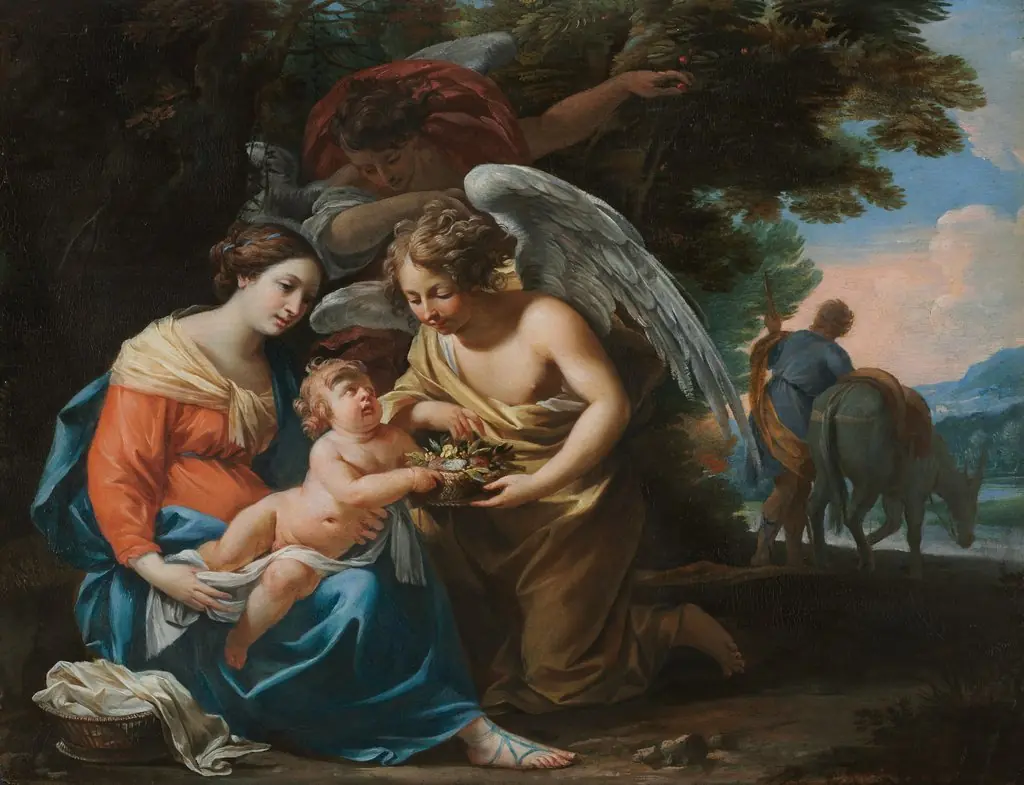 Rest on the Flight into Egypt
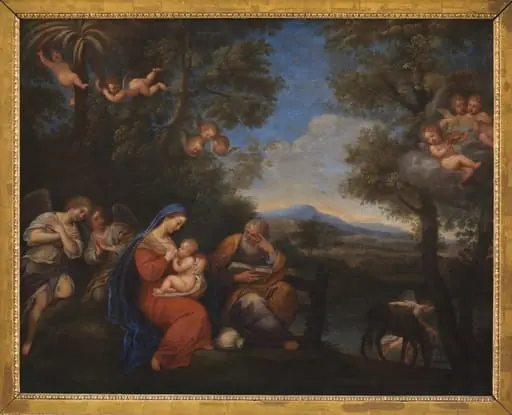 The Rest on the Flight into Egypt
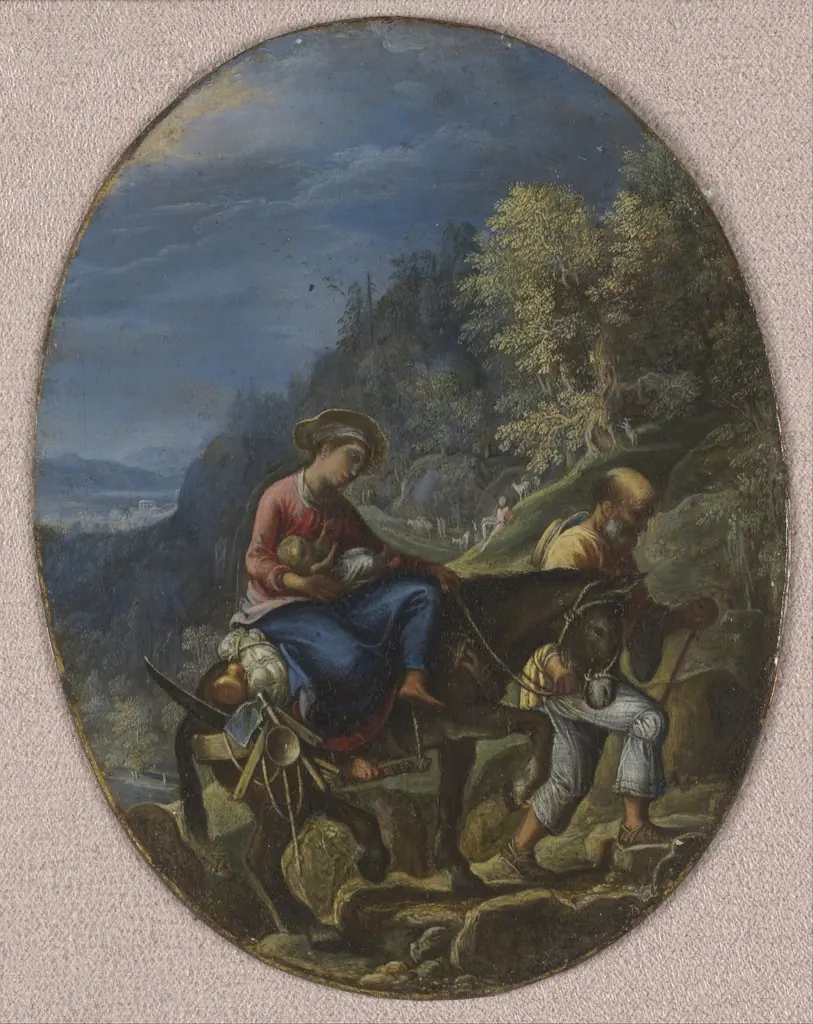 The Flight into Egypt
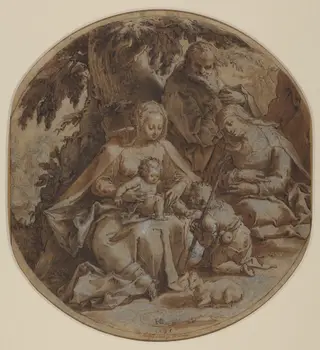 The Holy Family with Saint Elizabeth and Saint John the Baptist
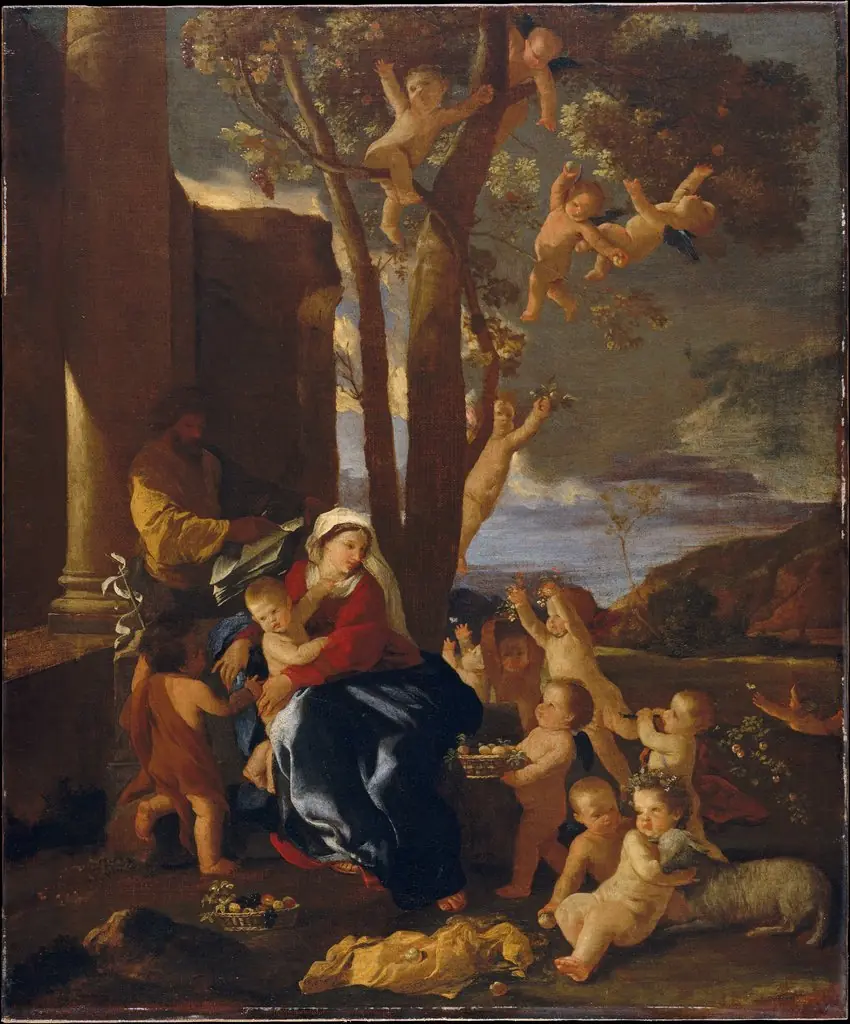 The Rest on the Flight into Egypt
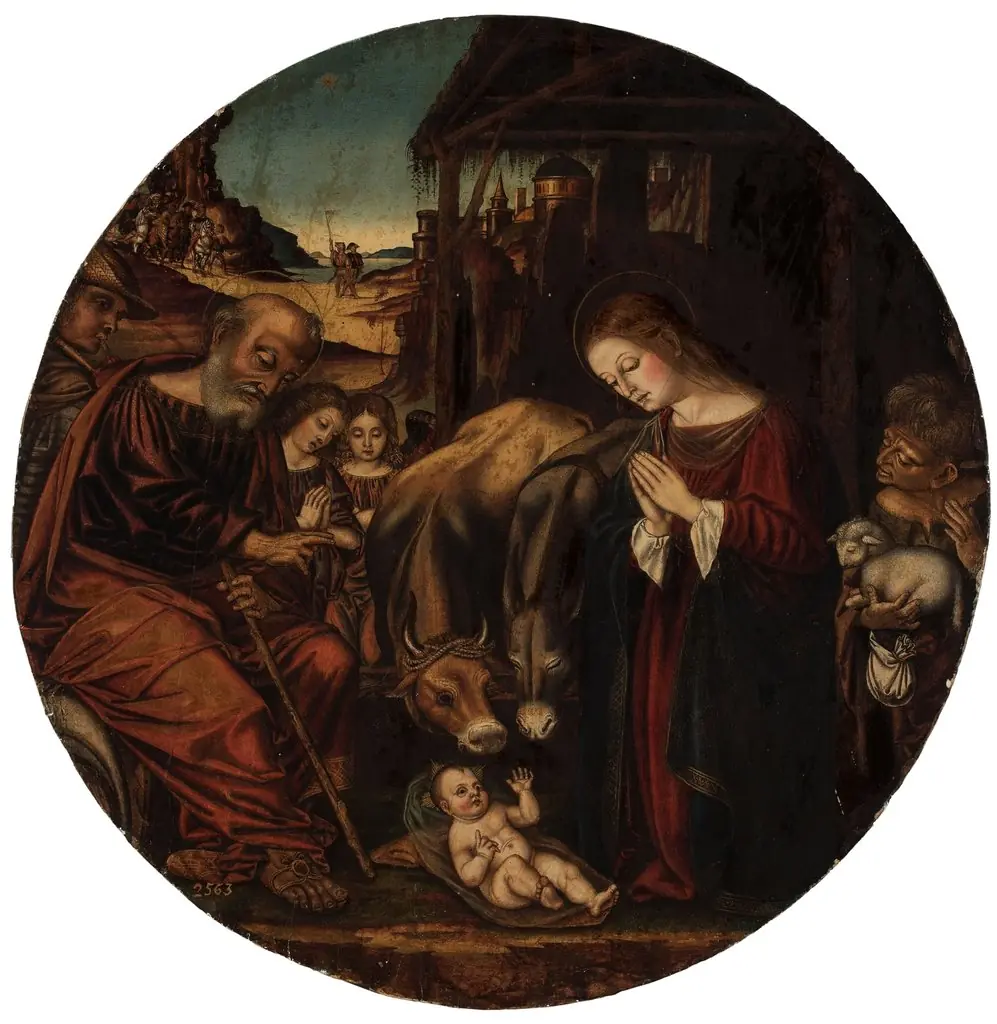 La Natividad
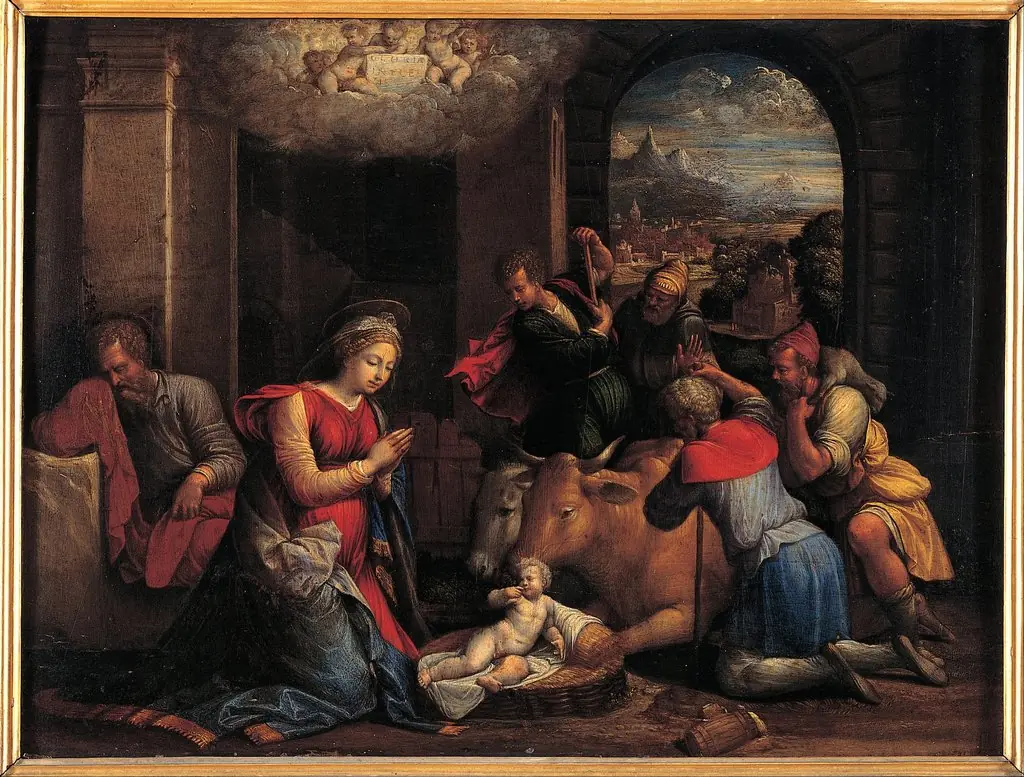 Adoration of the Shepherds
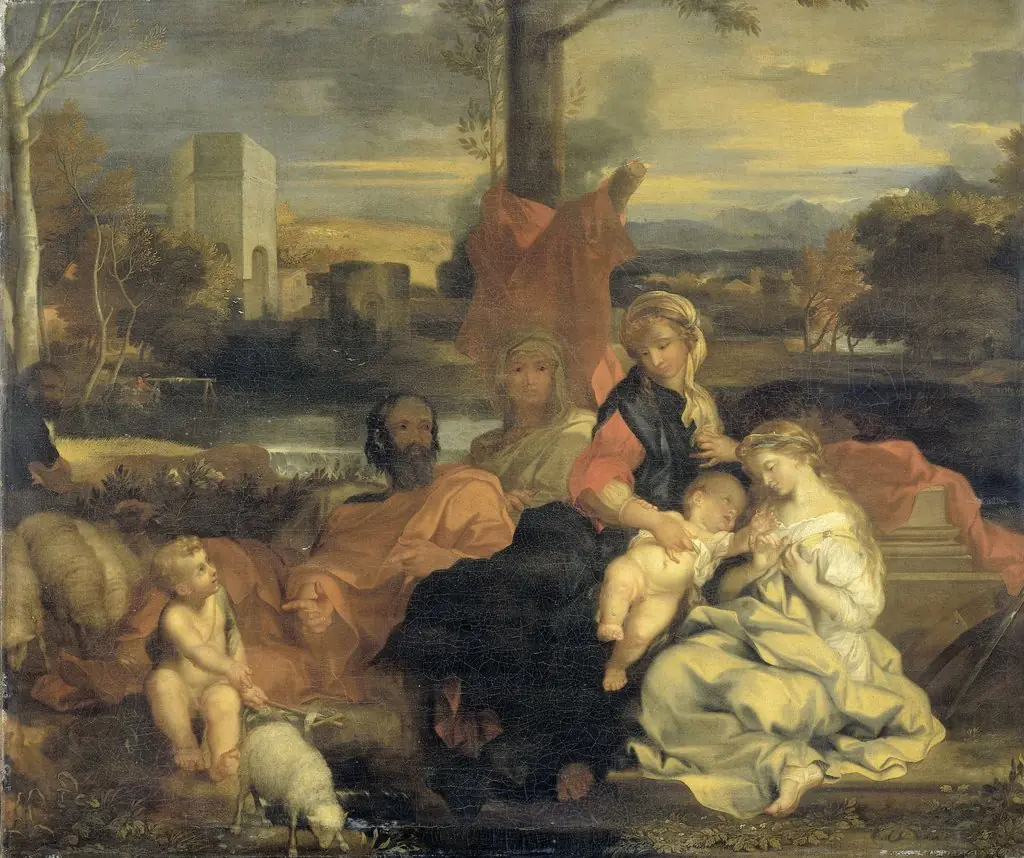 The Mystic Marriage of St Catherine