Artwork
Nymphs Feeding the Child Jupiter
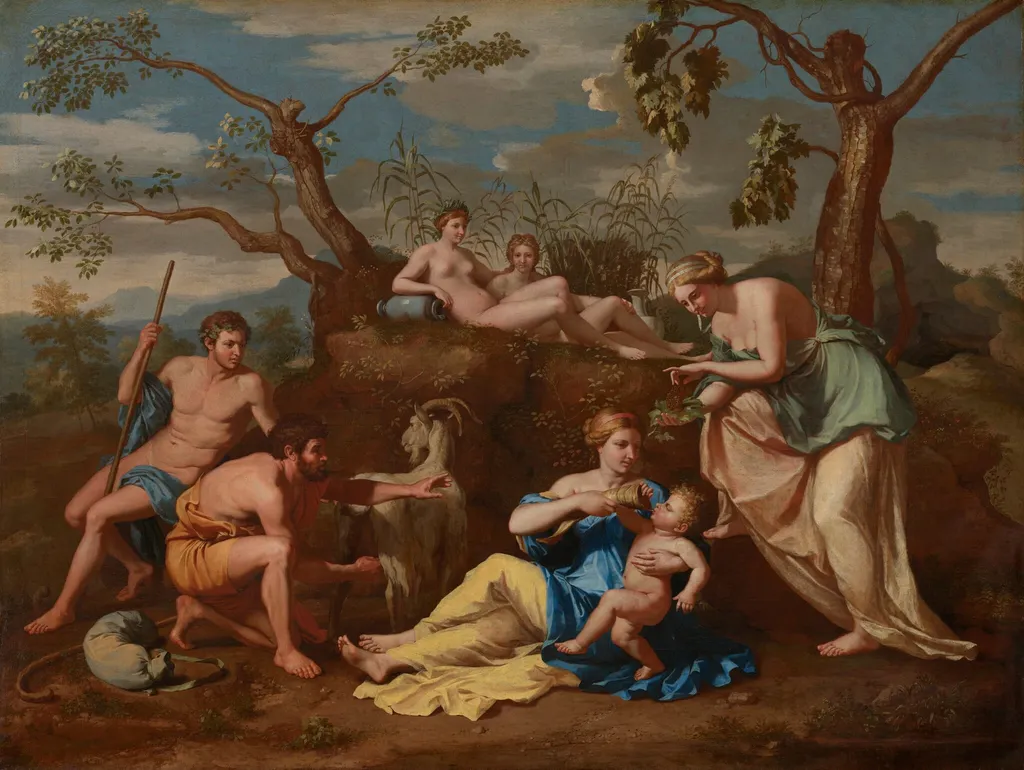
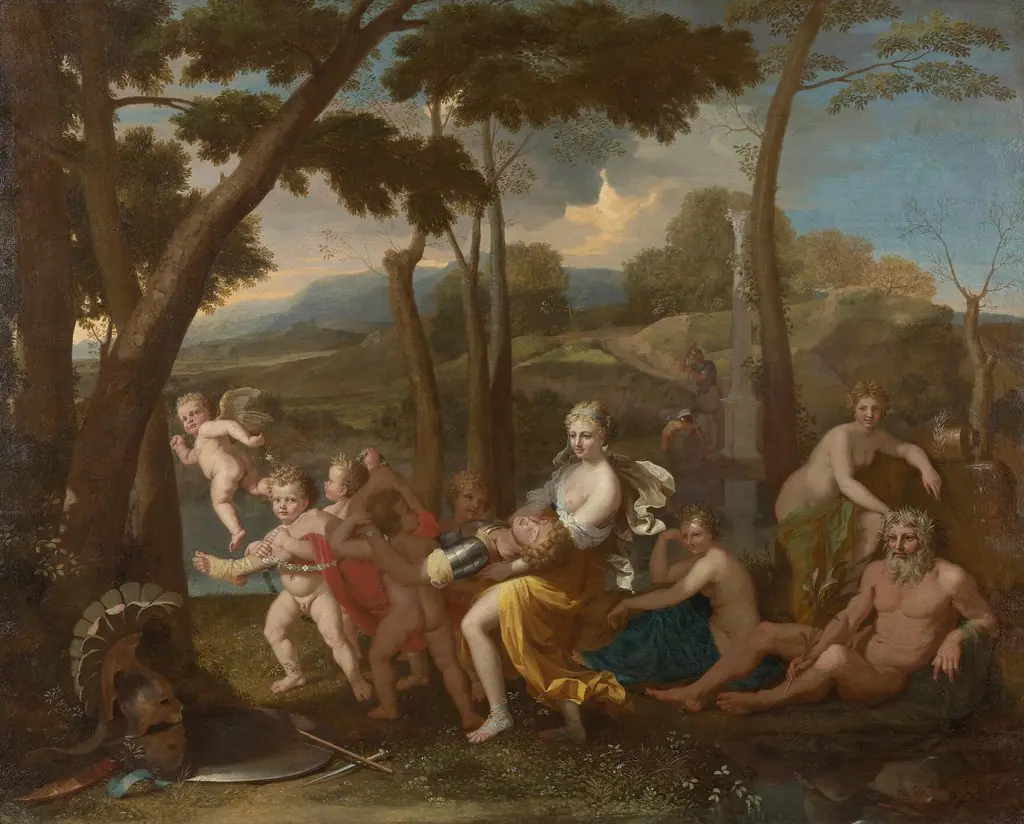
Nymphs Feeding the Child Jupiter is an oil painting by the Baroque artist Follower of Nicolas Poussin. It dates from 1650 and is held in the collection of the National Gallery of Art.
About this work
Technique & Style
No specific information about the painting's condition, conservation history, or detailed stylistic analysis is documented in the available sources.
The painting is executed in oil on canvas, measuring 117.4 × 155.3 cm. Its handling and formal qualities remain unattributed with certainty: while Wikidata associates the work with Nicolas Poussin, the artist is officially recorded as unknown. The mythological genre subject, nymphs nourishing the infant Jupiter, was a popular theme that allowed for pastoral landscape settings and idealized figure groupings typical of seventeenth-century French classical taste. No specific information about the painting's condition, conservation history, or detailed stylistic analysis is documented in the available sources.
History & Provenance
Created around 1650, this oil-on-canvas painting of mythological subject matter has been attributed to an unknown artist, though some records associate it with Nicolas Poussin. The work's documented history begins with Sir Robert Walpole, 1st Earl of Orford, who held it in the Dressing Room of 10 Downing Street by 1736. It subsequently passed through the Walpole family line to Horace Walpole and later to the Waldegrave family at Strawberry Hill.
During the estate sale at Strawberry Hill in May 1842, the painting was cataloged as The Education of Jupiter and sold to Sir John Easthope. By the 20th century, it was in the possession of Major Cecil Uvedale Corbett before being acquired by Wildenstein and Co. in 1947. That same year, the Samuel H. Kress Foundation purchased the piece, which was then gifted to the National Gallery of Art in Washington, D.C., in 1952.
Nymphs Feeding the Child Jupiter is housed in the National Gallery of Art, Washington, D.C. The painting was acquired in 1952 as a gift from the Samuel H. Kress Foundation, having entered the collection via Wildenstein and Co. after its 1947 sale. Its earlier ownership includes Sir Robert Walpole, who listed it in his 1736 catalogue, the Walpole family, and the Corbett family of Stableford Hall. The work appears in the Kress Collection records, though an explicit accession number is not recorded in the sources. Exhibition history is not detailed in the provided documentation.
Legacy
The painting’s later reputation rests on its passage through distinguished British collections and its eventual entry into the Samuel H. Kress Foundation and the National Gallery of Art. After remaining in the Walpole family and being displayed at Strawberry Hill, it appeared in the 1842 Strawberry Hill sale, subsequently passing through the hands of Sir John Easthope, the Doyle family, and the Corbett lineage before being acquired by Wildenstein in 1947. The same year the Kress Foundation purchased the work, and in 1952 it was gifted to the NGA, where it remains part of the Samuel H. Kress Collection of Old Master paintings.
Overview
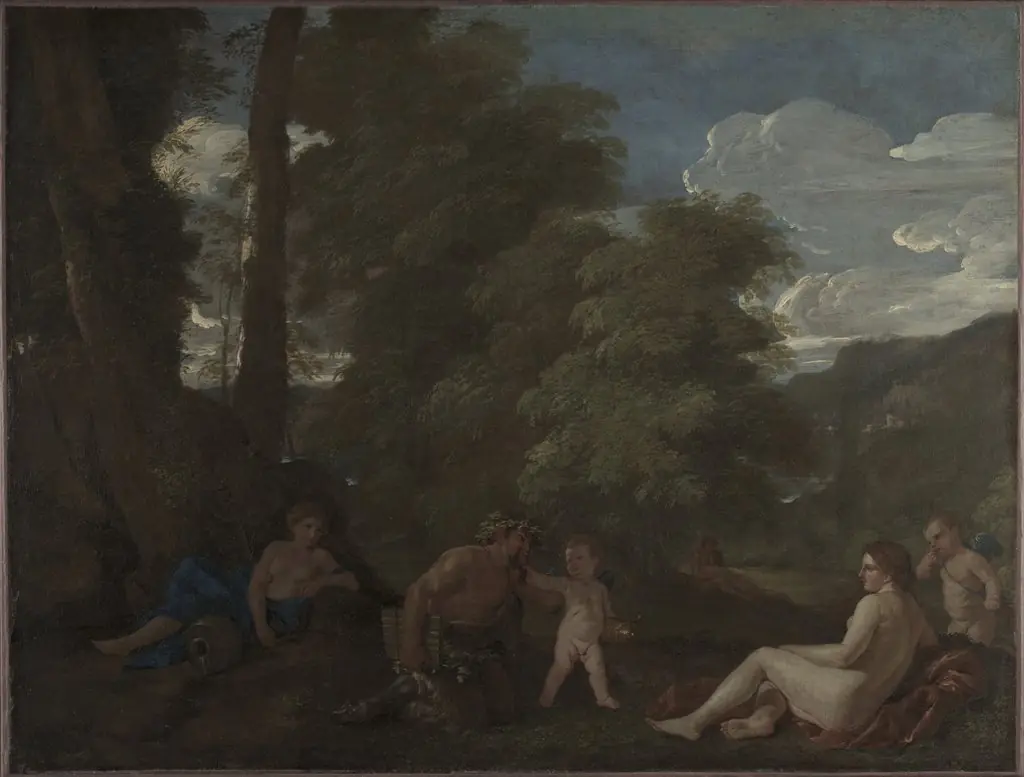
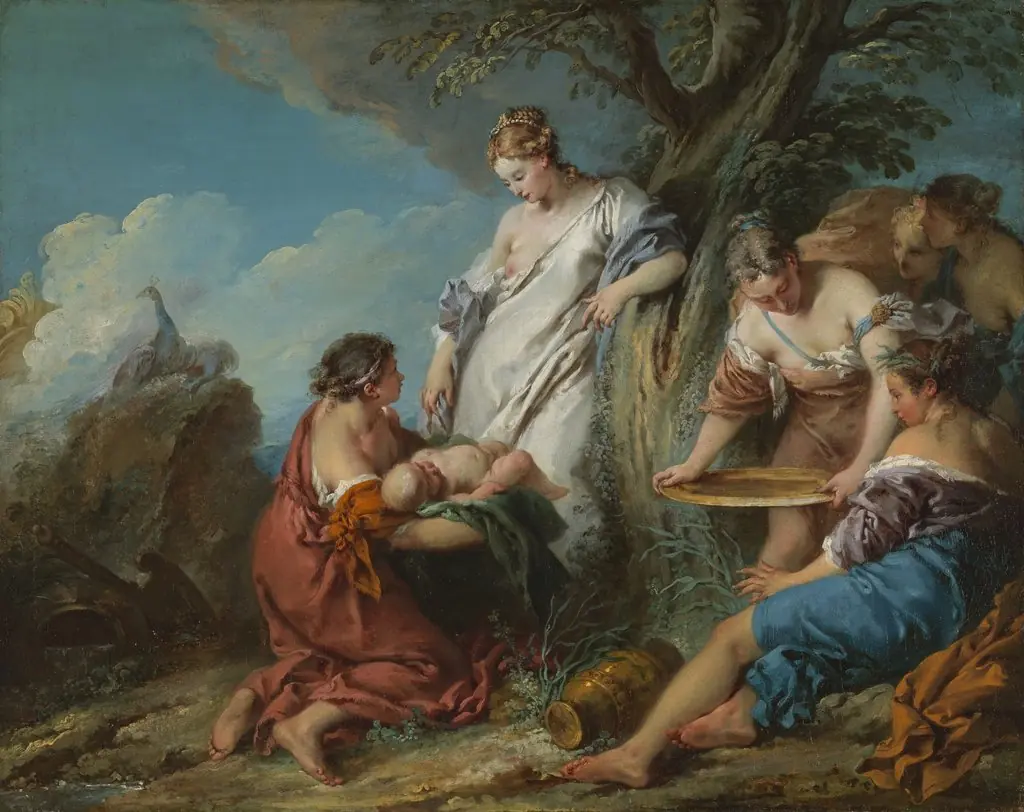
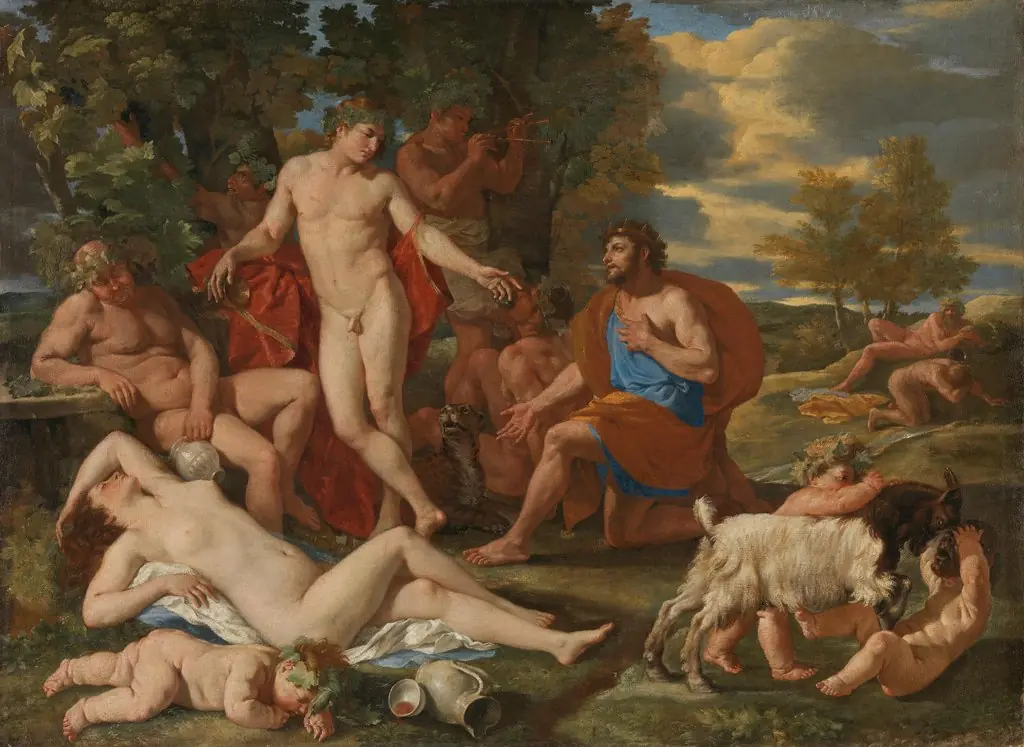
This oil on canvas painting, titled "Nymphs Feeding the Child Jupiter," presents a tranquil outdoor scene. It depicts several figures gathered in a lush, natural environment under a cloudy sky. The composition conveys a sense of peace, with the central action focusing on the care of an infant. The presence of animals, including goats and a dog, further integrates the figures into their sylvan surroundings.
Subject & Meaning
The artwork illustrates a mythological narrative, specifically the nurturing of the infant Jupiter. In the foreground, a woman, likely a nymph, attends to the child, while other figures, including additional nymphs and male attendants, observe or assist. The scene evokes themes of protection and sustenance, drawing from classical mythology where nymphs were often depicted as guardians of nature and divine beings in their infancy.
Artist & collection
Artist