Artwork
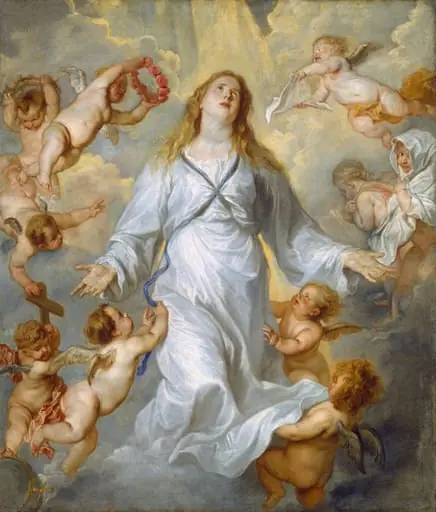
Ascension of Saint Rosalie
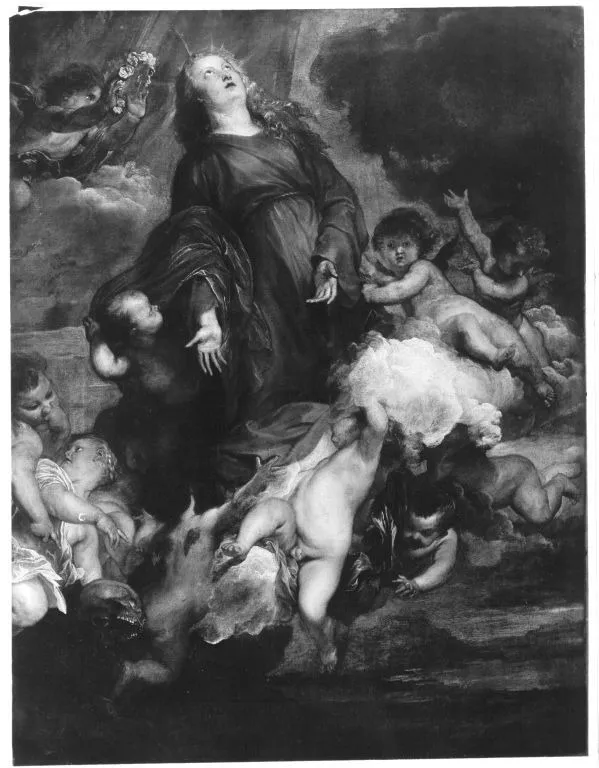
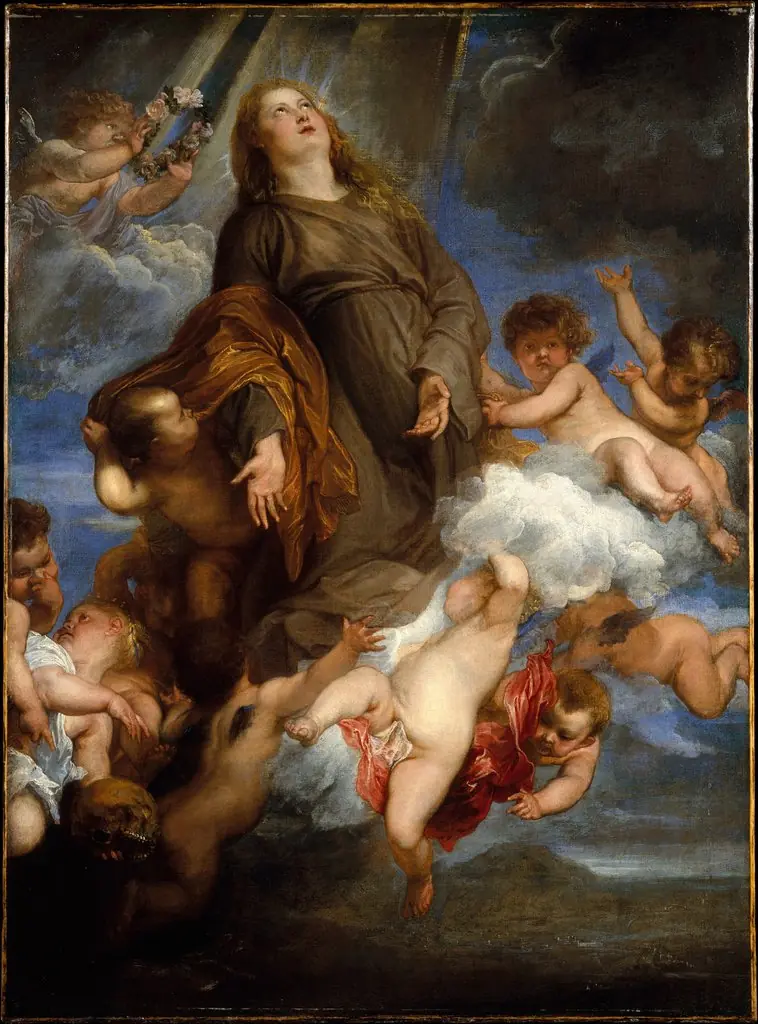
Ascension of Saint Rosalie is an oil painting by the Flemish Baroque painting artist Anthony van Dyck. It dates from 1620 and is held in the collection of the Bavarian State Painting Collections.
About this work
Subject & Meaning
Her attributes, a crown of roses and a skull, symbolize martyrdom and the transience of life, reinforcing the painting’s devotional purpose.
The painting shows Saint Rosalia raising her hand in prayer as she intercedes for those suffering from plague, a scene drawn from the hagiographic tradition of Saint Rosalia of Palermo. Her gesture embodies both divine compassion and protective mediation, while the work functions as a devotional image within the religious art genre of the 17th century. The iconography aligns with the narrative of Saint Rosalia Interceding for the Plague-stricken of Palermo, emphasizing her role as a heavenly advocate during epidemic crises.
The composition reflects Counter-Reformation themes of communal salvation and spiritual refuge, with the saint positioned centrally to convey authority and hope. Her attributes, a crown of roses and a skull, symbolize martyrdom and the transience of life, reinforcing the painting’s devotional purpose. Created in 1620 for the Bavarian State Painting Collections, the work remains on display at the Alte Pinakothek, where it continues to serve as a visual meditation on faith amid crisis.
Technique & Style
Ascension of Saint Rosalie is an oil painting executed on canvas by Anthonis van Dyck in 1620. The work depicts Saint Rosalia interceding for plague-stricken inhabitants of Palermo, rendered in the religious genre characteristic of van Dyck's devotional output. It measures 114.9 cm in height by 87.9 cm in width and is housed in the Bavarian State Painting Collections at the Alte Pinakothek in Munich.
History & Provenance
The Ascension of Saint Rosalie was painted by Anthony van Dyck in 1620, as indicated by the work’s documented date and the artist’s attribution.
By the mid-18th century the painting was recorded in the collection of the Elector of Bavaria, where it remained until transferred to the Bavarian State Painting Collections. It was subsequently placed in the Alte Pinakothek, Munich, where it has been held continuously since at least the 19th century.
The commission and early provenance details prior to the Elector’s ownership are not specified in the available records.
Anthony van Dyck's oil painting, Ascension of Saint Rosalie, is held by the Bavarian State Painting Collections in Munich. The work is specifically located within the Alte Pinakothek museum. Created in 1620, this religious canvas depicts Saint Rosalia and measures 114.9 cm in height by 87.9 cm in width.
The provided sources do not contain specific inventory or accession numbers, nor do they list any exhibition history for the artwork.
Overview
Created in 1620, the oil painting titled Ascension of Saint Rosalie portrays a celestial ascent of a female saint. The composition centers on a robed figure rising upward, her arms extended toward the heavens, surrounded by floating cherubs and a lamb. The work is part of the Alte Pinakothek’s collection in Munich, representing an early example of van Dyck’s religious output.
Artist & collection
Artist
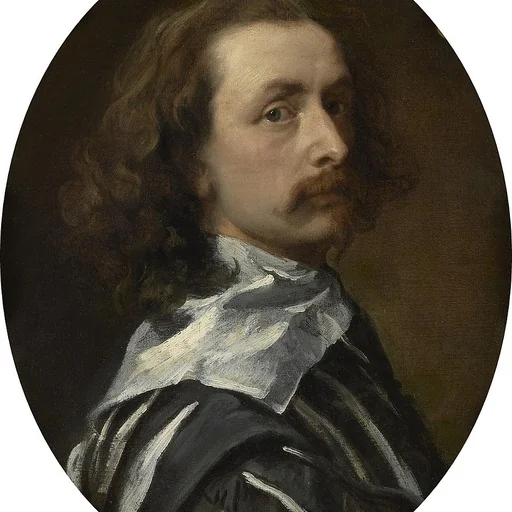
Sir Anthony van Dyck (; Dutch: Antoon van Dijck; 22 March 1599 – 9 December 1641) was a Flemish Baroque artist, who became the leading court painter in England after success in the Spanish Netherlands and Italy.

 Vermählung der hl. Katharina (Kopie nach)
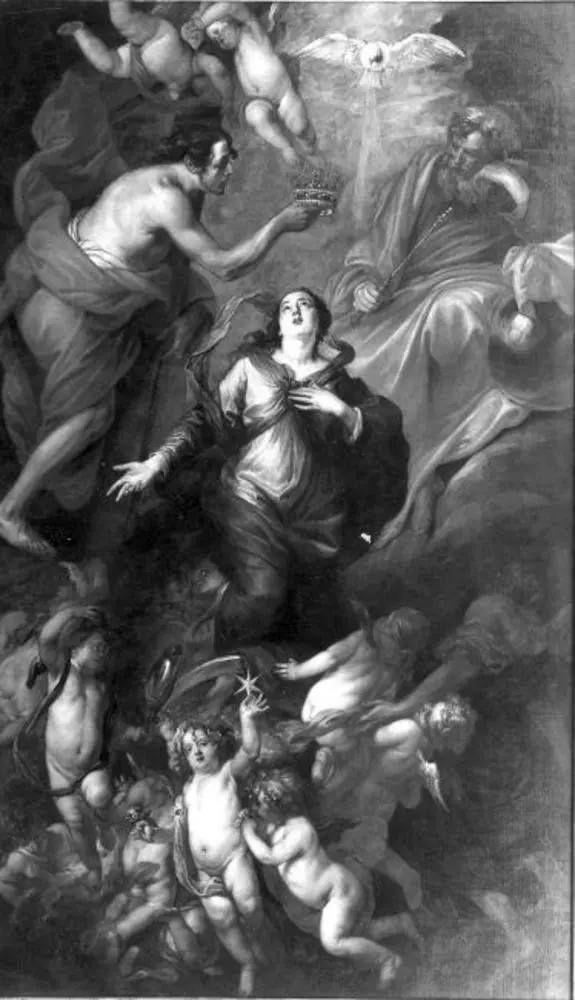 Coronation of Mary
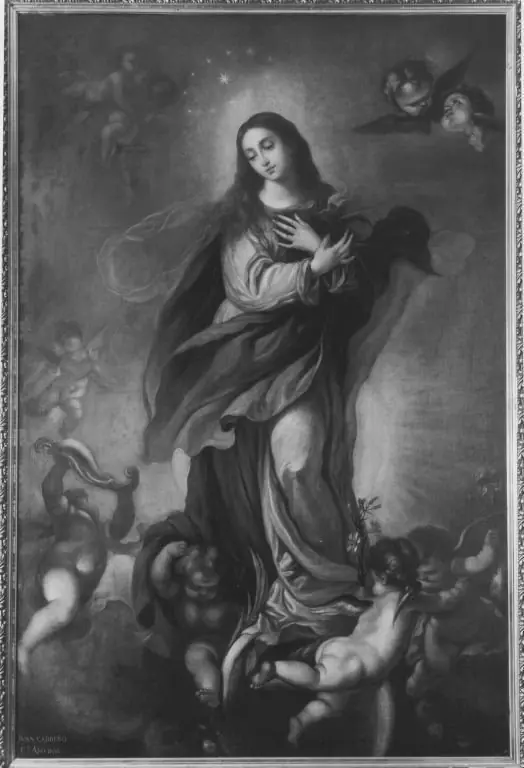 Maria, die unbefleckt Empfangene (und Werkstatt)
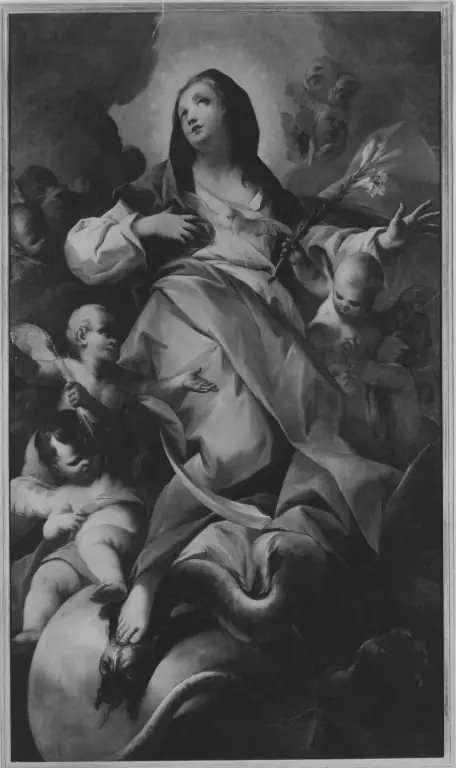 Unbefleckte Empfängnis
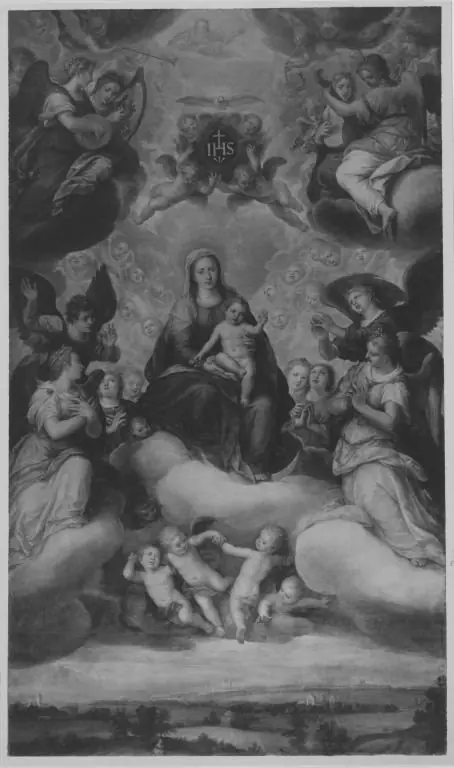 Maria in der Glorie
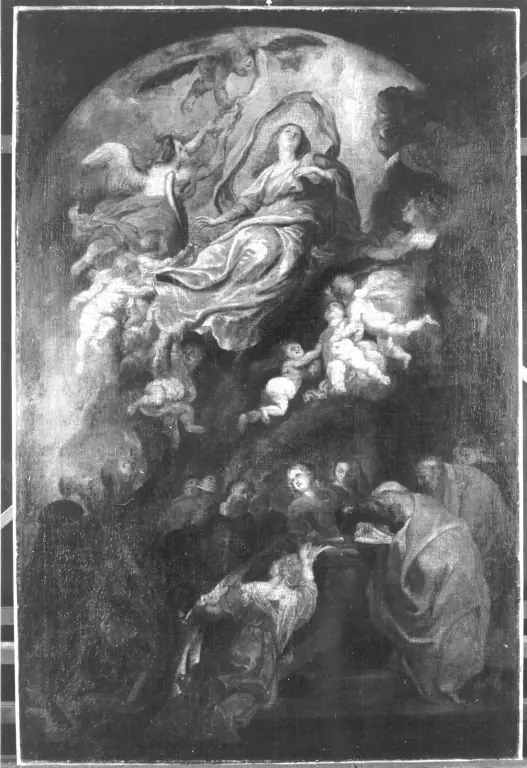 Himmelfahrt Mariae (Kopie nach)
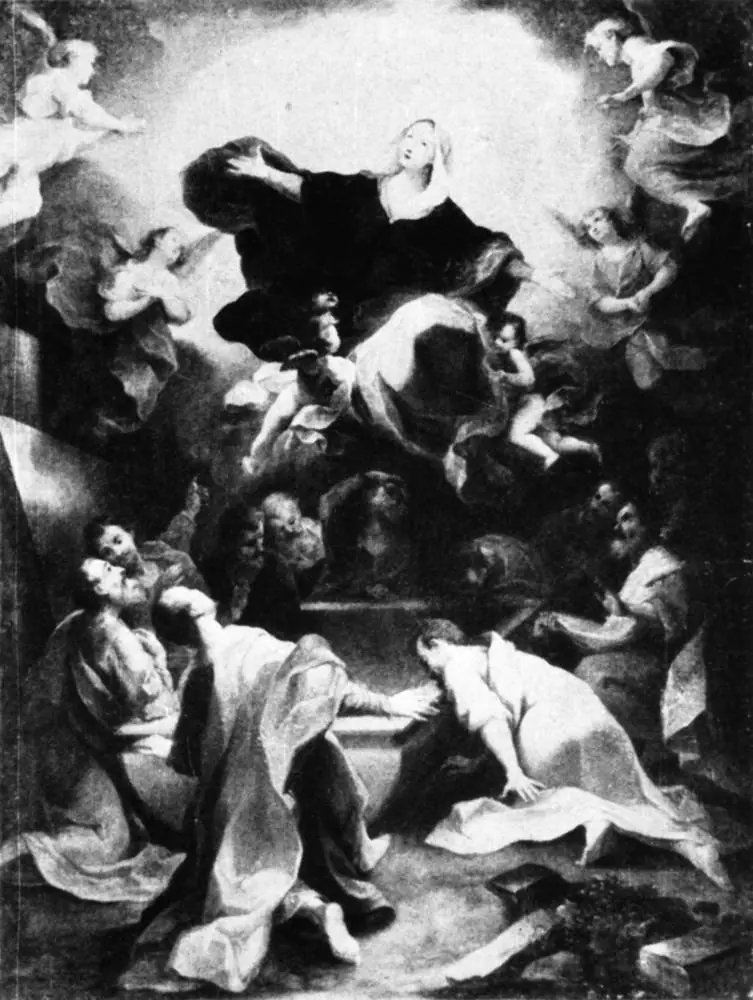 Assumption of the Virgin
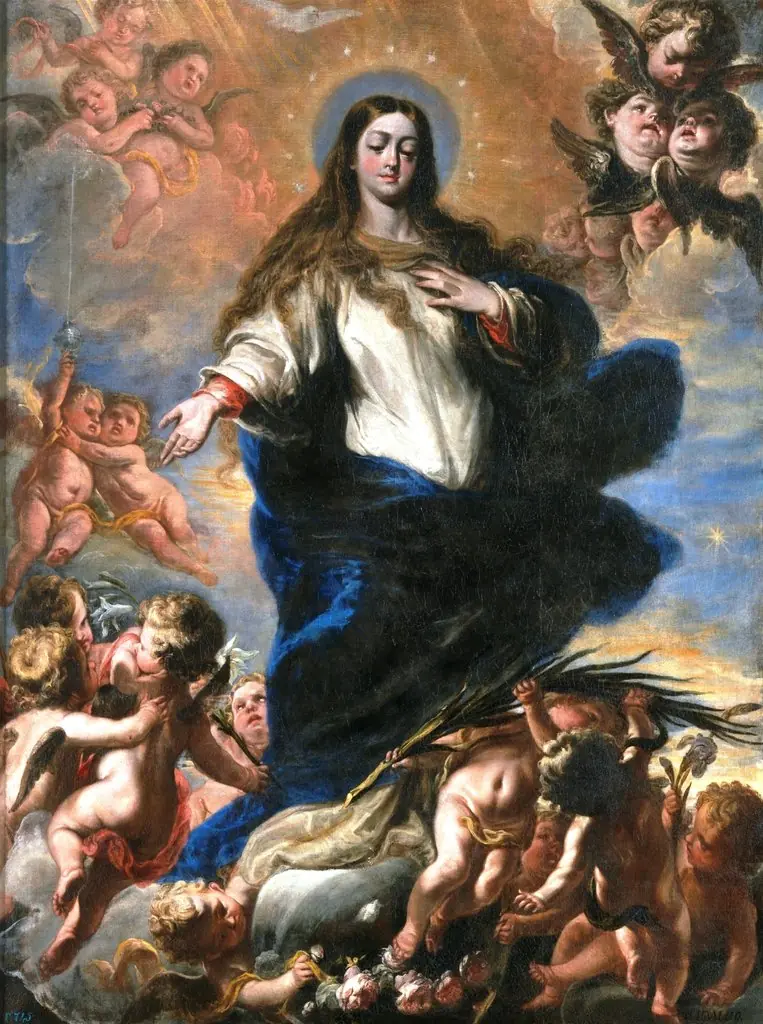 The Immaculate Conception
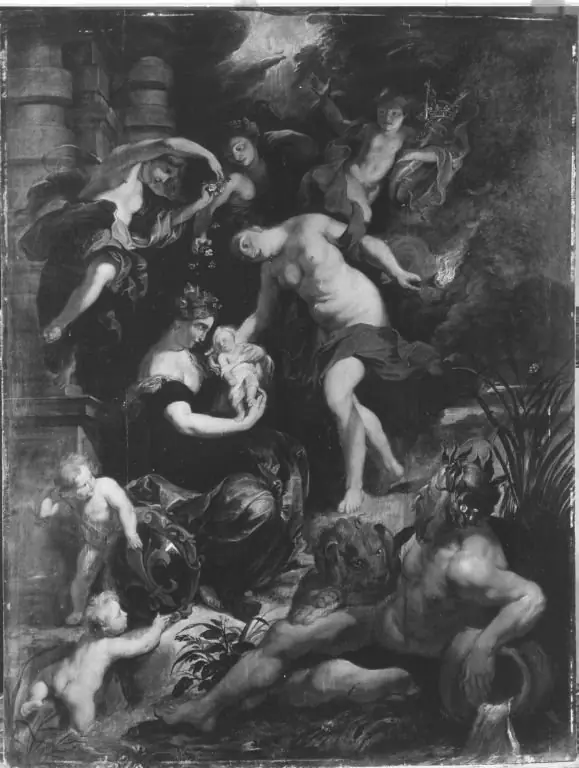 Birth of Maria de Medici (study)
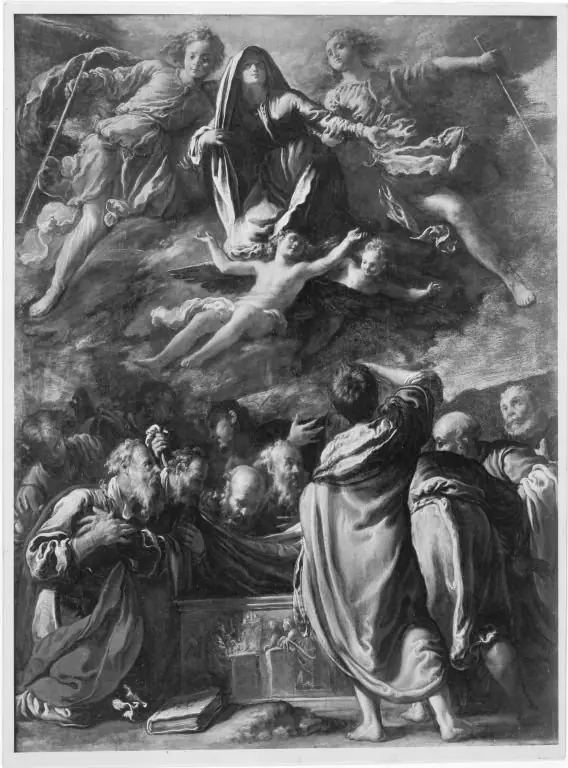 Himmelfahrt Mariä
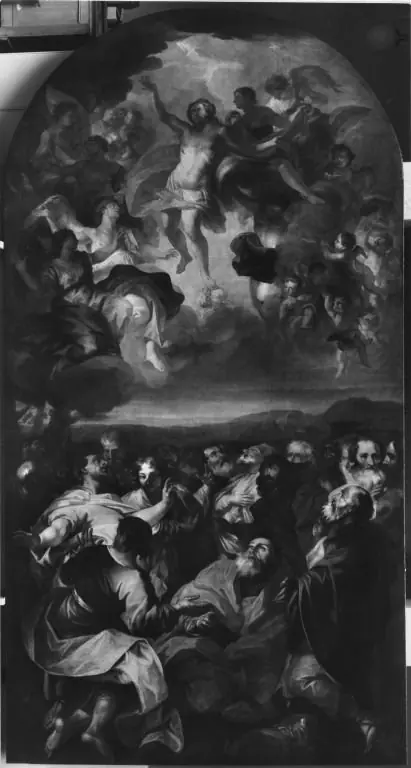 Himmelfahrt Christi
- Saint Rosalie Interceding for the Plague-stricken of Palermo