Artwork
Portrait of Nicolaes Rockox (1560-1640)
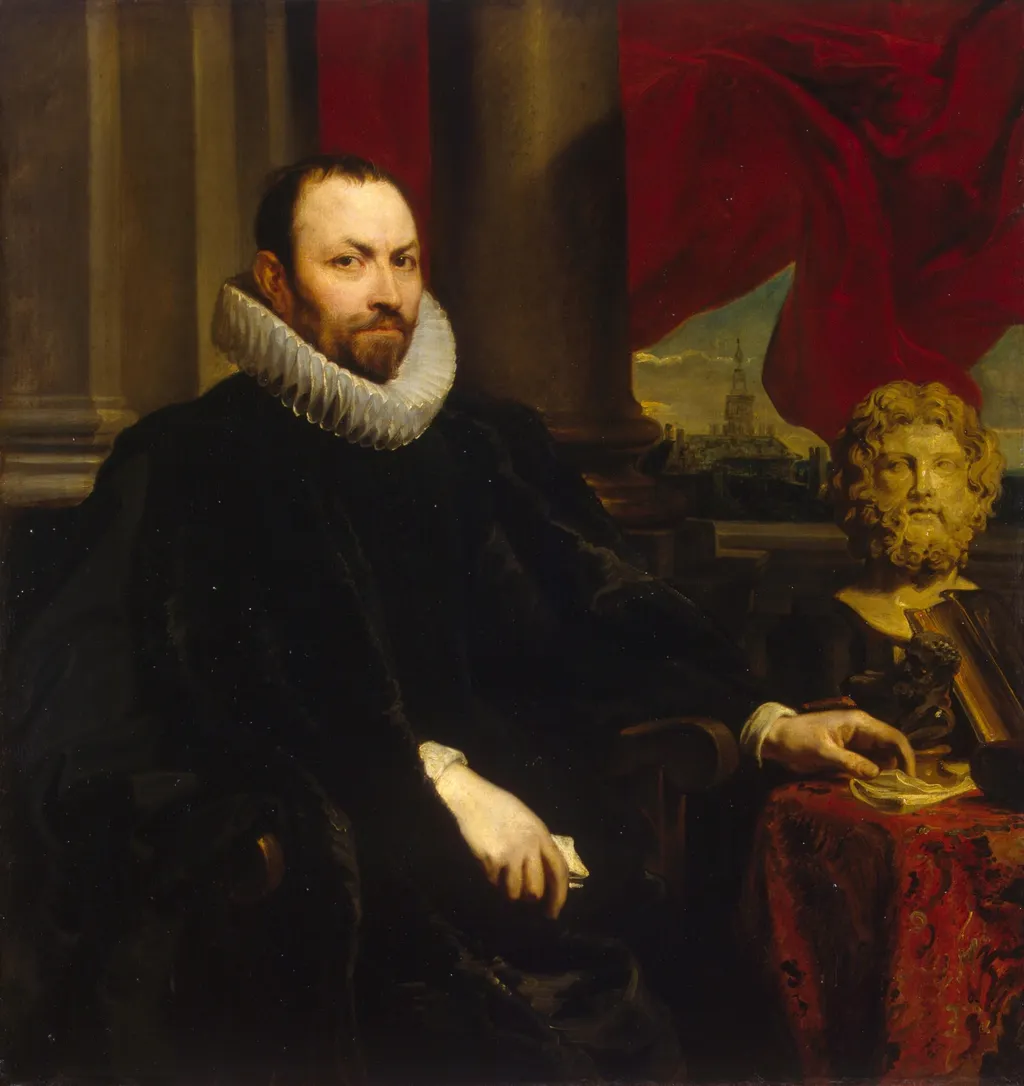
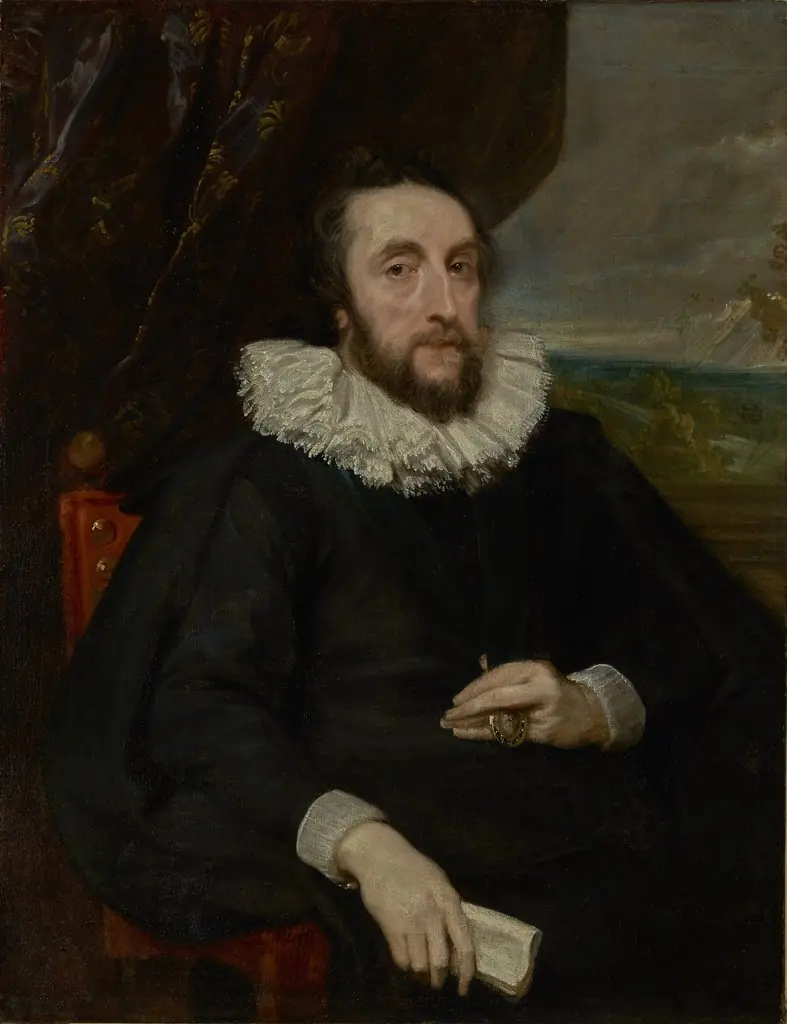
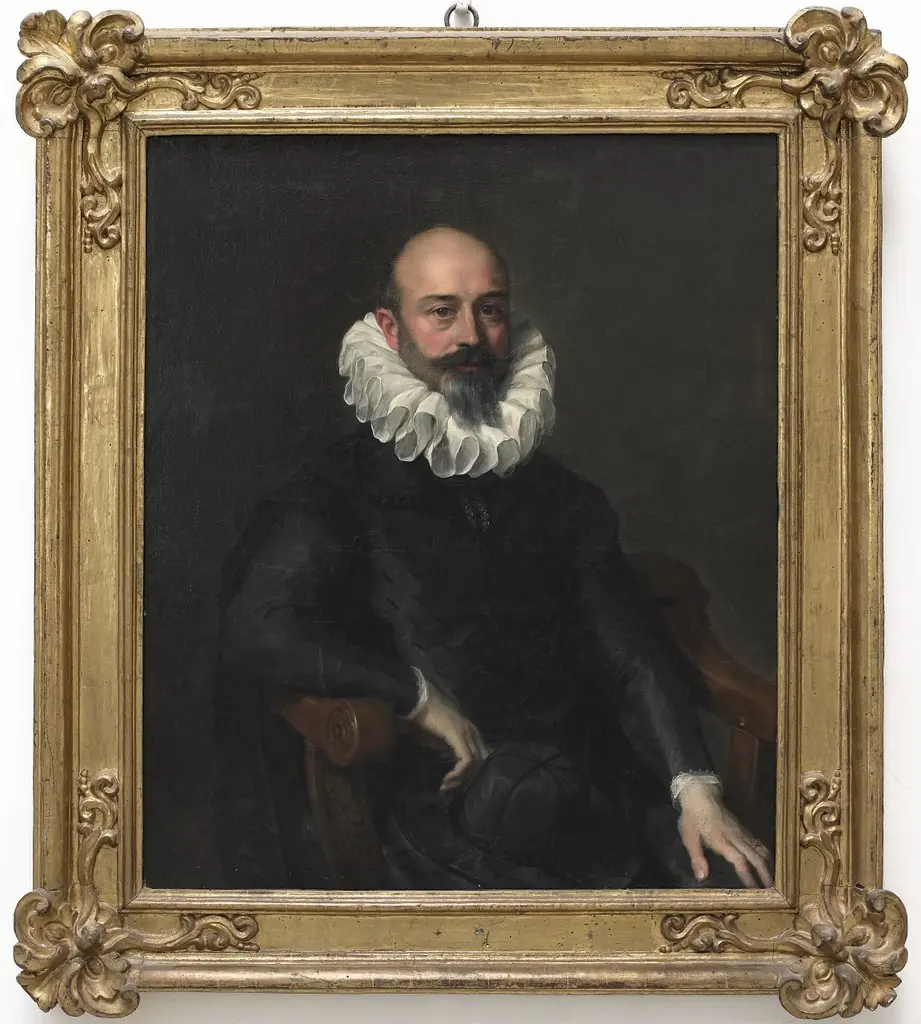
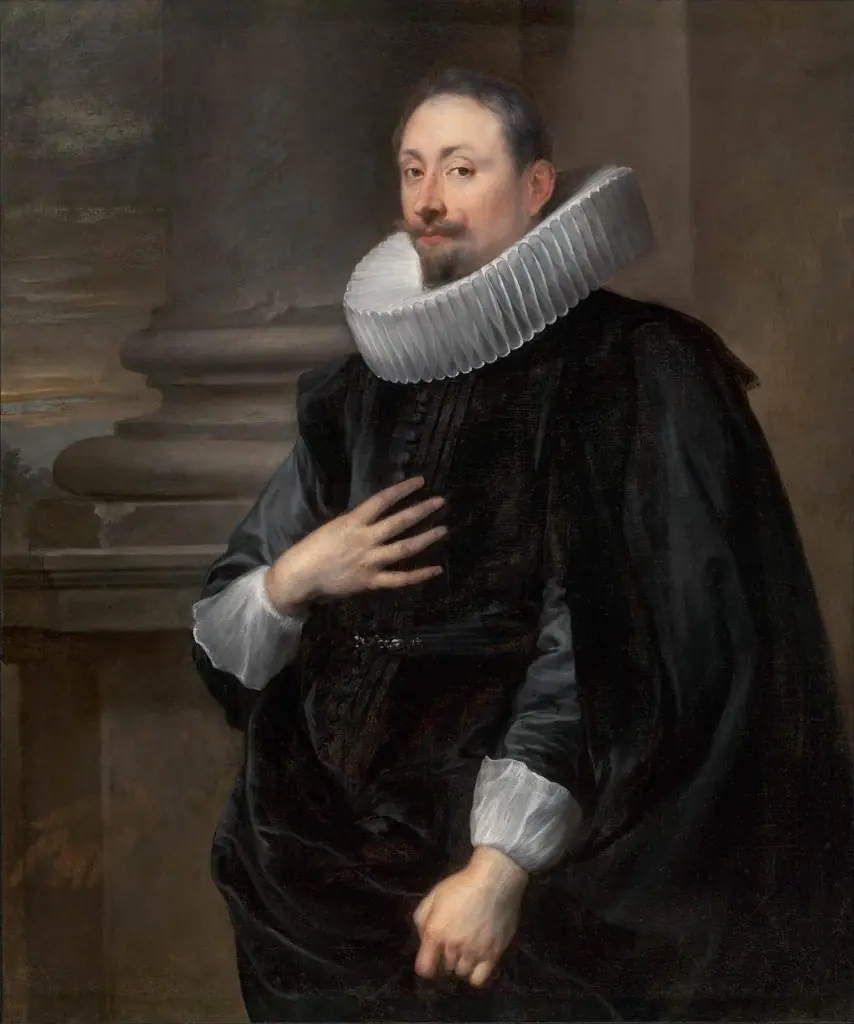
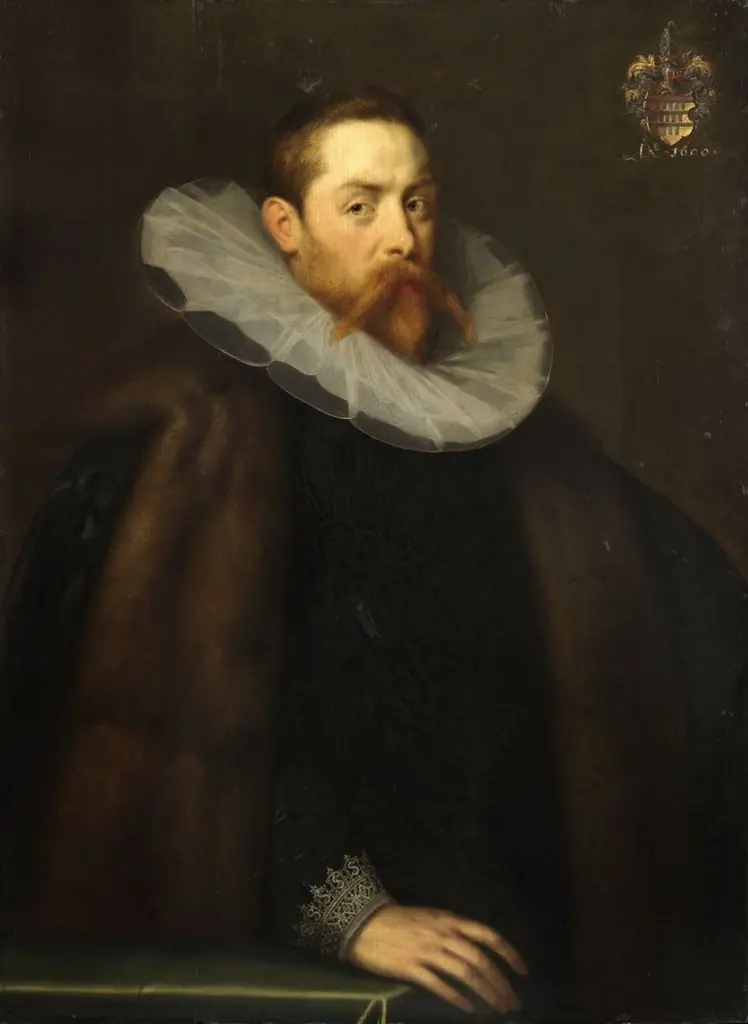
Portrait of Nicolaes Rockox (1560-1640) is an oil painting by the Flemish Baroque painting artist Anthony van Dyck. It dates from 1621 and is held in the collection of the Hermitage Museum.
About this work
Overview
5 by 117 centimetres, the work is now held in the State Hermitage Museum in Saint Petersburg, where it bears the inventory number GE-6922.
The Portrait of Nicolaes Rockox (1560-1640) is an oil-on-canvas painting by Anthony van Dyck, executed in 1621 upon the artist's return from his first trip to England. Measuring 122.5 by 117 centimetres, the work is now held in the State Hermitage Museum in Saint Petersburg, where it bears the inventory number GE-6922. The portrait exemplifies Van Dyck's emerging mature style, combining the formal conventions of Flemish civic portraiture with the increasing monumentality and colouristic richness that would define his later career. It stands as one of the most significant surviving images of one of Antwerp's leading citizens and patrons of the arts.
Subject & Meaning
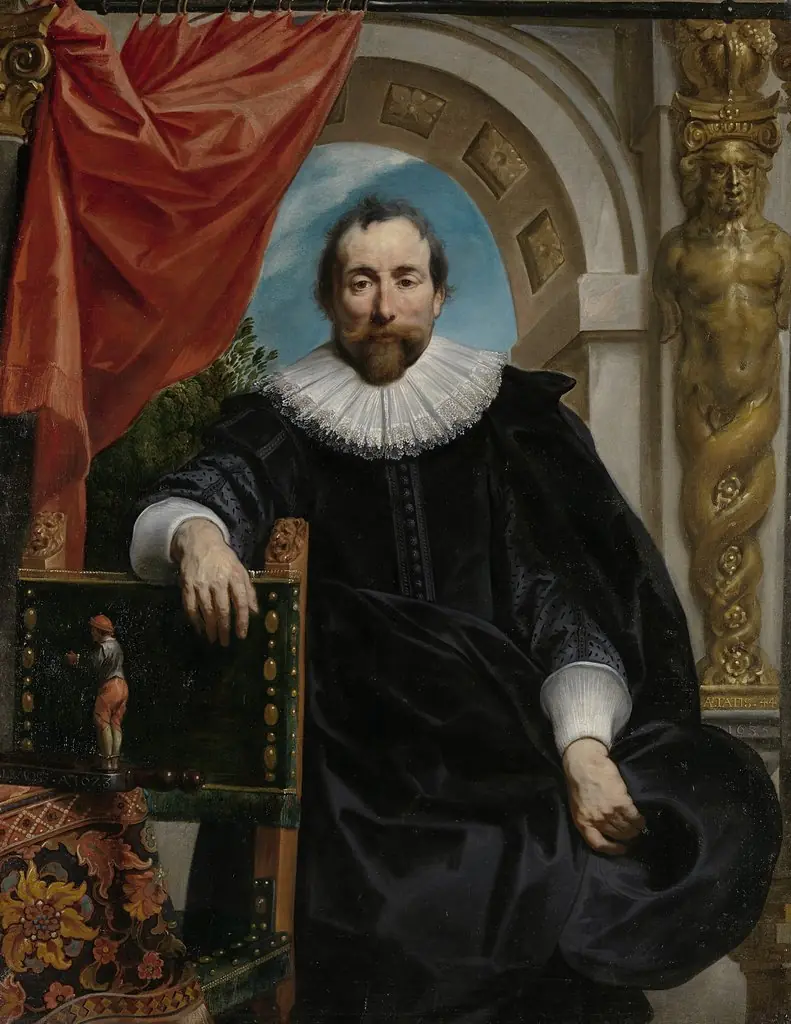
The sitter, Nicolaes Rockox, was a merchant, numismatist, collector, and patron who served nine terms as burgomaster of Antwerp. Rather than relying on the traditional sixteenth-century emblems of status, aristocratic gloves, or coats of arms, Van Dyck presents Rockox within a palatial interior that proclaims his diverse accomplishments. The bearded Rockox wears severe black civic dress with a large white ruff, his left hand resting on a table covered with a red patterned cloth. Upon this table lie books and antique sculptures, signalling his scholarly and collecting interests. In his hand he holds a letter or business document, alluding to his commercial and administrative activities. Behind him, pulled-back red drapery reveals a distant cityscape in which the spire of the German merchants' house (Hanseatic House) in Antwerp is visible, a reference to his trading connections. A stone column and classical bust with curly hair and beard further evoke the world of antiquity that fascinated Rockox as a numismatist. The overall iconography transforms a wealthy burgher into a figure of almost princely dignity, reflecting the evolving ambitions of the Antwerp elite in the early seventeenth century.
Technique & Style
The painting is executed in oil on canvas, a support that allowed Van Dyck the freedom to work on a substantial scale. The palette is dominated by deep blacks, rich reds, and warm browns, with strong light falling selectively on the face, hands, and collar to create a solemn, dignified atmosphere. The brushwork is smooth and polished, with careful attention to the contrasting textures of fabric, stone, and skin. Shadows are deep and dramatic, contributing to the work's imposing presence. The composition places Rockox in three-quarter pose, facing right, with the architectural and drapery elements creating a stage-like setting that frames the sitter. This approach demonstrates the growing influence of Titian on Van Dyck's manner, particularly in the colouristic richness and the grand, ceremonial quality that emerged after his English sojourn. The handling is more assured and monumental than in his earlier portraits, marking a pivotal moment in his stylistic development.
History & Provenance
The portrait remained in Rockox's possession during his lifetime and passed after his death to his heir, Adriaen van Heedtvelde, in whose will of 1685 it is recorded. It subsequently descended to Anna Theresia van Halen, appearing in her sale in Antwerp on 19 August 1749, attributed to Van Dyck. Frederik Graaf van Thoms acquired it, and it appeared in his sale in Leiden on 7 April 1750, then catalogued as by Rubens. By the later eighteenth century it was in Paris, in a collection identified variously as that of Vetellier or Claude-Henri Watelet. Between 1769 and 1779, Count Alexander S. Stroganov (1733-1811) acquired it for his collection in Saint Petersburg. The painting remained with the Counts Stroganov, and when their collection was offered at Lepke in Berlin on 12-13 May 1731, it failed to sell and returned to Russia. It was transferred from the Stroganov Palace Museum to the Hermitage in 1932, passing through the All-Union Association 'Antikvariat'. The Hermitage inventory number is GE-6922.
Context
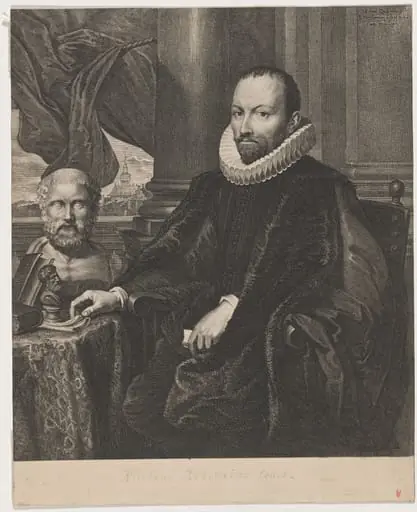
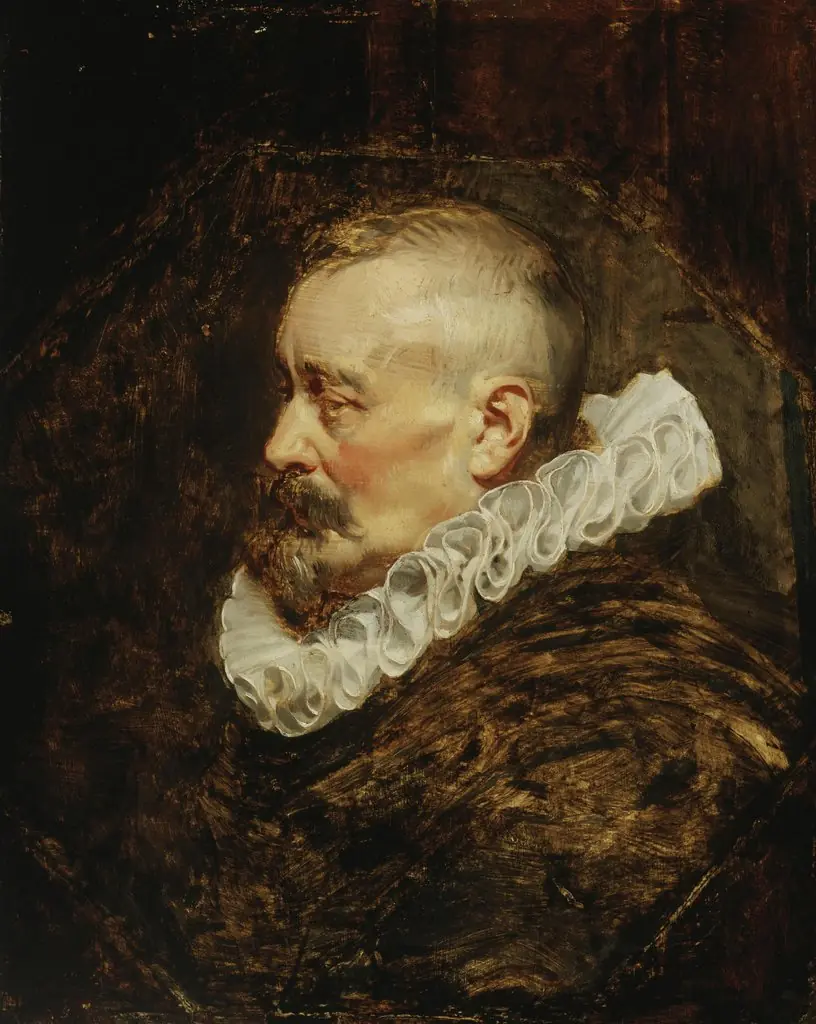
The portrait occupies a significant place within Van Dyck's oeuvre and within Flemish portraiture more broadly. Painted in 1621, it belongs to the period immediately following his first English trip, when his style acquired a new grandeur under Titian's influence. The work exemplifies a shift in civic portraiture: where sixteenth-century patrons had contented themselves with heraldic additions, seventeenth-century subjects like Rockox demanded settings that proclaimed their cultural sophistication and social weight through architectural splendour and classical references. The Hermitage painting is closely related to another portrait of the same model in the Louvre (INV 1264), an oil-on-panel work of smaller dimensions (0.62 by 0.5 metres) dated to the second quarter of the seventeenth century. The Louvre version, which bears a wax seal of Vivant Denon on the reverse, was listed in Napoleonic inventories as from the 'ancienne collection de la couronne', was placed at Compiègne during the Restoration, exhibited at the Louvre in 1826, and deposited at the Ministry of Finance in Paris from 1852 to 1996. Scholarly literature records the Hermitage version as the primary autograph work, with the Louvre painting as a related composition. The portrait has been discussed in the standard Van Dyck literature, including Susan J. Barnes and collaborators' catalogue raisonné of 2004, and in Elisabeth Foucart-Walter and Jacques Foucart's catalogue of Flemish and Dutch paintings at the Louvre (2009).
Legacy
The portrait's afterlife is intertwined with the dispersal of major European collections across centuries. Its passage from Rockox's Antwerp household through eighteenth-century auction rooms in the Netherlands, to Parisian collections, and ultimately to the Stroganov collection in Russia, illustrates the international circulation of Flemish art. The Stroganov provenance connects it to one of the most important aristocratic collections in Imperial Russia, and its transfer to the Hermitage in 1932 consolidated its place within one of the world's great museum holdings. The existence of the Louvre version, with its own complex provenance through French royal and state collections, attests to the demand for images of Rockox and the currency of Van Dyck's compositions. The painting continues to serve as a key document for understanding the social aspirations of the Antwerp patriciate, the evolution of Van Dyck's portraiture after his first English period, and the mechanisms of art collecting and museum formation from the seventeenth century to the present.
Own this work as a print
Artist & collection
Artist
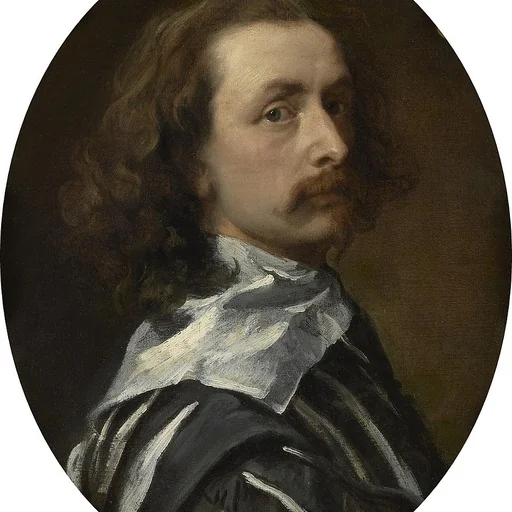
Sir Anthony van Dyck (; Dutch: Antoon van Dijck; 22 March 1599 – 9 December 1641) was a Flemish Baroque artist, who became the leading court painter in England after success in the Spanish Netherlands and Italy.